Tag: John Williams

  • Hitchcock Williams & Murderous Movie Music

    Hitchcock Williams & Murderous Movie Music

    When trying to convey the tone he was looking for with his latest motion picture, director Alfred Hitchcock stated drolly to the film’s composer, “Mr. Williams, murder can be fun.”

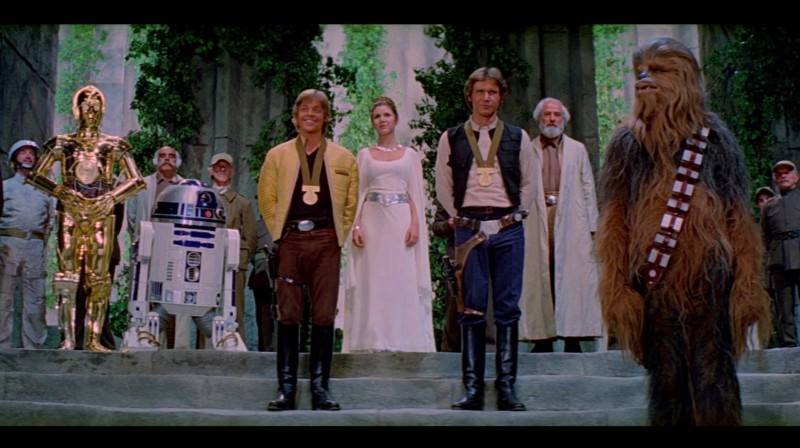
    John Williams was hired to score Hitchcock’s final film, “Family Plot,” in 1976. At the time, he was poised between his breakout success with “Jaws” and “Star Wars,” which would make him a household name. He would be honored for both with Academy Awards for Best Original Score.

    To satisfy Hitch’s hunger for ham on wry, Williams turned to the harpsichord, an instrument that had taken on a certain mischievous quality when applied to mysteries and thrillers.

    This week on “Picture Perfect,” we’ll hear selections from this neglected score from the dawn of Williams’ widespread popularity, alongside Ron Goodwin’s music for “Murder She Said” (the first of Margaret Rutherford’s Miss Marple films), John Addison’s for “Sleuth” (Sir Laurence Olivier and Michael Caine engage in a battle of wits with potentially deadly consequences), and André Previn’s for “Dead Ringer” (a post-“Whatever Happened to Baby Jane” Bette Davis plays contentious twins whose relationship, naturally, leads to murder).

    Join me for an hour of wicked fun with arch harpsichords this week, on “Picture Perfect,” music for the movies, this Friday evening at 6:00 EST, on WWFM – The Classical Network and at wwfm.org.

  • Superhero Movie Scores: Bland by Design?

    Superhero Movie Scores: Bland by Design?

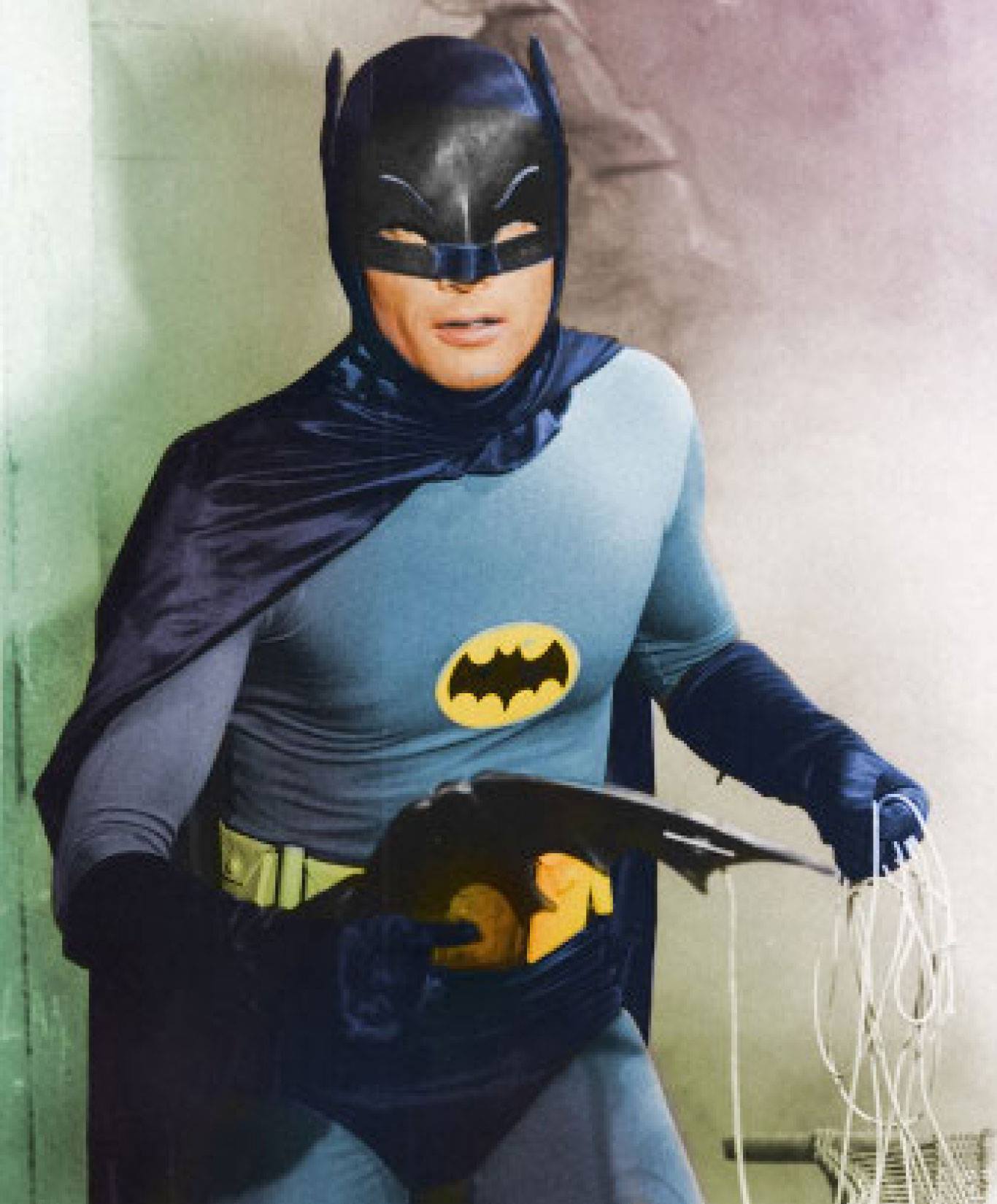
    So why are the film scores to blockbuster superhero films so undistinguished? You know something’s got to be wrong when Patrick Doyle, one of the screen’s great melodists (he wrote the music for “Henry V,” “Much Ado About Nothing,” and “Sense and Sensibility”), succumbs to a bludgeoning drum beat for “Thor.” One thing’s for certain, we are a long, long way from John Williams’ “Superman” (1978), which proved, even in its most intimate scenes, how indelible and uplifting a superhero score could be.

    To be fair, there isn’t a lot of room in contemporary superhero films for the music to breathe, the scores often swallowed up by hyperkinetic editing and ear-splitting sound effects. For a composer’s contribution to be heard, he needs to be pounding the biggest drum – even if it’s an electronic drum – in the room.

    If there is melody, it is either cranked out of a noodle press, someone running their fingers mindlessly across a keyboard with no concept of how a true melody is structured, or limited to a recurring motif (as in “The Avengers”), as if the composer is embarrassed to let his score “sing.” Alan Silvestri, composer for “The Avengers,” wrote the music for “Back to the Future,” for crying out loud! His scores since at least “Van Helsing” (2004) have been horrifying assaults. He was given the chance to write a good old-fashioned march for “Captain America,” but the film itself was a self-conscious throwback, directed by Lucas and Spielberg associate Joe Johnston.

    So who decided audiences were fed up with grand, post-romantic, orchestral scores? What film composer has sold more albums than John Williams? What composer is more represented in a list of top-grossing films of all time? Who doesn’t love “Star Wars” and “Raiders of the Lost Ark” and “E.T.” and “Jurassic Park” and “Harry Potter?” I’m not saying every score has to be like those, but the majority of scores these days sound as if they are churned out on a synthesizer – which may very well be the case. Sure, the composer, as the last in the post-production assembly line, has to deliver very quickly, but Jerry Goldsmith churned out plenty of memorable music at white heat.

    The sad fact of the matter is that the bean-counters have figured out that music no longer has to make much of an impression for a film to make a billion dollars worldwide. Also, if a composer no longer requires extensive training, then anyone can sit down and noodle something out on their computer – which is why so many rock musicians are now on the rise as film composers. Think back on the incredibly rich scores by Erich Wolfgang Korngold or Miklós Rózsa or Bernard Herrmann or Andre Previn, and measure their contributions against just about anything being written today. These guys were honest-to-goodness geniuses at their craft.

    Hans Zimmer, who, by his own admission doesn’t have the chops to write on Williams’ level, as far as orchestral scores are concerned, helped sow the seeds of destruction by demonstrating that synthesizers and electronic sampling by a team of composers would be perfectly acceptable to most audiences. When producers have the choice between hiring out to Zimmer’s studio or leasing the London Symphony Orchestra, who are they going to go with? It could take a composer, working with a trusted orchestrator, a good month or more to come up with a polished score. Using electronics, music can be cranked out like sausages, and today’s audiences are only too ready to gobble them down.

    Okay, that’s my rant. Here’s a related piece on how cannibalized temp tracks have helped keep Marvel movies at a level of musical mediocrity.

    http://www.theverge.com/2016/9/12/12893622/hollywood-temp-scores-every-frame-a-painting-film

  • John Williams’ Olympic Royalties: How Much?

    John Williams’ Olympic Royalties: How Much?

    The Olympic royalties continue to pile up for John Williams, thanks to NBC’s perpetual use of “Olympic Fanfare and Theme” (written for the 1984 Los Angeles Games), “Summon the Heroes” (written for the 1996 Atlanta Games), and his synthesis of Leo Arnaud’s “Bugler’s Dream” (the quintessential Olympic music) with his own ’84 opus. These are heard incessantly as bumpers, as coverage fades to commercial, or to underscore segues between events.

    How much, exactly, does he make? According to an article in Variety, published in 2008, each prime time use could net between $500 and $2500.

    http://variety.com/2008/music/news/olympic-songs-snag-significant-sums-1117991375/

    Of course, that was eight years ago.

    Here’s an article on the official NBC Olympics website about Williams’ contribution to the Olympics:

    http://www.nbcolympics.com/news/john-williams-continues-score-sound-olympics

    Over the years, Williams has composed four original pieces for the games. In addition to his works for the ’84 and ’96 Olympics, he wrote “The Olympic Spirit” for the 1988 games in Seoul, South Korea, and “Call of the Champions” for the 2002 winter games in Salt Lake City.

    Though Arnaud’s fanfare embodies the Olympic spirit like no other, it was not actually written with the Olympics in mind. “Bugler’s Dream” was written as part of a larger suite for conductor Felix Slatkin, who commissioned it for his 1958 album, “Charge!” In 1968, the fanfare was picked up by ABC for use in its coverage of the Winter Olympics from Grenoble. It became embedded in the public consciousness as THE music for the Olympics.

    Like Williams, Arnaud worked in Hollywood for many years. A pupil of Maurice Ravel and Vincent d’Indy, he labored as an orchestrator on films ranging from “The Wizard of Oz” to “Ryan’s Daughter.”

    In this article, Williams’ Olympic fanfares are ranked. It includes musical examples, so you can decide for yourself:

    http://www.sportingnews.com/athletics/news/john-williams-best-olympic-themes-fanfare-music-ranked-nbc/1h2z6g0ovcgm518jx6fcvq1oj9


    PHOTO: Williams, looking hale at 84, as he appeared at Tanglewood last week, between Boston Symphony Orchestra principal trumpeter Tom Rolfs and Philadelphia Orchestra principal guest conductor Stéphane Denève (photo by BSO principal trombonist Toby Oft)

  • Olympic Music Fever on WPRB

    Olympic Music Fever on WPRB

    This morning on WPRB, we are consumed by OLYMPIC FEEEEEEEEEEEE-VAH! Or maybe it’s just the Zika virus. It’s hard to tell, as we celebrate the Summer Games in Rio de Janeiro.

    We’ll hear Olympic fanfares and occasional music composed by Leo Arnaud, Angelo Badalamenti, Robin Frost, Philip Glass, Basil Poledouris, Richard Strauss (his notorious “Olympic Hymn” for the 1936 Berlin games), Mikis Theodorakis, and John Williams.

    We’ll also hear works by Brazilian composers Antônio Carlos Gomes , Camargo Guarnieri and Heitor Villa-Lobos, alongside music inspired by Brazil by smitten tourists Darius Milhaud, Ottorino Respighi, Martin Butler and David Gunn.

    Also featured will be Michael Torke’s “Javelin,” co- commissioned by the Atlanta Symphony Orchestra and the Atlanta Committee for the Olympic Games; John Harbison’s “Olympic Dances;” and bona fide medal-winning works by Olympic composers Josef Suk and Rudolph Simonsen.

    We’ll be testing positive for caffeine, from 6 to 11 EDT on WPRB 103.3 FM and at wprb.com. Our motto has always been “Citius, Altius, Fortius,” on “Classic Ross Amico.”

  • John Williams Home Serenaded Video Viral

    John Williams Home Serenaded Video Viral

    This has been sweeping the internet for the past couple of days. For anyone who’s curious whether or not John Williams wears his signature turtleneck at home, here he is being serenaded by two young musicians (hopefully not in the middle of a nap).

    What a good sport. It’s also nice to see he lives in a real house, in an actual neighborhood!

Tag Cloud

Aaron Copland (92) Beethoven (95) Composer (114) Film Music (123) Film Score (143) Film Scores (255) Halloween (94) John Williams (187) KWAX (229) Leonard Bernstein (101) Marlboro Music Festival (125) Movie Music (138) Opera (202) Philadelphia Orchestra (89) Picture Perfect (174) Princeton Symphony Orchestra (106) Radio (87) Ralph Vaughan Williams (85) Ross Amico (244) Roy's Tie-Dye Sci-Fi Corner (290) The Classical Network (101) The Lost Chord (268) Vaughan Williams (103) WPRB (396) WWFM (881)

DON’T MISS A BEAT

Receive a weekly digest every Sunday at noon by signing up here


RECENT POSTS