Tag: Jón Leifs

  • Volcano Music Blows Up The Lost Chord

    Volcano Music Blows Up The Lost Chord

    Did you remember to “spring forward?” This Sunday night on “The Lost Chord,” now that we’ve all lost an hour, thanks to the time change, I figured everyone ought to be pretty drowsy by 10 p.m. So I had better be damn well sure to choose some very loud music. Also, it’s Alan Hovhaness’ birthday.

    Hovhaness composed his Symphony No. 50 in the wake of Mount St. Helens’ cataclysmic eruption in 1980. When Helens blew, she killed 57 people, reduced hundreds of square miles to wasteland, and caused over a billion dollars in damage. This is music calculated to keep everyone awake.

    Hovhaness viewed mountains as symbols of man’s attempt to know God – symbolic meeting places between the mundane and spiritual worlds. The friction of the natural and the transcendent informs the progression of the symphony, from a sense of grandeur in the first movement, a prelude and fugue in praise of Helens; the placidity of Paradise Lake, the beauty of which disappeared forever; and the volcano itself, recalled in the third and final movement, most percussively rendered. The violence subsides, and the dawn hymn of the opening returns in triumph.

    Hovhaness’ volcano symphony is like a walk in the park alongside the mad inspirations of Icelandic genius Jon Leifs. Leifs’ “Hekla,” from 1961, is probably the closest you’ll ever want to get to a volcanic eruption. Requiring 19 percussionists banging away on anvils, stones, sirens, plate bells, chains, shotguns, cannons, and a large wooden stump, it has been called the loudest piece of classical music ever written. For their own well-being, the performers were instructed to wear earplugs.

    As a bonus, with what’s left of our hearing, we’ll also enjoy “Volcanic Eruption and Atonement” from Leifs’ ballet, “Baldr.”

    Down a six-pack of energy drinks and leap into a pool of ice. Then tune in for an hour of volcano music. If there was a degree awarded for distinguished achievement in volcanology, these composers would have graduated “Magma Come Loudly.”

    Prepare to be blown away, this Sunday night at 10:00 EASTERN DAYLIGHT TIME, on WWFM – The Classical Network and wwfm.org.

  • Icelandic Yule Lads Mischief and Mayhem

    Icelandic Yule Lads Mischief and Mayhem

    December 12. Here come the Yule Lads!

    What’s that? You’re unfamiliar with the Icelandic tradition of the Yule Lads? This unruly party is clearly a precursor to the thirteen dwarves [sic] who enlist a certain Hobbit as “burglar,” eating him out of house and home and imperiling his dishes in the process.

    Chip the glasses and crack the plates!
    Blunt the knives and bend the forks!
    That’s what Bilbo Baggins hates—
    Smash the bottles and burn the corks!

    Cut the cloth and tread on the fat!
    Pour the milk on the pantry floor!
    Leave the bones on the bedroom mat!
    Splash the wine on every door!

    Dump the crocks in a boiling bowl;
    Pound them up with a thumping pole;
    And when you’ve finished if any are whole,
    Send them down the hall to roll!

    That’s what Bilbo Baggins hates!
    So, carefully! carefully with the plates!

    Today, the Yule Lads are usually personified as a kind of bevy of affable Santa Clauses. Except, being Icelandic, they either leave gifts (if you’ve been nice) or rotting potatoes (if you’ve been naughty). That’s the sanitized version. You don’t have to dig too deeply to discover their true selves.

    The Lads are thirteen in number. In Icelandic lore, they are annoying pranksters at best; at worst, they are homicidal trolls who devour children. Mostly they steal from and harass Icelandic farmers.

    The Lads descend from the mountains, staggering their arrivals and departures, beginning thirteen nights before Christmas. Each has his own exasperating speciality.

    There’s the peg-legged Stekkjarstaur (Sheep-Cote Clod), who harasses sheep. He arrives on December 12 and takes his leave on Christmas Day.

    There’s Giljagaur (Gully Gawk), who lurks in gullies, biding his time to sneak into the cowshed and steal milk. He turns up on December 13 and returns to his lair on December 26.

    There’s the diminutive Stúfur (Stubby), who steals pans in order to eat the crust out of them. He trots in on December 14 and totters off on December 27.

    There’s Þvörusleikir (Spoon-Licker), who, well, licks spoons. He’s very gaunt, due to malnutrition. He shows up on December 15 and disappears, like Kafka’s hunger artist, into the straw on December 28.

    There’s Pottaskeffil (Pot-Scraper), another one who steals leftovers from pots. He comes a-calling on December 16 and returns to the hills on December 29.

    There’s Askasleikir (Bowl-Licker). Again, he licks bowls. I’d advise you to use extra soap, except once he licks the bowls, he usually steals them. He slips in on December 17 and slips out on December 30.

    There’s Hurðaskellir (Door-Slammer), who slams doors in the night. He raises a ruckus from December 18 to December 31.

    There’s Skyrgámur (Skyr-Gobbler), a Yule Lad who’s crazy for skyr, a kind of Icelandic yogurt. He sates himself from December 19 to January 1.

    There’s Bjúgnakrækir (Sausage-Snatcher), who’s crazy for the pig-products. He hides in the rafters and swipes smoked sausages. He makes his mark from December 20 to January 2.

    There’s Gluggagægir (Window-Peeper), who peeps, creepily, through windows, looking for things to steal. He cases the joint from December 21 to January 3.

    There’s Gáttaþefur (Doorway-Sniffer), who sniffs around the door jamb with his abnormally large proboscis, in search of laufabrauð, Icelandic Christmas bread. He hungers from December 22 to January 4.

    There’s Ketkrókur (Meat-Hook), who uses a hook to steal meat. He steals from December 23 to January 5.

    And finally, there’s Kertasníkir (Candle-Stealer), who pursues children so that he can eat their candles. (He likes tallow.) He’s a “light” eater from Christmas Eve, December 24, to Epiphany, January 6.

    And you thought holiday visits from your relatives drove you batty!

    Their mother is the ogress Grýla, who descends from the mountains in search of children to boil in her cauldron. If you happen to find yourself in her gnarled claws, remember, she has to release you if you repent.

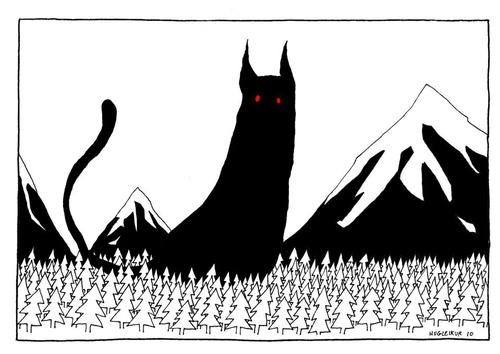
    The Yule Lads are frequently accompanied by the Yule Cat, which eats children who do not receive new clothes before Christmas. This is tied in to the Icelandic work ethic. In the old days, if farm hands processed their autumn wool in a timely fashion, they were rewarded with new clothes. If not, they received nothing, leaving them fair game for the Yule Cat. Better sheer them sheep!

    To my knowledge, there has been no classical music written about the Yule Lads. As with Krampus, some enterprising composer could make a real killing. All you need is a Christmas hit, and you can kick back and collect those sweet holiday royalties.

    Be that as it may, I’ll be doing what I can, playing the “Icelandic Folk Dances” by Jón Leifs, among my featured works, this afternoon between 4 and 6 p.m. EST, on WWFM – The Classical Network and wwfm.org.

  • Jón Leifs Icelandic Composer Rediscovered

    Jón Leifs Icelandic Composer Rediscovered

    No one scores natural phenomena quite like Jón Leifs.

    Leifs, who was born on a farm in northwestern Iceland, traveled to Germany to study music at the Leipzig Conservatory in 1916. Soon after graduation, he married the pianist Annie Reithof, a decision that necessitated some careful maneuvering in the perilous years to come.

    Leifs remained in Nazi Germany through much of World War II. On the surface, his celebration of Norse heroism should have been just the thing to endear him to the National Socialists. However, two things worked against him: the modernistic language of his music, and the fact that his wife and children were Jewish.

    Performances of Leifs’ music were derided or discouraged. This, apparently, he took in his stride, finding solace in re-reading the Icelandic Sagas and finding strength in the exploits of their heroes. Above all, on account of his family, Leifs tried not to attract a lot of unwanted attention. He was still useful for propaganda purposes in Germany’s relations with Scandinavia.

    Leifs finally managed to obtain permission to leave Germany in 1944, his family temporarily settling in Sweden. He and his wife divorced, and Leifs returned to Iceland. There, he was regarded with suspicion due to his Nazi “associations.”

    Also, much of his music was conceived on such a gargantuan scale, and scored for such outlandish instruments, there was no way they could be practically performed. Therefore much of it went unheard in his lifetime.

    In particular, “Hekla,” his evocation of a volcano in eruption, has been called the loudest piece of classical music ever written, requiring 19 percussionists hammering away at a most unconventional arsenal: anvils, stones, sirens, plate bells, chains, shotguns, cannons, and a large wooden stump. For their own well-being, the performers are instructed to wear earplugs.

    His “Saga Symphony,” inspired by prose accounts of battles, feuds, and power struggles of early Viking settlers, is enlivened by tuned anvils, stones, whip, shields of iron, leather, and wood, great wooden containers (played by large hammers), and six lurs – copies of ancient long horns.

    Leifs’ music can be austere to the Nth degree. The severity of his art is reflective of the unforgiving-yet-sublime Icelandic landscape and the stoicism of the heroes of the sagas. His is a wholly unique voice in 20th century music that deserves to be much better known. `

    Join me this afternoon, as we remember Leifs on the 50th anniversary of his death. I’ll go easy on you by vaulting over the volcanoes and geysers and presenting instead the elemental “Iceland Overture” and the “Variazioni pastorale” – his variations on a theme by Beethoven.

    The Viking longboat will be well-provisioned. Be ready to row, from 4 to 7 p.m. EDT, on WWFM – The Classical Network and wwfm.org.
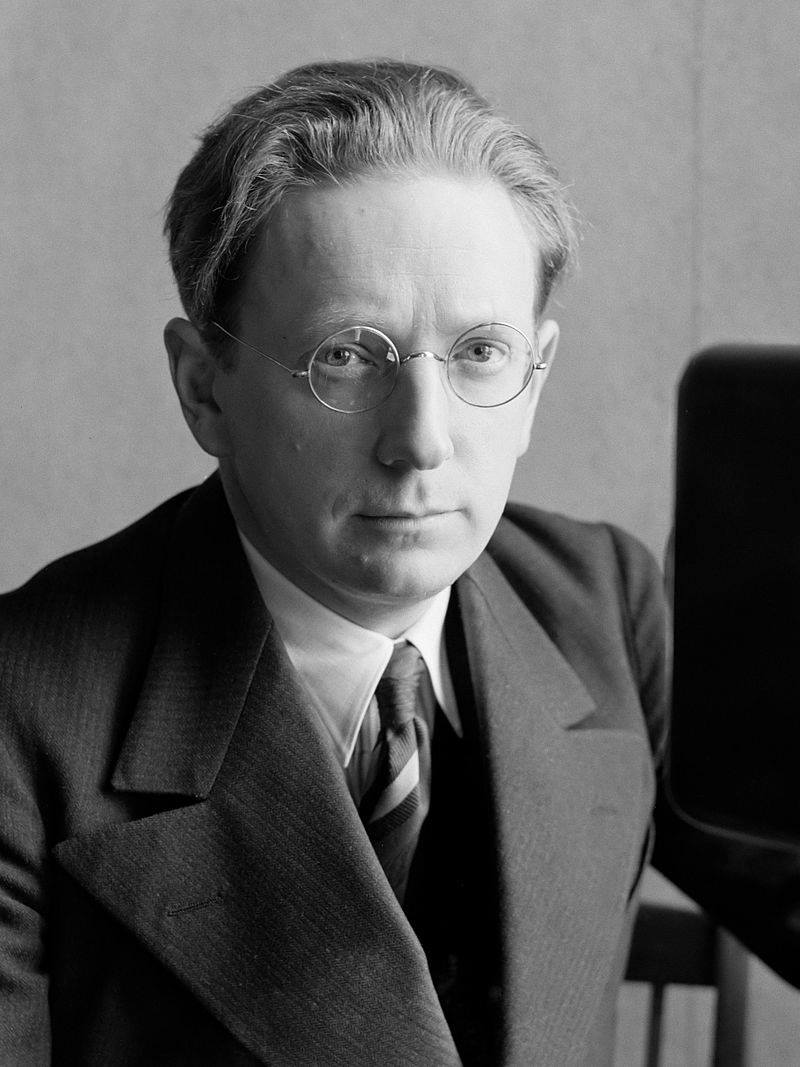

    PHOTOS: Jón Leifs and Hekla

  • Volcanic Eruptions in Classical Music

    Volcanic Eruptions in Classical Music

    When is cauliflower not good for you? When it turns out that it’s actually Mount St. Helens.

    Mount St. Helens blew on May 18, 1980, killing 57 people, reducing hundreds of square miles to wasteland, and causing over $1 billion in damage. It also happened to inspire a symphony by Alan Hovhaness.

    This Sunday night on “The Lost Chord,” with so much Hawaiian volcanic activity in the news of late, I thought it a good time to revisit Hovhaness’ “Mount St. Helens” Symphony, alongside two works by Icelandic genius Jon Leifs.

    Hovhaness was moved to write his Symphony No. 50 in the wake of Helens’ cataclysmic eruption, the deadliest in U.S. history. The composer always viewed mountains as symbols of man’s attempt to know God – symbolic meeting places between the mundane and spiritual worlds.

    The friction of the natural and the spiritual inform the progression of the symphony, from a sense of grandeur in the first movement, a prelude and fugue in praise of Helens; the placidity of Paradise Lake, the beauty of which disappeared forever; and the volcano itself, recalled in the third and final movement, most percussively rendered. The violence subsides, and the dawn hymn of the opening returns in triumph.

    Hovhaness’ volcano symphony is like a walk in the park alongside Leifs’ mad inspirations. Leifs’ “Hekla,” from 1961, is probably the closest you’ll ever want to get to a volcanic eruption. Requiring 19 percussionists banging away on anvils, stones, sirens, plate bells, chains, shotguns, cannons, and a large wooden stump, it has been called the loudest piece of classical music ever written. For their own well-being, the performers were instructed to wear earplugs.

    As a bonus, with what’s left of our hearing, we’ll also enjoy “Volcanic Eruption and Atonement” from Leifs’ ballet, “Baldr.”

    If there was a degree awarded for distinguished achievement in volcanic music, these composers would certainly have graduated “Magma Come Loudly.” Prepare to be blown away, this Sunday night at 10:00 EDT, on WWFM – The Classical Network and wwfm.org.


    PHOTO: That ain’t cauliflower: Mount St. Helens in 1980

  • Jon Leifs Saga Symphony Viking Sounds

    Jon Leifs Saga Symphony Viking Sounds

    This Sunday night on “The Lost Chord,” brace yourself for Icelandic composer Jon Leif’s “Saga Symphony.” Scored for tuned anvils; stones; whip; shields of iron, leather, and wood; great wooden containers played by large hammers; and six ancient long horns, or lurs, the work is an intriguing blend of extravagance and austerity.

    Leifs studied in Leipzig and wound up stranded in Nazi Germany for much of World War II. You’d think the National Socialists would have gone ape for this musical advocate of Norse heroism, but two things worked against him: the modernistic language of much of his output, and the fact that his wife and children were Jewish. Also, he found Wagner repellent, asserting that Wagner completely misunderstood the essence and artistic tradition of the North. Public performances of Leif’s works were discouraged (and would have been impractical anyway). Under the circumstances, he preferred to attract as little attention to himself as possible. He found escape in rereading the Icelandic sagas, even as he was used for propaganda purposes to strengthen Germany’s relations with Scandinavia.

    Leifs finally managed to obtain permission to leave Germany in 1944. Unfortunately, suspicion of Nazi associations further hindered acceptance of his music abroad. It was only with a series of compact disc recordings released on the Swedish label BIS, beginning in the 1990s, that Leifs – who died in 1968 – was revealed to be Iceland’s most important composer, with a voice as distinctive as any of his time.

    Iceland of a hundred years ago was a very different place than it is now. Leifs didn’t hear his first orchestra until he traveled to Leipzig. The “Saga Symphony” is a direct response to Franz Liszt’s “A Faust Symphony,” a performance of which sent the young composer into ecstasies. He went home and immediately began work on the piece we’re about to hear. However, his own approach to the symphony is quite different from Liszt’s. In terms of symphonic development, there is none to speak of. In its place are evocative fields of static harmonies.

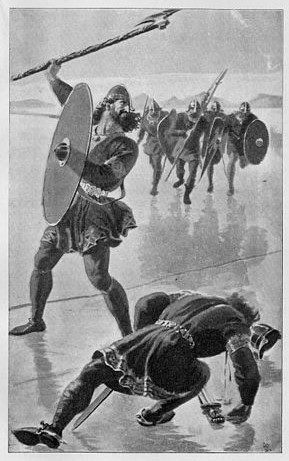
    Each of the work’s five movements is a character portrait of a hero from the Norse sagas: the vitriolic warrior Skarphedinn (Njal’s Saga), who hacks and hews with his battle axe; the strong-willed Gudrun Osvifrsdottir (Saga of the Laxardals), who avenges herself against her husband’s killer; the latently heroic comic braggart and coward Bjorn of Mork, who takes shelter behind the swashbuckler Kari Solmundarson, as Kari avenges the deaths of Njal and his sons; Grettir Asmundarson, who vanquishes the ghost of Glamr in a wrestling match, only to be haunted ever after; and the warrior-poet Tormod Kolbrunarskald (The Foster Brother’s Saga), who pulls an arrow from his heart and even in the throes of death formulates an intricate poem.

    Greet your fate with courage and stoicism. Join me for “Liking the Viking,” this Sunday night at 10:00 EST, on WWFM – The Classical Network and wwfm.org.
Tag Cloud

Aaron Copland (93) Beethoven (95) Composer (114) Film Music (126) Film Score (143) Film Scores (255) Halloween (94) John Williams (189) KWAX (229) Leonard Bernstein (101) Marlboro Music Festival (125) Movie Music (141) Mozart (87) Opera (203) Philadelphia Orchestra (89) Picture Perfect (174) Princeton Symphony Orchestra (107) Radio (87) Ross Amico (244) Roy's Tie-Dye Sci-Fi Corner (290) The Classical Network (101) The Lost Chord (268) Vaughan Williams (103) WPRB (396) WWFM (881)

DON’T MISS A BEAT

Receive a weekly digest every Sunday at noon by signing up here


RECENT POSTS