Josef Suk’s 30th year was a tragic one, marked by the deaths of both his young wife, Otilie, and her father, his former teacher, Antonín Dvořák. Not surprisingly, a sense of morbidity colors much of his mature output. The double-loss directly inspired Suk’s “Asrael Symphony,” named for the Angel of Death.
This week on “The Lost Chord,” we’ll take a look at “A Summer’s Tale,” the next step in Suk’s emotional rehabilitation. The work is a five-movement symphonic poem, the second of a four-part cycle that contemplates death and the meaning of life. More affirmative than the grim “Asrael,” which is full of pain, loss, and grief, “A Summer’s Tale” explores the healing powers of nature, in a score that at times reflects the epic romanticism of Gustav Mahler and at others the impressionism of Claude Debussy. It was composed over the course of just six weeks in the summer of 1907. Further tinkering took place over the next year-and-a-half. The work received its premiere in January of 1909.
Suk later described the theme of the piece as “finding a soothing balm in nature.” I hope you’ll join me as we clear a path to “Healing by Nature” – Josef Suk’s “A Summer’s Tale” – on “The Lost Chord,” now in syndication on KWAX Classical Oregon!
———-
Clip and save the start times for all three of my recorded shows:
PICTURE PERFECT, the movie music show – Friday at 8:00 PM EDT/5:00 PM PDT
SWEETNESS AND LIGHT, the light music program – Saturday at 11:00 AM EDT/8:00 AM PDT
THE LOST CHORD, unusual and neglected rep – Saturday at 7:00 PM EDT/4:00 PM PDT
Stream them, wherever you are, at the link!
https://kwax.uoregon.edu/
Tag: Josef Suk
-
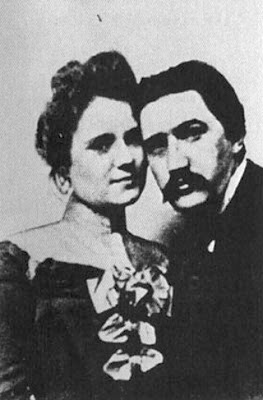
Healing by Nature with Josef Suk on “The Lost Chord”
-

Josef Suk’s Summer’s Tale Healing Through Nature
Josef Suk’s 30th year was a tragic one, marked by the deaths of both his young wife, Otilie, and her father, his former teacher, Antonín Dvořák. Not surprisingly, a sense of morbidity colors much of his mature output. The double-loss directly inspired Suk’s “Asrael Symphony,” named for the Angel of Death.
This week on “The Lost Chord,” for this, his sesquicentennial year (he was born on January 4, 1874), we’ll take a look at “A Summer’s Tale,” the next step in Suk’s emotional rehabilitation. The work is a five-movement symphonic poem, the second of a four-part cycle that contemplates death and the meaning of life. More affirmative than the grim “Asrael,” which is full of pain, loss, and grief, “A Summer’s Tale” explores the healing powers of nature, in a score that at times reflects the epic romanticism of Gustav Mahler and at others the impressionism of Claude Debussy. It was composed over the course of just six weeks in the summer of 1907. Further tinkering took place over the next year-and-a-half. The work received its premiere in January of 1909.
Suk later described the theme of the piece as “finding a soothing balm in nature.” I hope you’ll join me as we clear a path to “Healing by Nature” – Josef Suk’s “A Summer’s Tale” – on “The Lost Chord,” now in syndication on KWAX, the radio station of the University of Oregon!
Clip and save the start times for all three of my recorded shows:
PICTURE PERFECT, the movie music show – Friday at 8:00 PM EDT/5:00 PM PDT
SWEETNESS AND LIGHT, the light music program – ALL NEW! – Saturday at 11:00 AM EDT/8:00 AM PDT
THE LOST CHORD, unusual and neglected rep – Saturday at 7:00 PM EDT/4:00 PM PDT
Stream them, wherever you are, at the link!
-

Josef Suk Morbidity & Melodies
Josef Suk (1874-1935) was the one-time pupil and eventual son-in-law of Antonin Dvořák. In fact, his early works very much reflect Dvořák’s influence, sunny, romantic music full of nationalistic touches.
However, a double tragedy occurred in Suk’s 30th year. In 1905, he lost both his father-in-law and his beloved wife – Dvořák’s elder daughter – Otilie. The events directly inspired Suk’s “Asrael Symphony,” named for the Angel of Death. Not surprisingly, morbidity colors much of his mature output.
Today marks the 150th anniversary of Suk’s birth. Here are some samples of Suk, pre- and post-happiness.
Serenade for Strings (1892)
“Asrael Symphony” (1905-06)
And a personal favorite, “Pohádka,” or “Fairy Tale” (1897-98). Suk arranged the suite from incidental music he composed for a play called “Radúz and Mahulena,” in which true love conquers all. The work took on special significance for the composer, since it was the period in which he was secretly in love with his teacher’s daughter and feared the day of reckoning, when all would be revealed. He needn’t have worried, of course. Dvořák was delighted. Alas, Suk’s happiness was to be short-lived.
Respect to Josef Suk on his sesquicentennial.
-

Good King Wenceslas Snowball Secrets
Good King Wenceslas looked out, on the Feast of Stephen. We all know the carol, which tells of the good king’s generosity – how he brought flesh and wine and fuel to a needy peasant, his faltering page literally treading in his master’s footsteps.
What the carol doesn’t tell us is that, with all the snow lying round about, deep and crisp and even, Wenceslas could pack a wicked snowball, as seen in this medieval fresco. Woe betided the lord or lady who caught one of the king’s frigid projectiles.
On this St. Stephen’s Day, the second day of Christmas, I hope that you too are continuing to enjoy your midwinter festivities.
Here’s a “Meditation on the Old Czech Chorale ‘St. Wenceslas’” (which has little to do with the immortal carol), by Josef Suk. Suk was a pupil – and eventually the son-in-law – of Antonin Dvořák. I’ve never heard this arrangement before. The piece was originally conceived for string quartet.
https://www.youtube.com/watch?v=SL0MiuKZ1Ik
And the carol itself, with lyrics, so sing along!
Just watch your back.
Detail from “Winter” (before 1407), by Master Wenceslas of Bohemia
-

Libor Pešek Beloved Conductor Dies at 89
Genial, esteemed, self-effacing and beloved – the conductor Libor Pešek has died.
Pešek was a regular presence on the podiums of his native land for some 70 years and did much to promote Czech music abroad.
In particular, he was instrumental in raising the awareness of the works of Josef Suk outside the Czech Republic, especially the wounded, even morbid scores of the composer’s maturity.
Suk, the pupil and son-in-law of Antonín Dvořák, lost both his mentor and his young wife, Otylie (Dvořák’s daughter), at the age of 30. Already, when Suk was a young man, Dvořák detected a melancholy strain in his music and set him the challenge of writing something sunny. The result was Suk’s Serenade for Strings, which became one of the composer’s most frequently performed works.
Suk could do Czech nationalism with the best of them, but as he entered his prime, his works became as gloomily introspective as anything by Gustav Mahler, without the ecstatic peaks. Pešek’s recording of the “Asrael Symphony” (which takes its name from the Angel of Death) did much to increase the work’s international reputation. It was a piece he performed not only in Liverpool, where he was music director, but also took with him (much to the chagrin of tour agents) to Spain and the United States.
Pešek, who studied with conductors Václav Smetáček and Karel Ančerl, began his professional career in the opera houses of Plzeň and Prague. He founded the Prague Chamber Harmony in 1958.
As his stature grew, he assumed posts with the Slovak Philharmonic (1981-82), the Czech Philharmonic (1982-90), the Royal Liverpool Philharmonic (1987-98), and the Czech National Symphony Orchestra (2007-19).
Pešek stepped down in Liverpool over budgetary difficulties, but continued to work with the orchestra in the capacity of laureate conductor for the next quarter century. Liverpool came to be regarded as “the best Czech orchestra this side of Prague.”
Among his many honors, he was made Knight Commander of the British Empire by Queen Elizabeth II. He retired from the podium at the age of 85. Most of his recordings were issued on the Supraphon and Virgin Classics labels.
Happily, he also appears to have been an amiable person, both professionally and personally, refreshingly lacking in ego and able to enjoy relaxed times with musicians, family, friends, and animals.
At the time of his death, Pešek was 89 years-old. R.I.P.
Pešek’s recording of Suk’s “Asrael Symphony” (with appropriately Halloweeny cover):
And a score from Suk’s happier days, “Pohádka,” or “Fairy Tale.” He arranged it from music he composed for a play called “Radúz and Mahulena,” in which true love conquers all. The work took on special significance for the composer, since he happened to be secretly in love with his teacher’s daughter and feared the day of reckoning, when all would be revealed. He needn’t have worried. Dvořák was delighted. Sadly, Suk’s happiness was to be short-lived.
Pešek also championed the music of Vítězslav Novák, another Dvořák pupil (and Suk’s classmate at the Prague Conservatory). See what you think of the “Slovak Suite.”
Also, Novák’s tone poem “Toman and the Wood Nymph,” in which a youth is seduced by an alluring dryad on St. John’s Eve:
Pešek certainly knew his way around the symphonies of Dvořák, if not always quite scaling the heights of the composer’s grandeur. I find he was often more satisfying in the “filler” material, as it were, and works like Dvořák’s lesser-known “American Suite.”
You don’t often encounter Dvořák’s earlier symphonies (i.e. those before No. 7), either in the concert hall or on the radio. I’ve always been partial to Pešek’s recording of No. 3. Here, the movements are posted separately (probably with ads in between). If you like it, you can let the feed run directly into No. 4.
Tag Cloud
Aaron Copland (93) Beethoven (95) Composer (114) Film Music (144) Film Score (143) Film Scores (255) Halloween (94) John Williams (195) KWAX (229) Leonard Bernstein (104) Marlboro Music Festival (125) Movie Music (159) Mozart (90) Opera (212) Philadelphia Orchestra (89) Picture Perfect (174) Princeton Symphony Orchestra (109) Radio (88) Ross Amico (244) Roy's Tie-Dye Sci-Fi Corner (290) The Classical Network (101) The Lost Chord (269) Vaughan Williams (105) WPRB (397) WWFM (881)