Tag: Josef Suk

  • Olympic Music Anthems & Brazil on WPRB

    Olympic Music Anthems & Brazil on WPRB

    The City of Philadelphia, I’m sure, is only too happy to have the media spotlight shift to Rio de Janeiro for what must be the only city on the planet even more unprepared to host an event of significant magnitude.

    Tomorrow morning on WPRB, we’ll look past the mosquito-borne viruses, raw sewage, and kidnappings to celebrate the 2016 Summer Olympics. We’ll hear Olympic music composed by Leo Arnaud, Angelo Badalamenti, Robin Frost, Philip Glass, Basil Poledouris, Richard Strauss (his notorious “Olympic Hymn” for the 1936 Berlin games), Mikis Theodorakis, and of course John Williams.

    We’ll also hear works by Brazilian composers Antônio Carlos Gomes , Camargo Guarnieri and Heitor Villa-Lobos, along with music inspired by Brazil, written by visitors Darius Milhaud, Ottorino Respighi, Martin Butler and David Gunn.

    It’s a little-known fact that arts competitions were part of the Olympic Games from 1912 to 1948. Categories included architecture, literature, painting, sculpture, and music. The competitions were discontinued because of concerns about the artists being professionals, in contrast to the amateur status of the athletes. A non-competitive art and cultural festival has been presented in conjunction with the games since 1952.

    Tomorrow morning, we’ll hear probably the best-known piece of music to emerge from the competitions, “Toward a New Life,” by Josef Suk, a former pupil and son-in-law of Antonin Dvořák. Suk was the recipient of a Silver Medal in 1932. (No Gold or Bronze medals were awarded that year.) We’ll also hear the Bronze medal winner from 1928, the Symphony No. 2 “Hellas,” by the Danish composer Rudolph Simonsen.

    Also featured will be Michael Torke’s “Javelin,” commissioned by the Atlanta Committee for the Olympic Games and the Atlanta Symphony Orchestra for performance in 1996; John Harbison’s “Olympic Dances;” and Lee Holdridge’s score for the 1986 documentary, “16 Days of Glory.”

    We carry the torch for Rio tomorrow morning, from 6 to 11 EDT on WPRB 103.3 FM and at wprb.com. It will be way more fun than getting a Brazilian wax, on Classic Ross Amico.

  • Ivan Moravec Czech Pianist Dies

    Ivan Moravec Czech Pianist Dies

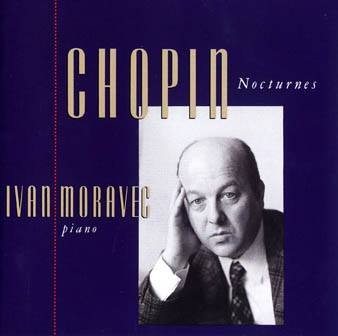
    It is with sadness that I share the news of the death of the Czech pianist Ivan Moravec. He was one of the outstanding Chopin interpreters. Here he is performing music of Josef Suk, who was the focus of last night’s “The Lost Chord.” The show will repeat Wednesday evening at 6, at wwfm.org, though I hasten to add there is no Moravec on that program. Perhaps someday soon.

    Moravec plays Chopin:

    A great loss.

  • Suk’s A Summer’s Tale: Healing Through Nature

    Suk’s A Summer’s Tale: Healing Through Nature

    While I appreciate supportive phone calls – and who doesn’t like compliments? – I’m often a tad self-absorbed while I’m on the air trying to figure out what exactly I’m supposed to be doing next. One enthusiastic listener who has been following me on all three (!) radio stations has been calling me up the past several weeks to talk about all sorts of unusual and neglected repertoire and how he’d love to hear certain pieces. In response to which I begin by giving my full attention, but then after several minutes my concentration becomes divided, as I try to organize pertinent background information for the next time I go on mic, and I start to reply to certain comments with a perfunctory “Hmm mmm” or “Ah!”

    However, after several such calls, one request managed to seep into my consciousness: Josef Suk’s “A Summer’s Tale.” For one, it’s seasonal; for another it’s nearly an hour long, which means I only have to write and record a single introduction! With these advantages in mind, I have decided to devote “The Lost Chord” this week to this single, sprawling symphonic poem.

    Suk was the one-time pupil and future son-in-law of Antonin Dvořák. In fact, his early works very much reflect Dvořák’s influence, in sunny, romantic music full of nationalistic touches.

    However, a double tragedy occurred in Suk’s 30th year, in 1905, when he lost both his father-in-law and his beloved wife, Otilie, Dvořák’s older daughter. The events directly inspired Suk’s “Asrael Symphony” – named for the Angel of Death. Not surprisingly, morbidity colors much of his mature output.

    “A Summer’s Tale” is the next step in Suk’s emotional rehabilitation. The work is a five-movement symphonic poem, the second of a four-part cycle, which contemplates death and the meaning of life. More affirmative than the grim “Asrael,” full of pain, loss and grief, “A Summer’s Tale” explores the healing powers of nature, in a score that at times reflects the epic romanticism of Gustav Mahler and the impressionism of Claude Debussy. It was composed over the course of just six weeks in the summer of 1907. Further tinkering took place over the next year, year-and-a-half. The work received its premiere in January of 1909.

    Suk later described the theme of the piece as “finding a soothing balm in nature.” Tune in tonight and see if you agree.

    That’s “Healing by Nature” – Suk’s “A Summer’s Tale” – on “The Lost Chord,” Sunday at 10 p.m. ET, with a repeat Wednesday evening at 6; or listen to it later as a webcast at wwfm.org.

    PHOTOS: Otilie Dvořáková and Josef Suk, in happier days

Tag Cloud

Aaron Copland (92) Beethoven (95) Composer (114) Film Music (120) Film Score (143) Film Scores (255) Halloween (94) John Williams (185) KWAX (229) Leonard Bernstein (100) Marlboro Music Festival (125) Movie Music (135) Opera (198) Philadelphia Orchestra (88) Picture Perfect (174) Princeton Symphony Orchestra (106) Radio (87) Ralph Vaughan Williams (85) Ross Amico (244) Roy's Tie-Dye Sci-Fi Corner (290) The Classical Network (101) The Lost Chord (268) Vaughan Williams (103) WPRB (396) WWFM (881)

DON’T MISS A BEAT

Receive a weekly digest every Sunday at noon by signing up here


RECENT POSTS