Tag: Kurt Atterberg

  • Mucho Dinero for Kurt Atterberg

    Mucho Dinero for Kurt Atterberg

    Wallet feeling a little light on Tax Day? Why not cash in on a career in the arts!

    I know, worst advice ever. But every once in a while, it’s possible to score a nice pay day.

    In 1928, Swedish composer Kurt Atterberg entered his Symphony No. 6 into a contest held by the Columbia Record Company in honor of the 100th anniversary of the death of Franz Schubert. For his effort, he was awarded a first prize of $10,000. (Not bad for 1928!) The work became known as Atterberg’s “Dollar Symphony.” It remains the composer’s most-recorded piece, starting all the way back with Sir Thomas Beecham and Arturo Toscanini.

    Though Atterberg was the winner of the international competition, divisional winners (by “zone”) included the now-forgotten English composer John St. Anthony Johnson, for his work “Pax Vobiscum,” and the equally-forgotten American, Charles Haubiel, for a piece called “Karma.”

    Franz Schmidt was recognized in Austria, for his Symphony No. 3. Havergal Brian won second prize in England, for the first three movements of his “Gothic Symphony.”

    You can find all the details here:

    https://en.wikipedia.org/wiki/1928_International_Columbia_Graphophone_Competition

    For a time at least, Atterberg’s “Dollar Symphony” was one of the darlings of Classical 24, a syndicated satellite service out of Minnesota used by classical music radio stations around the country to save on the cost of maintaining local announcers. However, characteristically, C24 only ever plays a single movement.

    Whether it’s 1928 or 2026, money makes the world go ‘round. Ka-ching!

    ——-

    Atterberg, Symphony No. 6 – the whole thing – on YouTube


    John St. Anthony Johnson, “Pax Vobiscum”


    Charles Haubiel, “Karma”


    Franz Schmidt, Symphony No. 3


    Havergal Brian, “Gothic Symphony”


  • Atterberg’s Dollar Symphony and Forgotten Composers

    Atterberg’s Dollar Symphony and Forgotten Composers

    Very few get rich in the arts. But every once in a while, you can score a nice pay day.

    On this date in 1928, Swedish composer Kurt Atterberg entered his Symphony No. 6 into a contest held by the Columbia Record Company in honor of the 100th anniversary of the death of Franz Schubert. For his effort, he was awarded the first prize of $10,000. (Not bad for 1928!) The work became known as Atterberg’s “Dollar Symphony.” It remains the composer’s most-recorded piece, starting all the way back with Sir Thomas Beecham and a recorded broadcast with Arturo Toscanini.

    Though Atterberg was the winner of the international competition, divisional winners (by “zone”) included the now-forgotten English composer John St. Anthony Johnson, for his work “Pax Vobiscum,” and the equally-forgotten American, Charles Haubiel, for a piece called “Karma.”

    Franz Schmidt was recognized in Austria, for his Symphony No. 3. Havergal Brian won second prize in England, for the first three movements of his “Gothic Symphony.”

    You can find all the details here:

    https://en.wikipedia.org/wiki/1928_International_Columbia_Graphophone_Competition?fbclid=IwAR3SBNQYv6WvGRJ383L3o-Xv-2zG-842lDcVuwOOI2A-N-iJwTEBolswZ84

    For a time at least, Atterberg’s “Dollar Symphony” was one of the darlings of Classical 24, a streaming service out of Minnesota used by classical music radio stations around the country to save on the cost of maintaining local announcers. However, characteristically, C24 only ever plays a single movement.

    Whether it’s 1928 or 2022, money makes the world go ‘round. Ka-ching!


    Atterberg, Symphony No. 6 – the whole thing – on YouTube

    John St. Anthony Johnson, “Pax Vobiscum”

    Charles Haubiel, “Karma”

    Franz Schmidt, Symphony No. 3

    Havergal Brian, “Gothic Symphony”
  • Finding Bliss at Princeton Record Exchange

    Finding Bliss at Princeton Record Exchange

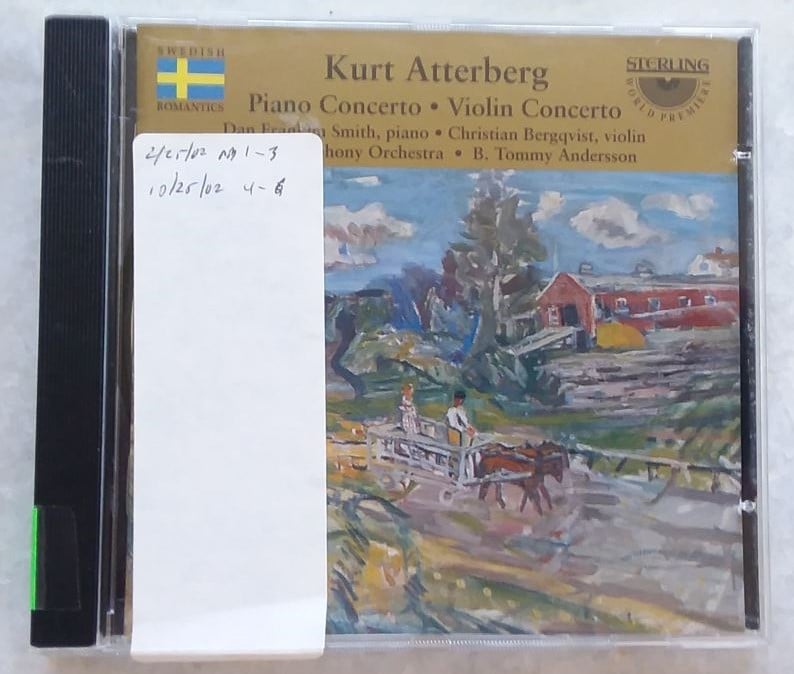
    I was at Princeton Record Exchange the other day, when something surreal happened. I was down on my knees, flipping through the dollar bins on the floor of the classical section, when I espied a CD of music by the Swedish composer Kurt Atterberg. The spine indicated a couple of concertos I knew I didn’t have in my collection. But what I found momentarily disorienting was a label on the front of the jewel case that sported some very familiar scrawl.

    Was this a CD from the WWFM library? At first, I thought so. It was only upon further reflection that the truth became clear. This CD belonged to my former colleague, Bliss Michelson.

    I know I’ve mentioned it before, but Bliss and I had a long association, from the time he taught me the ropes at WWFM in Trenton-Princeton, in 1995, to only a few years ago, when we were both on-call hosts at WRTI in Philadelphia. Bliss died in March from complications of COVID-19.

    At WWFM, we had these labels that we affixed to the jewel cases of the CDs in the station library, on which we indicated the date and time the individual contents were played. At some point, we transitioned to a spread sheet on the computer, but we kept up the stickers all the same.

    For some of us, our programming was heavily supplemented by music from our collections. To help keep track, Bliss carried over the labeling system to his own records. Many was the time that I’d be going through the library only to alight upon an interesting CD I hadn’t noticed there before. Of course, it was one of Bliss’ discs, accidentally shelved. On those occasions, I would leave it on his desk with a post-it note.

    Then and now, his scrawl is unmistakable. So someone must have sold at least some of his collection to Princeton Record Exchange. It would have been fairly recently, since the price tag bears the date of 11-21.

    What I learned from Bliss is incalculable. In particular, he really expanded my knowledge of Nordic repertoire. We were both Sibelius fans, and Bliss was enormously proud of his Swedish heritage. It’s a strange coincidence to have made the discovery of this CD. Bliss continues to introduce me to new music, even from beyond the grave.

    You too might be interested to give it a listen, because it’s a knockout. If you love Rachmaninoff, Atterberg’s Piano Concerto is a one-way ticket to Valhalla. The movements are posted separately, so let the playlist run.

    How is it I never encountered this before? Thank you, Bliss!

  • Christmas Music Guilt When Is Too Early

    Christmas Music Guilt When Is Too Early

    So how soon is too soon to unleash the pent-up forces of Christmas? It’s less than two weeks away. I’ve got enough in my library, probably, to program the entire month, without repeating – and yet I’ve felt sheepish about already letting slip the fairly secular “Tuttifäntchen” by Paul Hindemith and Constant Lambert’s “Les Patineurs” (“The Skaters”) after Meyerbeer.

    Where do I start? How much do I play? These are but some of the decisions that weigh on the conscience of the classical music programmer. In the full knowledge that I can’t please everyone, I will rouse my slumbering inner elf and gradually crank up the volume of egg nog and mistletoe.

    It won’t be all glitter and ho ho ho. There may be a few more cantatas and oratorios than some would like. Then again, how many brass arrangements of “The Twelve Days of Christmas” can one take?

    Wish me luck. We’ll also have music by Swedish composer Kurt Atterberg on the anniversary of his birth, this afternoon from 4 to 7 EST, on WWFM – The Classical Network and at wwfm.org.


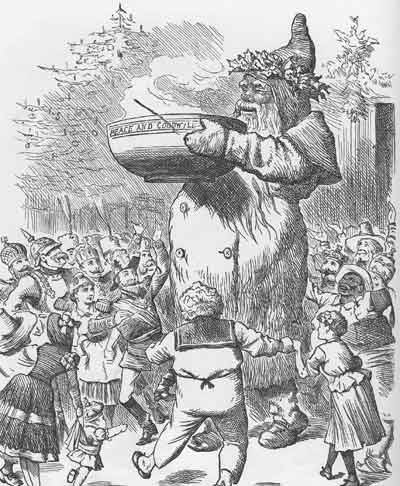
    IMAGE: Peace and goodwill – or else!

  • Atterberg’s Dollar Symphony WWFM Today

    Atterberg’s Dollar Symphony WWFM Today

    On this date in 1928, Swedish composer Kurt Atterberg entered his Symphony No. 6 into a contest held by the Columbia Record Company in honor of the 100th anniversary of the death of Franz Schubert. For his effort, he was awarded the first prize of $10,000. The work became known as Atterberg’s “Dollar Symphony.” It remains the composer’s most-recorded piece, starting all the way back with Sir Thomas Beecham and a recorded broadcast with Arturo Toscanini.

    Though Atterberg was the winner of the international competition, divisional winners (by “zone”) included the now-forgotten English composer John St. Anthony Johnson, for his work, “Pax Vobiscum,” and the equally-forgotten American Charles Haubiel, for a piece called “Karma.”

    Franz Schmidt was recognized in Austria, for his Symphony No. 3. Havergal Brian won second prize in England, for the first three movements of his “Gothic Symphony.”

    You can find all the details here:

    https://en.wikipedia.org/wiki/1928_International_Columbia_Graphophone_Competition

    Atterberg’s “Dollar Symphony” is one of the darlings of Classical 24, but they only ever play one movement. You’ll have a chance to hear the entire thing this afternoon, sometime between 4:00 and 7:00 EDT, on WWFM – The Classical Network and at wwfm.org.

Tag Cloud

Aaron Copland (92) Beethoven (95) Composer (114) Film Music (118) Film Score (143) Film Scores (255) Halloween (94) John Williams (185) KWAX (229) Leonard Bernstein (99) Marlboro Music Festival (125) Movie Music (133) Opera (198) Philadelphia Orchestra (86) Picture Perfect (174) Princeton Symphony Orchestra (106) Radio (87) Ralph Vaughan Williams (85) Ross Amico (244) Roy's Tie-Dye Sci-Fi Corner (290) The Classical Network (101) The Lost Chord (268) Vaughan Williams (102) WPRB (396) WWFM (881)

DON’T MISS A BEAT

Receive a weekly digest every Sunday at noon by signing up here


RECENT POSTS