Tag: KWAX

  • Back to School with Classical Music on KWAX

    Back to School with Classical Music on KWAX

    This week on “Sweetness and Light,” we’re headed back to school.

    We’ll have frothy music on scholastic themes. None frothier than a head of beer, conjured perhaps by Emil Waldteufel’s “Estudiantina,” or “Band of Students.” Listeners of a certain age may associate this music with a popular jingle for Rheingold Beer. Clearly its inclusion suggests a double-significance – not that I condone riotous student behavior (unless, of course, I’m invited)!

    I’ll also share one of my favorite lesser-heard works of Ralph Vaughan Williams: the “Charterhouse Suite,” a collection of light dances for strings, named for the public school the composer attended, beginning at the age of 15. Pedants will add that the work was actually arranged from an earlier “Suite of Six Short Pieces” for piano.

    Franz Joseph Haydn’s Symphony No. 55 is often referred to as the “Schoolmaster.” Passages are said to be strikingly similar to those in a lost Haydn divertimento, identified as “The Schoolmaster in Love.” In particular, it’s been suggested that the dotted rhythm of the second movement of the symphony calls to mind a schoolmaster’s wagging finger – disrupted at intervals by musical sighs as he swoons with love.

    Along the way, we’ll also enjoy music by Richard Addinsell, Gilbert & Sullivan, and Sigmund Romberg.

    Put on your school clothes, boys and girls, and learn your lessons well. You’ll get a gold star when you join me for “Sweetness and Light,” this Saturday morning at 11:00 EDT/8:00 PDT, exclusively on KWAX, the radio station of the University of Oregon!

    Stream it wherever you are at the link:

    https://kwax.uoregon.edu/

  • Back to School Movie Music Scores on KWAX

    Back to School Movie Music Scores on KWAX

    It’s back to school time!

    Time to take notes, as we get all pedantic about music from movies with academic settings, including selections from “Goodbye, Mr. Chips” (Richard Addinsell), “Dead Poets Society” (Maurice Jarre), “Back to School” (Danny Elfman), “Mr. Holland’s Opus” (Michael Kamen), and “Tom Brown’s School Days” (again, Richard Addinsell).

    Minds will be sharpened and buttons will be pushed, on “Picture Perfect,” music for the movies, now in syndication on KWAX, the radio station of the University of Oregon!


    Clip and save the start times for all three of my recorded shows:

    PICTURE PERFECT, the movie music show – Friday at 8:00 PM EDT/5:00 PM PDT

    SWEETNESS AND LIGHT, the light music program – Saturday at 11:00 AM EDT/8:00 AM PDT

    THE LOST CHORD, unusual and neglected rep – Saturday at 7:00 PM EDT/4:00 PM PDT

    Stream them, wherever you are, at the link!

    https://kwax.uoregon.edu/

  • Labor Day Music Marathon on Sweetness and Light

    Labor Day Music Marathon on Sweetness and Light

    How laborious it was to put together this morning’s “Sweetness and Light!” Which I suppose is only appropriate, since today’s theme is music for Labor Day.

    It’s not uncommon when producing a show that the running time can come up a little long. I try to avoid it, but when it happens, it’s usually remedied with a few snips. But this week I was a full 90 seconds over, which meant trimming my commentary to the bone. It can take a while to whittle it all down.

    In the end, I was still 30 seconds over. The rock was high and Classic Ross Amico was so small!

    So I had to swap out Aaron Copland’s rarely-heard “John Henry” (at 4 minutes) for something decidedly more “Common” (at about 3:30). If you’re at all familiar with the composer and his output, I think you can deduce what that is.

    Another casualty was my fine encapsulation of the essence of John Alden Carpenter’s construction worker ballet “Skyscrapers.” There’s an awful lot of color in that score to convey a few sentences!

    “The scenario involves workers in overalls, who struggle to bring order to a confusion of girders and flashing red lights; all around them the hustle and bustle of the city. Eventually the whistle blows. There’s a diverting side-trip to a Coney Island-type amusement park, with its crowds and attractions and popular dance rhythms. Again the whistle blows, and the laborers return to work.”

    The music is still there, but I wind up basically saying “here it is.”

    Life is full of frustration, folks, but it still beats digging ditches.

    I hope you’ll join me for a program that will also include works by George Frideric Handel, Nikolai Medtner, Michael Torke, and Eric Coates, with Princeton’s own Paul Robeson singing Earl Robinson’s labor classic “Joe Hill.” How that’s sweet OR light, I have no idea, but I’m playing it.

    As always, I earn my bread by the sweat of my brow. Just in time for breakfast, I’ll be bringing home the bacon, on “Sweetness and Light,” this Saturday morning at 11:00 EDT/8:00 PDT, exclusively on KWAX, the radio station of the University of Oregon!

    Stream it wherever you are at the link:

    https://kwax.uoregon.edu/


    IMAGE: One of ten dynamic panels from Thomas Hart Benton’s mural, “America Today” (1930-31). You can click through thumbnails of all of them here:

    https://www.metmuseum.org/art/collection/search/499559

  • Atlanta Symphony Premieres on KWAX

    Atlanta Symphony Premieres on KWAX

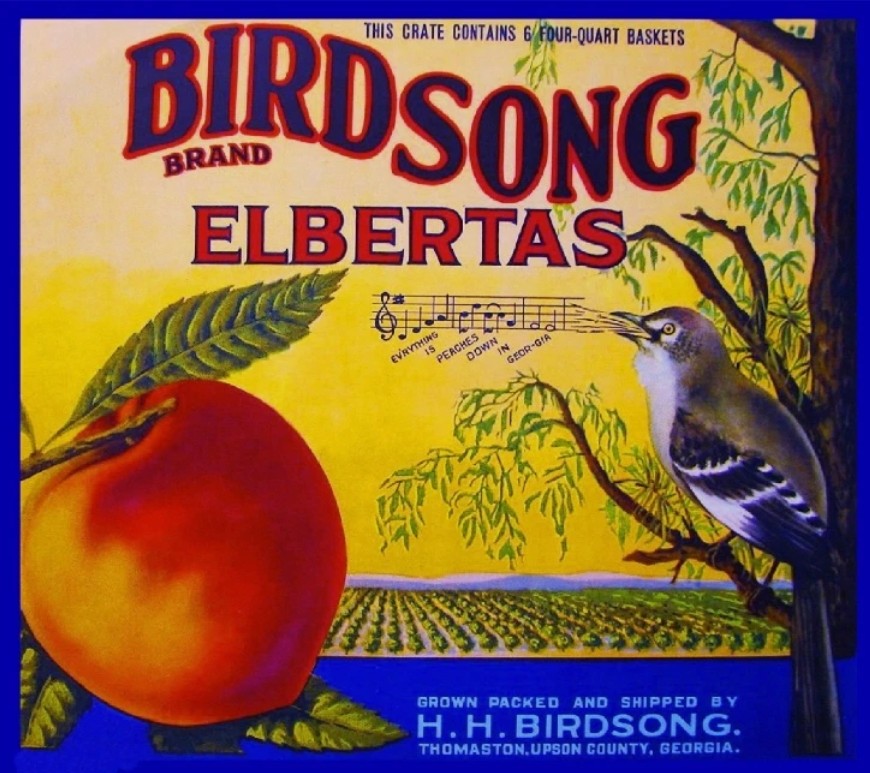
    This Labor Day weekend, on “The Lost Chord,” enjoy an hour of Georgia peaches – a couple of American premieres courtesy of the Atlanta Symphony Orchestra.

    Longtime Philadelphia-based Pultizer Prize winner Jennifer Higdon composed “On a Wire” for the new music sextet Eighth Blackbird. A concerto grosso of sorts for six soloists, the piece begins with the musicians gathered around an open-lidded piano, most of them bowing the strings. The composer asks the listener to imagine six blackbirds sitting on a wire.

    We’ll follow that with “Q.E.D.: Engaging Richard Feynman,” by Michael Gandolfi. Feynman, the noted physicist and Nobel laureate, was as renowned for his wit as for his inquisitive mind.

    Gandolfi’s piece does not focus on scientific inquiry. Rather it takes as its starting point two anecdotes shared by the physicist in interviews with the BBC, which the composer discovered on YouTube. In performance, the video clips were shown to the audience preceding the work’s two sections. Understandably, these have been omitted from the recording.

    The sections themselves are settings of texts by various poets illustrating a specific theme. The first concerns a challenge put by an artist friend of Feynman suggesting that as a scientist he cannot truly appreciate the beauty of a flower. Feynman counters that scientific knowledge, a greater understanding of the flower, only adds to its beauty, rather than detracts.

    The second grows out of an anecdote concerning Feynman’s boyhood ignorance of the name of a certain kind of bird, a brown-throated thrush, and his realization that a name tells one nothing about the bird, but rather something about the people of various cultures who named the bird. He concludes, “Now, let’s look at the bird.”

    Part One is titled “On Waking,” and includes settings of Gertrude Stein, Emily Dickinson, and the Irish Republican poet Joseph Campbell. Part II, “Song of the Universal,” includes settings of Walt Whitman, Ralph Waldo Emerson, and Siegfried Sassoon.

    The sung texts are mostly incomprehensible. However, it sure is nice to listen to.

    That’s a double-helping of “Georgia Peaches” with the Atlanta Symphony Orchestra on “The Lost Chord,” now in syndication on KWAX the radio station of the University of Oregon!


    Clip and save the start times for all three of my recorded shows:

    PICTURE PERFECT, the movie music show – Friday at 8:00 PM EDT/5:00 PM PDT

    SWEETNESS AND LIGHT, the light music program – Saturday at 11:00 AM EDT/8:00 AM PDT

    THE LOST CHORD, unusual and neglected rep – Saturday at 7:00 PM EDT/4:00 PM PDT

    Stream them, wherever you are, at the link!

    https://kwax.uoregon.edu/

  • Bernstein’s Waterfront A Hollywood Contender

    Bernstein’s Waterfront A Hollywood Contender

    “I coulda had class. I coulda been a contender. I coulda been somebody – instead of a bum, which is what I am.”

    We’ve all had those kinds of days, haven’t we?

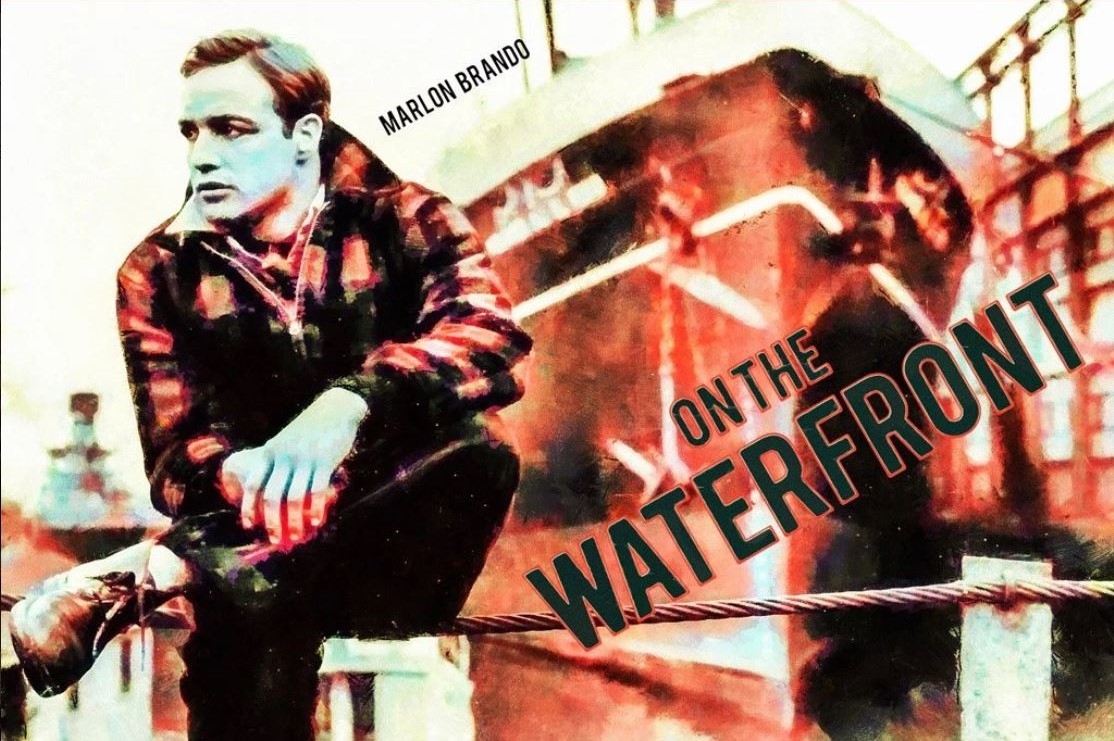
    Yet Leonard Bernstein’s score for “On the Waterfront” (1954) was always a contender, even if at times the composer found himself on the ropes.

    “On the Waterfront” was the only original film score composed by Bernstein (the screen adaptations of his stage musicals were adapted by other hands). Narrative film, of course, is a collaborative effort, in which music is usually the last to the table and the first to go. Bernstein’s score was edited and dialed down to suit the overall needs of the film.

    Unused to such rough treatment, Bernstein found his brush with Hollywood to be dispiriting, to say the least. He arranged his music into a concert suite, over which he had complete control, and the work has gone on to become one of his better-known pieces. That said, what can be heard in the film remains a powerful statement, and one of the great film scores.

    The original recordings, as they appear in the film, were long believed to have been lost. However, in the course of restoration of “On the Waterfront” for release on BluRay, it was discovered that audio had been preserved on acetate discs used for playback during the original recording sessions. Material from these were issued for the first time in 2014, on the Intrada label.

    Bernstein’s music would be nominated for an Academy Award, one of twelve total nominations for the film. “On the Waterfront” would win in eight categories, including Best Picture, Best Actor (Marlon Brando), and Best Director (Elia Kazan). Bernstein may have lost out to Dimitri Tiomkin for his work on “The High and the Mighty.” However, like Brando’s Terry Malloy, his score to “On the Waterfront” proves itself a champion.

    We’ll hear selections, alongside some of Aaron Copland’s music for “The Red Pony” (1949), once again, from the film’s original elements; dances from the only film score ever to be awarded the Pulitzer Prize for Music, “Louisiana Story” (1948), by Virgil Thomson; and the music that lends “Picture Perfect” its signature tune, “They Came to Cordura” (1959), by Elie Siegmeister.

    It’s an hour of New York composers in Hollywood this week, on “Picture Perfect,” music for the movies, now in syndication on KWAX, the radio station of the University of Oregon!


    Clip and save the start times for all three of my recorded shows:

    PICTURE PERFECT, the movie music show – Friday at 8:00 PM EDT/5:00 PM PDT

    SWEETNESS AND LIGHT, the light music program – Saturday at 11:00 AM EDT/8:00 AM PDT

    THE LOST CHORD, unusual and neglected rep – Saturday at 7:00 PM EDT/4:00 PM PDT

    Stream them, wherever you are, at the link!

    https://kwax.uoregon.edu/

Tag Cloud

Aaron Copland (94) Beethoven (95) Composer (114) Film Music (148) Film Score (143) Film Scores (255) Halloween (97) John Williams (196) KWAX (232) Leonard Bernstein (105) Marlboro Music Festival (125) Movie Music (163) Mozart (91) Opera (215) Philadelphia Orchestra (90) Picture Perfect (174) Princeton Symphony Orchestra (110) Radio (90) Ross Amico (244) Roy's Tie-Dye Sci-Fi Corner (290) The Classical Network (101) The Lost Chord (269) Vaughan Williams (107) WPRB (397) WWFM (881)

DON’T MISS A BEAT

Receive a weekly digest every Sunday at noon by signing up here


RECENT POSTS