Tag: Labor Day

  • Carl Nielsen A Labor Day Composer

    Carl Nielsen A Labor Day Composer

    Carl Nielsen understood the value of hard work. He grew up, one of twelve children, in a musical family of very limited means. By the time he was accepted into the Royal Danish Academy of Music in Copenhagen, he had already been performing and composing for many years. Like “The Ugly Duckling” of his compatriot Hans Christian Andersen, he emerged from humble origins to become a cherished thing of beauty, embraced as his country’s national composer.

    Nielsen described the finale of his Symphony No. 3 as “a hymn to work and the healthy activity of living.” Enjoy it tomorrow morning, as we anticipate the Labor Day weekend with musical salutes to labor and the worker.

    Be there with your lunch pail and dungarees, from 6 to 11 EDT, on WPRB 103.3 FM. We’re always working hard for your enjoyment, on Classic Ross Amico.


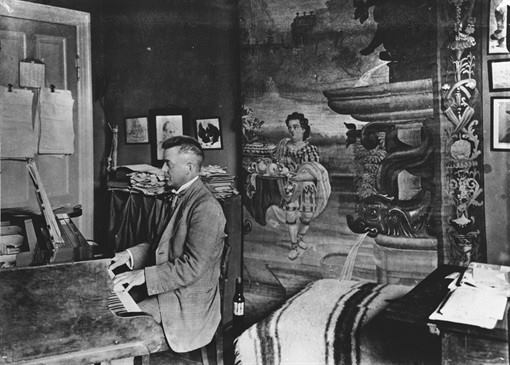
    PHOTO: Nielsen breaking a sweat in his workroom, where he completed his Symphony No. 3 in 1911

  • John Henry Labor Day A Resonating Metaphor

    John Henry Labor Day A Resonating Metaphor

    A metaphor that continues to resonate. For all you John Henrys…

    Paul Robeson:

    Aaron Copland:

    Happy Labor Day.

  • Labor Day Classical Music Showcase

    Labor Day Classical Music Showcase

    Sure, we’re looking ahead to Labor Day this morning, but not all of the music will be “labor intensive.” I hope you’ll join me for music by a bunch of neglected dead white guys from the Greatest Generation of American Composers, and maybe a few women (also dead, alas). In addition, we’ll have contributions from those still toiling, composers like Paul Lansky and John Corigliano.

    Poor David Diamond got short shrift on the 100th anniversary of his birth, since everyone else seemingly played everything in advance of his July 9 birthday. Enough time has passed that I can now in some small way make amends. We’ll have his best known piece, the early “Rounds for String Orchestra,” and one of his later works, the adagio from the Symphony No. 11 – the only part of the symphony so far to be recorded.

    Certainly a highlight will be one of the symphonies of Lukas Foss, drawn from a new recording of the complete set of four, performed by Boston Modern Orchestra Project (BMOP).

    Labor-oriented pieces will include “John Henry” by Aaron Copland, “Skyscrapers” by John Alden Carpenter, and “Flivver Ten Million” – about automobile manufacturing – by Frederick Shepherd Converse. In addition, Princeton’s own Paul Robeson will sing the labor anthem “Joe Hill.”

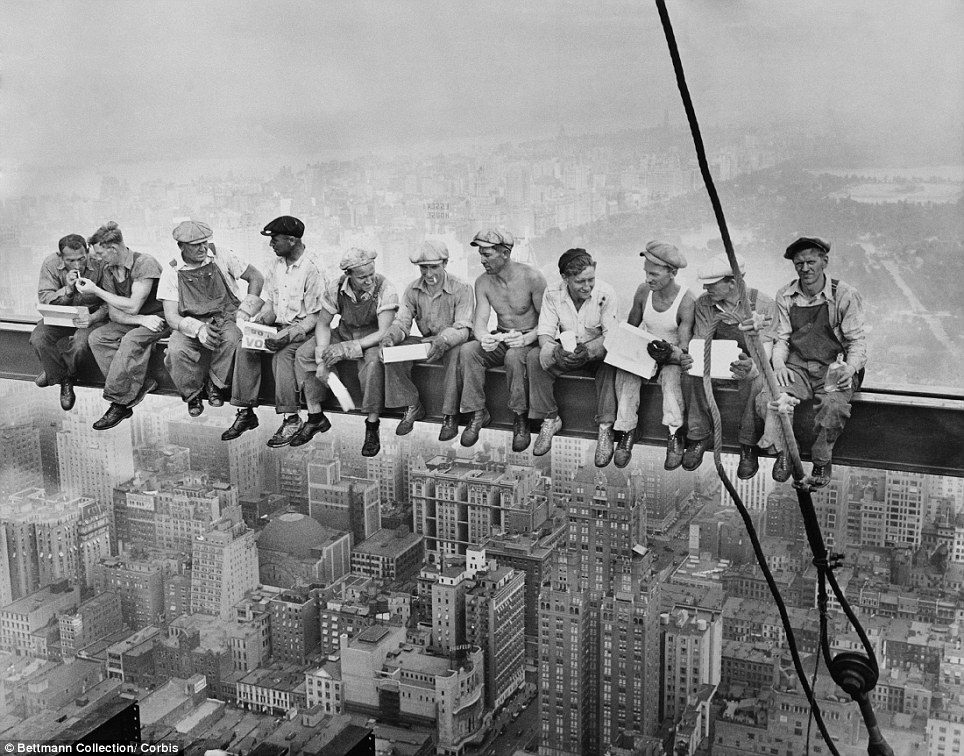
    Pull up a girder and get out your Stanley thermos. I’ll be doing the heavy-lifting on Class Ross Amico, today from 6 to 11 ET, on WPRB 103.3 FM or at wprb.com.

  • Labor Day Film Scores Working Class Heroes

    Labor Day Film Scores Working Class Heroes

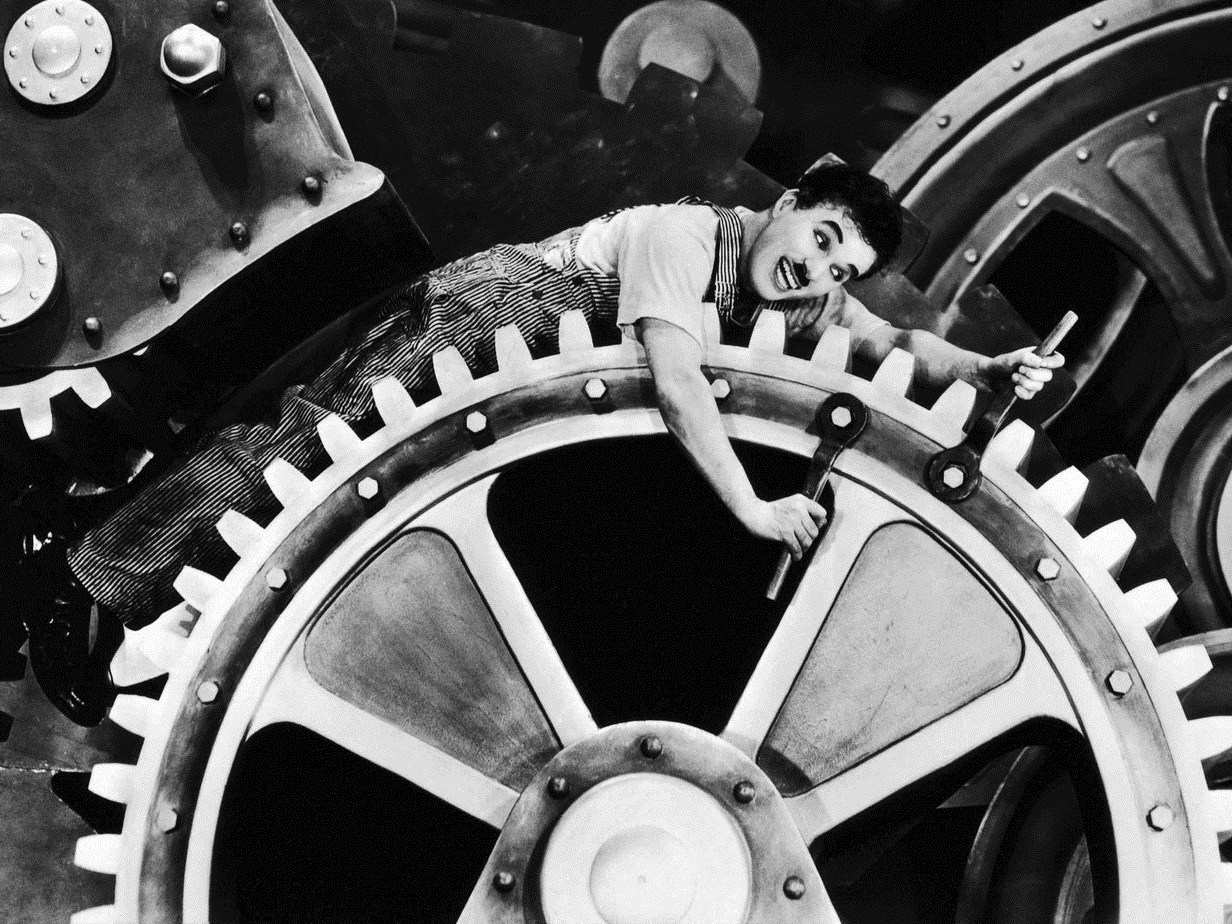
    It’s nice to be able to look forward to a three-day weekend, when nobody expects you to get your butt in gear. Unless you’re Charlie Chaplin.

    This week on “Picture Perfect,” we’ll have music from films about working class heroes, for Labor Day.

    “The Molly Maguires” (1970), set in and around the anthracite mines of Pennsylvania, details the unfair labor practices imposed on immigrant workers there, which led to violent strikes and acts of sabotage. Sean Connery is the ringleader, and Richard Harris the Pinkerton detective brought on to infiltrate the gang.

    The film was directed by Martin Ritt, a number of whose projects deal with labor, intimidation, and corruption, and his own experiences living through the era of the Hollywood blacklist. Among these: “Edge of the City,” “The Front,” and “Norma Rae.”

    The music is by Henry Mancini, a far cry from his work on “The Pink Panther,” “Peter Gunn,” and “Breakfast at Tiffany’s,” with a decidedly Celtic lilt.

    Charlie Chaplin was a brilliant comedian, of course, but his perfectionism could lead to uncomfortably close supervision at times on every aspect of his films. The young David Raksin found this out the hard way, when he accepted the job of assisting Chaplin in the writing of the score to “Modern Times” (1936).

    Chaplin, a violinist and cellist himself, would whistle tunes and then stand over Raksin’s shoulder as he figured out how to make them fit the action. Alfred Newman, a much more seasoned hand, stormed out of the recording sessions. Raksin was actually fired once, after only a week and a half, though quickly rehired. Despite the creative friction, the two men became friends, and Raksin recollected his work on “Modern Times” as some of the happiest days of his life.

    The film begins with an iconic scene in a factory, with Chaplin working an assembly line, at an increasingly hectic pace, and then being put through the gears of the machinery. He suffers a breakdown, goes berserk, and throws the entire mechanized dystopia into chaos.

    At the time Aaron Copland wrote the music for “Of Mice and Men” (1939), John Steinbeck’s tragic tale of two migrant ranch workers, he was at the height of his populist period. He had just written “El Salon Mexico” and “Billy the Kid,” and most of his best-loved music – “Fanfare for the Common Man,” “A Lincoln Portrait,” “Rodeo” and “Appalachian Spring” – would be composed within the next few years.

    Copland would only write music for five films in all. That for one of them, “The Heiress,” was honored with an Academy Award. So a complete recording of this, his first film score, would seem to be an important venture. Unfortunately, due to copyright entanglements, it was made available for only a very brief time, and that as a download. Catch it while you can, because it’s as scarce as hair on a mole rat.

    Rarer still, until last year, were the original recording sessions for “On the Waterfront” (1954). Long believed lost, the acetate discs were rediscovered during the restoration process in preparation for the film’s release on Blu-ray. Recognizing the importance of the find, the enterprising Intrada label issued the music on compact disc.

    Leonard Bernstein’s concert suite is fairly well-known, but the suite doesn’t tell the whole story. The Intrada release features moving music written for the famous cab scene, when Brando as Terry Malloy pours out his heart to his brother (“I coulda been a contender”), and the dead pigeon scene. On the film’s soundtrack, Morris Stoloff conducts the Columbia Pictures Studio Orchestra.

    “On the Waterfront” would be Bernstein’s only original film score (as distinguished from film adaptations made by other hands of his musical theater works). He found the experience somewhat dispiriting, in that his music was edited and dialed down to suit the overall needs of the film. What remains is a powerful statement, and one of the great film scores.

    I hope you’ll join me for music from films featuring working class heroes for Labor Day this week. Listen Friday evening at 6 ET, Saturday morning at 6, or later, at your leisure, as a webcast, at wwfm.org
  • Labor Day American Classics on WPRB

    Labor Day American Classics on WPRB

    I am toiling at programming right now so that I might get you in the mood for Labor Day tomorrow morning on WPRB. Unsurprisingly, I will be playing all American music, though not all of it will be labor-oriented.

    Composers you may hear will include David Amram, Romeo Cascarino, John Corigliano, David Diamond, Howard Hanson, Paul Lansky, Jerome Moross, Stephen Paulus, Walter Piston and Elie Siegmeister.

    I can pretty much guarantee that you will hear a symphony by Lukas Foss from a new recording of the complete set of four by Boston Modern Orchestra Project (BMOP).

    Labor-oriented pieces will include “John Henry” by Aaron Copland, “Skyscrapers” by John Alden Carpenter, and “Flivver Ten Million” – complete with foundry noises – by Frederick Shepherd Converse. In addition, Princeton’s own Paul Robeson will sing the labor anthem “Joe Hill.”

    Get ready to punch the clock tomorrow morning at 6 ET. I’ll be with you until 11, on WPRB 103.3 FM or online at wprb.com, busting my hump on Classic Ross Amico.

Tag Cloud

Aaron Copland (93) Beethoven (95) Composer (114) Film Music (144) Film Score (143) Film Scores (255) Halloween (94) John Williams (195) KWAX (229) Leonard Bernstein (104) Marlboro Music Festival (125) Movie Music (159) Mozart (90) Opera (212) Philadelphia Orchestra (89) Picture Perfect (174) Princeton Symphony Orchestra (109) Radio (88) Ross Amico (244) Roy's Tie-Dye Sci-Fi Corner (290) The Classical Network (101) The Lost Chord (269) Vaughan Williams (105) WPRB (397) WWFM (881)

DON’T MISS A BEAT

Receive a weekly digest every Sunday at noon by signing up here


RECENT POSTS