
Tag: Léo Delibes

  • Delibes, Kung Fu Theater, and Stolen Scores

    Delibes, Kung Fu Theater, and Stolen Scores

    It’s Léo Delibes’ birthday. So naturally, my thoughts turn to kung fu!

    Perhaps you’re familiar with Delibes from his ballet music, or from his opera Lakmé, with its famous “Flower Duet” and “Bell Song.” But if you made it a habit to tune in to “Kung Fu Theater” in the 1980s, you may also have encountered the “Procession of Bacchus.”

    Granted, for some, this will be an arcane reference point. I can’t even remember what film, myself. But face it, all of those kung fu titles were randomly chosen from a scrambled short list of maybe eight or ten words anyway (i.e. Shaolin, jade, dragon, master, deadly, invincible, mantis, Buddhist, fist, etc.).

    Of course, I was one of a presumably tiny subset that always found the musical choices entertaining. There were purloined movie soundtracks from much better-known, western films, alongside the occasional snippet of classical music. And yes, every once in a while, there was an original score.

    Spaghetti western music was especially well-represented, with a lot of Morricone (presumably uncompensated). Sometimes there would be the odd needle-drop from John Williams. There were also many, many brief tracks that were often very nearly recognizable, yet always frustratingly just out of reach.

    Now, I find a page on the website of Kung Fu Magazine on which some committed disciple has taken it upon himself to identify the music of kung fu. He’s done a fairly impressive job of it, too. Though I still can’t find the kung fu movie I watched on my tiny, rabbit-eared set in the college dorms that opened with the “Procession of Bacchus” from Léo Delibes’ ballet “Sylvia.”

    https://www.kungfumagazine.com/forum/archive/index.php/t-63823.html

    I miss “Kung Fu Theater!”

    On a related note, someone must have sold some sort of institutional record library to Princeton Record Exchange. A lot of the CDs have stickers on them that read “LIBRARY COPY: PLEASE DO NOT REMOVE.” They’re in pristine shape (of course, they are; why would anyone be interested in listening to classical music?), so I’ve been filling in around the edges of my personal collection. This involves, among other things, picking up a fair amount of ballet music by Léo Delibes and others. Since I started doing the light music show for KWAX, it astonishes me, with a collection of 10,000+ CDs and records, how many holes there are in my library. It really brings home how often I used to spackle in with short selections from the library of a certain local classical music station I used to work for, that ironically now pumps in most of its content from outside sources.

    If I hadn’t gotten into radio, I think my dream job would have been choosing the music, fabricating the translations for, and dubbing ‘70s kung fu movies.

    Happy birthday, Léo Delibes!


    Delibes without all the ponytails and bamboo:

    “Procession of Bacchus”

    “Flower Duet” from “Lakmé”

    “Bell Song” from “Lakmé”

    Pizzicato from “Sylvia”

    Waltz from “Coppélia”

    Before A.I., there was kung fu! How else to explain the word salad in this sublime trailer for “The Buddha Assassinator” (1980)?

    “The Dragon, the Hero” (1979) opens with Morricone, from “The Big Gundown.” There’s also some John Williams, from “Star Wars,” no less, played during the kill around the 20-minute mark.

    https://www.youtube.com/watch?v=iDQ1mI6Z2QY

    Strong opener for “Fist of the White Lotus,” music credited to Eddie Wang, but sounding an awful lot like it was lifted from Ron Goodwin’s score for “Where Eagles Dare.”
    https://www.youtube.com/watch?v=z0YhUl0kdHo

  • Babbitt and Ballet on The Classical Network

    Babbitt and Ballet on The Classical Network

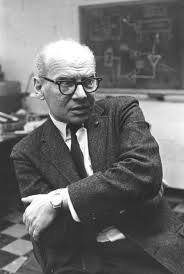
    Where else but on The Classical Network will you hear Milton Babbitt and Léo Delibes within a single afternoon?

    Today’s noontime concert will bring you Babbitt’s “All Set” for jazz ensemble, alongside works by Wolfgang Rihm, David Rakowski, Curt Cacioppo, Ingrid Arauco, and Robert Capanna, all performed by the Philadelphia-based Network for New Music.

    Babbitt, a longtime faculty member at Princeton University, was born in Philadelphia in 1916. A pioneer of integral serial and electronic music, he became one of the most controversial of composers when an editor at High Fidelity magazine changed the title on an article he had submitted from “The Composer as Specialist” to the more inflammatory “Who Cares If You Listen?” Babbitt was incensed (the article was also aggressively edited), and his critics invoked the title whenever they sought an easy cudgel for the remainder of his career. Though not always easily understood, Babbitt was obviously brilliant and inspirational to generations of rising composers. He received numerous honors, including a Pulitzer Prize citation in 1982. Network for New Music did not shy away from celebrating Babbitt’s centenary during its 2015-2016 season.

    The next program of Network for New Music, now in its 32nd season, will be presented on two concerts, on Sunday at 3 p.m., at the Settlement Music School in Philadelphia, and on March 5 at 3 p.m., at Delaware County Community College’s Large Auditorium, located in the campus’ Academic Building. “Poetry through Music” will include works inspired by Friedrich Hölderlin’s novel “Hyperion,” either directly or by way of a new poem by Susan Stewart, with musical contributions by Georg Friedrich Haas, Gerald Levinson, Andrew Rudin, Eliza Brown, Benjamin Krause, Robert Capanna, and Ke-Chia Chen.

    Following the noon concert we’ll do a one-eighty and listen to one of the most ingratiatingly melodic ballets in the repertoire, a complete recording of Léo Delibes’ “Coppélia,” on this, Delibes’ birthday. Sure, “Coppélia” is overflowing with earworms that will ruin the rest of your day (and boy, do I hate the term earworm), but in actuality it is a terrible adaptation of one of the most effective of E.T.A. Hoffmann’s weird tales of mechanism and madness, a story called “The Sandman.” I prefer good old fashioned paper to reading online, but here’s a link, if you think it won’t take something away from it for you to read it on your computer.

    http://germanstories.vcu.edu/hoffmann/sand_e.html

    The anodyne libretto, by Charles-Louis-Étienne Nuitter, completely Disneyfies the subject matter, but Nuttier must have been on to something. 100 of his 500 libretti were produced, taken up by composers such as Offenbach, Lalo, and Lecocq. His opera translations from German and Italian into French were praised by Wagner and Verdi. He also worked as an archivist, though at the end of the day, it was the law that really paid the bills.

    I hope you’ll join me this afternoon for new music and mindless enjoyment, from 12 to 4 p.m. EST, on WWFM – The Classical Network and at wwfm.org.


    It will be Babbitt and ballet today on The Classical Network

Tag Cloud

Aaron Copland (92) Beethoven (95) Composer (114) Film Music (119) Film Score (143) Film Scores (255) Halloween (94) John Williams (185) KWAX (229) Leonard Bernstein (99) Marlboro Music Festival (125) Movie Music (134) Opera (198) Philadelphia Orchestra (86) Picture Perfect (174) Princeton Symphony Orchestra (106) Radio (87) Ralph Vaughan Williams (85) Ross Amico (244) Roy's Tie-Dye Sci-Fi Corner (290) The Classical Network (101) The Lost Chord (268) Vaughan Williams (102) WPRB (396) WWFM (881)

DON’T MISS A BEAT

Receive a weekly digest every Sunday at noon by signing up here


RECENT POSTS