Tag: Leon Kirchner

  • Schoenberg, Paganini & Marlboro Music

    Schoenberg, Paganini & Marlboro Music

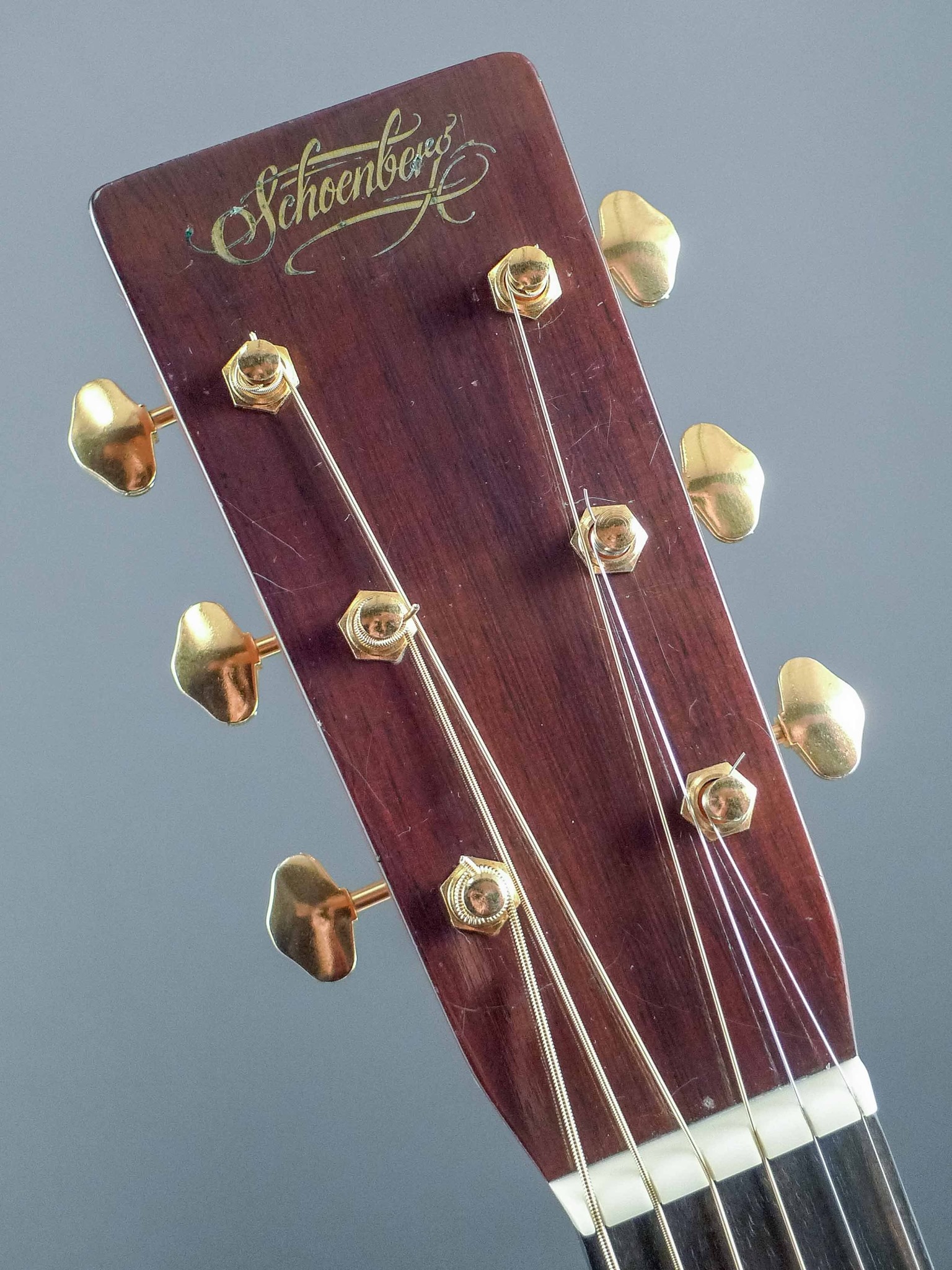
    Arnold Schoenberg’s “Serenade,” Op. 24, puts me in the mind of Lorca’s weeping guitar.

    Schoenberg employs the guitar as part of a loony ensemble that also includes two clarinets, mandolin, violin, viola, cello, and – in the work’s most prescient movement – voice.

    On this week’s “Music from Marlboro,” we’ll hear this Janus-like piece. The Serenade may contain the first published example of Schoenberg’s twelve-tone method to employ multiple instruments (with voice) – a three-minute setting of a Petrarch sonnet – but of the other five movements, though they may push tonality beyond the breaking point, none of them are actually “twelve-tone.”

    If you find yourself hanging on by your fingernails at the seeming lack of identifiable landmarks, it might be better to just let go and allow all the colors to wash over you.

    The composer looks back to classical form through the use of repetitions in the opening “March,” the second movement “Minuet,” and the fifth movement “Dance Scene.” There is also a seeming affirmation of the past through the deliberate choice of Petrarch as a source of inspiration. The third movement is a set of “Variations,” and the sixth a “Song (without Words).” A “Finale” caps the piece,” which, all in all – by Schoenberg standards – is fairly light and easygoing.

    We’ll hear a performance from the 1966 Marlboro Music Festival. Guitarist Stanley Silverman is one with an ensemble that also includes violinist Jaime Laredo, violist Samuel Rhodes, cellist Madeline Foley, B-flat clarinetist Harold Wright, bass clarinetist Don Stewart, mandolinist Jacob Glick, and (singing Petrarch) bass Thomas Paul. Leon Kirchner directs.

    The guitar moves to the front and center in Niccolò Paganini’s Quartet No. 15 in A minor. Paganini, of course, was one of the great violinists – some posit, the greatest who ever lived – but he was also an exceptional guitarist. He composed 15 quartets for guitar and strings.

    The last of these is from 1820. We’ll hear it performed in 1976, by guitarist Javier Calderon, violinist Daniel Phillips, and violist Luigi Alberto Bianchi. The cellist, 20 years-old at the time, is Yo-Yo Ma.

    Marlboro musicians get a chance to exhibit their pluck, on this week’s “Music from Marlboro,” this Wednesday evening at 6:00 EDT, on WWFM – The Classical Network and wwfm.org.

    Marlboro School of Music and Festival: Official Page


    In a 1930 poll conducted by the Viennese newspaper Neues Wiener Tagblatt, Arnold Schoenberg and Erich Wolfgang Korngold were elected two of the most influential Austrian composers of their time. The two artists couldn’t be more different, of course – Schoenberg, the godfather of dodecaphonic music, and Korngold, the progenitor of the “Hollywood sound.” Tune in a little early, at 4:00 EDT, to enjoy some of Korngold’s music, on his birthday. I’ll also be talking with Leon Botstein about this summer’s Bard Music Festival, at Bard College. The focus of this year’s festival will be on “Korngold and His World.”

  • Schoenberg’s Serenade: Tradition & Tone

    Schoenberg’s Serenade: Tradition & Tone

    Don’t call him revolutionary. He didn’t care for that. Arnold Schoenberg did not see himself as a troublemaker. Rather, if you could bring yourself to ask him, he might have described himself as a traditionalist who was merely extending the legacy of an inherited past. Then he might have painted your portrait or challenged you to a game of tennis.

    On this week’s “Music from Marlboro,” we’ll hear Schoenberg’s Janus-like Serenade, Op. 24. Sure, the Serenade contains the first published example of Schoenberg’s twelve-tone method to employ multiple instruments (and human voice): a setting of Petrarch’s Sonnet No. 217, according to the composer, always so concerned with precision. In actuality, it’s the Sonnet No. 256, if we’re to go by the standard Italian edition of the poet’s works, but who’s counting?

    The other five movements push tonality beyond the breaking point, true, but they are not “twelve-tone.” If you find yourself hanging on by your fingernails at the seeming lack of identifiable landmarks, it might be better for you to just let go and allow all the colors to wash over you. Schoenberg employs, in addition to a vocal basso in the three-minute Petrarch setting, B-flat and bass clarinets, mandolin, guitar, violin, viola, and cello.

    The composer looks back to classical form through the use of repetitions in the opening “March,” the second movement “Minuet,” and the fifth movement “Dance Scene.” There is also a seeming affirmation of the past through the deliberate choice of Petrarch as a source of inspiration for the fourth movement “Sonnet.” The third movement is a set of “Variations,” and the sixth a “Song (without Words).” A “Finale” caps the piece,” which, by Schoenberg standards, is fairly light and easygoing.

    We’ll hear a performance from the 1966 Marlboro Music Festival, with Leon Kirchner directing the ensemble. Coincidentally, today is Kirchner’s birthday.

    To round off the hour, we’ll also have a delightful work by Wolfgang Amadeus Mozart – his Sonata in B-flat for Bassoon and Cello, K. 292. The 1975 performance will feature bassoonist Alexander Heller and a 19 year-old cellist named Yo Yo Ma.

    Ma plays Mozart, and we take a shine to Schoenberg, on the next “Music from Marlboro,” this Wednesday evening at 6:00, on WWFM – The Classical Network and wwfm.org.

    Marlboro School of Music and Festival: Official Page


    Arnold Schoenberg: music’s menace loved his tennis

Tag Cloud

Aaron Copland (92) Beethoven (95) Composer (114) Film Music (119) Film Score (143) Film Scores (255) Halloween (94) John Williams (185) KWAX (229) Leonard Bernstein (99) Marlboro Music Festival (125) Movie Music (134) Opera (198) Philadelphia Orchestra (86) Picture Perfect (174) Princeton Symphony Orchestra (106) Radio (87) Ralph Vaughan Williams (85) Ross Amico (244) Roy's Tie-Dye Sci-Fi Corner (290) The Classical Network (101) The Lost Chord (268) Vaughan Williams (102) WPRB (396) WWFM (881)

DON’T MISS A BEAT

Receive a weekly digest every Sunday at noon by signing up here


RECENT POSTS