Tag: Leonard Bernstein

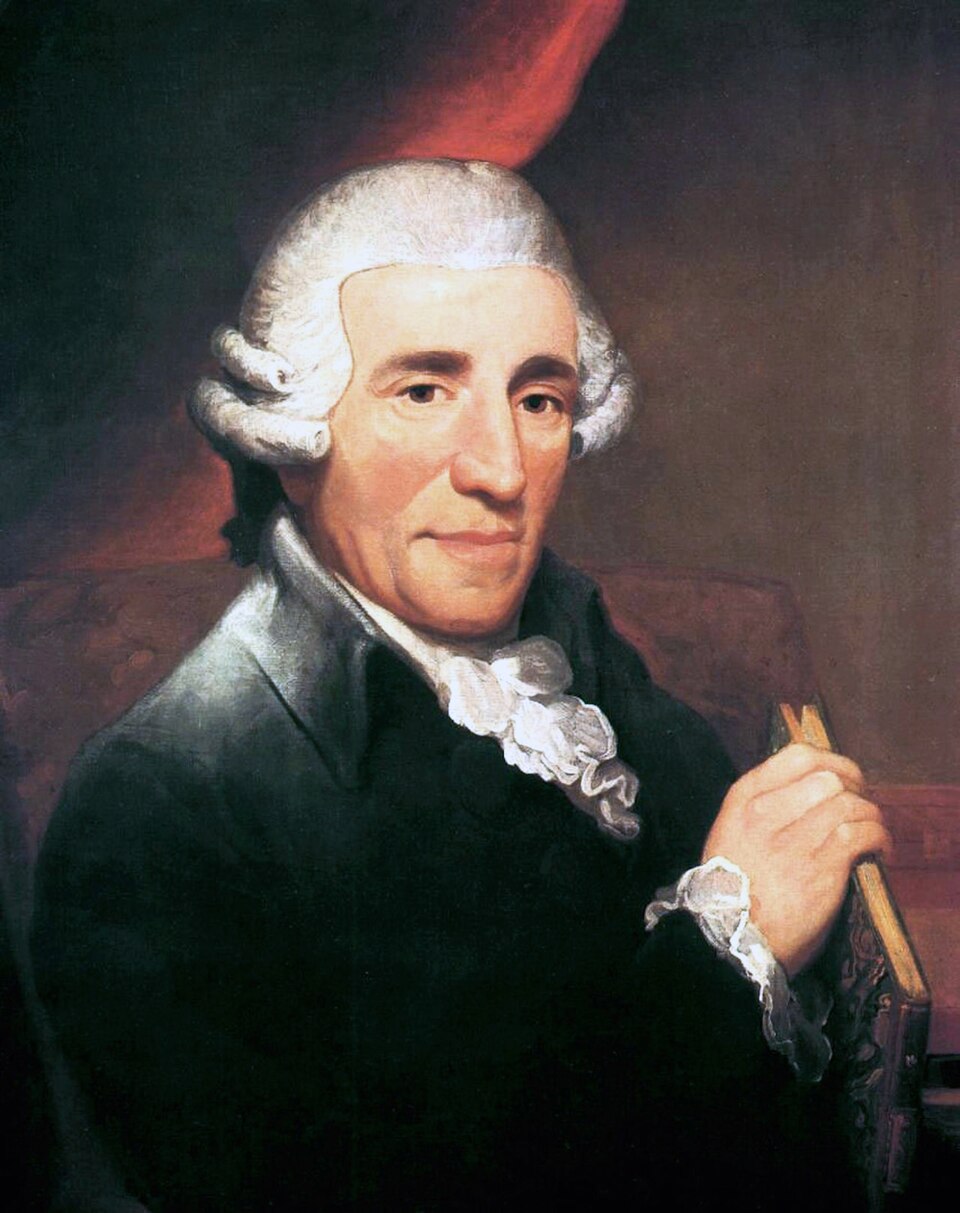
  • Bernstein and Haydn:  Synergy of Strange Bedfellows

    Bernstein and Haydn: Synergy of Strange Bedfellows

    I’m not sure elegance is near the top of anyone’s list when they consider the attributes of Dionysian Leonard Bernstein. I mean, he could cut a dapper figure, especially during the “matinee idol” years of his youth and early middle-age. He spoke well, and at concert time or before the cameras, he was invariably well-dressed, with that hair and that cigarette, seductively cool in black and white. But by the 1970s, he started to let it all hang out. That’s when he would show up at rehearsal dressed like a French wharf rat, all stubbly, in a striped sailor shirt and neckerchief. You be you, Lenny.
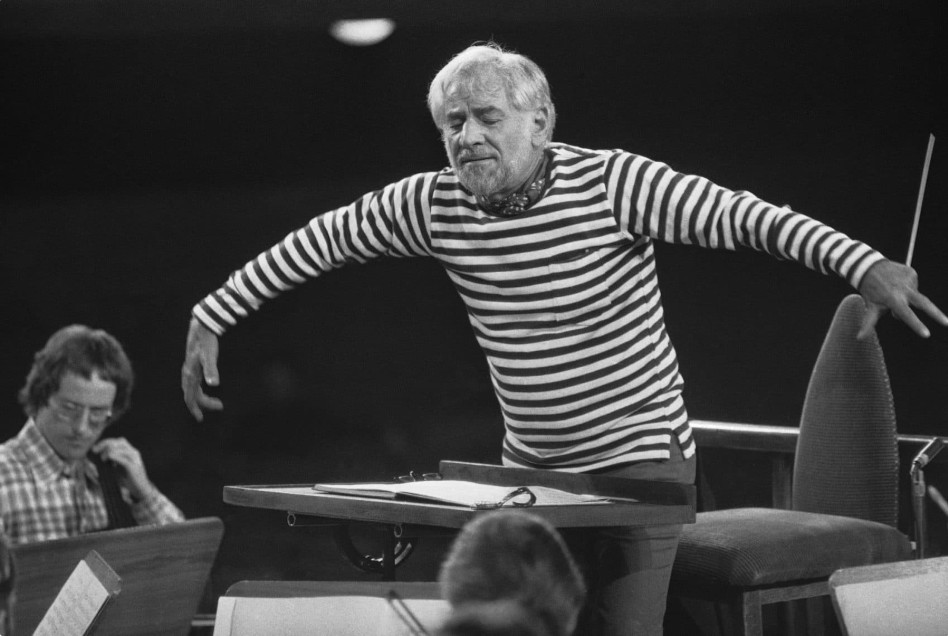

    But a strange synergy occurred whenever he conducted the music of Franz Joseph Haydn. Haydn, that most elegant of composers – except when he wasn’t (cue flatulent bassoon jokes) – virtually invented the modern symphony, or perfected it anyway. During the Classical era, it adhered to some pretty strict rules – which Haydn would then either humorously or dramatically manipulate or subvert.

    In the arts, it was once common knowledge that the way to freedom was through order. Once you internalize the rules and master the technique, you can pretty much do whatever you want. And no one knew his way around the symphony better than Haydn. He composed at least 106 of them (104 of them numbered) over a period of about 40 years. That’s an astronomic level of devotion to a single form, and it was far from Haydn’s exclusive focus. (He’s also credited as the father of the modern string quartet.)

    Bernstein, of course, developed a reputation for bringing great energy and involvement to highly subjective interpretations of music by composers such as Gustav Mahler. At his most thrilling, his identification with the composer could be so complete, it was as if he was creating the music himself. That doesn’t always mean his “identification” was exactly what the composer had in mind. But, totally unexpectedly, this celebrated proponent of some of the most flamboyant music in the repertoire turned out to be an outstanding Haydn interpreter.

    Bernstein’s Haydn is marked by great fluency and fun. He just GOT him, and I suspect there wasn’t a hell of a lot of analytical thinking behind it. The way we all just click with certain people and not with others – that’s how it was with these two. The high priest of emotional truth saw past the formal principles of the 18th century to Haydn the man and totally grokked where he was coming from. Haydn at his best is not a dry or boring “textbook” composer. He was a living, breathing human being, full of clever ideas, subject to a range of emotions, and brimming with good humor.

    Whenever I need a lift, I need look no further than Lenny’s recordings of the “Paris” Symphonies. Of these, the Symphony No. 82, subtitled the “Bear,” is perhaps my favorite. Bernstein’s “Bear” (not to be confused with a Berenstain Bear) is a treasure, energetic, lyrical, and exhilarating.

    FUN FACTS: The first performance was conducted by Joseph Bologne, Chevalier de Saint-Georges. Saint-Georges was a talented athlete, a respected swordsman, and the first classical composer of African descent to achieve widespread acclaim in Europe.

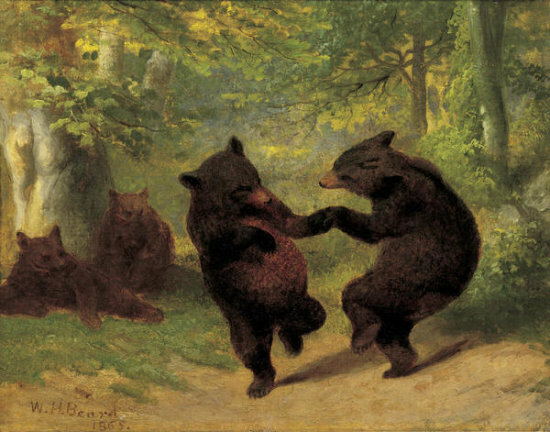
    The symphony’s nickname, the “Bear,” was bestowed not by Haydn, but by someone else, picking up on the repeated drone in the work’s finale. In those days, dancing bears were accompanied by bagpipes as a popular form of street entertainment. See if you can hear the dancing bear in the fourth movement of Haydn’s symphony.

    https://www.youtube.com/watch?v=3SjNmqj0czM

    When it comes to Lenny’s Haydn, there’s also this precious document, in which he conducts the last movement of the Symphony No. 88 – with his eyes! Of course, he does it as an encore. For the complete performance, you can scroll back to the beginning of the video.

    https://www.youtube.com/watch?v=bXEldU1UC70&t=1511s

    Want more? Here you go: the “Paris” Symphonies (82-87), the Symphony No. 88, and from the “London” Symphonies, the Symphony No. 93 (with a flatulent bassoon joke in the slow movement), the Symphony No. 94 (the famous “Surprise” Symphony), and the Symphony No. 95. The collection starts with the “Bear.” You can either skip over it or revel in it all over again.

    https://www.youtube.com/watch?v=VOrjmUI5f9Y

    Happy birthday, Haydn!

  • A Lament for Jubilant

    A Lament for Jubilant

    This is very sad, all the more horrible, coming as it does during the holiday season. Jubilant Sykes appeared in the world’s great opera houses and sang the Celebrant on a Grammy-nominated album of Leonard Bernstein’s “Mass.”

    He died on Monday of stab wounds allegedly inflicted by his son.

    Sykes was 71 years old.

    R.I.P.

    https://www.theguardian.com/music/2025/dec/10/jubilant-sykes-son-arrested-after-grammy-nominated-opera-singer-stabbed-to-death

  • Aaron Copland, on the 35th Anniversary of His Death

    Aaron Copland, on the 35th Anniversary of His Death

    Aaron Copland died on this date in 1990. By that time, the grand old man of American music was deep in my heart. I can’t believe there was ever a time that I didn’t care for his cowboy ballets, but I didn’t like them when I first encountered them. Where was my soul?

    Yeah, I liked “Appalachian Spring” and of course “Fanfare for the Common Man,” but it wasn’t until I left my small town for college in the big city that listening to Copland tore my heart out. In a good way. The man was the voice of an idealized America. 35 years later, I wonder if he still is?

    Unquestionably, he was the most prominent and influential American classical music composer of his generation. He helped distill and elevate the variety and dynamism of our distinctly American idioms and for the first time place them on a competitive footing with most of what Europe had to offer.

    He himself was quintessentially American. Born in Brooklyn in 1900 to hard-working Jewish immigrants, he lived through Tin Pan Alley and the Jazz Age, the Great Depression, and two world wars. In between, he studied in France, where he was exposed to and assimilated influences from the best of Europe. He experimented with modernist techniques, immersed himself in jazz and American folk song, and internalized the brave new world of serialism. Despite this restless curiosity, he never lost his own, distinctive voice.

    I always marvel, when viewing documentaries about prominent figures who emerged from that era, at just how much people of Copland’s generation lived through. We see black and white photos of kids dressed like sailors or rolling hoops with sticks for entertainment – and then, decades later, here they were, in suit and tie, still walking among us. At least, that’s the way it was back then. In the 1980s, we were maybe 40 years from their most important achievements. Now we’re 40 years from the 1980s. Do younger people, in the field or otherwise, care anymore? Do they even remember?

    1990 was a rough year for American music. Leonard Bernstein, who smoked too much, died in October at the age of 72. We had a good thing going here, in terms of building on what seemed to be a solid foundation for a domestic art music. Certainly artists continue to compose, but there doesn’t appear to be any centralized school of composition anymore. It’s a diverse country, so I suppose it was inevitable that our music would return to the eclecticism from which it emerged. Historical “lines” are often constructs anyway, as there is always significant activity going on outside the mainstream, beyond that which is endorsed by the establishment.

    I love Copland, and he could be a generous man, but I can’t help but feel bad about his public humiliation of Alan Hovhaness. Hovhaness had received a scholarship to study at Tanglewood. It was in Bohuslav Martinů’s composition class that a record of Hovhaness’ “Exile Symphony” was played. The work, like much of Hovhaness’ music, is steeped in Eastern influences. The whole while, Copland was transparently disinterested, carrying on conversations in Spanish with his Latin American students. Afterward Bernstein mocked it at the piano, characterizing it as “ghetto music.” The comment, which was met with derisive laughter, was especially insensitive, as the work was Hovhaness’ response to the Armenian genocide. But none of us is perfect, and this was a rare lapse for Copland, who did so much to help so many.

    Americans are still underrepresented on the podiums of this country’s major orchestras, and American music comprises the merest fraction of what is performed in our concert halls. Things are better for the living than for those of the “Greatest Generation.” It’s not uncommon for a new work to open a concert. But you’re not going to encounter too many full-length American symphonies on the second half of a program.

    Contrast that with the American composers who came up during the Depression and were active at mid-century. Copland has certainly been luckier than most. We still encounter a number of the major works on concert programs, but these are selected largely from a narrow span of some 20 years, give or take, out of his overall output. And that’s probably about as good as it gets. But it’s not all that different from what we hear of most of the European masters. The same handful of works, played over and over. It’s a big deal if somebody programs a Haydn symphony that doesn’t bear a nickname.

    On October 2, 1990, I remember listening to WFLN, Philadelphia’s (now-defunct) classical music station, which had been in existence since 1949 – the year Copland composed his Academy Award winning film score for “The Heiress.” My future WWFM colleague Bill Shedden came on that evening to share the sad news that Aaron Copland had died. It’s difficult to describe the emotions I felt, as Shedden broadcast, by way of memorial, Copland’s second set of “Old American Songs.” It was the classic recording with baritone William Warfield and the composer conducting. It was a beautiful choice. I remember regretting that I never wrote him – an actual letter, in those pre-internet days – to tell him just how much his music meant to me.

    Anyway, it’s always been a part of me, and I am looking forward to the listening to the quixotic, 5-day, 41-hour marathon of his music coming up on Harvard’s radio station, WHRB, beginning at 1:00 this afternoon, EST. If you’d like to know more about it, I wrote about it yesterday. Here’s a link to the post.

    https://rossamico.com/2025/12/01/fanfare-for-an-uncommon-copland-broadcast

    Stream the signal at https://www.whrb.org/

    And spread the word among your music-loving friends!

    ———-

    PHOTO: Copland and Bernstein with the score to “El Salón México”

  • Bernstein, Liszt & the Devil’s Symphony

    Bernstein, Liszt & the Devil’s Symphony

    I don’t know about you, but if I were a kid I’d be all over my parents to be able to attend a program called “Liszt and the Devil.”

    In one of his celebrated “Young People’s Concerts,” from 1970, Leonard Bernstein makes the bold assertion that “A Faust Symphony” is Franz Liszt’s greatest work. I think “grandest” would be less controversial. I mean, Liszt was the composer of probably the most revolutionary piano sonata of the 19th century.

    Despite Bernstein’s effusion that “A Faust Symphony” is one of the monumental works of the whole Romantic Movement, it is hardly the most frequently programmed of his compositions. His piano concertos are heard much more frequently. So are some of his symphonic poems, at least on the radio. (When was the last time you heard “Les Preludes” in concert?) He wrote oratorios, masses, organ works, songs, and even an opera. His later works are on another plane entirely, as he hurled his lances into a future he would never live to see.

    As a pianist, he is frequently cited as a kind of proto-rock star, whipping his audiences into extravagant displays of emotion. Men wept and women fainted. Some fought over carelessly abandoned gloves or cigar butts or even his coffee dregs. Doctors seriously debated the causes and effects of “Lisztomania,” as it was described, and it remains a topic of speculation in academic and medical circles today.

    Liszt was a peculiar mix of prophet and showman. He could be flashy or profound, fiendishly difficult or insistently memorable, offputtingly vulgar or transcendentally beautiful. Interestingly, in his mid-30s, he retired from public life as a recitalist (recital, by the way, was a term he coined), shifting his focus instead to composition, conducting, teaching, and philanthropic efforts. In his mid-50s, he took the cloth. As the Abbé Liszt, he was, among other things, a licensed exorcist. Which takes us back to the matter at hand.

    I happen to share Bernstein’s enthusiasm for “A Faust Symphony.” It’s always been a great favorite of mine. Sadly, you don’t really see it programmed very often anymore – if it ever was. But back in the day, Bernstein and Solti and maybe a few others kept it alive. Bernstein recorded it twice: with the New York Philharmonic for Columbia Records in 1960 and with the Boston Symphony Orchestra for Deutsche Grammophon in 1976. Riccardo Muti conducted it in Philadelphia, back in 1982 – sadly two years before my arrival in the City of Brotherly Love – and recorded it for EMI. The recording is very good. Come to think of it, I don’t think I’ve ever heard “A Faust Symphony” live. This must be rectified!

    I love that Bernstein doesn’t talk down to the kids and lays some pretty heavy, adult concepts on them. Not only in the philosophical examination of the essential dichotomy of the human character, but also the nitty gritty of debauched adult behavior. I’m sure there are moments when the moms and dads in the audience are wondering whether maybe they should have taken the young ones to Radio City Music Hall instead. Around 28 minutes in, Bernstein delves into the Devil, the seduction of Gretchen, and “the wages of sin.”

    It’s fun that Bernstein can go to the piano to illustrate so many of his musical points and that he’s got so much Liszt under his fingers.

    This is the second “Young Person’s Concert” I’ve seen in which Bernstein gets so carried away conducting that he loses his baton (at 44 minutes in). The other was during a Sibelius program from 1965, in which he conducts the Symphony No. 2. In that instance, a moment after the baton takes flight, he reaches beneath the lectern and actually produces a spare! Here he rides it out with his bare hands, as Mephisto’s spirit of negation is itself negated by Gretchen’s innocence.

    This is Liszt’s original version, by the way. Three years later, he appended a coda for chorus and tenor. That’s the version Bernstein recorded.

    Bernstein knows a thing or two in comparing Liszt to Faust. He had a little bit of Faust in his own character, as well. But then, don’t we all?

    Happy birthday, Franz Liszt!


    “Young People’s Concert: Liszt and the Devil.” All in all, an intelligently presented, entertainingly delivered lecture and performance. I hope you enjoy it.

    Bernstein’s classic 1960 recording with the New York Philharmonic

    Also fun to hear “A Faust Symphony” turn up among the musical selections on the soundtrack to this restoration of the 1926 silent film “Masciste in Hell”

  • Yo-Yo Ma at 70 a Musical Legend

    Yo-Yo Ma at 70 a Musical Legend

    The years, they do fly by. How can Yo-Yo Ma be 70? It seems only yesterday we were celebrating his 60th birthday.

    Arguably the most visible and charismatic cellist of his generation, Ma was born on October 7, 1955. He’s recorded more than 90 albums and been recognized with 19 Grammy Awards. In addition, among innumerable other honors, he has been the recipient of the National Medal of the Arts and the Presidential Medal of Freedom. As recently as 2020, he was included in Time Magazine’s “100 Most Influential People.”

    Ma began playing cello at the age of 4. That’s when he “put away childish things” – that is to say, a juvenile pursuit of the violin, viola, and piano! At 5, he began performing in public, and at 7, played for Presidents Dwight D. Eisenhower and John F. Kennedy. At 8, he was introduced to American television audiences courtesy of Leonard Bernstein. The next year, Isaac Stern brought him along to “The Tonight Show with Johnny Carson.”

    This was all before Ma attended Juilliard, where he studied with Leonard Rose. He dropped out of Columbia – only to attend Harvard. He spent four summers at the Marlboro Music Festival, where he played under the direction of legendary cellist and conductor Pablo Casals. He’s been friends with Emanuel Ax, a regular chamber music partner, since their student days.

    Ma has long been acclaimed for his interpretations of the Bach Cello Suites, chamber music by Beethoven and Brahms, and most of the major concertos for cello and orchestra. However, his first commercial recording, believe it or not, was of the Cello Concerto by English composer Gerald Finzi. Ma recorded the piece while in his early 20s, with the Royal Philharmonic Orchestra conducted by Vernon Handley.

    Later, having conquered the classical concert hall and established his mastery of the standard repertoire, Ma proved increasingly restless and exploratory, with forays into Baroque music on period instruments, American bluegrass, Argentinean tango, improvisatory duets with Bobby McFerrin, and several musical journeys along the Silk Road.

    He’s also been active in film, contributing to the soundtracks of “Seven Years in Tibet” and “Memoirs of a Geisha” for John Williams and “Crouching Tiger, Hidden Dragon” (the recipient of an Academy Award for Best Original Score) for Tan Dun. And of course his album of arrangements of Ennio Morricone themes sold faster than a tray full of cannoli.

    Ma’s friendship with Williams also yielded a cello concerto, which they first recorded together in 1994. My most recent Ma acquisition is his recording of the concerto in its revised version, released on Sony Classical in 2022, and of course it’s wonderful. However, the earlier release has an alluring bonus in Williams’ “Elegy,” reworked from material originally conceived for “Seven Years in Tibet” – six transporting minutes of unalloyed loveliness.

    Ma is one of classical music’s last media celebrities, whether introducing kids to the cello on PBS’ “Arthur,” “Sesame Street,” or “Mr. Rogers’ Neighborhood,” or playing Bach in support of dancer Misty Copeland and sitting in with the band on “The Late Show with Stephen Colbert.”

    I’ve been privileged to see him in concert several times. Last season, he was in Princeton at McCarter Theatre for a conversation with PBS NewsHour correspondent Jeffrey Brown. His love for music is such that it is not unusual for him to return after intermission, following a star turn in a big concerto, to modestly sit in with the rest of the cello section and play as a rank-and-file musician on the concert’s second half.

    All in all, I suspect he’s a really good guy. In fact, I’m sure he is. Happy birthday, and thanks for everything, Yo-Yo Ma!


    John Williams’ “Elegy”

    On Colbert with Misty Copeland

    At the age of 7, presented by Leonard Bernstein

    “Crouching Tiger, Hidden Dragon”

    Ma with saxophonist Joshua Redman, playing “Crazy Bus” on “Arthur”

    On “Sesame Street”

    Gerald Finzi’s Cello Concerto

    Bach, Suite No. 1 for Unaccompanied Cello

Tag Cloud

Aaron Copland (92) Beethoven (94) Composer (114) Film Music (116) Film Score (143) Film Scores (255) Halloween (94) John Williams (185) KWAX (228) Leonard Bernstein (99) Marlboro Music Festival (125) Movie Music (131) Opera (197) Philadelphia Orchestra (86) Picture Perfect (174) Princeton Symphony Orchestra (106) Radio (86) Ralph Vaughan Williams (85) Ross Amico (244) Roy's Tie-Dye Sci-Fi Corner (290) The Classical Network (101) The Lost Chord (268) Vaughan Williams (99) WPRB (396) WWFM (881)

DON’T MISS A BEAT

Receive a weekly digest every Sunday at noon by signing up here


RECENT POSTS