Tag: Leopold Stokowski

  • Leopold Stokowski The Forgotten Celebrity

    Leopold Stokowski The Forgotten Celebrity

    In his lifetime, he was as recognized as – well, as Mickey Mouse.

    With his wild hair, dove-like hands, and faux middle-European accent, Leopold Stokowski was familiar to anyone who went to the movies.

    In the latter decades of the 20th century, kids were still emulating Looney Tunes’ cries of “LEOPOLD!,” thanks to television reruns of Bugs Bunny.

    Once upon a time, before classical music became marginalized…

    I’ll pass on asking the rhetorical question of what the hell happened to my country, and instead channel my energy into projecting happy birthday wishes to the beyond for Leopold Stokowski!


    Conducting Tchaikovsky in the film “Carnegie Hall” (1947)

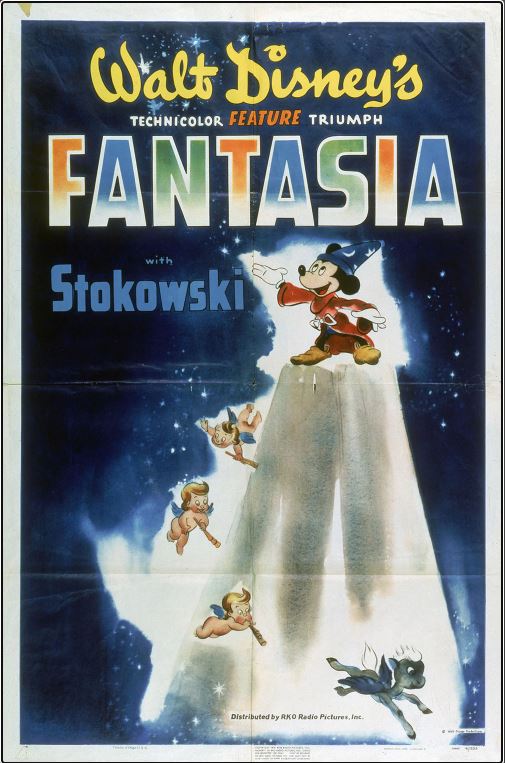
    Shaking hands with Mickey Mouse in “Fantasia” (1940)

    Parodied in “Long-Haired Hair” (1949)

    Introduced by Burns & Allen in “The Big Broadcast of 1937”

    Introduced in a snood around the 3:30 mark in “Hollywood Steps Out” (1941)

    http://www.youtube.com/watch?v=xOFG_qmoH8I&t=0m16s

    Charging his fingers at around 1:35 in Walter Lantz’s “Hollywood Bowl” (1938)

    https://vimeo.com/126713908?fbclid=IwAR07EsgTjeN70QIfVpM1HoWyJ66k-oc5T4hs2WRPl7XGDp530eLMuWyF8Xk

    With Deanna Durbin in “One Hundred Men and a Girl” (1937)

  • Fikret Amirov Azerbaijan’s Secret Music

    Fikret Amirov Azerbaijan’s Secret Music

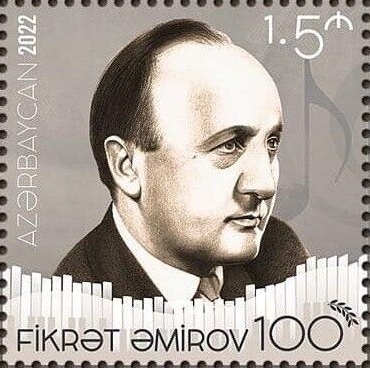
    Despite the admiration of Leopold Stokowski (who recorded “Azerbaijan Mugam”) and Michelle Kwan (who skated to “Gulistan Bayati-Shiraz”), the music of Fikret Amirov is still rarely-encountered in the West. This Sunday night on “The Lost Chord,” for the centenary of Amirov’s birth (on November 22, 1922), get to know Azerbaijan’s best-kept secret.

    Collectors of a certain vintage may recall Stokowski’s recording, with the Houston Symphony Orchestra, of “Azerbaijan Mugam.” Its native title is “Kyurdi Ovshari.” That language barrier may in part explain Amirov’s relative obscurity in the West. Even taking into account the more accessible title, what exactly is a mugam? Why, it’s a highly rhapsodic and improvisatory form, alternating between song and dance episodes, characteristic of Azeri music. But you see what I mean.

    It is that very “exoticism” which makes Amirov difficult to market, yet at the same time, it is what makes him so interesting. In an increasingly multicultural climate, with light being shed now in all corners of the repertoire, perhaps Amirov’s day has finally come.

    Tonight, we’ll sample his “Six Pieces for Flute and Piano” of 1970, consisting of “Song of the Aushug,” “Lullaby,” “Dance,” “In the Azerbaijan Mountains,” “At the Spring,” and “Nocturne.” If Amirov’s music at times reminds one of Khachaturian, one need only remember that Azerbaijan shares a border with Armenia. Without getting too much into politics, relations between the two countries are tense, to say the least. His music is also colored by the influence of other neighboring and nearby countries – Turkey, Russia, and Iran.

    This is something to bear in mind when approaching his full-length ballet, “The Arabian Nights.” The work, given its premiere in 1979, is one of the rare adaptations to come out of a region which gave us the original stories that make up “A Thousand and One Nights.” The world famous adventures of Sinbad, Ali Baba, and Aladdin are enshrined in these tales, and each of them make an appearance in the ballet’s second act.

    This week, we’ll hear selections from Act I, which sets up the framing device, with the unfaithful wife Nurida, the Sultan’s declaration of vengeance against all womankind, and the introduction of Scheherazade, the vizier’s daughter who enthralls the Sultan with her wit and creativity and finally restores his ability to love.

    I hope you’ll join me for “Azerbaijani Come Lately” – late works by Fikret Amirov, for his 100th anniversary – this Sunday night at 10:00 EST, on WWFM – The Classical Network and wwfm.org.


    Stokowski conducts “Azerbaijan Mugam”

    Michelle Kwan’s “Taj Mahal” routine, skated to Amirov’s “Gulistan Bayati-Shiraz”

    https://youtu.be/KHpA1_3R0BU?t=214

  • Hollywood Bowl Celebrates 100 Years

    Hollywood Bowl Celebrates 100 Years

    The Hollywood Bowl formally opened on this date 100 years ago.

    The open-air auditorium, constructed in a natural canyon, is immediately recognizable by its iconic band shell, a proscenium of concentric arches. Controversially, in 2004, the original shell, which over the decades had experienced wear from exposure to the elements and accrued acoustical issues, was demolished and replaced by a larger version.

    The Hollywood Bowl is the largest natural amphitheater in the United States. The shell is set against the backdrop of the Hollywood Hills, with the landmark Hollywood sign to the northeast. The “bowl” refers to the shape of Bolton Canyon, which serves as a natural amplifier.

    Music by Wagner, Tchaikovsky, Grieg, and Rossini opened the venue. But it wasn’t long before the orchestra shared space with actors, orators, dancers, and popular musicians. The Bowl can accommodate an audience of nearly 18,000.

    You can learn more about the venue’s history and the shell’s remarkable architects here:

    https://en.wikipedia.org/wiki/Hollywood_Bowl

    And here:

    https://www.hollywoodbowl.com/about/the-bowl/hollywood-bowl-history

    Many of us in other parts of the country got to know this West Coast landmark through its use in dozens of films and television shows, especially cartoons. This is where Bugs Bunny was venerated as “Leopold!” and Tom and Jerry attempted to one-up each other while conducting a feline orchestra.

    Glimpse the real deal, in its heyday, in historic footage of some of the greatest classical musicians active in the 1930s. Consult the index below the videos to see Igor Stravinsky, Arnold Schoenberg, Albert Einstein with Artur Rodzinski, Leopold Stokowski, William Grant Still, and Béla Bartók, among others.

    Part 1:

    Part 2:

    Here’s a Hollywood Bowl cartoon from 1938, produced by Walter Lantz (of Woody Woodpecker fame), chockful of caricatures of classic movie actors. I love this sort of thing. The score is by Frank Churchill, indebted to Liszt, Johann Strauss, Mendelssohn, Weber, Beethoven, Schubert and others. Churchill composed many songs and scores for Walt Disney, including “Who’s Afraid of the Big Bad Wolf” and those for “Snow White and the Seven Dwarfs” and “Dumbo.” Stokowski gets a fair amount of screen time. Definitely check out his introduction, as he charges his fingers at 1:36! Once bandleader Ben Bernie takes over, Fats Waller, Rudy Vallee, Cab Calloway, Benny Goodman, Fred Astaire, and Martha Raye get their moments to shine.

    https://vimeo.com/126713908

    Leopold!

  • Leopold Stokowski The Genius at 140

    Leopold Stokowski The Genius at 140

    Maestro. Showman. Magician. Matinee idol. Prima donna. Charlatan. Genius. Superstar.

    The multifaceted Leopold Stokowski was born on this date, 140 years ago.

    Preserved (or parodied) in all media, he could be as outrageous as he was revelatory. He brought to concert music a glamour and vitality that today it too often lacks. His wild hair and faux middle-European accent, his dove-like hands, his flamboyant experiments in sound, his pursuit of the novel and the cutting edge of technology, made him a celebrity, often to the chagrin of his critics. But the proof is in the pudding, and thankfully his recorded legacy is enormous. There is ample evidence to support all claims.

    Stokowski died in 1977 at the age of 95. At 94, he signed his final recording contract, with Columbia Records, which would have kept him busy into his 100th year.

    Here’s a documentary filmed when he was 88:

    At around the 11:23 mark, he states, “We have a motto in the American symphony orchestra, which is ‘do better.’ And it would be a good motto for life all over the world today, when we are killing instead of loving. Do better, world!”

    Well said. Happy birthday, Leopold!


    One of my favorite live performances on YouTube, when it shows up (it keeps getting taken down), with Stokowski conducting Debussy at the age of 90.

    Bach in Philadelphia in 1927

    Conducting Tchaikovsky in the film “Carnegie Hall” (1947)

    Shaking hands with Mickey Mouse in “Fantasia” (1940)

    Parodied in “Long-Haired Hair” (1949)

    “Daphnis and Chloe” Suite No. 2

    London Phase 4 “The Firebird” finale

  • Wagner’s Parsifal Good Friday Soundtracks

    Wagner’s Parsifal Good Friday Soundtracks

    I mean no disrespect in saying that, for me, Good Friday is made better by Wagner’s “Parsifal.” I try to listen to it every year, whether I need it or not.

    Here’s my annual posting of Leopold Stokowski’s transcendent Houston recording of the “Good Friday Spell” from Act III.

    Also, a fascinating 1927 recording of the Transformation Music and Grail Scene from Act I, set down at the Bayreuth Festspielhaus. The recording employs the original bells designed by Wagner, which were later melted down by the Nazis for ammunition during World War II. A rare opportunity to experience “Parsifal” as Wagner actually knew it. (The bells begin at 5:57.)

    The conductor, Karl Muck, was associated with the Bayreuth Festival since 1892. He became its principal conductor in 1903. Between 1901 and 1930, he conducted “Parsifal” at Bayreuth 14 times.

    Another conductor who was a pillar at Bayreuth was Hans Knappertsbusch. Of Kna’s 95 appearances there, 55 were conducting “Parsifal,” for which he was especially renowned.

    I was going to post a link to one of his performances of the Prelude to Act I , but then I couldn’t help it. Here’s the whole blessed thing – all four hours of it – from 1962. The live recording is regarded as the benchmark by many, rivaled only by Kna’s performances from the 1950s.

    Sacrifice, compassion, healing, and rebirth. Every Friday is good, but Good Friday with “Parsifal” is subime.


    The metal canisters used to produce Bayreuth bell sounds from the 1880s to about 1929:

    https://www.monsalvat.no/parsifal-bells.htm

    IMAGE: Set design by Paul von Joukowsky for the 1882 Bayreuth debut of “Parsifal”

Tag Cloud

Aaron Copland (92) Beethoven (95) Composer (114) Film Music (118) Film Score (143) Film Scores (255) Halloween (94) John Williams (185) KWAX (229) Leonard Bernstein (99) Marlboro Music Festival (125) Movie Music (133) Opera (198) Philadelphia Orchestra (86) Picture Perfect (174) Princeton Symphony Orchestra (106) Radio (87) Ralph Vaughan Williams (85) Ross Amico (244) Roy's Tie-Dye Sci-Fi Corner (290) The Classical Network (101) The Lost Chord (268) Vaughan Williams (102) WPRB (396) WWFM (881)

DON’T MISS A BEAT

Receive a weekly digest every Sunday at noon by signing up here


RECENT POSTS