Tag: Leopold Stokowski

  • Stokowski Two Sides of a Conducting Legend

    Stokowski Two Sides of a Conducting Legend

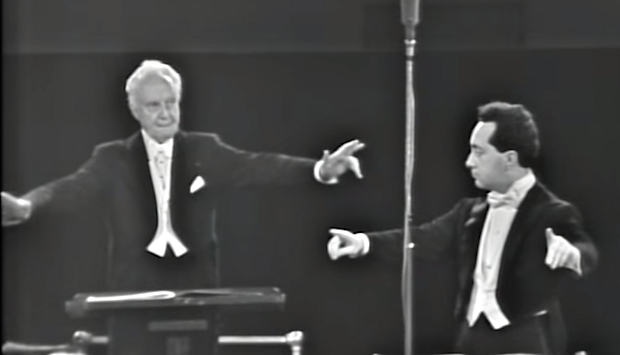
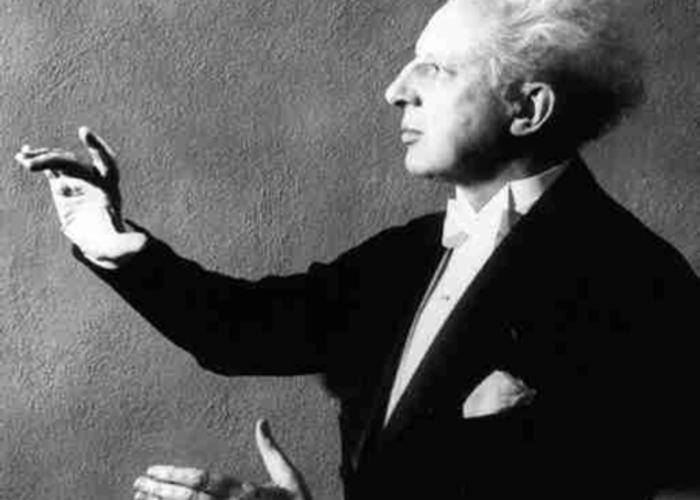
    Two faces of Leopold Stokowski:

    First, from the 1947 potboiler “Carnegie Hall,” which contrives to string together appearances by some of the greatest classical music talent of the day (including Jascha Heiftez, Gregor Piatigorsky, Arthur Rubinstein, Rise Stevens, Ezio Pinza, Bruno Walter and Fritz Reiner) using the flimsiest and hokiest of plots (renegade young pianist scandalizes – and ultimately makes good – with his new jazz concerto).

    Stokowski provides the musical high point of the picture, with the director, low budget maestro Edgar G. Ulmer – who was a set designer on “Metropolis” and “M” – indulging in Expressionist tricks (low-angle camera set-ups and stark lighting) to accentuate Stoky’s majesty, to say nothing of his hair.

    Second, Stokowski rehearsing the American Symphony Orchestra in 1968, at the age of 85. He still had ten years of conducting ahead of him. His talent, temperament – and hair – remain undiminished.

    Happy birthday, Leopold Stokowski (1882-1977).

  • Varese’s Amériques Premiere Orchestra History

    Varese’s Amériques Premiere Orchestra History

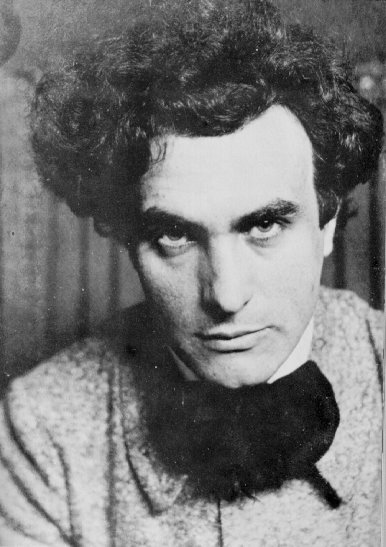
    On this date in 1926, Leopold Stokowski conducted The Philadelphia Orchestra in the first performance of Edgard Varese’s “Amèriques.” With these two guys at the helm, what could possibly go wrong?

    Here it is, conducted by Christopher Lyndon-Gee. The notorious siren makes its first appearance at the 2:30 mark.

    https://www.youtube.com/watch?v=RbPzNBvwnsM

    Next season, Lyndon-Gee will guest conduct the Princeton Symphony Orchestra in music of Elgar and Nielsen.

  • William Grant Still American Composer

    William Grant Still American Composer

    They say that still waters run deep.

    William Grant Still, the so-called “Dean of Afro-American Composers,” composed a lot of attractive music, much of it informed by the black experience. This Sunday night on “The Lost Chord,” we’ll hear Still’s delightful Symphony No. 2, subtitled “Song of a New Race,” and a more serious work fueled by racial considerations, “And They Lynched Him on a Tree,” for double-choir, narrator and orchestra.

    Still, who lived from 1895-1978, emerged from unlikely circumstances – born in Woodville, Mississippi; raised in Little Rock, Arkansas – to become a major force in American music. Having abandoned a career in medicine for studies at the Oberlin Conservatory of Music and the New England Conservatory in Boston, where he studied with George Whitefield Chadwick, Still was a “first” in many respects.

    His Symphony No. 1, the “Afro-American Symphony,” was the first written by a black composer to be performed by a major orchestra (the New York Philharmonic). He was the first to be given the opportunity to conduct a major orchestra (the Los Angeles Philharmonic, at the Hollywood Bowl). His opera, “Troubled Island,” became the first to be produced by a major company (the New York City Opera). Another of his operas, “A Bayou Legend,” was the first to be performed on national television (as late as 1981). His works were performed internationally by the Berlin Philharmonic, the London Symphony Orchestra, the BBC Symphony, and the Tokyo Philharmonic.

    Perhaps the least likely pupil of Edgard Varèse, he incorporated jazz and blues elements into his concert music. He cut his teeth writing arrangements for Paul Whiteman, W.C. Handy and Artie Shaw. According to Eubie Blake, one of Still’s improvisations in the pit band during Blake’s revue “Shuffle Along” became the basis for Gershwin’s hit tune “I Got Rhythm.” Still didn’t appear to be bitter about the appropriation (which Blake conceded was probably inadvertent), and in fact Still and Gershwin were on friendly terms and made it a point to attend performances of one another’s music.

    Pay particular attention to the second movement of Still’s Symphony No. 2, first performed in 1936 by Leopold Stokowski and the Philadelphia Orchestra, and see if you agree that Gershwin would have killed to have composed its second movement.

    We’ll follow that with a very different piece, Still’s choral ballad “And They Lynched Him on a Tree,” composed in 1940. The libretto is by the poet Katherine G.C. Biddle, the niece of Charlotte Mason, the so-called “Godmother of the Harlem Renaissance.” The work calls for a contralto soloist, as the mother of the victim, a “white chorus” to depict the mob, a “black chorus” to discover the lynching, a narrator, and a small orchestra. The composition is almost exactly contemporary with Abel Meeropol’s “Strange Fruit.” It was given its first performance by the New York Philharmonic, conducted by Artur Rodzinski.

    There will be just a few minutes left at the end of the show, during which we’ll decompress with Still’s miniature “Summerland.”

    I hope you’ll join me for “Still Runs Deep” – an hour of music by William Grant Still – this Sunday night at 10 ET, with a repeat Wednesday evening at 6; or that you’ll listen to it later as a webcast at wwfm.org.

  • Charles Martin Loeffler: Neglected Composer

    Charles Martin Loeffler: Neglected Composer

    The honor of “neglected composer du jour” must go to Charles Martin Loeffler. Loeffler was born on this date in 1861; he died in 1935.

    Though he long claimed to be of Alsation birth, Loeffler in actuality was born outside Berlin. The composer turned against Germany after his father died in prison, where he had been sent for his subversive writings, when Loeffler was only 12 years-old.

    Loeffler was a fastidious artist, who cut his teeth in Berlin and Paris, and indeed he is frequently identified as French-American. He settled in Boston in 1881, where he shared the first desk with the concertmaster of the Boston Symphony and became an important figure in the city’s musical life.

    A man of wide culture and refined taste, he founded the Boston Opera Company. In 1887, he left the Symphony to devote himself wholly to composition.

    Tune in this morning to hear Loeffler’s symphonic poem of 1906, titled “A Pagan Poem.” Inspired by the eighth Eclogue of Virgil, in which a maiden of Thessaly, abandoned by her lover, revives his ardor through the use of sorcery.

    The work was first performed by the Boston Symphony, under Karl Muck. It was later championed by Leopold Stokowski, who recorded it for EMI. The piano plays such a prominent role, the piece sounds at times as if it may be a piano concerto. We’ll hear pianist Robert Hunter, and also English hornist William Kosinski. Enjoy it at 11:00 on WRTI 90.1 FM or at wrti.org.

    Happy birthday, Charles Martin Loeffler!


    PHOTO: Loeffler (left) and Stokowski — who’s the true pagan here?

  • Disney’s Fantasia: A Glorious Folly at 75

    Disney’s Fantasia: A Glorious Folly at 75

    Try to forget for the moment that – between the acquisition of Marvel, The Muppets, Pixar, Star Wars and ABC (to say nothing of the cruises, resorts and theme parks) – Disney now owns the world. “A Night on Bald Mountain” was NOT intended as autobiography. This morning, we cast our thoughts back to simpler times when a visionary animator threw caution to the winds to forge “a new style of motion picture presentation.”

    A guaranteed money-loser from the start, “Fantasia” was spared no expense as it pushed the state of animation, audio reproduction and family entertainment. There was no way, with the possibility of overseas distribution curtailed by World War II, this was going to be anything other than a quixotic venture. When was the last time Disney took a gamble on a scale of “Fantasia?” Now it’s considered bold if they adapt a comic book that’s not “Iron Man.”

    I hope you’ll join me his morning as we celebrate the 75th anniversary of Disney’s most glorious “folly,” released on November 13, 1940. We’ll have abundant recordings of Leopold Stokowski, some made for the film (in experimental stereophonic sound), some earlier (in glorious mono) and some later, from his “Phase Four” period and beyond.

    It’s all Stokie from 6 to 11 ET, on WPRB 103.3 FM or online at wprb.com. Chernobog requests your presence, on Classic Ross Amico.

Tag Cloud

Aaron Copland (92) Beethoven (95) Composer (114) Film Music (119) Film Score (143) Film Scores (255) Halloween (94) John Williams (185) KWAX (229) Leonard Bernstein (99) Marlboro Music Festival (125) Movie Music (134) Opera (198) Philadelphia Orchestra (86) Picture Perfect (174) Princeton Symphony Orchestra (106) Radio (87) Ralph Vaughan Williams (85) Ross Amico (244) Roy's Tie-Dye Sci-Fi Corner (290) The Classical Network (101) The Lost Chord (268) Vaughan Williams (102) WPRB (396) WWFM (881)

DON’T MISS A BEAT

Receive a weekly digest every Sunday at noon by signing up here


RECENT POSTS