Tag: Les Six

  • Germaine Tailleferre in Philadelphia

    Germaine Tailleferre in Philadelphia

    I find it fascinating that Germaine Tailleferre waited out World War II in Philadelphia. And yet I can never seem to find out very much about what she did while in exile.

    Tailleferre was the only female member of Les Six, that loose collective of composers that rose to prominence in Paris in the late ‘teens and 1920s, under the guidance of Jean Cocteau. Her famous colleagues included Francis Poulenc, Darius Milhaud, Arthur Honegger, and Georges Auric. Louis Durey, a hard-line communist who went on to set poems by Ho-Chi Minh and Mao Zedong, is the one nobody remembers. (I wonder why.)

    Tailleferre was strong-willed from the beginning. Her birth name was Taillefesse, but she changed it to spite her father, since the old man opposed her musical studies. However, she took piano lessons with her mother and was admitted into the Paris Conservatory. It was there that she met the rest of The Six and that the prizes began to pile up. She also earned the friendship and received the support of Maurice Ravel.

    In 1925, she married Ralph Barton, the American caricaturist, and moved to New York. Two years later, the couple returned to France, then divorced. Her career thrived in the 1920s and ‘30s. With the outbreak of World War II, however, she beat it back to the United States, leaving most of her scores at her home in Grasse, and, as I said, passed the war years in Philadelphia.

    After the war, she again returned to France, where she resumed her career. As she got older, her pieces tended to be shorter, as she suffered from arthritis. She also wrote a lot for children and young pianists. She composed virtually right up until the time of her death in 1983, when she was 91 years-old. She wrote so much, in fact, that a lot of the music of her later years has never been published, and fresh discoveries from her output are being recorded all the time.

    Happy birthday, Germaine Tailleferre! If anyone has any information about her activities in Philadelphia, I would be very curious to know.


    The Concertino for Harp and Orchestra (1927):

    The lovely and wistful “Arabesque” for clarinet and piano (1972):

    https://www.youtube.com/watch?v=i0E8tUzQezA See Less

    The Concerto for Piano and Orchestra (1924). The piece was given its U.S. premiere – in the presence of the composer – by Alfred Cortot and the Philadelphia Orchestra, conducted Leopold Stokowski.
  • Eiffel Tower Music: From Ballet to Percussion

    Eiffel Tower Music: From Ballet to Percussion

    Most musicians dream of playing Carnegie Hall. Joseph Bertolozzi dreamed of playing the Eiffel Tower. Quite literally.

    This mad visionary and his technicians ascended the Tour Eiffel in 2013, turning the iconic French landmark into a gigantic percussion instrument. The results can be heard on his album “Tower Music,” which was released on the innova Recordings label in 2016.

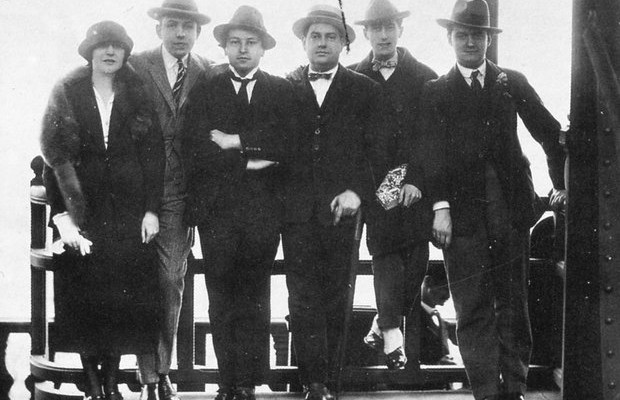
    95 years earlier, Jean Cocteau brought together five of his composer protégés, all members of Les Six, to provide music for a ballet set atop the Eiffel Tower – on July 14, Bastille Day. (The sixth member, Louis Durey, declined, pleading illness.)

    The scenario of “Les mariés de la tour Eiffel” (“The Wedding Party on the Eiffel Tower”) describes a wedding breakfast on one of the tower’s platforms. A series of surreal and vaguely satiric incidents involve a pompous speech made by one of the guests, a hunchbacked photographer asking the assembled guests to “watch the birdie,” the sudden appearance of a telegraph office, a lion devouring one of the guests, and the arrival of “a child of the future” who commits mass murder. The ballet concludes with the end of the wedding.

    Cocteau encapsulated the ballet’s themes as “Sunday vacuity; human beastliness, ready-made expressions, disassociation of ideas from flesh and bone, ferocity of childhood, the miraculous poetry of everyday life.” Quel illumination!

    Francis Poulenc, who provided the music for some of the numbers, alongside that of Georges Auric, Arthur Honegger, Darius Milhaud and Germaine Tailleferre, referred to the piece as “toujours de la merde.”

    Vive la France – and Happy Bastille Day!


    “Tower Music”:

    “The Wedding Party on the Eiffel Tower”:

    In performance, following introductory info, beginning at 6:52:

  • Poulenc Beethoven Scherzo? Music from Marlboro

    Poulenc Beethoven Scherzo? Music from Marlboro

    Is it just me, or does Francis Poulenc playfully riff on the scherzo to Beethoven’s “Eroica” Symphony in the third movement of his Trio for Oboe, Bassoon and Piano? Maybe not, but I’m going to go with it, since the potential delusion serves as an excellent excuse for me to juxtapose music of Poulenc and Beethoven on this week’s “Music from Marlboro.”

    Poulenc’s Trio, composed in 1926, begins very somberly indeed, before taking off with irrepressible joie de vivre. The central movement is both elegant and wistful in a manner characteristic of this composer, and the cheeky finale is presented with an ironic smile. We’ll hear a 1972 performance featuring oboist Rudolph Vrbsky, bassoonist Alexander Heller, and pianist Seth Carlin.

    Then Pablo Casals will preside over a makeshift orchestra consisting of dozens of musicians at the 1969 Marlboro Music Festival for a warm traversal of Beethoven’s Symphony No. 4. (While Casals conducted a number of the Beethoven symphonies at Marlboro, he did not do the “Eroica.”) The legendary cellist was affiliated with the Marlboro festival for the last 13 years of his life, from 1960 to 1973.

    Robert Schumann once characterized the symphony as “a Greek maiden between two Norse giants” – certainly a provocative image. We’ll temper this very Teutonic utterance with a splash of Gallic insouciance, on “Music from Marlboro,” this Wednesday at 6 p.m. EDT, on WWFM – The Classical Network and wwfm.org.

    Marlboro School of Music and Festival: Official Page


    PHOTO: A caricature of Beethoven adorning a dinner plate designed by Jean Cocteau; decades earlier, Cocteau was responsible for promoting Poulenc and five of his composer-colleagues as the collective “Les six”

  • Ravel, Les Six, and Marlboro’s French Trios

    Ravel, Les Six, and Marlboro’s French Trios

    Maurice Ravel’s Piano Trio in A minor had been gestating for at least six years before he finally sat down to write the work over the summer of 1914. At first, progress was slow, but when war was declared in August, Ravel put on a burst of speed to finish the piece so that he could he could do his patriotic duty and enlist in the French army. He was rejected from the infantry and the air force on account of his diminutive size and precarious health, but he learned to drive a truck and cared for the wounded at Verdun on the Western Front.

    We’ll hear Ravel’s Piano Trio on this week’s “Music from Marlboro,” alongside a couple of other trios by composers of the next generation – Francis Poulenc and Darius Milhaud – both of whom had complex reactions to Ravel’s music.

    Poulenc and Milhaud together formed one-third of Les Six, that collective of French composers who rose to prominence in Paris in the late ‘teens and 1920s. Each had his or her own distinctive style – the group’s other members included Arthur Honegger, Georges Auric, Germaine Tailleferre, and Louis Durey – but together they displayed a united front in resistance to the so-called Impressionists (Debussy and Ravel) and most of all Richard Wagner. Any trace of Wagnerian portentousness would be blown out between the tent flaps, as the spirit of the circus, café and cabaret came to dominate a new aesthetic.

    You’ll hear it embodied in Poulenc’s Trio for Oboe, Bassoon and Piano (1926), which begins very somberly indeed, before taking off with irrepressible joie de vivre. The central movement is both elegant and wistful in a manner characteristic of this composer, and the cheeky finale is presented with an ironic smile.

    Interestingly, Milhaud’s Suite for Clarinet, Violin and Piano (1936) revisits material from incidental music he composed for Jean Anouilh’s play “Le Voyageur sans bagages” (“The Traveler without Luggage”), about an amnesiac World War I soldier. The piece falls into four movements: “Ouverture;” “Divertissement;” “Jeu;” and “Introduction et Final.” As the titles suggest, much of the music is sassy and full of play, and it is to be wondered what Ravel, a veteran of the Great War would have thought of it.

    I hope you’ll join me for a trio of French trios, performed by musicians of the legendary Marlboro Music Festival, this Wednesday evening at 6 EDT, on WWFM – The Classical NetworkWWFM The Classical Network and wwfm.org.

    Marlboro School of Music and Festival: Official Page


    PHOTO: Ravel in uniform

  • Eiffel Tower Ballet: A Surreal Bastille Day

    Eiffel Tower Ballet: A Surreal Bastille Day

    Vive la France!

    In 1921, Jean Cocteau brought together five of his composer protégés, all members of Les Six, to provide music for a ballet set atop the Eiffel Tower on July 14 – Bastille Day. (The sixth, Louis Durey, pleaded illness.)

    The scenario involves a wedding breakfast on one of the platforms of the famed Parisian landmark. A series of surreal and vaguely satiric incidents involve a pompous speech made by one of the guests, a hunchbacked photographer asking the assembled guests to “watch the birdie,” the sudden appearance of a telegraph office, a lion devouring one of the guests, and the arrival of “a child of the future” who commits mass murder. The ballet concludes with the end of the wedding.

    Cocteau encapsulated the ballet’s themes as “Sunday vacuity; human beastliness, ready-made expressions, disassociation of ideas from flesh and bone, ferocity of childhood, the miraculous poetry of everyday life.” Quel illumination!

    Francis Poulenc, who provided the music for some of the numbers, alongside that of Georges Auric, Arthur Honegger, Darius Milhaud and Germaine Tailleferre, referred to the piece as “toujours de la merde.”

    Tune in and judge for yourself. “Les mariés de la tour Eiffel” (“The Wedding Party on the Eiffel Tower”) will be among my featured selections for Bastille Day, this Friday afternoon, from 4 to 6 EDT.

    Then stick around for music from movies set during the Napoleonic Wars. I’ve assembled suites from “War and Peace” (by Nino Rota), “The Pride and the Passion” (Trenton’s own George Antheil), “The Duellists” (Howard Blake), and “Napoleon” (Arthur Honegger), for “Picture Perfect” at 6.

    Our afternoon will begin at 4:00 with a visit from filmmaker H. Paul Moon, who will talk a little bit about his new documentary, “Samuel Barber: Absolute Beauty,” which will receive its world broadcast premiere tomorrow night at 8:00 on WHYY Philadelphia.

    As always, there will be plenty of beauty to enjoy today from 4 to 7 p.m. on WWFM – The Classical Network and wwfm.org.


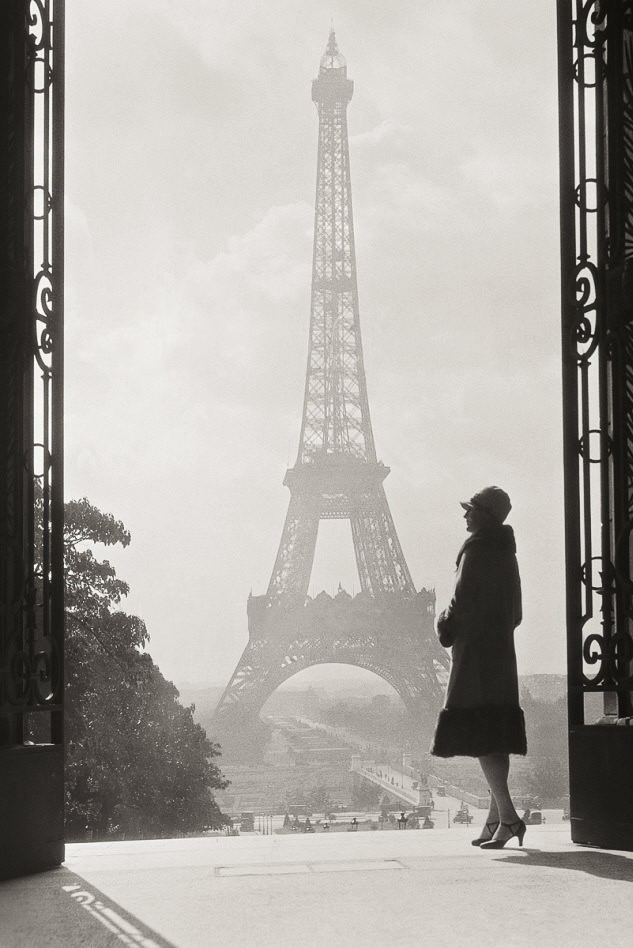
    PHOTO: The Eiffel Tower in the days of Les Six

Tag Cloud

Aaron Copland (92) Beethoven (95) Composer (114) Film Music (120) Film Score (143) Film Scores (255) Halloween (94) John Williams (185) KWAX (229) Leonard Bernstein (100) Marlboro Music Festival (125) Movie Music (135) Opera (198) Philadelphia Orchestra (88) Picture Perfect (174) Princeton Symphony Orchestra (106) Radio (87) Ralph Vaughan Williams (85) Ross Amico (244) Roy's Tie-Dye Sci-Fi Corner (290) The Classical Network (101) The Lost Chord (268) Vaughan Williams (103) WPRB (396) WWFM (881)

DON’T MISS A BEAT

Receive a weekly digest every Sunday at noon by signing up here


RECENT POSTS