Vive la France! Tomorrow morning on WPRB, we celebrate Bastille Day.
Among other musical confections, we’ll enjoy the collaborative ballet, “Les mariés de la tour Eiffel” (“The Wedding Party on the Eiffel Tower”), by members of Les Six, a surreal romp set on the Parisian landmark on July 14.
We’ll also hear selections from the album “Tower Music,” a recent release on the Innova Recordings label, in which mad visionary Joseph Bertolozzi plays the actual Tour Eiffel like a giant percussion instrument.
There will also be music by French Revolution Era composer Étienne Nicolas Méhul, Napoleon’s cellist, Jean-Louis Duport, and Hector Berlioz’s setting of “La Marseillaise.”
I’ll be chain-smoking baguettes, tomorrow morning from 6 to 11 EDT, on WPRB 103.3 FM and at wprb.com. “Liberté, égalité, fraternité” is our motto, on Classic Ross Amico.
I find it fascinating that Germaine Tailleferre waited out World War II in Philadelphia. And yet I can never seem to find out very much about what she did while in exile.
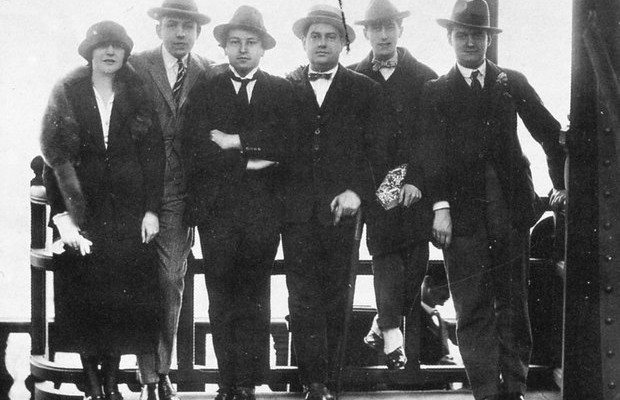
Tailleferre was the only female member of Les Six, that loose collective of composers who rose to prominence in Paris in the late ‘teens and 1920s, under the guiding hand of Jean Cocteau. Her famous peers included Francis Poulenc, Darius Milhaud, Arthur Honegger, and Georges Auric. Louis Durey, a hard-line communist who went on to set poems by Ho-Chi Minh and Mao Zedong, is the one nobody remembers. (I wonder why.)
Tailleferre was strong-willed from the beginning. Her birth name was Taillefesse, but she changed it to spite her father, since the old man opposed her musical studies. However, she took piano lessons with her mother and was admitted to the Paris Conservatory. It was there that she met her future colleagues and that the prizes began to pile up. She also earned the friendship and received the support of Maurice Ravel.
In 1925, she married Ralph Barton, an American caricaturist, and moved to New York. Two years later, the couple returned to France, then divorced. Her career thrived in the 1920s and ‘30s. With the outbreak of World War II, however, she beat it back to the United States, leaving most of her scores at her home in Grasse, and, as I said, passed the war years in Philadelphia.
After the war, she again returned to France, where she resumed her career. As she got older, her pieces tended to be shorter, as she suffered from arthritis. She also wrote a lot for children and young pianists. She composed virtually right up until the time of her death in 1983, when she was 91 years-old. She wrote so much, in fact, that a lot of the music of her later years has never been published, and fresh discoveries from her output are being recorded all the time.
Happy birthday, Germaine Tailleferre! If anyone has any information on her activities in Philadelphia, I would be most curious to know.
The Concertino for Harp and Orchestra:
The lovely and wistful “Arabesque” for clarinet and piano:
Today is the birthday of Arthur Honegger (1892-1955). Honegger was a member of Les six, that collective of composers which rose to prominence in Paris circa 1920.
His disposition, musically speaking, was generally more solemn than that of his colleagues. Not for Honegger the influence of the café and the music hall, as would be the case for, say, Francis Poulenc. Yet he was very good friends with Darius Milhaud, from their days together at the Paris Conservatory. Milhaud dedicated his String Quartet No. 4 to Honegger’s memory, as did Poulenc his Clarinet Sonata.
I’ve always been fond of Honegger’s symphonic movement, “Rugby,” with its dissonant harmonies and flights of lyricism. It pretty much captures the exhilaration that comes from rough-housing and horseplay.
In 1921, Jean Cocteau brought together five of his composer protégés, all members of Les Six, to provide music for a ballet set atop the Eiffel Tower on July 14 – Bastille Day. (The sixth, Louis Durey, pleaded illness.)
The scenario involves a wedding breakfast on one of the platforms of the famed Parisian landmark. A series of surreal and vaguely satiric incidents involve a pompous speech made by one of the guests, a hunchbacked photographer asking the assembled guests to “watch the birdie,” the sudden appearance of a telegraph office, a lion devouring one of the guests, and the arrival of “a child of the future” who commits mass murder. The ballet concludes with the end of the wedding.
Cocteau encapsulated the ballet’s themes as “Sunday vacuity; human beastliness, ready-made expressions, disassociation of ideas from flesh and bone, ferocity of childhood, the miraculous poetry of everyday life.” Quel illumination!
Francis Poulenc, who provided the music for some of the numbers, alongside that of Georges Auric, Arthur Honegger, Darius Milhaud and Germaine Tailleferre, referred to the piece as “toujours de la merde.”
Here is “Les mariés de la tour Eiffel” (“The Wedding Party on the Eiffel Tower”):
Happy Bastille Day!
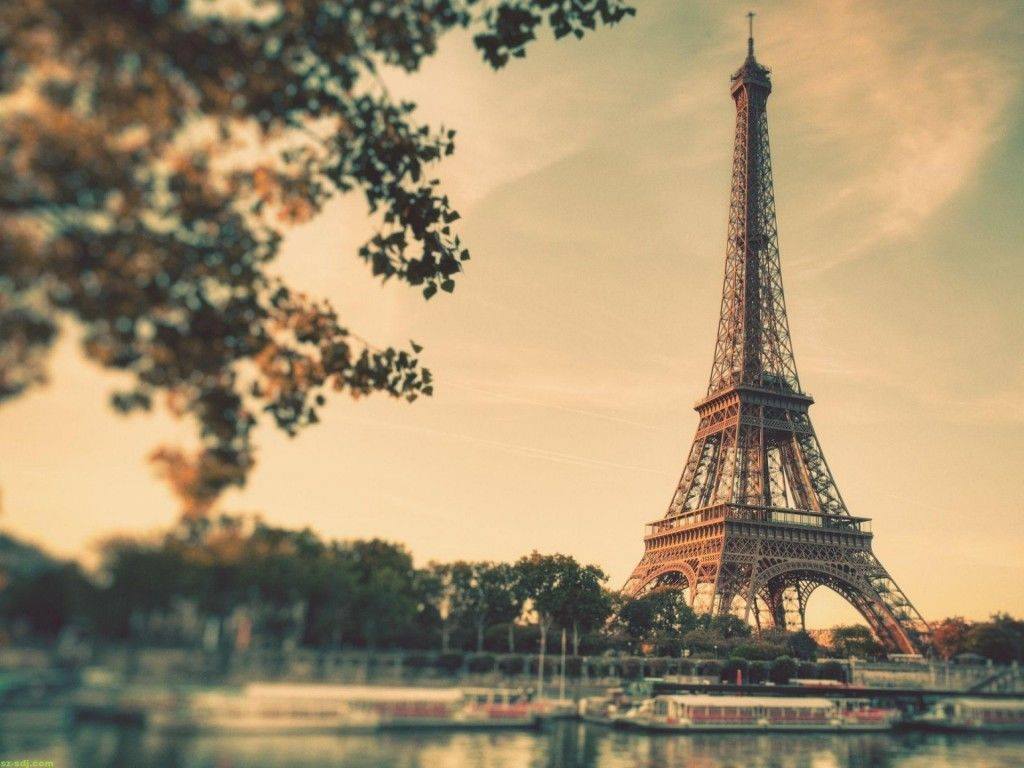
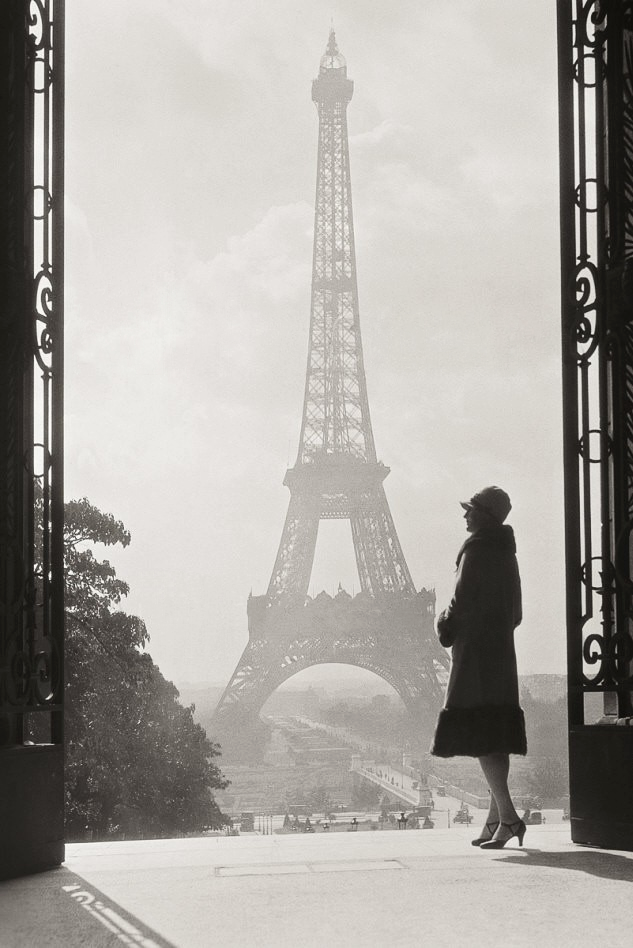
PHOTO: The Eiffel Tower in a contemporaneous photo