Tag: Lost Chord

  • Reznicek’s Dark New Year A Lost Chord Special

    Reznicek’s Dark New Year A Lost Chord Special

    Happy New Year, courtesy of Emil Nikolaus von Reznicek.

    Reznicek is fondly remembered for that sparkling “pops” favorite, the “Donna Diana Overture,” five minutes of high spirited fun.

    But who knows his five symphonies, his ample orchestral music, the violin concerto, his ballet, his chamber music, and his at least 12 operas?

    Reznicek liked to have fun, all right, though his sense of humor more often than not tipped over into the sardonic. While his works were often favorably received by audiences, those in the musical establishment were frequently offended by the composer’s transparent sarcasm. It’s not for nothing that his Second Symphony was subtitled the “Ironic.”

    Further controversy touched his personal life when he became involved with an unhappily married woman, who divorced her husband and became Reznicek’s second wife. There was a scene in his opera “Till Eulenspiegel” that was deemed in some circles anti-Semitic, though he himself was married to a Jew. He was helped in his career by his friend, Richard Strauss, with whom, however, he shared an ambivalent relationship. With the rise of the Nazis, Reznicek determined not to become involved in the Party, yet he remained in Berlin.

    He died there, of typhoid fever, after the city’s infrastructure was destroyed by the Soviets in 1945. His daughter was released by her Soviet captors when it was learned that her father was the composer of the “Donna Diana Overture,” the favorite piece of the Russian commanding officer.

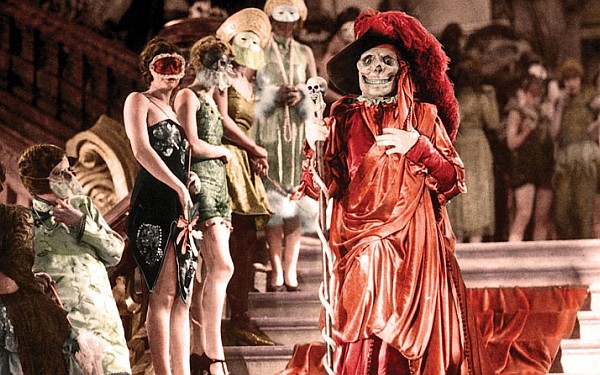
    My own longstanding ambivalence toward the New Year’s holiday has found a perfect match in Reznicek’s Symphony No. 5, written in 1924, which he subtitled “Dance Symphony.” Everyone dances on New Year’s, right? Well, Reznicek offers up in the work’s four movements a polonaise, a csardas, a ländler, and a tarantella. However, if as you’re merrily tapping your toes, something begins to strike you as a little askew, it’s because Reznicek conceived the piece as a “dance of death.” Rachmaninoff would have loved that idea. Whatever it is, it’s a corker.

    In the time remaining, we’ll hear some contemporaneous historic recordings of Reznicek himself conducting, including a vintage performance of his “Donna Diana Overture.” All of these have been issued on cpo.de – classic production osnabrück (or CPO, for short), a German record label that has done much to explore the forgotten byways of classical music, in general, and Reznicek’s output in particular.

    I hope you’ll join me for “Emil With Dancing” (say it aloud to better understand the pun), on special New Year’s edition of “The Lost Chord,” this Sunday night at 10:00 EST, on WWFM – The Classical Network and wwfm.org.

  • Saint Nicholas: From Saint to Santa in Music

    Saint Nicholas: From Saint to Santa in Music

    Over the centuries, the character of Saint Nicholas has undergone a remarkable transformation from austere-but-generous religious figure, to gift-giving, jolly old elf. This Sunday night on “The Lost Chord,” we’ll have music reflective of both.

    The historical and legendary Nicholas, fourth century Bishop of Myra, is the patron saint of sailors, merchants, travelers, brewers, prisoners, prostitutes, Russia, and of course children. THAT Nicholas is celebrated for his secret acts of charity, even if he could be rather short-tempered and a bit severe. Nicholas is said to have punched a few heretics, on occasion.

    One famous episode tells of Nicholas saving three daughters of a poor man from a life of prostitution by tossing bags of gold down their chimney, thereby providing them with proper dowries. The episode is reflected in the familiar pawnbrokers’ symbol of three gold spheres suspended from a bar (and also the practice of hanging stockings by the chimney with care).

    Composer Joseph-Guy Ropartz, a native of Brittany, and a pupil of Jules Massenet and César Franck, focuses on another famous, albeit grisly Nicholas legend. “Le Miracle de Saint Nicolas,” composed in 1905 on a text by René Avril, relates the slaughter of three boys by an unscrupulous butcher, who chops them up and pickles them in brine, with the goal of passing them off as ham. Nicholas restores the youths, and the butcher repents. The same story would be set some 40 years later by Benjamin Britten, as part of his cantata, “Saint Nicholas.”

    Clement Moore’s poem, “A Visit from Saint Nicholas,” exemplified, and in many ways codified, the modern perception of St. Nicholas as Santa Claus. The work inspired, among other things, a symphony by William Henry Fry.

    Fry was born in Philadelphia in 1813. A pioneering figure in American music, he was the first native-born composer to write on a large scale. He composed orchestral works and the first opera by an American to be performed publicly in his lifetime (“Leonora,” in 1845). He was an outspoken advocate of American music – that is, music composed by Americans – at a time when German imports ruled the roost. It would be decades before American music would gain a toehold in the concert halls, which makes Fry an even more remarkable figure.

    Fry studied music with a former bandleader in Napoleon Bonaparte’s army, who went on to become the head of Philadelphia’s Musical Fund Society. Fry himself would become the society’s secretary.

    He was also a journalist, a writer on music, and the first music critic to write for a major American newspaper. He was a foreign correspondent for the Philadelphia Public Ledger and acted as music critic for the New York Herald Tribune.

    Fry composed seven symphonies, all of them of a descriptive nature. His “Santa Claus Symphony,” of 1853, is more of a precursor to the Straussian tone poem, a detailed blow-by-blow of incidents conveyed in Moore’s verse.

    I hope you’ll join me, on this St. Nicholas Day, for two faces of St. Nick. That’s “Dr. Nicholas and Mr. Claus,” this Sunday night at 10:00 EST, on WWFM – The Classical Network and wwfm.org.


    PHOTOS: After resurrecting dismembered children from the dead, Saint Nicholas kicks back with a Coke and a smile

  • Hesse’s Magic Theater on The Lost Chord

    Hesse’s Magic Theater on The Lost Chord

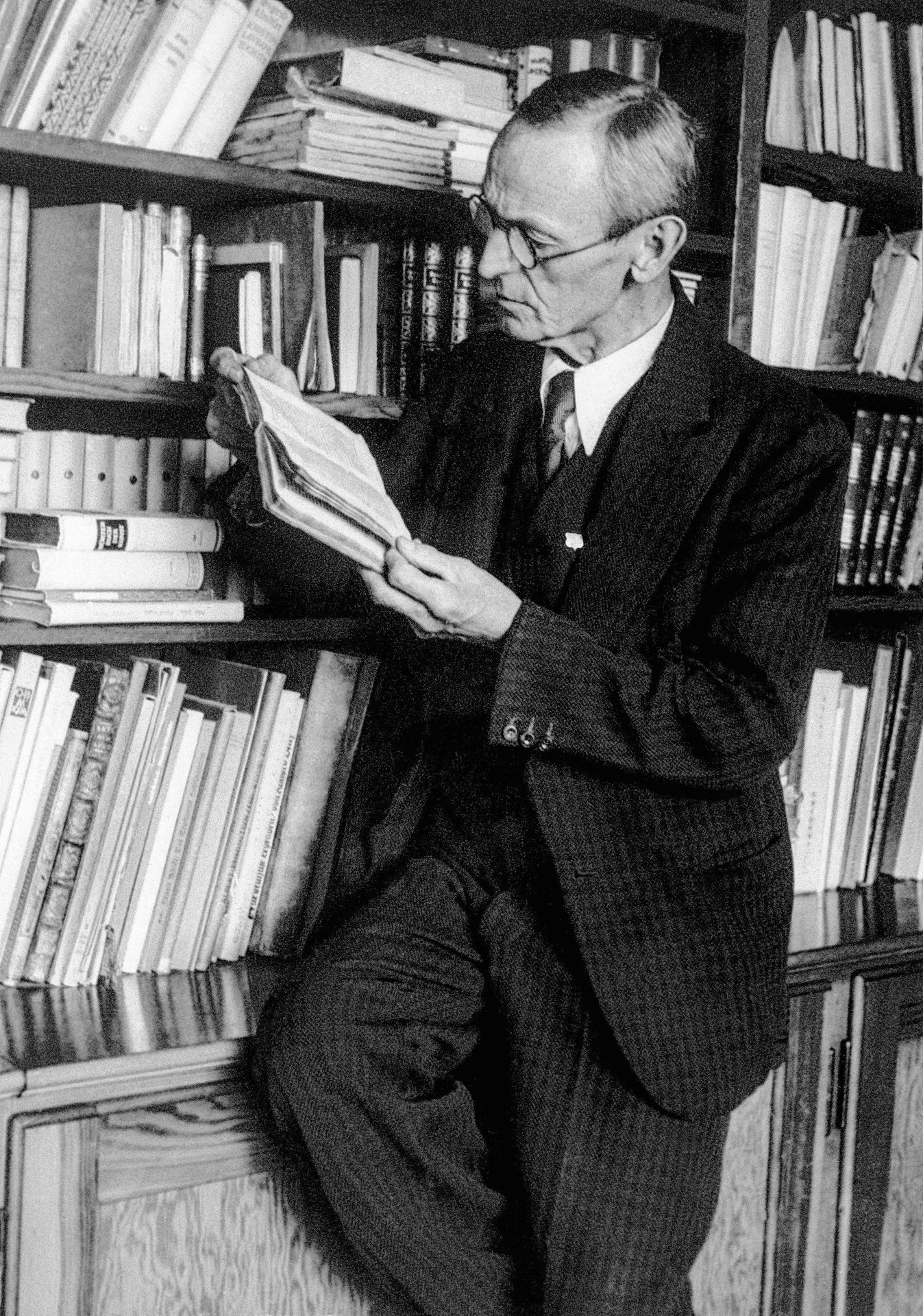
    In Hermann Hesse’s “Steppenwolf,” the loner Harry Haller stumbles across a secret door, inscribed “MAGIC THEATER – NOT FOR EVERYBODY – FOR MADMEN ONLY.” In “The Glass Bead Game,” the game itself, in which scholars strive to achieve perfection through a synthesis of the arts and sciences, is also described as a magic theater.

    This Sunday night on “The Lost Chord,” explore this common thread in Hesse’s novels, with a concerto for horn and orchestra, “The Glass Bead Game,” by James Beckel, and “Music for the Magic Theater,” by George Rochberg.

    Go mad for Hesse. Join me for “Novel Inventions,” this Sunday night at 10:00 EST, on WWFM – The Classical Network and wwfm.org.

  • Lost Chord Webcast Faith and Begorrah

    Lost Chord Webcast Faith and Begorrah

    Faith and Begorrah! “The Lost Chord” has been posted as a webcast!

    https://www.wwfm.org/post/lost-chord-march-15-sharing-green

  • Kirk Douglas & Mardi Gras on WWFM

    It’s a whale of a tail!

    This weekend’s Kirk Douglas “Picture Perfect” and Mardi Gras “Lost Chord” are now posted as webcasts at wwfm.org.

    Let the good times roll!

    https://www.wwfm.org/post/picture-perfect-february-21-remembering-kirk-douglas

    https://www.wwfm.org/post/lost-chord-february-23-louisiana-purchases

Tag Cloud

Aaron Copland (93) Beethoven (95) Composer (114) Film Music (126) Film Score (143) Film Scores (255) Halloween (94) John Williams (189) KWAX (229) Leonard Bernstein (101) Marlboro Music Festival (125) Movie Music (141) Mozart (87) Opera (203) Philadelphia Orchestra (89) Picture Perfect (174) Princeton Symphony Orchestra (107) Radio (87) Ross Amico (244) Roy's Tie-Dye Sci-Fi Corner (290) The Classical Network (101) The Lost Chord (268) Vaughan Williams (103) WPRB (396) WWFM (881)

DON’T MISS A BEAT

Receive a weekly digest every Sunday at noon by signing up here


RECENT POSTS