Tag: Marlboro Music Festival

  • Tuscan Dreams: Boccherini & Tchaikovsky at Marlboro

    Tuscan Dreams: Boccherini & Tchaikovsky at Marlboro

    On this week’s “Music from Marlboro,” we’ll take a trip to Tuscany. Book yourself a room with a view, via works of Luigi Boccherini and Peter Ilych Tchaikovsky.

    Though Boccherini was born in Lucca in 1743, by the time he was 14 he was already working alongside his father as a cellist at the court theater in Vienna. He and his father made several trips to Vienna, and Boccherini made his debut as a composer there at 17.

    Following his father’s death, he left Lucca for Paris. There, he found some success and his works began to be published. It was the Spanish ambassador who invited him to Madrid in 1768. Soon he was in the employ of the infante, Don Luis, at the intrigue-ridden court of Charles III. Boccherini would die in Madrid, after a series of misfortunes, in 1805. It was Mussolini (!) who had his remains repatriated for burial in his hometown. A Tuscan son interred under the Tuscan sun.

    In all, Boccherini composed 30 symphonies, 12 cello concertos, and an enormous quantity of chamber music. Above and beyond the “celebrated minuet,” there are over 100 string quintets, nearly 100 string quartets, and 12 guitar quintets.

    We’ll get a taste of this “Haydn of the Mediterranean,” with a performance of his genial Guitar Quintet No. 5 in D major, G. 449. This may have been the piece that annoyed the Prince of Asturias (later Charles IV), because of the repetitive nature of his violin part, which he demanded that the composer change. Boccherini responded by doubling down and actually expanding it, which infuriated his patron and led to his immediate dismissal.

    The quintet was recorded at Marlboro in 1979 by guitarist David Starobin, violinists Pina Carmirelli and Joseph Genualdi, violist Philipp Naegele, and cellist Marcy Rosen.

    Tchaikovsky, obviously, was not a Tuscan native. He was 50 years-old when he composed his Sextet for Strings in D minor in the summer of 1890. He called the piece “Souvenir de Florence” because he had sketched one of its principal themes – the one that would evolve into the work’s slow movement – while abroad in the city of Dante and Cellini, where he was at work on his opera “The Queen of Spades.”

    We’ll hear his musical souvenir performed at the 1989 Marlboro Music Festival, by violinists Ivan Chan and Marcia Weinfeld Goode, violists Pierre Lenert and Judith Busbridge, and cellists Katja Linfield and David Soyer.

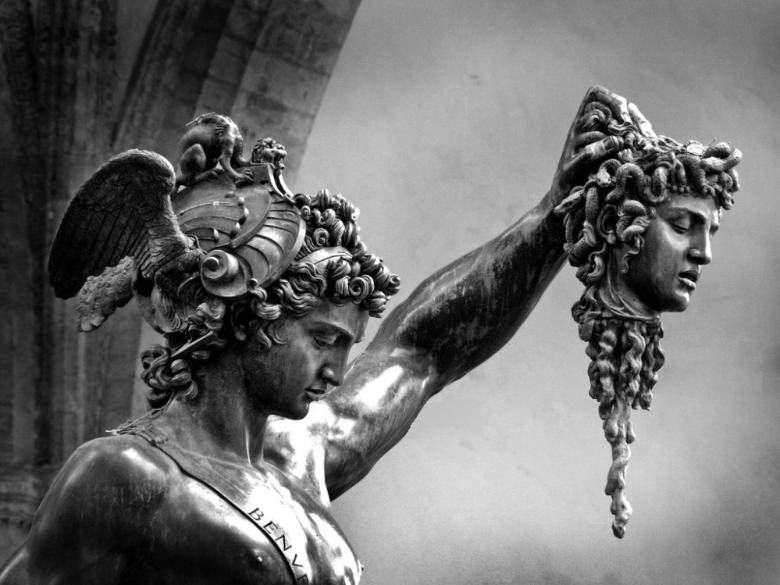
    It’s hard not to lose your head over the quality of the music-making. Pour yourself a nice Chianti. All the eggs will be Florentine, on this week’s “Music from Marlboro,” this Wednesday evening at 6:00 EST, on WWFM – The Classical Network.

    Marlboro School of Music and Festival: Official Page
  • Richard Goode: Marlboro Music Spotlight

    Richard Goode: Marlboro Music Spotlight

    If it’s Goode, you know it’s got to be great.

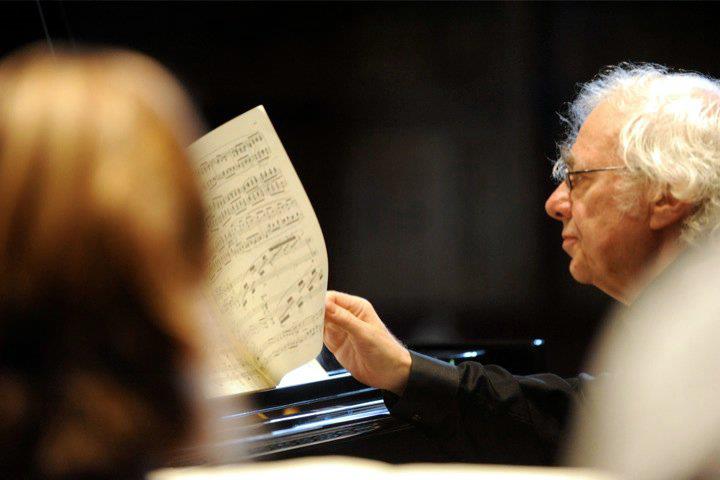
    On this week’s “Music from Marlboro,” we’ll celebrate pianist Richard Goode. Goode served as co-artistic director (with Mitsuko Uchida) of the Marlboro Music School and Festival, from 1999 to 2013. On and off, he’s been part of the fabric of Marlboro since he was 14 years-old.

    We’ll sample his artistry in outstanding performances of music by Ferruccio Busoni and Johannes Brahms.

    Inspired in part by Bach’s “Art of the Fugue,” Busoni composed his “Fantasia contrappuntistica” for solo piano in a flurry of inspiration in 1910. His arrangement for two pianos followed. I think you’ll agree, there’s no substitute for its thrilling antiphonal effects.

    The work is built into one continuous span, but subdivided into twelve parts – a prelude and variations on the Bach chorale “Ehre sei Gott in der Höhe” (“Glory to God in the Highest”) – capped by a quadruple fugue. The laws of counterpoint are rigorously applied, in a manner that would have made even Max Reger smile.

    The work was composed during a whirlwind tour of the United States. Busoni was especially proud of his ability to make every note of the fugue “sound.”

    We’ll hear it performed on a Marlboro spin-off recording from 1964, with Richard Goode and Peter Serkin, making musical mincemeat of this vertiginous knuckle-buster. Goode was only 20 years-old at the time – and Serkin was 16!

    Bach was also an important source of inspiration for Johannes Brahms. Following the death of his mother, the composer was discovered by one of his friends, weeping over the keyboard as he played through works by the Baroque master.

    Also stemming from his loss was Brahms’ Horn Trio in E flat major, Op. 40. The horn, which takes the place of the cello in the traditional configuration of the piano trio, was a highly unusual choice for chamber music, but one which must have recalled for Brahms the lessons he had taken as a child.

    Fortuitously, the instrument also has rustic associations. It was during a walk in the Black Forest that the composer first “heard” the trio’s opening theme. While the work is a celebration of nature, and in the last movement, perhaps even the hunt, the tempo marking of the third movement adagio is characterized as “slow and sad.” Brahms uncovers a well of emotion in the quotation of a German funeral melody, “Wer nur den lieben Gott läßt walten” (“If thou but suffer God to guide thee”).

    Demonstrating the kind of continuity that makes Marlboro shine among summer music festivals, we’ll again hear Richard Goode, this time in middle age, joining hornist Marie-Luise Neunecker and violinist Mark Steinberg, in 1989.

    We’ve never had it so Goode, on the next “Music from Marlboro,” this Wednesday evening at 6:00 EST, on WWFM – The Classical Network and wwfm.org.

    Marlboro School of Music and Festival: Official Page

    FOR THE GREATER GOODE: Richard Goode at Marlboro in 2011

  • Mozart at Marlboro: An Oasis of Musical Sanity

    Mozart at Marlboro: An Oasis of Musical Sanity

    With the world hurtling toward destruction, we’ll do our best to offer an oasis of sanity on the next “Music from Marlboro.”

    Find solace in Wolfgang’s Amadeus Mozart’s Piano Trio in B flat major, K. 502. The composer took evident pleasure in writing for the combination of violin, cello and piano. For one thing, these works provided him opportunities to connect with fellow musicians as a performer. He even regarded some as party pieces.

    K. 502 was written when Mozart was 30 years-old and at the peak of his powers. It was composed in 1786, the year of the premiere of “The Marriage of Figaro.” Like the opera, Mozart’s trio subverts a kind of class stratification, elevating the stringed instruments, formerly relegated to supporting roles, so that they attain equal footing with the piano. This egalitarian gesture allows for a kind of civilized discourse between friends.

    We’ll hear it performed at the Marlboro Music Festival in 1968, by violinist Jaime Laredo, cellist Madeline Foley, and pianist Rudolf Serkin.

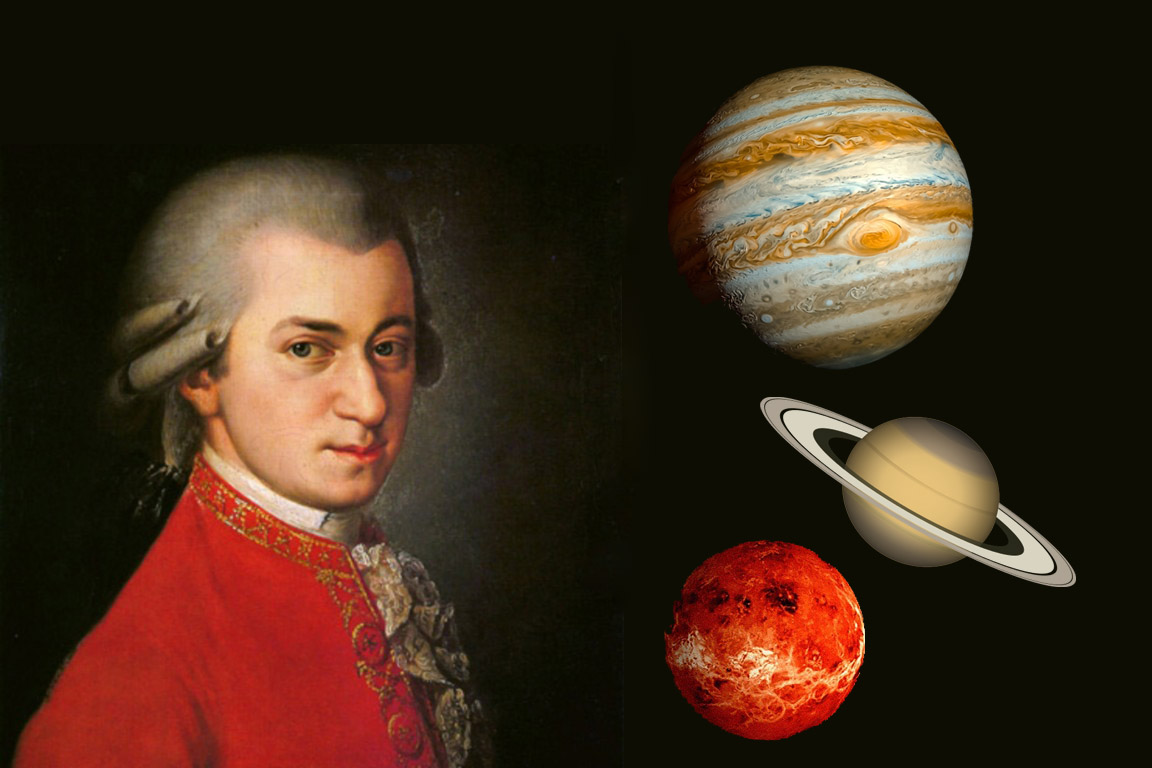
    Then Mozart reaches for the stars, both figuratively and by association. It was probably nowhere in the composer’s thoughts that his Symphony No. 41, composed in 1788, would bear the subtitle “Jupiter.” Like most nicknames, the sobriquet was bestowed by others. That said, it could hardly be more appropriate, as this is one of Mozart’s most Olympian works. It turned out to be his final symphony – and what a way to go!

    The fugato passages of the finale, with the effortless interweaving of no less than five harmonious themes, is breathtaking in its ambition and scale. The spirit of indomitable optimism is just the thing we need right now.

    We’ll hear it performed by the Marlboro Festival Orchestra in 1967, conducted by a 90 year-old Pablo Casals.

    Music may not be a cure-all, but it sure does serve to remind us that there is still beauty in the world and something noble in humanity. Would that everyone could tap into that largeness of spirit and aspire to something greater.

    It’s Mozart for sanity, on the next “Music from Marlboro,” this Wednesday evening at 6:00 EST, on WWFM – The Classical Network and wwfm.org.

    Marlboro School of Music and Festival: Official Page
  • Wagner, Brahms: A Christmas Truce

    Wagner, Brahms: A Christmas Truce

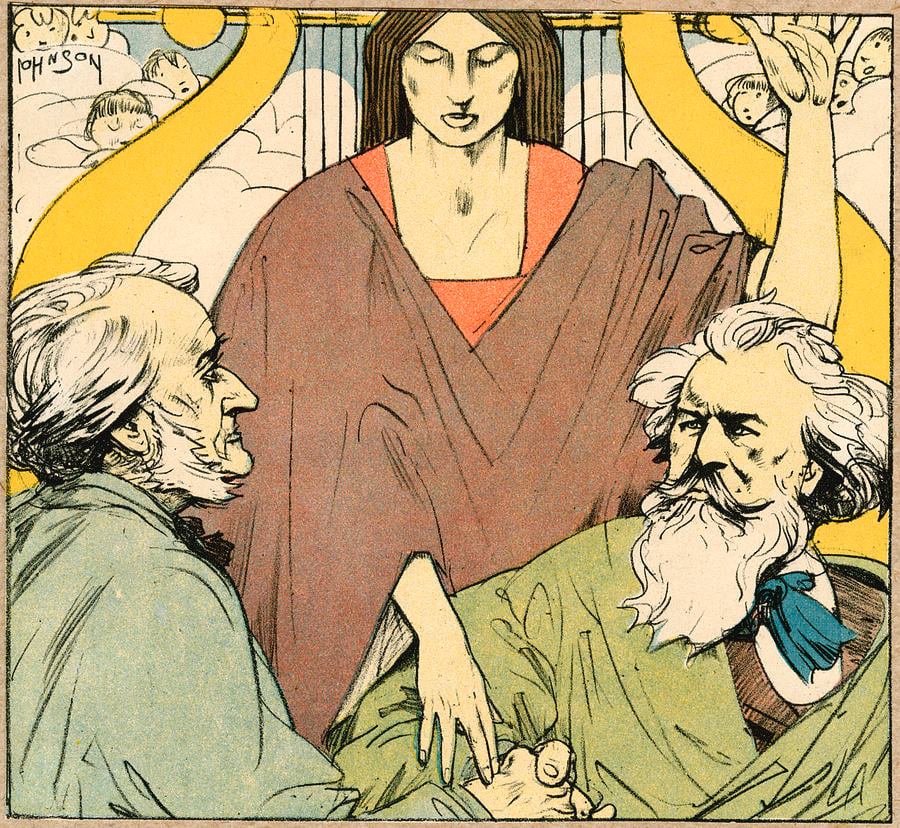
    Brahms and Wagner may have been pitted against one another as exemplars of two conflicting schools of music at the height of the Romantic era, but Christmas is the season of peace on earth and goodwill toward men. With this in mind, we call a ceasefire on the War of the Romantics, if only for the next “Music from Marlboro.”

    Though Wagner could be counted on to behave badly on just about any occasion, he did manage to pull off one of the most romantic gestures in all of classical music.

    On Christmas morning, 1870, Wagner’s wife, Cosima – with whom he had become involved while she was very much married to conductor (and devoted Wagner advocate) Hans von Bülow – awoke to the tender strains of a new serenade.

    Wagner had arranged to have 13 musicians seated along the stairs of their Swiss villa for the first performance of “Triebschen Idyll, with Fidi’s birdsong and the orange sunrise, a symphonic birthday greeting.”

    Cosima was born on December 24, but she always celebrated on Christmas. Fidi was the nickname of the Wagners’ newly-arrived son, Siegfried. Of course, today we recognize the piece more simply as the “Siegfried Idyll.”

    The work had been intended to remain in the Wagner family – from its original title, it’s obvious that it’s loaded with personal significance – but when Wagner ran short of cash, as he often did, he decided that maybe he had better have it published, after all. Some of the material later found its way into the third of the “Ring” operas (also known as “Siegfried”).

    We’ll hear Wagner’s Christmas serenade performed at the 1971 Marlboro Music Festival. In the first chair will be Alexander Schneider, a violinist long associated with the Budapest String Quartet.

    It’s all-too-easy to dismiss Brahms as crusty and gruff. This is the man, remember, who once notoriously wrecked a party by declaring, “If there’s anyone here I’ve failed to insult, I apologize!”

    But Brahms could also be an old softy, with a very generous heart. He retained as especially childlike demeanor around Christmas. He always saw to it that the Schumanns were well-gifted and that his housekeeper’s family had their own tree.

    Brahms’ “Zwei Gesänge” (“Two Songs”) for voice, viola and piano, Op. 91, from 1863, was originally intended as a wedding present for his friend, violinist Joseph Joachim (who also played the viola), and Joachim’s bride, Amalie (who was a contralto).

    The second of the songs , “Geistliches Wiegenlied” (“Sacred Lullaby”), is a setting of Emanuel Geibel’s text, a cradle song sung by Mary, who requests that the angels silence the rustling palms because her Child is asleep. The viola quotes the Christmas melody “Joseph, lieber Joseph mein,” a sly reference on the part of the composer, who incorporates the carol’s text, so as to include Joachim’s given name.

    We’ll hear a performance from 2011, featuring mezzo-soprano Jennifer Johnson Cano, violist Hélène Clément, and, at the keyboard, Marlboro co-director Mitsuko Uchida.

    The balance of the hour will be devoted to a work by the long-lived Carl Reinecke, who became friendly with Brahms while an instructor at the Cologne Music School in the 1850s. Like Brahms, Reinecke was a frequent guest in the Schumann home. A prolific composer himself, Reinecke served as kapellmeister of the Leipzig Gewandhaus Orchestra from 1860 to 1895.

    We’ll hear his charming Octet for Winds, Op. 216, which was published in 1892. It was performed at Marlboro in 2010 by oboist Nathan Hughes; clarinetists Anthony McGill and Moran Katz; hornists Rodovan Vlatkovic and Jill Bartles; and bassoonist William Winstead.

    It’s a Christmas truce, on this week’s “Music from Marlboro.” The Marquess of Queensberry Rules need not apply, this Wednesday evening at 6, on WWFM – The Classical Network and wwfm.org.

    Marlboro School of Music and Festival: Official Page

    WAGNER AND BRAHMS: Gods and sinners reconciled

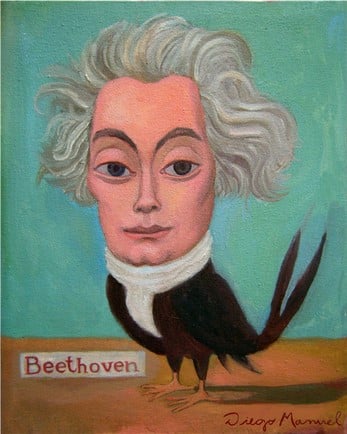
  • Beethoven at Marlboro Music Festival

    Beethoven at Marlboro Music Festival

    On this week’s “Music from Marlboro, we’ll hear Beethoven, early and late (maybe), performed by Marlboro artistic directors, past and present.

    It is clear from the Quintet for Piano and Winds, Op. 16, that Beethoven was an admirer of Mozart. The work, written when the composer was in his mid-20s, is evidently modeled on Mozart’s K. 452, scored for the same instrumental combination. It’s even written in the same key (E-flat).

    Beethoven’s Quintet will be performed at the 2012 Marlboro Music Festival by pianist Jonathan Biss, oboist Mary Lynch, clarinetist Tibi Cziger, hornist Wei-Ping Chou, and bassoonist Natalya Rose Vrbsky. Biss was appointed co-artistic director of the school and festival, joining Mitsuko Uchida, in 2018.

    When exactly did Beethoven composer his “Kakadu Variations?” The last of his piano trios was published in 1824. However, the first full manuscript dates from 1816. It’s possible its genesis lay even a good deal earlier than that. Was it a slip when Beethoven wrote to his brother and described the piece as having been composed in 1803? Or on another occasion, when he described it as “among my early works?”

    In any case, it’s thought that the piece underwent substantial revisions. In 1824, Beethoven was churning out masterpiece after masterpiece, including the “Diabelli Variations,” the “Missa solemnis,” and the Ninth Symphony.

    It is curious that the trio opens with such protracted air of solemnity, given its source material. The work’s Papageno-like theme is borrowed from the song “Ich bin der Schneider Kakadu” (“I am Kakadu the tailor”), from Wenzel Müller’s 1794 singspiel “Die Schwestern von Prag” (“The Sisters from Prague”). Müller’s opera had been revived in Vienna in 1814.

    The trunk of Beethoven’s trio is full of whimsy, a series of variations on Müller’s theme. Toward the end, however, the work slips back into a minor key and begins to take on renewed gravitas. The final variation exhibits on an unexpected depth, rigor and maturity, as Müller’s ditty is subjected to an incongruous display of chromatic and contrapuntal complexity.

    We’ll hear the “Kakadu Variations” performed by pianist Rudolf Serkin, violinist Yuzuko Horigome, and cellist Peter Wiley, who played the work at Marlboro in 1983. Serkin, of course, was Marlboro’s founding artistic director, from 1951.

    You can’t beat Beethoven. The composer takes wing, on the next “Music from Marlboro,” this Wednesday evening at 6:00 EST, on WWFM – The Classical Network and wwfm.org.

    Marlboro School of Music and Festival: Official Page

Tag Cloud

Aaron Copland (92) Beethoven (94) Composer (114) Film Music (116) Film Score (143) Film Scores (255) Halloween (94) John Williams (185) KWAX (228) Leonard Bernstein (99) Marlboro Music Festival (125) Movie Music (131) Opera (197) Philadelphia Orchestra (86) Picture Perfect (174) Princeton Symphony Orchestra (106) Radio (86) Ralph Vaughan Williams (85) Ross Amico (244) Roy's Tie-Dye Sci-Fi Corner (290) The Classical Network (101) The Lost Chord (268) Vaughan Williams (99) WPRB (396) WWFM (881)

DON’T MISS A BEAT

Receive a weekly digest every Sunday at noon by signing up here


RECENT POSTS