
Tag: Marlboro Music Festival

  • Nielsen & Sibelius at Marlboro School of Music and Festival

    Nielsen & Sibelius at Marlboro School of Music and Festival

    We head north on this week’s “Music from Marlboro” for selections by the most famous composers from Denmark and Finland, respectively.

    Like “The Ugly Duckling” of his compatriot, Hans Christian Andersen, Carl Nielsen emerged from humble beginnings to blossom into Denmark’s national composer. Internationally, Nielsen has flitted in and out of the seemingly inescapable shadow of Finnish master Jean Sibelius. Both men were born in 1865. In fact, Nielsen was six months older. But it is an unfair comparison, not so much apples and oranges; more like kipper and pickled herring.

    The very fact that Nielsen is not referred to reductively as “The Sibelius of Denmark” is attributable to an unusually strong individual voice. His music is modern, yet traditional; Scandinavian, yet Germanic. Most important, it is full of personality, freshness and vitality.

    Nielsen’s Wind Quintet of 1922 reflects the composer’s optimism and good humor. These he retained despite great personal, professional, and global turmoil. Each part of the quintet was tailored to the personality of the individual performer for which it was written (all members of the Copenhagen Wind Quintet). There is also something of the outdoors about the piece. Nielsen was always fascinated by nature, and there are ample suggestions of bird song woven into the texture of the work’s pastoral neoclassicism.

    We’ll enjoy a recording made at Marlboro in 1971, with Paula Robison, flute; Joseph Turner, oboe; Larry Combs, clarinet; William Winstead, bassoon; and Robin Graham, horn.

    Sibelius too was influenced by nature. However, the very subtitle of his String Quartet in D minor, “Voces Intimae,” suggests a looking inward. The piece was composed in 1909, between the Third and Fourth Symphonies. It is the only chamber work of Sibelius’ maturity. The composer wrote to his wife, “It turned out as something wonderful. The kind of thing that brings a smile to your lips at the hour of death. I will say no more.”

    If Nielsen suggests the Ugly Duckling, Sibelius is more like the Swan of Tuonela.

    We’ll hear his quartet performed at the 2005 Marlboro Music Festival, by Dan Zhu and Sarah Kapustin, violins; Samuel Rhodes, viola; and Amir Eldan, cello.

    The prevailing winds will be from the north (strings, too, for that matter), on the next “Music from Marlboro,” this Wednesday evening at 6:00 EST, on WWFM – The Classical Network and wwfm.org.

    Marlboro School of Music and Festival: Official Page

  • Thanksgiving Classical Music: Dvořák & More

    Thanksgiving Classical Music: Dvořák & More

    Over the river and through the wood, to grandmother’s house we go…

    Who are we kidding? We’re not going anywhere.

    While you’re whiling away the hours in Thanksgiving traffic, I hope you’ll join me on The Classical Network, on this busiest travel day of the year, as I crown a late afternoon of American music with an hour calculated to put you in a thankful frame of mind.

    Sure, in the amount of time it takes you to get where you’re going, Antonin Dvořák very likely was able to cross the Atlantic, to assume the directorship of the newly-minted National Conservatory of Music in New York. Some of the composer’s most beloved works had their genesis in his stay in the United States – the “New World” Symphony and the Cello Concerto in B minor, among them.

    Of his chamber music, I imagine none of it is more frequently encountered than his “American” String Quartet in F major, Op. 96. Written during the summer of 1893, while the composer was on holiday in the Czech community of Spillville, Iowa, the work is beautiful and ingratiating to an extraordinary degree. What’s puzzling is why the composer’s equally beautiful and ingratiating String Quintet in E-flat major, Op. 97, composed in Spillville immediately after – and also sometimes identified as the “American” – has not achieved the same degree of popularity.

    We’ll get to enjoy it this evening, in a performance featuring a young Joshua Bell, who joins violinist Felix Galimir, violists Ulrich Eichenauer and Judith Busbridge, and cellist Wendy Sutter, at the 1989 Marlboro Music Festival.

    Dvořák’s underrated quintet will be flanked by two works by American composers.

    We’ll begin with Vincent Persichetti, who was born in Philadelphia in 1915. (He died there in 1987.) Although Persichetti seems to have had more of a lasting influence as a teacher – having molded legions of budding composers through his work at Combs College of Music, the Philadelphia Conservatory, and the Juilliard School – his own compositions are invariably well-crafted and certainly well worth listening to.

    Persichetti composed 15 serenades for a variety of instrumental combinations. We’ll hear the Serenade No. 10, from 1961. It was performed at Marlboro, by flutist Julia Bogorad and harpist Rita Tursi, in 1976.

    The hour will conclude with an 8-minute Woodwind Quintet by the dread Elliot Carter. Carter is the kind of composer who, for the six decades or so that comprised his artistic maturity, had a tendency to get lost in his own head. (He lived to 103 and wrote right up to the very end.) Not to worry: in 1948, he still had one foot in Audience Land.

    We’ll hear Carter’s quintet performed in 2006 by flutist Valérie Tessa Chermiset, oboist Winnie Cheng-Wen Lai, clarinetist Charles Neidich, bassoonist Martin Garcia, and hornist Wei-Ping Chou.

    Classic Ross Amico will be your co-pilot, on the next “Music from Marlboro.” Misery loves company, this Wednesday evening at 6:00 EST, on WWFM – The Classical Network and wwfm.org.

    Happy Thanksgiving, and safe travels!

    Marlboro School of Music and Festival: Official Page

  • Schubert’s Octet Marlboro Music Festival

    Schubert’s Octet Marlboro Music Festival

    It’s foolish to attempt to play something like the Schubert Octet all by yourself. Many have tried – mad dreamers! – only to come up looking ridiculous. Not even the gloss of extraneous percussion instruments or transposition to the banjo can disguise the bald fact of the matter – that to really enjoy this work as Franz Schubert intended, you can’t do better than eight superb musicians from the Marlboro Music Festival.

    On the next “Music from Marlboro,” we’ll hear Schubert’s Octet in F major, D. 803, performed in its entirety, by violinists Joseph Genualdi and Felix Galimir, violist Steven Tenenbom, cellist Peter Wiley, double-bassist Peter Lloyd, clarinetist Shannon Scott, bassoonist Alexander Heller, and hornist David Jolley. Marlboro musicians toured the piece, alongside Mozart’s “Eine kleine Nachtmusik,” in 1987.

    Tune in for this expansive masterwork a little earlier than usual – there’s too much melody and charm to be confined within a single hour – this Wednesday evening at 5:50 EST. It pays to be a team player. One can’t outscore the Octet, on WWFM – The Classical Network and wwfm.org.

    Marlboro School of Music and Festival: Official Page
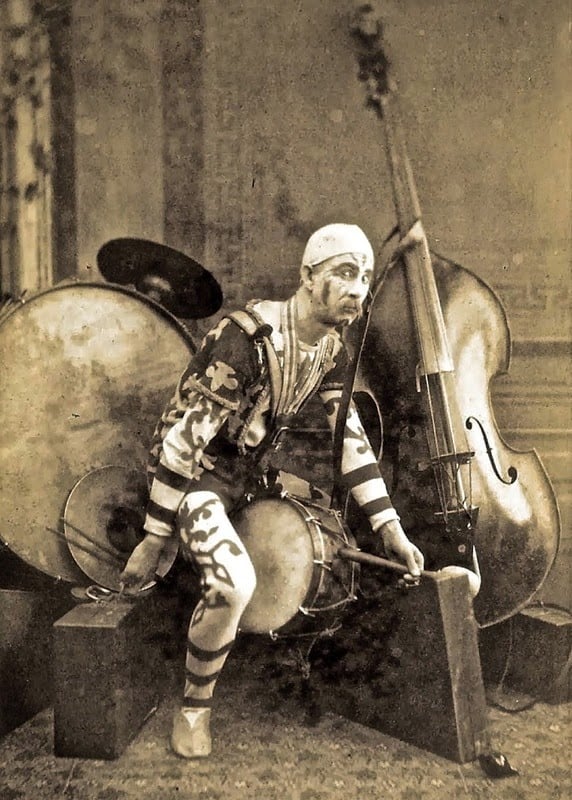
  • Dvořák & Bartók at Marlboro: Serenades & Divertimenti

    Dvořák & Bartók at Marlboro: Serenades & Divertimenti

    This week on “Music from Marlboro,” two Central European composers look back to the 18th century – in a sense. We’ll hear a serenade by Czech master Antonin Dvořák, and then a divertmento by Hungarian master Béla Bartók.

    I say in a sense, because both designations, “serenade” and “divertimento,” have their roots in the 18th century as entertainment music. The classical prototypes, as they were originally intended, avoided weighty arguments, profound introspection, and showy virtuosity of the type one might expect of more substantial forms, like the symphony, the concerto, or the string quartet.

    Dvořák’s unpretentious “Serenade for Winds” was given its first performance in 1878, when the composer was 37 years-old. The serenade is written in the tried-and-true “Slavonic style” that established Dvořák’s fame. Its instrumentation and emphasis on melody recall occasional and ceremonial serenades of the 18th century.

    We’ll hear a recording made in 1957, by Marlboro wind players directed by Louis Moyse.

    In addition to being one of the greatest composers of the 20th century, Bartók was a pioneering ethnomusicologist, who did much to expand and deepen our musical understanding, through his documentary journeys and insights into the cultures of Eastern Europe and North Africa.

    He also happened to be one of the most innovative of musical thinkers, beating an alternative route to modernism through the assimilation of folk music and forging a highly personal idiom that owes little to either Stravinsky or Schoenberg.

    Bartók’s “Divertimento for String Orchestra,” from 1939, is a fascinating chimera. It takes its name from an 18th century form (appropriate for its neo-classical ambitions), shares qualities with the Baroque concerto grosso (with its small group of soloists at times contrasting with the greater body of strings), and yet remains distinctly of its time. Even here, the composer’s love of folk music is evident.

    The “Divertimento” was Bartók’s final composition before fleeing Nazi Europe for the United States. He was 58 years-old. He completed the piece in only fifteen days, while a guest at the Swiss chalet of conductor Paul Sacher, who had commissioned the work. Though it was composed very quickly, as befits a divertimento, Bartók left meticulous instructions for its performance.

    We’ll hear it played at Marlboro in 1974, by a string orchestra conducted by Sándor Végh. Végh actually knew Bartók. He participated in the first Hungarian performance of the composer’s String Quartet No. 5.

    I hope you’ll join me for a diverting hour, on the next “Music from Marlboro.” If you’re Hungary for worthwhile music, Czech it out, this Wednesday evening at 6:00 EST, on WWFM – The Classical Network and wwfm.org.

    Marlboro School of Music and Festival: Official Page
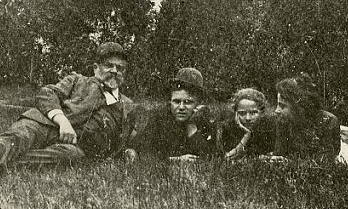

    PHOTOS: Dvořák and Bartók go al fresco

  • Dvořák & Bartók at Marlboro: Serenades Reimagined

    Dvořák & Bartók at Marlboro: Serenades Reimagined

    This week on “Music from Marlboro,” two Central European composers look back to the 18th century – in a sense. We’ll hear a serenade by Czech master Antonin Dvořák, and then a divertmento by Hungarian master Béla Bartók.

    I say in a sense, because both designations, “serenade” and “divertimento,” have their roots in the 18th century as entertainment music. The classical prototypes, as they were originally intended, avoided weighty arguments, profound introspection, and showy virtuosity of the type one might expect of more substantial forms, like the symphony, the concerto, or the string quartet.

    Dvořák’s unpretentious “Serenade for Winds” was given its first performance in 1878, when the composer was 37 years-old. The serenade is written in the tried-and-true “Slavonic style” that established Dvořák’s fame. Its instrumentation and emphasis on melody recall occasional and ceremonial serenades of the 18th century.

    We’ll hear a recording made in 1957, by Marlboro wind players directed by Marcel Moyse. Moyse co-founded the Marlboro Music Festival in 1951.

    In addition to being one of the greatest composers of the 20th century, Bartók was a pioneering ethnomusicologist, who did much to expand and deepen our musical understanding, through his documentary journeys and insights into the cultures of Eastern Europe and North Africa.

    He also happened to be one of the most innovative of musical thinkers, beating an alternative route to modernism through the assimilation of folk music and forging a highly personal idiom that owes little to either Stravinsky or Schoenberg.

    Bartók’s “Divertimento for String Orchestra,” from 1939, is a fascinating chimera. It takes its name from an 18th century form (appropriate for its neo-classical ambitions), shares qualities with the Baroque concerto grosso (with its small group of soloists at times contrasting with the greater body of strings), and yet remains distinctly of its time. Even here, the composer’s love of folk music is evident.

    The “Divertimento” was Bartók’s final composition before fleeing Nazi Europe for the United States. He was 58 years-old. He completed the piece in only fifteen days, while a guest at the Swiss chalet of conductor Paul Sacher, who had commissioned the work. Though it was composed very quickly, as befits a divertimento, Bartók left meticulous instructions for its performance.

    We’ll hear it played at Marlboro in 1974, by a string orchestra conducted by Sándor Végh. Végh actually knew Bartók. He participated in the first Hungarian performance of the composer’s String Quartet No. 5.

    I hope you’ll join me for a diverting hour, on the next “Music from Marlboro.” If you’re Hungary for worthwhile music, Czech it out, this Wednesday evening at 6:00 EST, on WWFM – The Classical Network and wwfm.org.

    Marlboro School of Music and Festival: Official Page


    PHOTOS: Dvořák and Bartók go al fresco

Tag Cloud

Aaron Copland (92) Beethoven (95) Composer (114) Film Music (123) Film Score (143) Film Scores (255) Halloween (94) John Williams (187) KWAX (229) Leonard Bernstein (101) Marlboro Music Festival (125) Movie Music (138) Opera (202) Philadelphia Orchestra (89) Picture Perfect (174) Princeton Symphony Orchestra (106) Radio (87) Ralph Vaughan Williams (85) Ross Amico (244) Roy's Tie-Dye Sci-Fi Corner (290) The Classical Network (101) The Lost Chord (268) Vaughan Williams (103) WPRB (396) WWFM (881)

DON’T MISS A BEAT

Receive a weekly digest every Sunday at noon by signing up here


RECENT POSTS