Tag: Music Education

  • Nadia Boulanger Influential Teacher

    Nadia Boulanger Influential Teacher

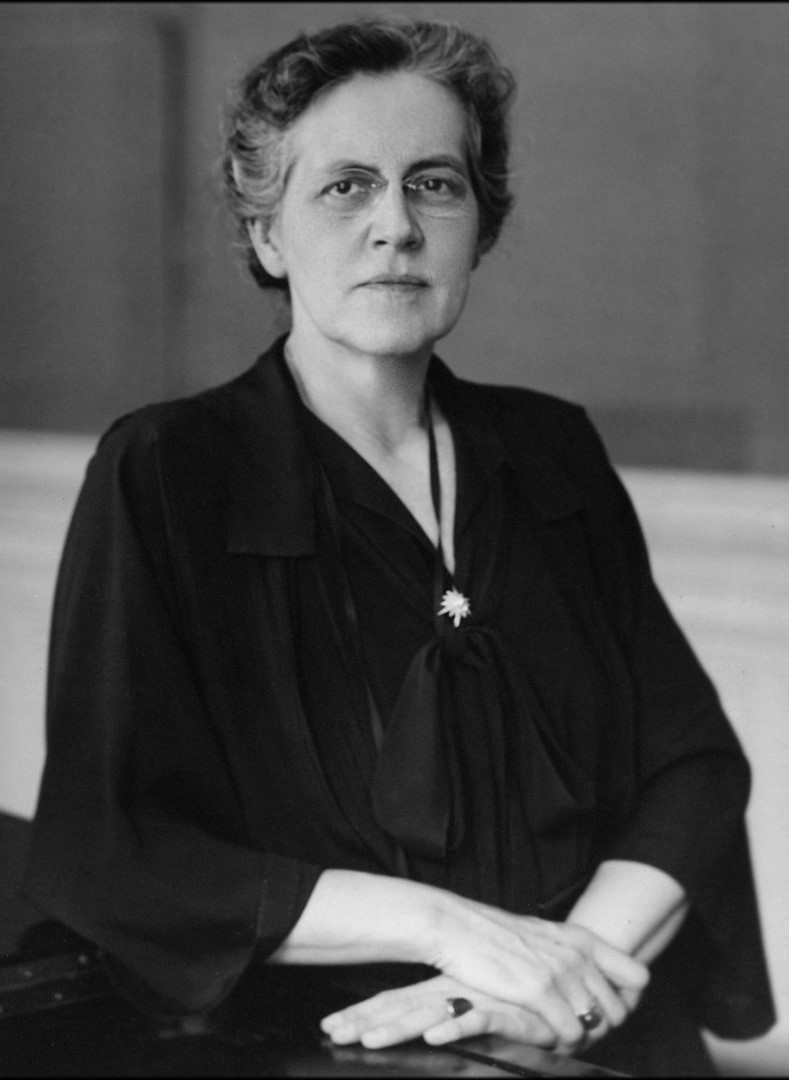
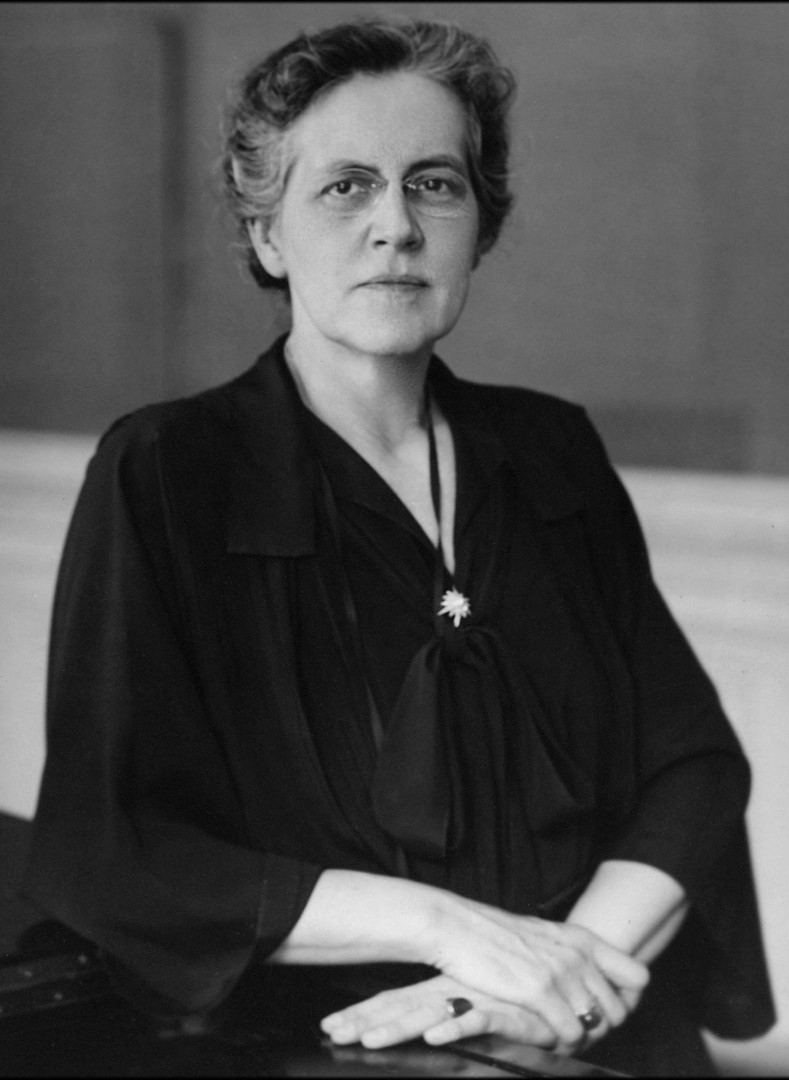
    Nadia Boulanger (1887-1979) has been described as the most influential teacher since Socrates.

    Her students included everyone from Dinu Lipatti to Igor Markevitch, from Aaron Copland to Elliott Carter, from Astor Piazzolla to Philip Glass, from Michel Legrand to Quincy Jones, from Leonard Bernstein to “What Makes It Great?” creator Rob Kapilow.

    Her influence on American music, in particular, has been incalculable. Hopefuls flocked to her American Conservatory at Fontainebleau, where she accepted applicants from all backgrounds, provided they were determined to learn. It was Virgil Thomson who quipped, “She was a one-woman graduate school, so powerful and permeating that legend credits every United States town with two things: a five and dime and a Boulanger pupil.” The five and dimes may have faded, but not so the legacy of the “Boulangerie.”

    Beneath those grey hairs and pince-nez lurked an iron will that brooked no nonsense, yet Boulanger was surprisingly accepting, astonishingly objective, and generally dead-on in her assessments. When asked if a hierarchy could be established among composers – Beethoven being more important than Max Bruch, for instance – she suggests the pointlessness of such comparisons, stating it is like comparing the Himalayas to Montmartre.

    She accepted the philosophical breadth of her pupils as a matter of course: “It’s very different to confront a work you don’t know yet, or a work in which you have to recognize some worth, while secretly saying to yourself, ‘that’s a trend I would never follow.’ That’s a matter of personal taste. Cannot culture allow us to go beyond personal taste and see the beauty of an object? I may not want to buy it, but I can see that it’s beautiful.”

    We need more of that in our world. Happy birthday, Nadia Boulanger!


    Fascinating Boulanger documentary, with first-hand accounts, historical footage, and terrific insights. Leonard Bernstein is interviewed in French, beginning around the 7-minute mark.

    Boulanger conducts Fauré’s Requiem

    Her sister, Lili, was really the composer in the family. (Sadly short-lived, she died at the age of 24.) Even so, Nadia made some game attempts at composition. Here’s her own “Fantaisie variée” for piano and orchestra.

    Three Pieces for Cello and Piano

    Playing Brahms waltzes with Dinu Lipatti

  • Herrmann’s Mentor: Percy Grainger

    Herrmann’s Mentor: Percy Grainger

    Bernard Herrmann may be best-recognized as the greatest film composer the United States ever produced, but he was also a passionate Anglophile. I’ve written a lot about Herrmann over the years, from many different perspectives, but in light of my recent visit to the Percy Grainger Home & Studio in White Plains, NY (where Grainger lived for 40 years), I thought I’d share a little bit about the relationship of these two artists today, for the anniversary of Herrmann’s birth.

    Herrmann studied composition with Grainger at New York University in the early 1930s. Even in untested youth, his extensive knowledge and passion for English music (and music in general) endeared him to his mentor – they also shared an ear for unusual orchestration – and a genuine affection sprang up between them. In particular, they both adored Frederick Delius, whom Grainger got to know fairly well in the early years of the 20th century. (Grainger, born in Melbourne, lived in England from 1901-14.)

    For Herrmann, Grainger was like a magic fountain of information about many of the living composers he so admired. Herrmann himself would later get to know some of them himself during guest conducting engagements with the BBC Symphony, the Halle Orchestra, and the London Symphony Orchestra.

    Here’s a little more about Grainger and Herrmann, largely drawn from Steven C. Smith’s Herrmann biography, “A Heart at Fire’s Center.” I’ve read Smith’s book, of course, but for convenience’s sake, I am cutting and pasting this excerpt from an article about Herrmann’s Anglophilia compiled by Ian Lace for the MusicWeb International website. To access the complete article, which would certainly be worth your while, if it’s a topic that interests you, look for the link below.


    From Lace’s piece:

    Also in 1932 Herrmann attended a bi-weekly course in advanced composition and orchestration led by the brilliant but wildly unorthodox Percy Grainger.

    ‘Percy Grainger was Australia’s most innovative advocate of music past and present, from his childhood days as “the flaxen-haired phenomenon” of Melbourne to his years of international fame as folk song collector, composer, and recitalist. At the heart of Grainger’s unstable, erratic character was a fixation on truth, contempt for tradition and a passion for the outrageous.

    ‘Since becoming head of NYU’s music department in 1931, Grainger had offered a syllabus of musical eccentricity and frequent brilliance that left many students puzzled and unimpressed. The class of 1932, however, had one exception. In Grainger, Herrmann saw qualities he himself was cultivating: individualism and dedication to one’s craft and beliefs, however unpopular and unfashionable.

    ‘The relationship between the fifty-year-old teacher and the twenty-one year old student was one of mutual respect. “Grainger did not place orchestration examples before [his students],” Grainger biographer John Bird wrote, “Instead, he allowed them to choose their pieces and gave them advice when and where needed. Herrmann for instance, decided to orchestrate MacDowell’s Celtic Sonata and felt the need to employ the sonorities of a tenor tuba. The Australian knew little of this unusual piece of plumbing, so together, they familiarised themselves with the instrument and found suitable moments to include it.”

    ‘Herrmann and Grainger also discovered a shared love of Whitman and the music of Delius. One of Herrmann’s favourite NYU memories peripherally involved the latter: one morning the gaunt, sprightly Grainger leapt onto the lecture stage and announced, “The three greatest composers who ever lived are Bach, Delius and Duke Ellington. Unfortunately Bach is dead, Delius is very ill – but we are happy to have with us today the Duke!” Ellington and his band then mounted the stage and played for the next two hours.

    ‘If other Grainger lectures were less dramatic, they were no less influential to Herrmann: ancient monophony, folk music, atonality, polyphony, the indigenous rhythms of Africa, Asia, and the South Seas – each was examined by Grainger with alternating lucidity and jumbled mysticism. When the scholastic year ended in mid-August 1933, Grainger considered his work a failure, as few students had been as responsive as Herrmann; but it cemented a friendship between him and his intense young pupil that affected Herrmann for the rest of his life.’

    https://www.musicweb-international.com/classrev/2003/oct03/herrmann_anglophile.htm?fbclid=IwY2xjawLOBDtleHRuA2FlbQIxMABicmlkETFPTEczaGdzU1B4S0kzTWU3AR62TG3w1_v7tT4klupSLkdpPpTqX4vX0pwpvI3BPd3MVjNKSI3Mr_xsxg77Qg_aem_mH_vuFF2bUoZiXE-rhwFJw


    For more about Grainger and Herrmann (and Herrmann’s chum Jerome Moross), there’s also this entry on the Percy Grainger Society website.

    https://percygrainger.org/blog/8103609

    Happy birthday, Bernard Herrmann!


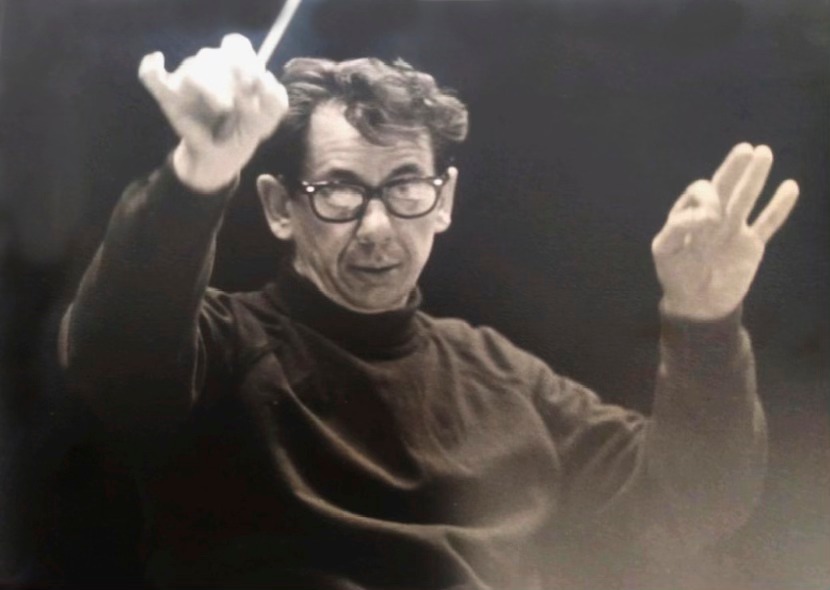
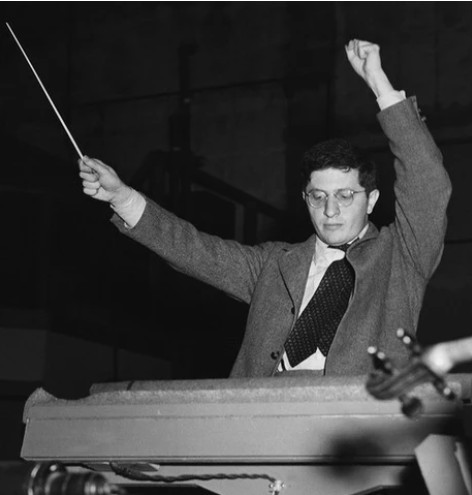
    PHOTOS (clockwise from upper left): Herrmann conducting at CBS radio in the 1930s; Grainger conducting the National High School Orchestra at Interlochen in 1937; Grainger with Duke Ellington at New York University in 1932; Herrmann and Orson Welles at CBS

  • The Last Repair Shop A Must-See Oscar Winner

    The Last Repair Shop A Must-See Oscar Winner

    How a documentary short as steeped in music as The Last Repair Shop could have eluded me is mindboggling. In its 39 minutes it does more to convey the transformative power of music – not in some lofty, abstract way, but demonstrably life-changing – than Bradley Cooper’s “Maestro” attempts at over thrice the running time.

    Honored at Sunday’s Academy Awards ceremony as the best of its category, the film profiles four unassuming technicians who perform the heroic service of repairing worn and damaged instruments for students in the Los Angeles public school system. Each walks us through the engrossing details of their respective trades, which they’ve performed for decades with a real sense of purpose. Along the way, each reveals his or her own incredible life story. I won’t spoil anything by revealing the details, but some of them take us to some pretty unexpected places, with plenty of comedy and tragedy, levity and struggle. All of them express their personal sense of connection with the kids, many of whom they’ve never met.

    In fact, there is empathy and elevation in abundance. This is one very moving, very human film. What’s more, it is life-affirming, so very necessary at a time when everything, from our environmental, health and tech anxiety, to our political and social strife, to our nihilistic entertainment, can leave us feeling lost, broken and overwhelmed.

    A cross-section of students demonstrates just how important having access to these instruments has been to their lives. The concluding scene is pitch perfect, and you may find yourself shedding tears of joy.

    If this is indeed “the last repair shop” – quality music programs in public schools have become an endangered species – the tradition needs to be resurrected now! Too often quality of life issues are the first casualties of slashed budgets.

    The filmmakers exercise remarkable restraint in making no such pleas. Instead, they allow the beautiful results to speak for themselves.

    I confess it choked me up.

    The film streams free on YouTube. Watch it!

  • Nadia Boulanger: Influential Music Teacher

    Nadia Boulanger: Influential Music Teacher

    Nadia Boulanger (1887-1979) has been described as the most influential teacher since Socrates.

    Her students included everyone from Dinu Lipatti to Igor Markevitch, from Aaron Copland to Elliott Carter, from Astor Piazzolla to Philip Glass, from Michel Legrand to Quincy Jones, from Leonard Bernstein to “What Makes It Great?” radio host Rob Kapilow.

    Her influence on American music, in particular, has been incalculable. Hopefuls flocked to her American Conservatory at Fontainebleau, where she accepted applicants from all backgrounds, provided they were determined to learn. It was Virgil Thomson who quipped, “She was a one-woman graduate school, so powerful and permeating that legend credits every United States town with two things: a five and dime and a Boulanger pupil.” The five and dimes may have faded, but not so the legacy of the “Boulangerie.”

    This summer, Boulanger was to have been the focus of “Nadia Boulanger and Her World,” a two-week celebration of her music and influence, at the Bard Music Festival, held on the campus of Bard College in upstate New York, since sensibly postponed to next year, because of COVID concerns. The concerts, talks, and panels will examine not only Boulanger’s own contributions, but also those of her sister, the tragically short-lived composer Lili Boulanger, and representative works by her innumerable students and contemporaries.*

    In the meantime, I stumbled across this fascinating documentary a few months back. It’s full of great stuff – first-hand accounts, historical footage, and terrific insights. Bernstein is interviewed in French, beginning around the 7-minute mark:

    Beneath those grey hairs and pince-nez lurked an iron will that brooked no nonsense, yet Boulanger was surprisingly accepting, astonishingly objective, and generally dead-on in her assessments. When asked if a hierarchy could be established among composers – Beethoven being more important than Max Bruch, for instance – she suggests the pointlessness of such comparisons, stating it is like comparing the Himalayas to Montmartre.

    She accepts the philosophical breadth of her pupils as a matter of course: “It’s very different to confront a work you don’t know yet, or a work in which you have to recognize some worth, while secretly saying to yourself, ‘that’s a trend I would never follow.’ That’s a matter of personal taste. Cannot culture allow us to go beyond personal taste and see the beauty of an object? I may not want to buy it, but I can see that it’s beautiful.”

    Clearly, she was an extraordinary person. Happy birthday, Nadia Boulanger!


    • There’s always something interesting going on at Bard. Check out the Bard Music Festival “Rediscoveries” series, featuring underplayed works by classic Black composers on the same programs with beloved masterpieces for string orchestra by Tchaikovsky and Bartók, now streaming on Saturdays:

    https://fishercenter.bard.edu/bmf/

    Fisher Center at Bard

Tag Cloud

Aaron Copland (92) Beethoven (95) Composer (114) Film Music (119) Film Score (143) Film Scores (255) Halloween (94) John Williams (185) KWAX (229) Leonard Bernstein (99) Marlboro Music Festival (125) Movie Music (134) Opera (198) Philadelphia Orchestra (86) Picture Perfect (174) Princeton Symphony Orchestra (106) Radio (87) Ralph Vaughan Williams (85) Ross Amico (244) Roy's Tie-Dye Sci-Fi Corner (290) The Classical Network (101) The Lost Chord (268) Vaughan Williams (102) WPRB (396) WWFM (881)

DON’T MISS A BEAT

Receive a weekly digest every Sunday at noon by signing up here


RECENT POSTS