Tag: Organ Music

  • Leif Kayser: Composer, Priest, & Organ Master

    Leif Kayser: Composer, Priest, & Organ Master

    Leif Kayser was certainly a multifaceted individual. This week on “The Lost Chord,” we’ll listen to some of his music, of course, but we’ll also talk about his many roles.

    Born in Copenhagen on 1919, Kayser began his studies at the Royal Danish Academy of Music in 1936. In Stockholm, he studied composition with Hilding Rosenberg and conducting with Tor Mann. In 1941, he made his debut as a pianist, in Copenhagen, and as a conductor, in Gothenburg.

    As a composer, he emerged as one of Denmark’s most promising young symphonists. However, following theological studies in Rome, Kayser was ordained in 1949. He largely abandoned concert music – but you can’t keep a good composer down.

    Over time, he began to write for the organ and gradually he produced another symphony. He served as pastor and organist of St. Ansgar Roman Catholic Cathedral until 1964. Then he left the Church to marry and to teach at his alma mater, the Royal Danish Academy of Music.

    Kayser died in 2001. He is still regarded as one of the leading organ composers of Denmark.

    We’ll hear one of Kayser’s gorgeous symphonies, from 1939. That will be prefaced by “Caleidoscopio,” a work for flute and organ, composed between 1974 and 1976. After a brief introduction, it gradually becomes apparent that the piece is constructed as a series of reflections on the familiar chorale “Von Himmel hoch.” Interesting that a former Catholic priest would write variations on a chorale associated with Martin Luther!

    But, like Whitman, Kayser contained multitudes, as composer, organist, pianist, conductor, priest, husband, and teacher. I hope you’ll join me for “Kayser Roles,” on “The Lost Chord,” now in syndication on KWAX, the radio station of the University of Oregon!


    Clip and save the start times for all three of my recorded shows:

    PICTURE PERFECT, the movie music show – Friday at 8:00 PM EST/5:00 PM PST

    SWEETNESS AND LIGHT, the light music program – ALL NEW! – Saturday at 11:00 AM EST/8:00 AM PST

    THE LOST CHORD, unusual and neglected rep – Saturday at 7:00 PM EST/4:00 PM PST

    Stream them, wherever you are, at the link!

    https://kwax.uoregon.edu/


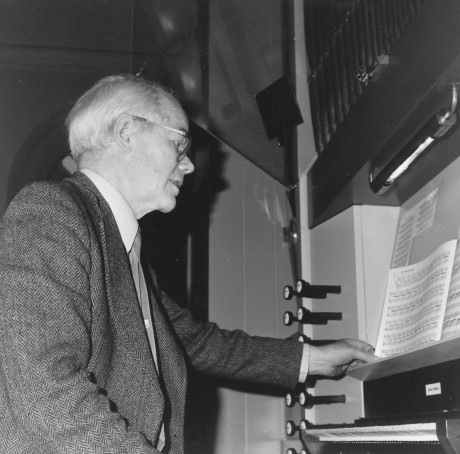
    PHOTO: Kayser pulls out all the stops

  • Felix Hell Bright Organ Music

    Felix Hell Bright Organ Music

    ‘Tis the season…

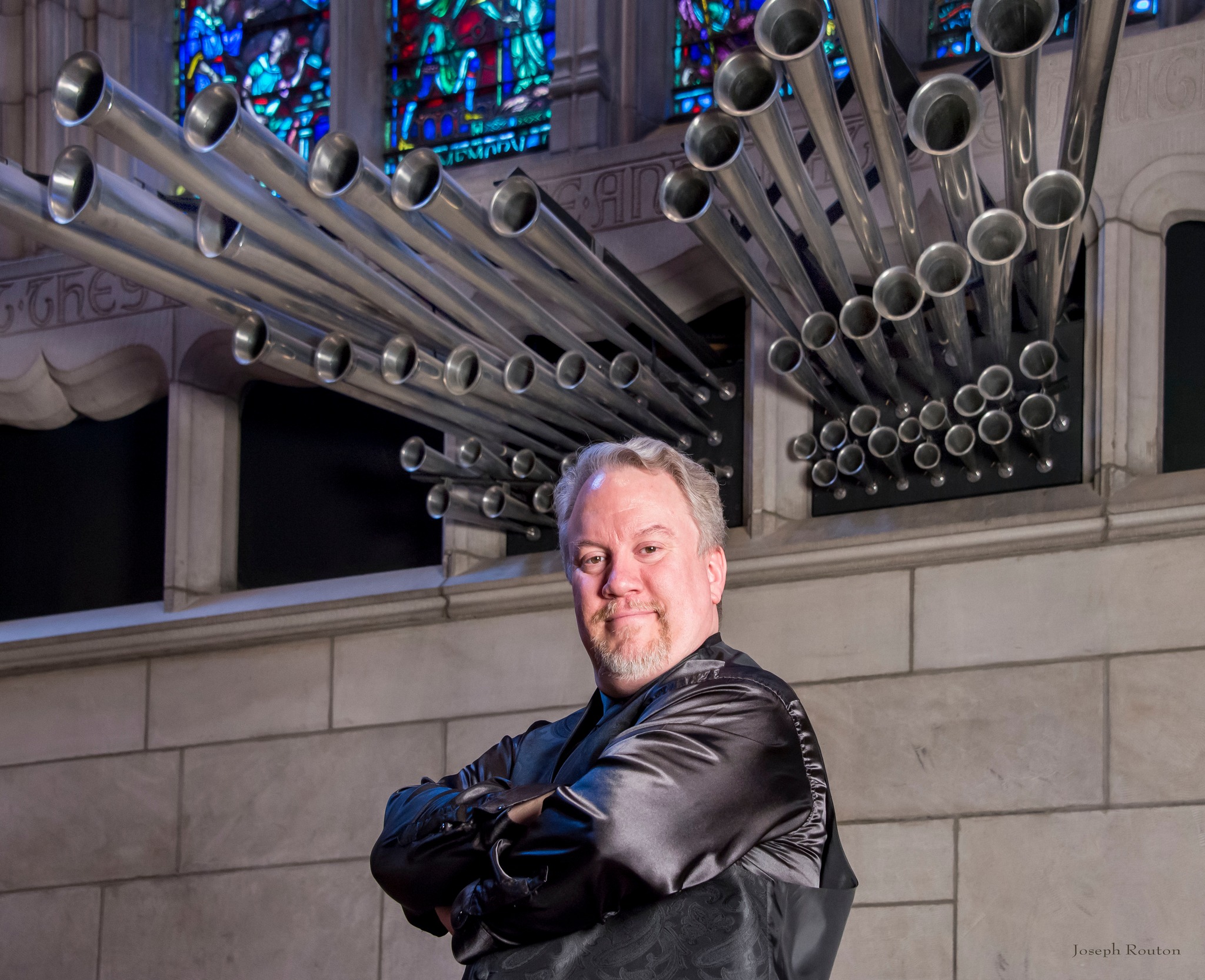
    Hear it performed on the largest pipe organ in the world, played by the aptly named Felix Hell.

    FUN FACTS! AMAZE YOUR FRIENDS! In German, the word for “Hell” is actually “Hölle” – “Hell” means “Bright.”

  • Glenn Gould & The Organist: A Bach Story

    Glenn Gould & The Organist: A Bach Story

    For some reason, everyone seems to think August is a great time to get married. So, alas and alack, it is with much disappointment that I am unable to attend the second weekend of the Bard Music Festival, devoted to “Berlioz and His World.” However, I still have some memories and assessments to share from last weekend. Tomorrow I hope to write-up my impressions of last Sunday’s performance of Pauline Viardot’s fairy tale opera “Le dernier sorcier” (“The Last Sorcerer”).

    In the meantime, here’s a follow-up to my post about Bill Osborne. Bill, you’ll recall, is my most recent Bard acquaintance, a retired organist who studied at Fontainebleau with the venerable pedagogue Nadia Boulanger. For over 40 years, he served as Distinguished Professor of Fine Arts at Denison University. Do yourself a service, if you haven’t read it, and check out my previous post about him, which is chock full of amusing anecdotes! You’ll find it at one of the links below.

    Somehow, in writing about Boulanger and Bernstein and Osborne’s adventures in Princeton, I failed to share his Glenn Gould story. Bill was rehearsing an organ recital for the University of Michigan’s Ann Arbor May Festival, when he was asked if it would be all right if the now-legendary pianist might have access to the auditorium, as Gould wanted to prepare for his appearance with Eugene Ormandy and the Philadelphia Orchestra. (I learn through a search of May Festival records that the concert took place on May 4, 1958.) Anyway, even though Bill had the auditorium reserved for the afternoon, naturally he said yes. It may have been spring, but Gould, one of classical music’s great eccentrics, showed up at the appointed time, bundled, characteristically, in heavy winter clothing.

    The work he was scheduled to perform was Beethoven’s Piano Concerto No. 4, but when he sat down at the keyboard, it was not Beethoven he rehearsed, but rather, from first note to last, Bach’s “Goldberg Variations.” It’s probably not necessary for me to mention that the recording Gould made of the variations only a few years before, in 1955, remains one of the all-time classics of the gramophone. With Gould’s permission, Bill sat there all by himself, out in the house, and enjoyed a command performance.

    Afterward, Gould expressed interest in the venue’s organ and asked if he could try the instrument. Again, Bill said yes (naturally), and Gould sat there in his street shoes and pulled some stops and made a terrific noise. A few years later, he would record Bach’s “The Art of Fugue” on the organ in 1962.

    Just after Gould’s Beethoven performance with the Philadelphia Orchestra, the pianist again encountered Bill, as he walked off stage, and what was the first thing he said? He wanted to know how Bill’s recital went. Bill told me he was incredibly touched by that.

    Anyway, that’s the Glenn Gould story. I hope you enjoyed it as much as I did.

    The Bard Music Festival continues through tomorrow at Bard College in Annandale-on-Hudson, NY. Tonight’s concert, featuring Louise Farrenc’s Symphony No. 3 and Joachim Raff’s Symphony 10 “Autumn” (with Berlioz’s “Les francs-juges” Overture the “William Tell” Overture” by the composer’s bête noire, Gioachino Rossini), is available for livestream. You’ll find a complete schedule at https://fishercenter.bard.edu/whats-on/programs/bard-music-festival/

    Fisher Center at Bard


    My previous Bill Osborne post

    https://www.facebook.com/photo/?fbid=1360873204831739&set=a.883855802533484

    History of the Philadelphia Orchestra at the May Festival

    https://alumni.umich.edu/michigan-alum/history-lessons-ums-philorch/

    Programs for the 1957 May Festival. I couldn’t locate 1958. Osborne is credited as pianist with the University Choral Union and bassoonist with the Musical Society Orchestra, conducted by Thor Johnson, then music director of the Cincinnati Symphony.

    https://aadl.org/sites/default/files/docfiles/programs_19570501b.pdf

    Glenn Gould plays the “Goldberg Variations” in 1955


    PHOTOS: With Bill Osborne at Bard (top); Glenn Gould at the May Festival in 1958

  • César Franck Bicentennial A Late Appreciation

    César Franck Bicentennial A Late Appreciation

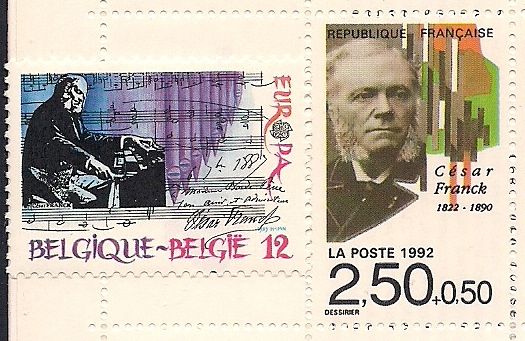
    The Belgian-born French composer César Franck was born on this date 200 years ago.

    I was slow to warm to Franck’s highly-regarded Symphony in D minor, in particular to the insipid theme of the last movement. It’s taken decades, but I think I’ve finally gotten to the point where I’m willing to concede its overall greatness.

    Much more congenial to me have always been Franck’s symphonic poems and his lovely chamber music.

    No comment on the organ works – although I once attended a “Franckathon” at St. Clement’s Church in Philadelphia, back in the 1990s, at which his complete output for the instrument was presented, with two intermissions. Just to say that I did. Well, that and for the free doughnuts and coffee.

    He may very well have had the finest mutton chops in the world, I’ll grant him that.

    Happy bicentennial, César Franck!


    Symphony in D minor (insipid theme starts at 28:39)

    “Le Chasseur maudit” (“The Accursed Huntsman”)

    Piano Quintet in F minor

    Violin Sonata in A major

    “Grande pièce symphonique,” played by Marcel Dupré

    Prelude, Chorale and Fugue

    https://www.youtube.com/watch?v=wHftZ2-w4XE

    And, for the season, “Panis Angelicus”

  • Eric Plutz Princeton’s Acclaimed Organist

    Eric Plutz Princeton’s Acclaimed Organist

    If there’s a keyboard to be played in Princeton, especially if it happens to be on an organ console, then there’s a good chance Eric Plutz is in the building. Now in his 18th year as University Organist of Princeton University, Plutz has begun another very full season.

    Read my profile of this remarkable musician, make plans to attend a few concerts (including those on the free “After Noon Concert Series,” at Princeton University Chapel, Thursdays at 12:30 p.m., and Princeton Pro Musica’s performance of Brahms’ “Ein Deutsches Requiem,” at Richardson Auditorium this Sunday at 4 p.m.), and, by all means, consider adding Eric’s new recording, “Vierne: The Complete Organ Symphonies,” to your collection.

    The article appears in this week’s edition of U.S. 1 Newspaper – PrincetonInfo, online and in area vending machines today.

    https://www.communitynews.org/princetoninfo/artsandentertainment/princeton-organist-celebrates-french-master-with-new-cds/article_1dd88012-4f0c-11ed-bffd-3bd5ef7eac2c.html

Tag Cloud

Aaron Copland (92) Beethoven (95) Composer (114) Film Music (119) Film Score (143) Film Scores (255) Halloween (94) John Williams (185) KWAX (229) Leonard Bernstein (99) Marlboro Music Festival (125) Movie Music (134) Opera (198) Philadelphia Orchestra (86) Picture Perfect (174) Princeton Symphony Orchestra (106) Radio (87) Ralph Vaughan Williams (85) Ross Amico (244) Roy's Tie-Dye Sci-Fi Corner (290) The Classical Network (101) The Lost Chord (268) Vaughan Williams (102) WPRB (396) WWFM (881)

DON’T MISS A BEAT

Receive a weekly digest every Sunday at noon by signing up here


RECENT POSTS