Tag: Organ Music

  • Gordon Turk’s Jongen at Ocean Grove

    Gordon Turk’s Jongen at Ocean Grove

    It seems that organist Gordon Turk has found the ideal demonstration piece for the outsized acoustical marvel that is the Great Auditorium in Ocean Grove.

    Turk, who has been organist in residence at Ocean Grove since 1974, will be the soloist in Joseph Jongen’s “Symphonie Concertante,” a work that he has described as “the biggest and most magnificent piece written for the combination of organ and orchestra.”

    The work will conclude the “Summer Stars” classical concert series in grand fashion on August 4 at 7:30 p.m. The MidAtlantic Opera Company Orchestra will be conducted by Jason Tramm. Also on the program will be Paul Dukas’ “The Sorcerer’s Apprentice.” Mezzo-soprano Margaret Mezzacappa, a Metropolitan Opera National Auditions winner, will sing famous arias from Italian opera.

    The “Symphonie Concertante” is probably the most celebrated work by Jongen, who was born in Liège, Belgium, in 1873. The piece was commissioned by Rodman Wanamaker in 1926 for performance in his Philadelphia department store on the largest functioning pipe organ in the world. Wanamaker died before the project could come to fruition. It wasn’t until 2008 that the work was performed on the instrument for which it was originally intended, with Peter Richard Conte at the console and Rossen Milanov conducting the Philadelphia Orchestra.

    Originally installed in 1908 by Robert Hope-Jones, the auditorium’s organ is one of the 20 largest in the world. It has been restored and greatly expanded by Turk and curator John Shaw. The organ has five manuals, 190 ranks and 11,753 pipes.

    Remarkably, the Great Auditorium was constructed by shipbuilders in only 90 days in 1894. It is the largest enclosed auditorium in New Jersey. The picturesque, wooden structure houses 6,250 seats. Its barrel-vaulted ceiling is a practical throwback to the days before amplification. In its original layout, the hall had close to 10,000 seats, reflective of its mission as a facility for camp meetings. The auditorium continues to host religious services and visiting evangelists.

    The venue’s enormous capacity and superior acoustical properties made it a popular venue for musicians from the golden age, from Enrico Caruso to John Philip Sousa. Leonard Bernstein affectionately called it “The Great Barn,” comparing its acoustics favorably to those of Carnegie Hall.

    You can find out more about the concert, the performers, the instrument, and this remarkable structure in my article in today’s Trenton Times.

    http://www.nj.com/times-entertainment/index.ssf/2016/07/classical_music_gordon_turk_mi.html

  • Rediscovering Max Reger: Genius or Sauerkraut?

    Rediscovering Max Reger: Genius or Sauerkraut?

    Like just about everyone else, I have missed doing something special for the centennial of Max Reger’s death. Not that I didn’t see it coming. I just plum forgot.

    Reger died on this date in 1916. Perhaps the craziest exemplar of crazy German contrapuntalism, Reger could write music of such density that the individual voices could get lost in a tangle, deep inside a knot, somewhere in an impenetrable thicket.

    He was mostly a composer of “abstract” music – mainly a lot of fugues and sets of variations – seeing himself as the heir of Beethoven and Brahms. But it is the Baroque masters Reger most closely resembles, in his own gargantuan, overcooked way, especially in his organ works, of which he composed many.

    Aside from his sporadically delightful (though occasionally borderline) “Variations and Fugue on a Theme by Mozart” and a handful of organ works, most of his prolific output is known mainly by specialists. For some reason or another, Rudolf Serkin remained a high profile torchbearer. Serkin recorded Reger’s Piano Concerto with the Philadelphia Orchestra and, later in life, the “Variations and Fugue on a Theme of Bach.”

    To me, Reger comes closest to being palatable – and even charming – when restricted to a single, non-keyboard instrument, as in his sonatas for solo violin and suites for solo cello.

    Also, it sounds like he may have actually had some fun composing his “Four Tone Poems after Arnold Böcklin.” Böcklin, you may recall, was the Swiss artist who painted “The Isle of the Dead,” which inspired the third of these. Surprisingly, the tone poems are late works. Did anyone see them coming? I guess after a lifetime of getting all tangled up, Reger just wanted to walk around with loose shoelaces for a change.

    Despite the fact that in most of his photos he looks like he’s got a mouth full of sauerkraut, Reger actually proved himself to have a sharp sense of humor. His most famous retort to a critic came in the form of a letter written in 1906. It reads: “I am sitting in the smallest room of my house. I have your review in front of me. Soon it will be behind me.”

    Reger, you rascal. Why couldn’t you get more of that into your music?

    Actually, somebody didn’t forget: Michael Kownacky will be celebrating Reger tonight on “A Little Night Music,” at 10 EDT on wwfm.org.


    “Variations and Fugue on a Theme by Mozart”:

    “Fantasy and Fugue on B-A-C-H”:

    Rudolf Serkin plays the “Variations and Fugue on a Theme by Bach”:

    Serkin plays the Piano Concerto:

    Sonata for Unaccompanied Violin in G Major, Op. 91, No. 6:
    Mov’t I https://www.youtube.com/watch?v=rW4Jk3zmbzg
    Mov’t II https://www.youtube.com/watch?v=SKfGFwQZgeg
    Mov’t III https://www.youtube.com/watch?v=8u_sWKiLc60
    Mov’t IV https://www.youtube.com/watch?v=yoaTz5mVuXg

    Suite for Unaccompanied Cello in G Major, Op. 131c, No. 1:

    “Four Tone Poems after Arnold Böcklin” (with the paintings that inspired them):


    PHOTOS: The many moods of Max Reger (1873-1916)

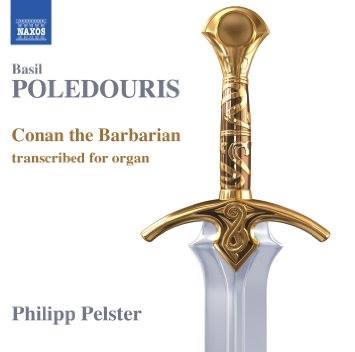
  • Conan the Barbarian Organ: A Holy Film Score

    Conan the Barbarian Organ: A Holy Film Score

    If what’s been keeping you out of church is that there’s simply not enough music from “Conan the Barbarian” being played on the organ, Naxos Records has done your soul an enormous service.

    Organist Philipp Pelster has transcribed and recorded Basil Poledouris’ film score magnum opus for the King of Instruments. What’s that, you say, something GOOD actually came out of “Conan?” Well, yes, actually, as a matter of fact. Having seen the movie, I was skeptical, myself. But Poledouris’ film score is one of the best of the era. And that’s saying something.

    To bless the venture and keep it holy, here’s Arnold Schwarzenegger’s prayer to Crom:

    If you just can’t deal with the silliness, here’s the music without the visuals:

    Feel free to needle-drop. There’s great stuff all the way through it.

    Unfortunately, there are no clips of the organ transcription posted on YouTube. I guess I’ll just have to shell out the $12 and hope for the best. CROM! HEAR ME, CROMMM!!!!

  • Ocean Grove NJ’s Grand Summer Music Series

    Ocean Grove NJ’s Grand Summer Music Series

    If you like the organ, the beach, or outsized halls left over from the era of the Third Great Awakening, you might consider the summer classical music series at Ocean Grove, NJ.

    Musicians have traditionally been attracted to churches, usually as an affordable means to reach local audiences. The Great Auditorium is not your neighborhood church. Ocean Grove does everything on a grand scale – 6,250 seats, 25 ton organ and a visiting chorus of 1000 voices. The hall’s enormous capacity and uncanny acoustical properties have attracted such luminaries as Enrico Caruso, Leonard Bernstein and Virgil Fox.

    Sure, there’s a whiff of vulgarity about the venue, with its large wooden American flag studded with flashing light bulbs and enormous illuminated signs that flank the stage proclaiming “Holiness to the Lord” and “So be ye holy,” but really it makes it all the more perfect as a setting to celebrate America’s independence.

    Read the complete rundown of the summer’s musical events in my article in today’s Trenton Times:

    http://www.nj.com/times-entertainment/index.ssf/2015/06/classical_music_series_of_reci.html


    PHOTO: Understatement was never its strong suit

  • Philadelphia Organ Delights

    Philadelphia Organ Delights

    It occurs to me that I haven’t had the time to acknowledge the passing of Minnesota composer Stephen Paulus, who died Oct. 19, nearly 16 months after suffering a debilitating stroke. Paulus, who made his home in the Twin Cities area (though born in Summit, NJ), was particularly noted for his choral and vocal works.

    The The Philadelphia Orchestra will perform Paulus’ Grand Concerto for Organ and Orchestra at the Kimmel Center tonight at 8. The work was composed in 2004. This will be its first performance by the orchestra. Ken Cowan will be the soloist. It comes at the end of a three-concert weekend celebrating the Verizon Hall’s magnificent Fred J. Cooper Memorial Organ, the largest mechanical-action concert organ in the United States.

    Each program includes a different organ work, each rendered by a world-class performer. Yesterday afternoon, Paul Jacobs joined the orchestra for Alexandre Guilmant’s Symphony No. 1 for organ and orchestra.

    I attended the first of the concerts on Thursday night, with Peter Richard Conte in Joseph Jongen’s Symphonie concertante, and it was a stunner. The work is well enough represented on recordings, though this is the first time I had an opportunity to enjoy it live. The soloist, choirmaster and organist at Philadelphia’s St. Clement’s Church and Grand Court Organist of the famed Wanamaker organ, was seated at a console situated right up between the cellos and the podium, which was wholly appropriate in a work with so much interplay between organ and the other instruments. It is an extremely well-written piece, and the orchestra, which played beautifully, with plenty of elegance in the winds, merged seamlessly with the organ, the King of Instruments on a genial stroll out among its subjects.

    All three programs open with Carlos Chávez’s orchestration of an organ piece by Dietrich Buxtehude, his Chaconne in E Minor. Buxtehude, of course, was an influential and revered organist. Composers travelled from all over Europe to hear him perform. There is a famous story, perhaps apocryphal, of Bach walking close to 300 miles for the privilege. It’s certainly possible, since Bach took off work for almost four months for the occasion!

    I have to say, I found Chávez’s arrangement to be surprisingly refreshing. Maybe I’m just suffering from Bach/Stokowski fatigue. Even the austere Schoenberg, for as much as I enjoy his arrangement of the “St. Anne” Fugue, is far too flashy for me not to feel a little cheap for enjoying it. Chávez‘s treatment is a model of good taste, allowing the music to speak for itself, without any attention-grabbing razzle dazzle. This kind of restraint in orchestrating a keyboard work is not to be undersold (though showmanship certainly does have its place). Of course it helps that the music in itself is extremely beautiful.

    Buxtehude’s use of ostinato influenced Bach, and the Chaconne in particular became the model for the final movement of Brahms’ Symphony No. 4.

    Here it is, played by a youth orchestra in Caracas:

    The Latin connection, both in the clip and in the ethnicity of the orchestrator, is fitting, since the chaconne had its roots in the Spanish colonies as a triple-meter dance of the 16th century. Of course, once the Germans got a hold of it, everything became very solemn.

    The concerts conclude with Sir Edward Elgar’s “Enigma Variations,” a work I never tire of hearing. On Thursday, the orchestra did the piece proud. Each variation was put across as characterful, sporatically witty or energetic, often melancholy, and always noble.

    I was a little worried toward the end, since music director Yannick Nézet-Séguin has a tendency to push, rather than allow a work’s grandeur to unfold naturally. Indeed, he launched into the finale in a vigorous manner, perhaps just to prove his players could keep up. For me, personally, this kind of thing has marred his interpretations of Shostakovich’s 5th and Mahler’s 1st, for instance, though from the ecstatic audience and critical reaction, I appear to be in the minority. Thankfully, it was only a momentary aberration, and the Elgar concluded with unforced grandeur and nobility as it should. The organ was heard once again in the progam’s finale, in all its “Star Wars” throne room pomp.

    While I have had mixed feelings about Yannick, his programs are often undeniably exciting in themselves. This was the second Philadelphia concert I attended this season to which I was enticed by the opportunity to experience unusual repertoire performed by a major orchestra. A couple of weeks ago, I shelled out my hard-earned dollars to hear Leoš Janácek’s “Glagolitic Mass,” an astonishing piece of music I never thought I’d be able to hear live without traveling to the Czech Republic (which also happens to feature a major part for organ, including a wild cadenza). The balance of the program was made up of symphonic poems by Sibelius and Dvorak.

    Sadly, on that occasion, as on this, the hall was half empty. Can it really be that audiences only want to hear Schubert’s 9th Symphony?

    PHOTO: Philadelphia’s King of Instruments

Tag Cloud

Aaron Copland (92) Beethoven (95) Composer (114) Film Music (119) Film Score (143) Film Scores (255) Halloween (94) John Williams (185) KWAX (229) Leonard Bernstein (99) Marlboro Music Festival (125) Movie Music (134) Opera (198) Philadelphia Orchestra (86) Picture Perfect (174) Princeton Symphony Orchestra (106) Radio (87) Ralph Vaughan Williams (85) Ross Amico (244) Roy's Tie-Dye Sci-Fi Corner (290) The Classical Network (101) The Lost Chord (268) Vaughan Williams (102) WPRB (396) WWFM (881)

DON’T MISS A BEAT

Receive a weekly digest every Sunday at noon by signing up here


RECENT POSTS