Tag: Osmo Vänskä

  • Sibelius’s Symphony No 5 Day 4 of 8

    Sibelius’s Symphony No 5 Day 4 of 8

    EIGHT DAYS OF SIBELIUS – DAY 4

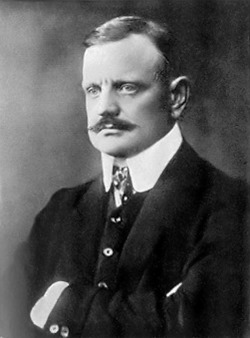
    With his 50th birthday imminent, Jean Sibelius received a commission from the Finnish government to write a brand-new symphony. The Symphony No. 5 was given its world premiere in 1915, with the composer conducting the Helsinki Philharmonic – though the original version was quite different, in many respects, from the masterwork we know today. In a remarkable feat of objectivity, Sibelius extensively revised his symphony twice, in 1916 and then again in 1919.

    One of the work’s major innovations (showing the influence of Liszt, whom Sibelius greatly admired) involved the elimination of the break between the first two movements of the original four-movement structure. The demarcations are blurred so that the first movement now slips inexorably into a scherzo, and the listener is swept along, as if caught up in a powerful current, or precipitated into a sublime avalanche, to thrilling effect.

    The transition has always been a challenge for conductors, since this sneaking accelerando should feel as if it’s completely organic. It has to unfurl naturally. Sibelius would further experiment with the telescoping of movements and the subversion of classical expectations in his Symphony No. 7.

    Perhaps the most striking revision is in how the final movement builds to a climax of impressive grandeur, a sublime apotheosis of its ennobling “swan theme,” only to come up against a series of powerful, monolithic chords, each isolated from the next by a moment of silence. The first five serve to suspend the effect. The sixth falls, like Thor’s hammer, with an indisputable sense of finality. Truly, this is music of the gods.

    The Sibelius 5th is among the noblest in the entire literature. I have long regarded it as my favorite symphony.


    Herbert von Karajan conducts the 5th Symphony:

    Osmo Vänskä conducts the original 1915 version!
  • Sibelius Incidental Music Rediscovered

    Sibelius Incidental Music Rediscovered

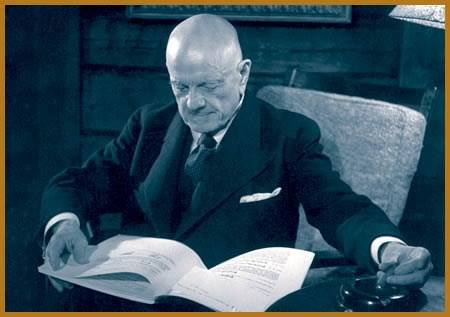
    Jean Sibelius was the composer of seven authorized symphonies that stand like granitic monoliths at the heart of 20th century music. Less well known, perhaps, is the abundant incidental music he composed for the theater. Join me for an historic 1932 recording of selections written for the play “Belshazzar’s Feast,” with Robert Kajanus conducting, and a more recent, digital premiere of the complete incidental music composed for “Everyman,” made under the baton of Osmo Vänskä. Enjoy this neglected-but-worthwhile music on “Sibelius, Incidentally,” this Sunday night at 10 EDT on WWFM – The Classical Network and wwfm.org.

  • Finland’s Music Takes Wing

    Finland’s Music Takes Wing

    After a week of bitter temperatures and more falling snow, it’s hardly surprising that my thoughts turn to the north (and I don’t mean Boston).

    This Sunday night on “The Lost Chord,” we’ll have a couple of pieces from Finland, both of them inspired by the region’s avian life.

    Einojuhani Rautavaara wrote his “Cantus Arcticus” in 1972. He described it as a “concerto for birdsong and orchestra.” The work incorporates tape recordings made on the bogs of Liminka, near the Arctic Circle. More than just a gimmick, the piece is an inspiring triptych that manages to transcend its potentially new age conceit. The final movement takes the form of a long crescendo for orchestra, which incorporates the song of whooper swans.

    Swans, of course, also played a crucial role in the creation of Jean Sibelius’ uplifting Symphony No. 5. The composer was moved to write the grand theme of the symphony’s finale after observing a flock of swans in flight over his home on the shores of Lake Tuusula in Järvenpää. The tolling French horns unfailingly generate a glow of hope and optimism. Such noble music! I don’t mind sharing that this is probably my favorite symphony.

    Wait a minute – the Symphony No. 5 is standard repertoire. What’s this doing on “The Lost Chord?”

    In 1995, conductor Osmo Vänskä recorded Sibelius’ first thoughts on the symphony, as it was heard at its 1915 premiere. Though the work was extremely well-received, Sibelius became increasingly dissatisfied with it, as he prepared the manuscript for publication.

    In what must be one of the most amazing feats of revision ever, he crafted from the comparatively rough material the masterwork we know today. When you hear this original version, you will marvel at the composer’s clarity of purpose, his remarkable objectivity, and just how hard he worked. It’s almost like a completely different piece, one that uses the same recognizable themes, but completely rethinks the structure and, at times, the orchestration. Listening to certain passages is like strolling across familiar terrain. Then the ground shifts, and you find yourself walking down a strange path. If you haven’t heard it, definitely make a point to check it out.

    If, like me, you find yourself watching the Academy Awards at 10:00 tomorrow night even as you wonder why, “The Lost Chord” will be rebroadcast Wednesday evening at 6; or you can listen to it later as a webcast at http://www.wwfm.org.

    PHOTO: Finnish music takes wing, on “Snow Birds”

Tag Cloud

Aaron Copland (93) Beethoven (95) Composer (114) Film Music (126) Film Score (143) Film Scores (255) Halloween (94) John Williams (189) KWAX (229) Leonard Bernstein (101) Marlboro Music Festival (125) Movie Music (141) Mozart (87) Opera (203) Philadelphia Orchestra (89) Picture Perfect (174) Princeton Symphony Orchestra (107) Radio (87) Ross Amico (244) Roy's Tie-Dye Sci-Fi Corner (290) The Classical Network (101) The Lost Chord (268) Vaughan Williams (103) WPRB (396) WWFM (881)

DON’T MISS A BEAT

Receive a weekly digest every Sunday at noon by signing up here


RECENT POSTS