Tag: Peter Serkin

  • Rachmaninoff Busoni and Marlboro’s Serkin & Goode

    Rachmaninoff Busoni and Marlboro’s Serkin & Goode

    Today is one of those remarkable days, on which two masters of the same instrument happened to be born. (Another is February 2, which gave us both violinists Fritz Kreisler and Jascha Heifetz.) In addition to it being the anniversary of the birth of pianist-composer Sergei Rachmaninoff (in 1873), it is also the birthday of Ferruccio Dante Michelangelo Benvenuto Busoni (in 1866). Clearly, Ferruccio Busoni’s parents had great expectations for their boy!

    “Music from Marlboro” is on hiatus from WWFM – The Classical Network for the duration of the COVID-19 lockdown. However, it’s still possible to enjoy great Marlboro performances on recordings. Here’s a jawdropping performance of Busoni’s “Fantasia contrappuntistica,” a vertiginous knucklebuster played with elan by 16 year-old Peter Serkin and 20 year-old Richard Goode.

    Marlboro School of Music and Festival: Official Page

  • Remembering Peter Serkin Marlboro Legend

    Remembering Peter Serkin Marlboro Legend

    With the passing of Peter Serkin on Saturday at the age of 72, a major voice of the Marlboro Music Festival has fallen silent. On this week’s “Music from Marlboro,” we’ll pay tribute to this extraordinary artist.

    Serkin was barely beyond a toddler when his father, Rudolf Serkin, and maternal grandfather, Adolf Busch, co-founded the Marlboro Music School and Festival in 1951. Rudolf Serkin, of course, was one of the great pianists of the 20th century. Busch, his frequent recital partner, was the noted violinist, composer, and anti-fascist. As you can imagine, that’s quite a legacy to have to live up to!

    Naturally, the younger Serkin was absorbed into the family trade and soon developed into a brilliant musician in his own right. He was already performing in public at the age of 12. At 19, he was recognized with a special Grammy Award.

    But in his early 20s, the business of making music began to ring hollow. He became frustrated with the grind of being a performer and disagreed with the way in which musicians’ interpretations were being evaluated. He decided it was time to do some serious soul-searching.

    In the late ‘60s, he turned his back on the concert platform to confront bigger questions in his own life. He dropped out, traveled to India, and moved to rural Mexico to seek peace with his wife and daughter.

    Then one Sunday morning, he happened to overhear Bach being broadcast over a neighbor’s radio. It was then that he felt the tug back to his true calling.

    When he returned, it was with a freshness of purpose. Serkin employed his intelligence and introspection in probing more deeply into the classics and in exploring new frontiers with contemporary music.

    Of all the great chamber ensembles that had their roots in Marlboro, few were more adventurous than Tashi, a group Serkin co-founded. It was a Marlboro performance of Messiaen’s “Quartet for the End of Time” that inspired him to form the group, alongside Ida Kavafian, Fred Sherry, and Richard Stoltzman. Their recording of the quartet is still venerated as the benchmark.

    Among composers who wrote works specifically for Serkin were Luciano Berio, Oliver Knussen, Peter Lieberson, Bright Sheng, Toru Takemitsu, and Charles Wuorinen. He was also an ardent champion of the music of Stefan Wolpe.

    We’ll celebrate Peter Serkin this evening, with two recordings tied to his Marlboro experiences.

    An affection for Max Reger is something Peter held in common with his father and grandfather. He recorded Reger’s Cello Sonata No. 4 in A minor, with Mischa Schneider, at Marlboro in 1963. The composer’s characteristic tension between Baroque polyphony and fin de siècle chromaticism holds no terrors for either musician. Serkin was only 16 when he sat down before the microphones.

    Then Peter will join Rudolf Serkin for an ebullient performance of Mozart’s Concerto for Two Pianos, recorded in New York the previous year, with the Marlboro Festival Orchestra conducted by Alexander Schneider.

    PLEASE NOTE: This Peter Serkin tribute is too great to be confined within a single hour. Because of the musical content of this evening’s program, “Music from Marlboro” will begin FIVE MINUTES EARLIER THAN USUAL, at 5:55 EST. Set your watches and dial us up early to enjoy my scintillating intro, on WWFM – The Classical Network and wwfm.org.

    Marlboro School of Music and Festival: Official Page

  • Remembering Peter Serkin Rebel Pianist

    Remembering Peter Serkin Rebel Pianist

    I am stunned to learn of the death of Peter Serkin. As the confluence of two dizzyingly talented musical tributaries (his father was Rudolf Serkin, and his mother was the daughter of Adolf Busch), it couldn’t have been easy to make his own way.

    Yet he proved himself early, both as a graduate of the Curtis Institute of Music and as a brilliant participant in the Marlboro Music Festival. I recently broadcast a jaw-dropping recording he made at age of 16 of Busoni’s “Fantasia contrappuntistica.” By then, he had already been performing in public for four years. At 19, he was recognized with a special Grammy Award.

    But it was the ‘60s, so Serkin decided he didn’t want to play anymore. He dropped out, traveled to India, and moved to Mexico. He always did follow his own path. It was when he overheard music of Bach being played on a neighbor’s radio, one Sunday morning, that he finally came to grips with who he was.

    When he returned to the concert stage, not only could he play Bach and Beethoven with the best of them, he also pushed deep into contemporary territory. He was a champion of the works of Stefan Wolpe, and Toru Takemitsu, Charles Wuorinen, and Peter Lieberson all wrote pieces for him. He also became one of the founders of the new music ensemble Tashi.

    Over a career that spanned six decades, Serkin didn’t just emerge from the shadows of his father and grandfather, he established himself as a formidable artist in his own right, one with a distinctive and inimitable profile.

    R.I.P. Peter Serkin. To me, you’ll always be the Easy Rider of classical pianists.

    https://www.nytimes.com/2020/02/01/arts/music/peter-serkin-dead.html


    Serkins fils and père play Schubert:
    https://www.youtube.com/watch?v=wlD9haP7g0g

    Serkin, 16, and Richard Goode, 20, play Busoni:

    Serkin plays Leon Kirchner:

    Tashi, from Messiaen’s “Quartet for the End of Time”:

    Serkin plays the “Goldberg Variations”:

  • Richard Goode: Marlboro Music Spotlight

    Richard Goode: Marlboro Music Spotlight

    If it’s Goode, you know it’s got to be great.

    On this week’s “Music from Marlboro,” we’ll celebrate pianist Richard Goode. Goode served as co-artistic director (with Mitsuko Uchida) of the Marlboro Music School and Festival, from 1999 to 2013. On and off, he’s been part of the fabric of Marlboro since he was 14 years-old.

    We’ll sample his artistry in outstanding performances of music by Ferruccio Busoni and Johannes Brahms.

    Inspired in part by Bach’s “Art of the Fugue,” Busoni composed his “Fantasia contrappuntistica” for solo piano in a flurry of inspiration in 1910. His arrangement for two pianos followed. I think you’ll agree, there’s no substitute for its thrilling antiphonal effects.

    The work is built into one continuous span, but subdivided into twelve parts – a prelude and variations on the Bach chorale “Ehre sei Gott in der Höhe” (“Glory to God in the Highest”) – capped by a quadruple fugue. The laws of counterpoint are rigorously applied, in a manner that would have made even Max Reger smile.

    The work was composed during a whirlwind tour of the United States. Busoni was especially proud of his ability to make every note of the fugue “sound.”

    We’ll hear it performed on a Marlboro spin-off recording from 1964, with Richard Goode and Peter Serkin, making musical mincemeat of this vertiginous knuckle-buster. Goode was only 20 years-old at the time – and Serkin was 16!

    Bach was also an important source of inspiration for Johannes Brahms. Following the death of his mother, the composer was discovered by one of his friends, weeping over the keyboard as he played through works by the Baroque master.

    Also stemming from his loss was Brahms’ Horn Trio in E flat major, Op. 40. The horn, which takes the place of the cello in the traditional configuration of the piano trio, was a highly unusual choice for chamber music, but one which must have recalled for Brahms the lessons he had taken as a child.

    Fortuitously, the instrument also has rustic associations. It was during a walk in the Black Forest that the composer first “heard” the trio’s opening theme. While the work is a celebration of nature, and in the last movement, perhaps even the hunt, the tempo marking of the third movement adagio is characterized as “slow and sad.” Brahms uncovers a well of emotion in the quotation of a German funeral melody, “Wer nur den lieben Gott läßt walten” (“If thou but suffer God to guide thee”).

    Demonstrating the kind of continuity that makes Marlboro shine among summer music festivals, we’ll again hear Richard Goode, this time in middle age, joining hornist Marie-Luise Neunecker and violinist Mark Steinberg, in 1989.

    We’ve never had it so Goode, on the next “Music from Marlboro,” this Wednesday evening at 6:00 EST, on WWFM – The Classical Network and wwfm.org.

    Marlboro School of Music and Festival: Official Page
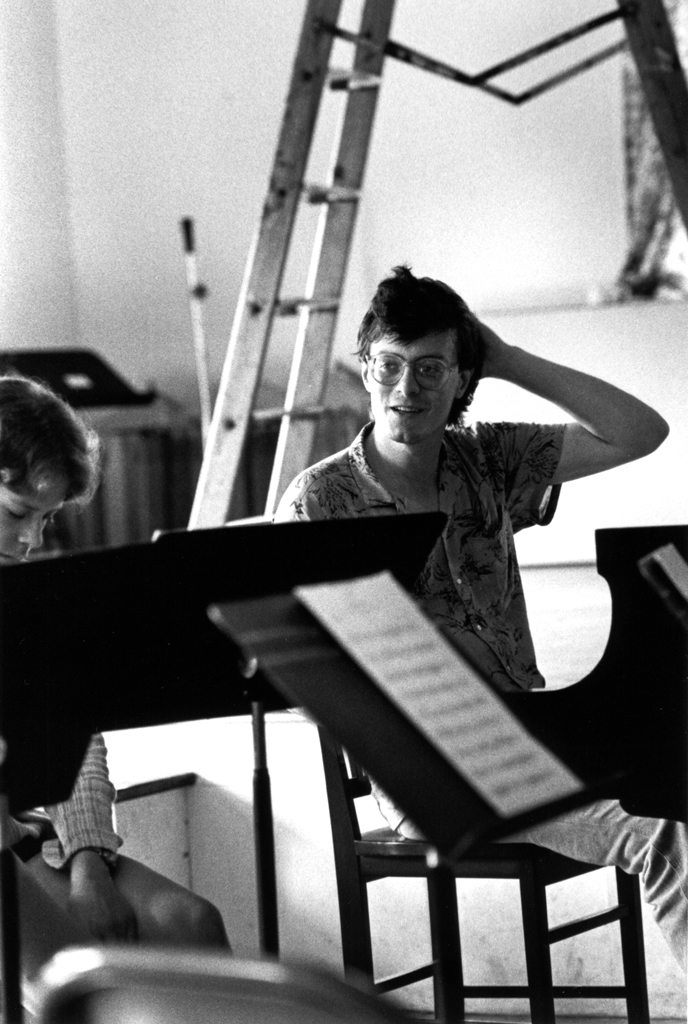

    FOR THE GREATER GOODE: Richard Goode at Marlboro in 2011

  • Peter Serkin & Marlboro Music Festival

    Peter Serkin & Marlboro Music Festival

    For some reason, I always equate Peter Serkin in my mind with Peter Fonda. Perhaps it’s because he’s like the Easy Rider of pianists. At one point, he even totally dropped out, moving to Mexico and not playing for a couple of years. When he returned, as often as not, he was a kind of countercultural champion of modernist works (he was one of the founders of the new music ensemble Tashi). But he is, after all, his father’s son (sired by legendary pianist Rudolf Serkin), so Bach and Beethoven have been just as important to him as an artist and as a person.

    Hard to believe that Peter Serkin is 72 years-old today. On this week’s “Music from Marlboro,” we’ll hear a performance of Mozart’s Concerto for Two Pianos (the Piano Concerto No. 10), KV 365, with Peter, at 15, joined in music-making by his Marlboro co-founding father.

    Then we’ll keep our spirits high, as Pablo Casals conducts the Marlboro Festival Orchestra in Franz Schubert’s Symphony No. 5. Schubert was totally under the spell of Mozart at the time of its composition, remarking in his diary, “O Mozart! Immortal Mozart! what countless impressions of a brighter, better life hast thou stamped upon our souls!”

    This summer’s Marlboro Music Festival is about to enter its third weekend, with three concerts on the agenda. The festival’s annual town benefit concert will be held on Friday at 8 p.m., featuring music by Schumann, Stravinsky, Mozart, and György Kurtág. Marlboro co-directors Mitsuko Uchida and Jonathan Biss will appear on separate concerts on Saturday and Sunday. Uchida will be the pianist in Schumann’s Piano Quintet on a program which will also feature music by Schoenberg, on Saturday at 8 p.m. Biss will perform Dvořák’s Piano Trio in F minor on a concert which will also include works by Mozart and Marlboro composer-in-residence Jörg Widmann, on Sunday at 2:30 p.m. For complete listings and more information, visit marlboromusic.org.

    For today, musicians from the renowned chamber music festival take a break from playing chamber music. It’s a well-orchestrated program on this week’s “Music from Marlboro,” this Wednesday evening at 6:00 EDT, on WWFM – The Classical Network and wwfm.org.

    Marlboro School of Music and Festival: Official Page
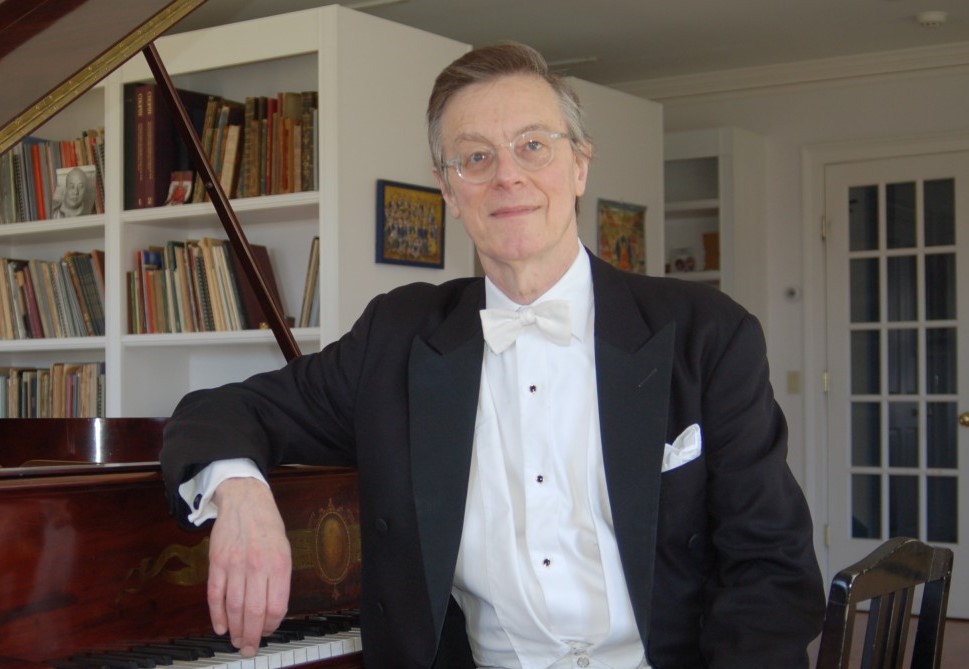

    PHOTO: Young Peter Serkin performs Mozart on today’s broadcast of recordings from the archive of Marlboro Music.

Tag Cloud

Aaron Copland (92) Beethoven (94) Composer (114) Film Music (117) Film Score (143) Film Scores (255) Halloween (94) John Williams (185) KWAX (228) Leonard Bernstein (99) Marlboro Music Festival (125) Movie Music (132) Opera (197) Philadelphia Orchestra (86) Picture Perfect (174) Princeton Symphony Orchestra (106) Radio (86) Ralph Vaughan Williams (85) Ross Amico (244) Roy's Tie-Dye Sci-Fi Corner (290) The Classical Network (101) The Lost Chord (268) Vaughan Williams (100) WPRB (396) WWFM (881)

DON’T MISS A BEAT

Receive a weekly digest every Sunday at noon by signing up here


RECENT POSTS