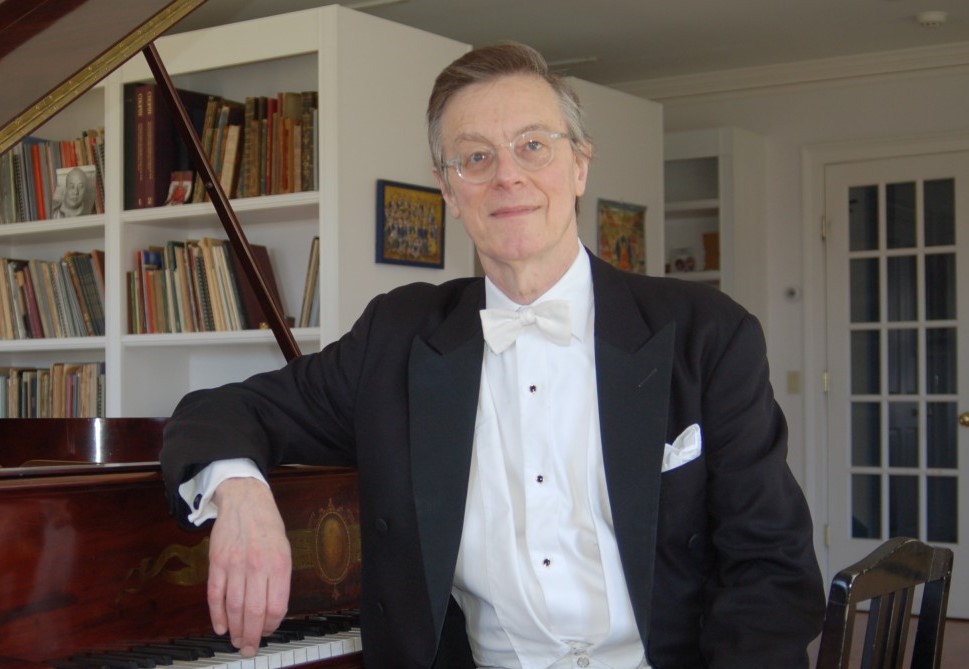
I am stunned to learn of the death of Peter Serkin. As the confluence of two dizzyingly talented musical tributaries (his father was Rudolf Serkin, and his mother was the daughter of Adolf Busch), it couldn’t have been easy to make his own way.
Yet he proved himself early, both as a graduate of the Curtis Institute of Music and as a brilliant participant in the Marlboro Music Festival. I recently broadcast a jaw-dropping recording he made at age of 16 of Busoni’s “Fantasia contrappuntistica.” By then, he had already been performing in public for four years. At 19, he was recognized with a special Grammy Award.
But it was the ‘60s, so Serkin decided he didn’t want to play anymore. He dropped out, traveled to India, and moved to Mexico. He always did follow his own path. It was when he overheard music of Bach being played on a neighbor’s radio, one Sunday morning, that he finally came to grips with who he was.
When he returned to the concert stage, not only could he play Bach and Beethoven with the best of them, he also pushed deep into contemporary territory. He was a champion of the works of Stefan Wolpe, and Toru Takemitsu, Charles Wuorinen, and Peter Lieberson all wrote pieces for him. He also became one of the founders of the new music ensemble Tashi.
Over a career that spanned six decades, Serkin didn’t just emerge from the shadows of his father and grandfather, he established himself as a formidable artist in his own right, one with a distinctive and inimitable profile.
R.I.P. Peter Serkin. To me, you’ll always be the Easy Rider of classical pianists.
https://www.nytimes.com/2020/02/01/arts/music/peter-serkin-dead.html
Serkins fils and père play Schubert:
https://www.youtube.com/watch?v=wlD9haP7g0g
Serkin, 16, and Richard Goode, 20, play Busoni:
Serkin plays Leon Kirchner:
Tashi, from Messiaen’s “Quartet for the End of Time”:
Serkin plays the “Goldberg Variations”:
Leave a Reply