
Tag: Piano Music

  • English Pastoral Piano Music

    English Pastoral Piano Music

    According to a certain school of thought, folk music – music of the land – embodies the spirit of a nation. And no nation’s composers milked that cow quite as soulfully as the English.

    This Sunday night on “The Lost Chord,” we’ll have an hour of bucolic reflections for the keyboard of a time lost to technology and industrialization.

    We’ll begin with Gerald Finzi’s “Eclogue” for piano and string orchestra. Originally drafted in the mid-‘20s as the projected slow movement of a piano concerto, the material was later reshaped by the composer, who was content to let it stand on its own. In case you’re not familiar with the term, an eclogue is a short pastoral poem.

    If you find yourself transported by this, I think you will also really enjoy Cyril Rootham’s “Miniature Suite” of 1921. Rootham, better known for his choral music, was a friend of Ralph Vaughan Williams and Gustav Holst. His work at Cambridge University exerted a significant influence over English musical life. Like the “Eclogue,” the “Miniature Suite” is scored for piano and strings.

    In between, I’ll provide a palette cleanser in the form of E.J. Moeran’s “Summer Valley.” Moeran was one of the last composers to really thrive on English folk music. “Summer Valley,” composed for solo piano in 1925, was dedicated to Frederick Delius.

    Finally, we’ll engage in a bit of musical time travel. In addition to the whole folk song perspective, England is justifiably proud of its formal musical past. The legacy of the Tudors was a particular influence on works such as Benjamin Britten’s “Gloriana,” Gordon Jacob’s “William Byrd Suite,” and Vaughan Williams’ “Fantasia on a Theme by Thomas Tallis.”

    In the case Herbert Howells – like Rootham, a composer better recognized for his choral endeavors – he fell under the spell of the clavichord, after he was lent one by one Herbert Lambert, a photographer with a passion for building replicas of early keyboard instruments.

    The fortuitous encounter led to the composition of three suites, written in different periods of Howells’ life, which hark back to the glory days of the “Fitzwilliam Virginal Book.” All three sets are characterized by an inventive blend of Tudor and English folk influences. Each of the individual movements are dedicated to a friend or colleague of the composer. We’ll hear the first set, titled “Lambert’s Clavichord,” written in 1927, which was sanctioned for performance on the modern piano.

    I hope you’ll join me for an hour of musical escapes to the countryside and the golden musical past. That’s “Idyll Thoughts” – pastoral English works for piano – this Sunday night at 10:00 EDT, on WWFM – The Classical Network and wwfm.org.
  • Clipper Erickson Revives R Nathaniel Dett’s Music

    Clipper Erickson Revives R Nathaniel Dett’s Music

    Clipper Erickson, piano, doesn’t like to sit still. As a performer and as a recording artist, he is seemingly everywhere at once.

    In the past month or so, he has performed at least two solo recitals, on top of George Gershwin’s Piano Concerto in F, with the Warminster Symphony Orchestra, and Rachmaninoff’s Piano Concerto No. 2 – twice – with the Knox-Galesburg Symphony in Illinois and locally with the Capital Philharmonic of New Jersey. He’s also anticipating his latest CD release, “Tableau, Tempest and Tango,” due out on Navona Records, PARMA Recordings, on July 13.

    The indefatigable pianist, who is on the faculty of Westminster Conservatory of Music in Princeton and Boyer College of Music and Dance – Temple University, is gearing up to present his latest program in a crusade to resurrect the half-forgotten music of R. Nathaniel Dett (1882-1943).

    Erickson will be joined by soprano Deborah Ford, baritone Gregory Hopkins, and Mostly Motets, for a mixed program of Dett’s music at St Michael’s Church, Trenton NJ, on June 10 at 3 p.m.

    Dett was born in what is now Niagara Falls, Ontario. The grandson of Underground Railroad refugees, he became an important figure in American music of his time. Yet he is remembered today, if at all, for a lone piano suite, “In the Bottoms,” or perhaps only for its two-minute concluding dance, “Juba,” which was championed by Percy Grainger, among others.

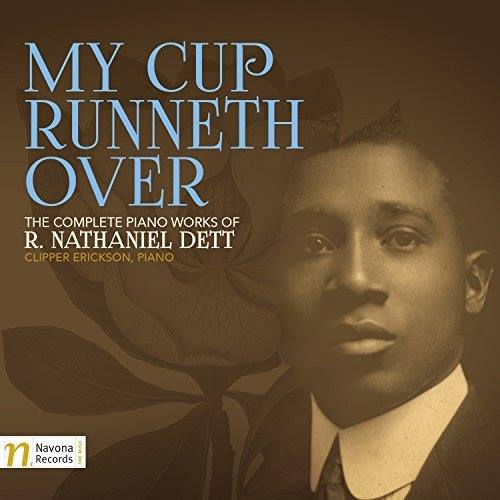
    Erickson was the first to record Dett’s complete piano works. His performances have been issued on an album titled “My Cup Runneth Over,” also on Navona, for which he provides his own liner notes. The two-CD set was made possible, in part, through the financial backing of St. Michael’s, where Erickson serves as organist.

    You can read more about Dett’s debt to Erickson, the Revolutionary history of the church, and more, in my article in this week’s U.S. 1 Newspaper – PrincetonInfo, out today. Here’s the online version:

    http://www.princetoninfo.com/index.php/component/us1more/?Itemid=6&key=6-6-18erickson

    Erickson plays “Juba:”

  • Sorabji’s Anniversary & Epic Piano Music

    Sorabji’s Anniversary & Epic Piano Music

    Today is the anniversary of the birth of the pianist-composer known as Kaikhosru Shapurji Sorabji.

    Born Leon Dudley in 1892 to a civil engineer of Parsi parentage and an English mother, Sorabji’s most notorious pieces are even longer than his name. His “Opus clavicembalisticum” clocks in at around four hours in performance. The composer wrote, “The closing 4 pages are so cataclysmic and catastrophic as anything I’ve ever done – the harmony bites like nitric acid – the counterpoint grinds like the mills of God…” Even so, some of his later works make it seem like a mere bagatelle. His “Symphonic Variations for Piano” is roughly nine hours in length.

    As if that weren’t enough to place a seal on his obscurity, Sorabji put a ban on public performance of his music for 40 years. Sorabji had the means to live in seclusion, and in seclusion he lived. A complex and at times prickly individual, his scores nevertheless attracted some persistent champions who managed to coax him out of retirement for a final burst of creativity until failing eyesight and difficulty holding a pen caused him to give it up. Sorabji died in 1988, at the age of 96.

    Clearly, Sorabji marched to the beat of his own drum. Equally evident is that much of his music is inappropriate for drive time. But join me today, and we’ll sample some of his shorter pieces, among our featured works, to propel you on your afternoon commute, from 4 to 7 EDT, on WWFM – The Classical Network and wwfm.org.

  • Alkan Eccentric Genius Rediscovered

    Alkan Eccentric Genius Rediscovered

    Charles-Valentin Alkan was a pianist of transcendent technique, a forward-looking composer, and the most eccentric recluse in Paris.

    Acclaimed in all circles as one of the finest keyboard artists of his day, he secluded himself in his home for years at a time. He shared the apartment with his illegitimate son, two apes and 100 cockatoos.

    He was also known to exhibit obsessive tendencies. His “12 Etudes in All the Minor Keys” contains among its movements a full concerto and a symphony for solo piano. He translated the entire Bible (with Apocrypha) from its original languages, and he talked of setting the entire thing to music.

    At the time of his death, his library contained 75 volumes in Hebrew or related to Judaism. He’s said to have been killed by a fallen bookcase after reaching for a volume of the Talmud, which was situated on a high shelf.

    Alkan himself was top-shelf material. Admired by Chopin and Liszt, his refusal to travel, or even to leave his home, contributed to his general obscurity, though he continued to issue new, exciting scores to great acclaim. He was studied by Debussy, Ravel, Busoni and Rachmaninoff, but really it fell to pianists of our own time to rediscover Alkan’s genius.

    Alkan (1813-1888) will be among our featured subjects this afternoon, as we celebrate his birthday anniversary. We’ll also hear from Swedish composer Ture Rangström (1884-1947); lied master Carl Loewe (1796-1869); lifelong friend of Richard Strauss, Ludwig Thuille (1861-1907); and late disciple of Mily Balakirev, Sergei Lyapunov (1859-1924). Finally, Romanian pianist Radu Lupu (b. 1945), another recluse, will perform music by Franz Schubert.

    I myself will emerge from seclusion, from 4 to 7 p.m. EST, on WWFM – The Classical Network and at wwfm.org.


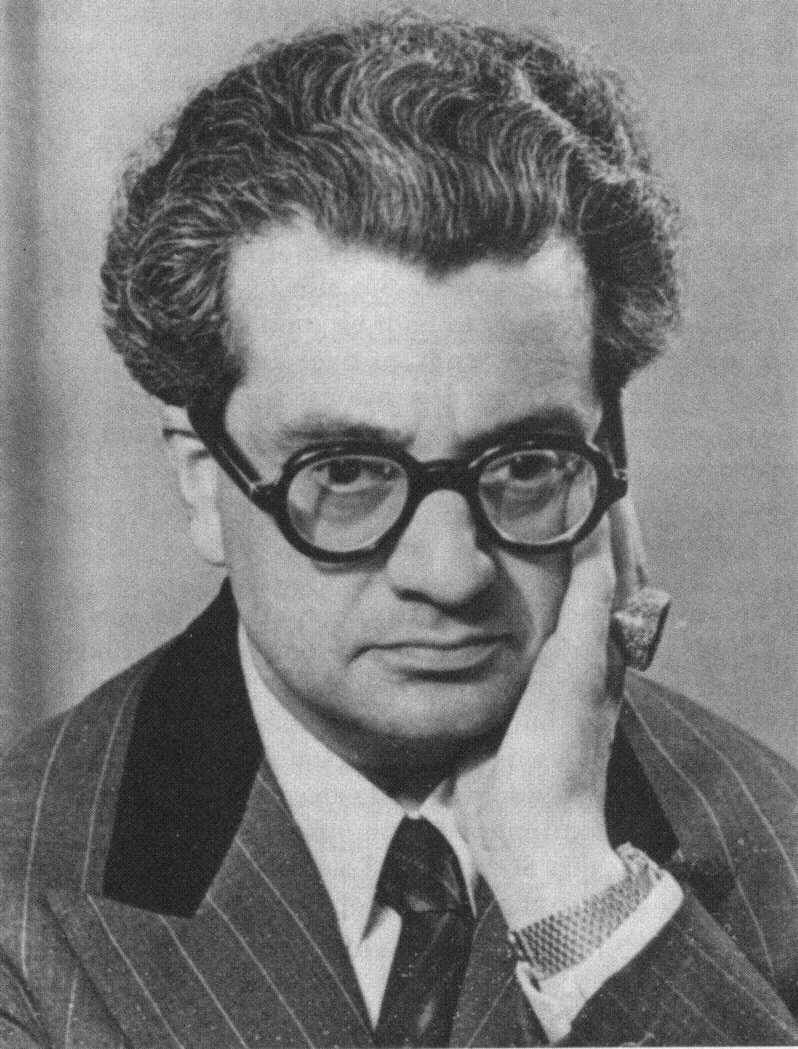
    IMAGES: Alkan (left), in one of only two photos of him known to exist, and friend

  • Clipper Erickson Rediscovering Lost Piano Gems

    Clipper Erickson Rediscovering Lost Piano Gems

    While the rest of the world is looking ahead to a new year, Clipper Erickson, piano is on the look-out for new repertoire.

    Erickson, who is on the faculty of Westminster Conservatory of Music, Rider University, in Princeton, and Boyer College of Music and Dance – Temple University, in Philadelphia, has two new releases of rediscovered works which have languished in obscurity for decades.

    These include world premiere recordings of pieces by R. Nathaniel Dett, the grandson of fugitive slaves who became an important figure in American music, and Cyril Scott, in his day a frontrunner of the English avant-garde, whose reputation faded over the decades until he was remembered, if at all, as the composer of one or two innocuous miniatures in Grandma’s piano bench.

    Interestingly, there was a creative exchange between the two by way of eccentric Australian pianist Percy Grainger, who championed works of both composers. You can read all about it in my article in today’s Trenton Times.

    http://www.nj.com/times-entertainment/index.ssf/2015/12/classical_music_local_pianist.html

Tag Cloud

Aaron Copland (92) Beethoven (95) Composer (114) Film Music (120) Film Score (143) Film Scores (255) Halloween (94) John Williams (185) KWAX (229) Leonard Bernstein (100) Marlboro Music Festival (125) Movie Music (135) Opera (198) Philadelphia Orchestra (88) Picture Perfect (174) Princeton Symphony Orchestra (106) Radio (87) Ralph Vaughan Williams (85) Ross Amico (244) Roy's Tie-Dye Sci-Fi Corner (290) The Classical Network (101) The Lost Chord (268) Vaughan Williams (103) WPRB (396) WWFM (881)

DON’T MISS A BEAT

Receive a weekly digest every Sunday at noon by signing up here


RECENT POSTS