Is it Bach or Rachmaninoff?
When Rachmaninoff’s birthday falls on April Fool’s Day, it can only be…
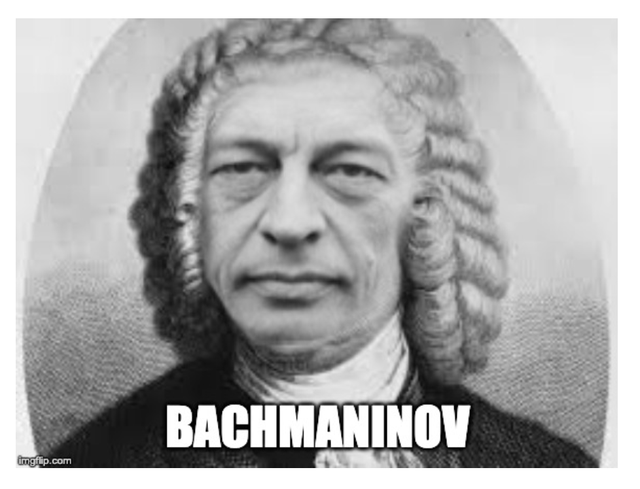
Is it Bach or Rachmaninoff?
When Rachmaninoff’s birthday falls on April Fool’s Day, it can only be…
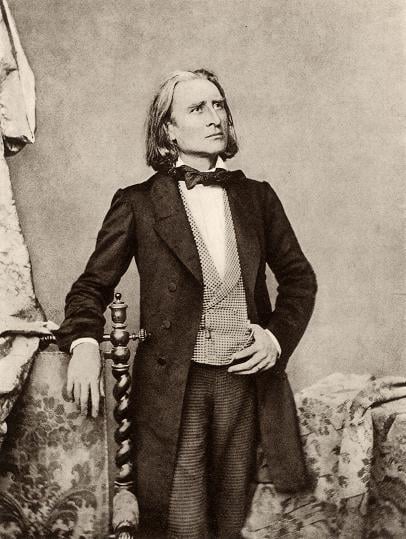
In the days before the phonograph, it was common practice to arrange works from stage and concert hall for the piano, so that the music could be disseminated and enjoyed in the home. A figure like Franz Liszt went above and beyond, frequently elevating the original material to a whole other level of artistry.
These “paraphrases,” as he often called them, could hardly have been considered reductions. Most would have been too difficult for amateur pianists. Nevertheless, some of them have become very well known – the “Reminiscences of Don Juan,” “Reminiscences of Norma” and “Rigoletto Paraphrase” spring to mind. This Sunday night on “The Lost Chord,” we’ll sample a few which are perhaps not so frequently heard.
For his famous showdown against rival pianist Sigismond Thalberg, at the Paris salon of Princess Belgiojosa-Trevulzia in 1837, Liszt selected his “Niobe Fantasy,” a prime example of his ability to spin gold from the flax of a now-forgotten opera, in this case by Giovanni Pacini. When the dust settled, Belgiojosa-Trevulzia rose to declare Thalberg the greatest pianist, and Liszt the ONLY pianist – a very diplomatic assessment.
Liszt’s paraphrases were not only means to capitalize on popular operas of the time, they were also a medium through which to champion particular scores. As kappelmeister at the Weimar Court Theatre for many years, Liszt mounted operas by controversial composers of the time, like Wagner and Berlioz. It’s hard to conceive these days just how incendiary a figure Wagner was.
But Liszt thought nothing of breaking a lance for those he believed in. In fact, his reckless idealism and blind generosity would contribute to his being pushed out of the theater directorship. To honor his special relationship with Wagner – who would become his son-in-law – we’ll hear “Valhalla,” based on motives from Wagner’s “Das Rheingold.”
Then, to demonstrate the astonishing breadth of his arrangements, we’ll turn to a paraphrase on Handel’s “Almira.” This dates from Liszt’s later period – his only arrangement from that time based on a Baroque source. It was written in 1879 for his English piano student Walter Bache for performance at the Handel Festival in London. It should be noted that Handel’s operas were virtually forgotten at the time. Again, Liszt’s treatment is by no means a straight transcription, but a skillful reimagining of the Baroque, in almost Busonian terms, and an impressive piece of music in itself.
Handel’s operas may have been regarded as obscurities in those days, but very much the opposite was the case with the grand operas of Giacomo Meyerbeer. In contrast to Handel’s operatic reputation, which has increased enormously in recent decades, Meyerbeer’s once wildly-popular works for the stage have virtually disappeared. There are several reasons for this, not least of which is that these grandest of grand operas cost a fortune to mount.
Liszt made ambitious arrangements of all of Meyerbeer’s greatest works and put some of these through quite extensive revisions. Tonight, we’ll hear a “Grand Fantasy on Meyerbeer’s ‘The Huguenots,” the third of three versions, from 1842.
Liszt’s transcriptions and paraphrases were numerous, and no mere sidebar. On the contrary, they were central to his creative output. He was an astoundingly prolific arranger, especially when considering his other activities as composer, conductor, and teacher.
I hope you’ll join me for “Grand Opera to Hand Opera” – Franz Liszt’s operatic paraphrases for the keyboard – this Sunday night at 10:00 EST, on WWFM – The Classical Network and wwfm.org.
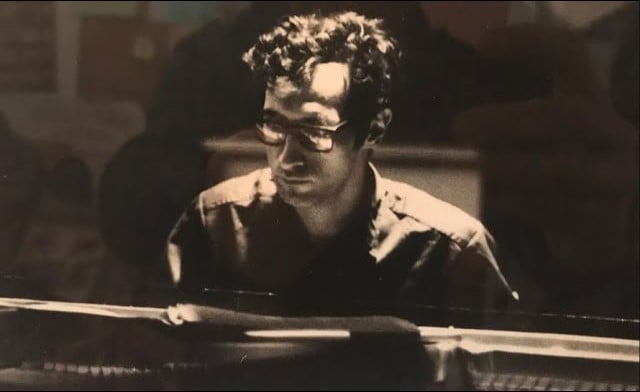
Composer and pianist Frederic Rzewski has died.
A child prodigy from Westfield, Massachusetts, Rzewski (pronounced “ZHEF-skee”) studied at Harvard, with Randall Thompson and Walter Piston, and Princeton University, with Roger Sessions and Milton Babbitt.
In 1960, he fell in with Luigi Dallapiccola and the Italian avant-garde. He was a founding member of Musica Elettronica Viva, or MEV, a collaborative experimental ensemble that prominently featured electronic instruments and benefited from his genius as an improviser. The group achieved notoriety in Italy for its ability to generate riots.
He also taught composition at the Royal Conservatory of Music in Liège, Belgium, and held a number of visiting professorships, at Yale, the University of Cincinnati, the California Institute of the Arts, the University of California, San Diego, the Royal Conservatory of the Hague, and Trinity College of Music London.
His own works often grew out of social or political themes. His best-known music is the titanic set of piano variations on a Chilean protest song, “The People United Will Never Be Defeated!” The work was conceived as a companion piece to Beethoven’s “Diabelli Variations.”
Nicolas Slonimsky described him as a “a granitically overpowering piano technician, capable of depositing huge boulders of sonoristic material across the keyboard without actually wrecking the instrument.” Michael Schell called him as one of America’s greatest living composers, and more specifically one of its most important living composers of piano music.
Rzewski was 83 years-old.
An appreciation by Tim Page in the Washington Post:
Rzewski plays Rzewski:
Rzewski plays Beethoven:
Rzewski with Musica Elettronica Viva:
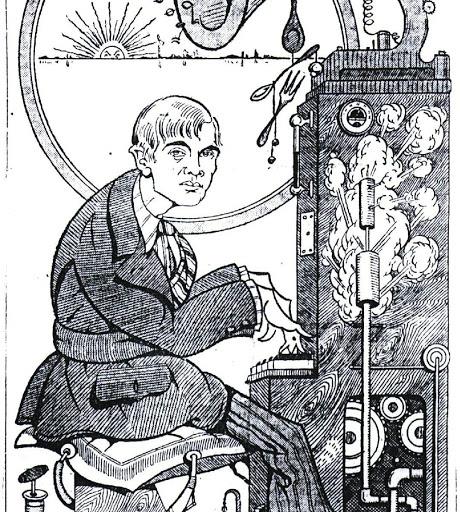
More enticing than a fistful of candy hearts – the “Valentine Waltzes,” by Trenton’s own George Antheil.
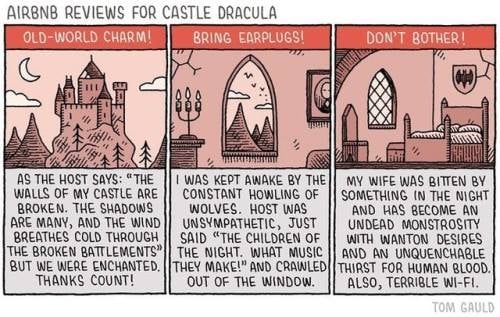
31 DAYS OF HALLOWEEN (DAY 6)
“Bats in the Belfry” by Billy Mayerl
Aaron Copland (93) Beethoven (95) Composer (114) Film Music (144) Film Score (143) Film Scores (255) Halloween (94) John Williams (195) KWAX (229) Leonard Bernstein (104) Marlboro Music Festival (125) Movie Music (159) Mozart (90) Opera (212) Philadelphia Orchestra (89) Picture Perfect (174) Princeton Symphony Orchestra (109) Radio (88) Ross Amico (244) Roy's Tie-Dye Sci-Fi Corner (290) The Classical Network (101) The Lost Chord (269) Vaughan Williams (105) WPRB (397) WWFM (881)