If you needed a reminder of just how good an orchestra the Princeton Symphony Orchestra is, you needed look no further than this past weekend’s concerts, in which the ensemble played two new works with such commitment that you would have sworn that they are standard repertoire.
“Extra(ordinarily) Fancy,” composed in 2019-20 by Princeton alumnus and Curtis graduate Viet Cuong is so much fun, it would not have been out of place among the riotous offerings on a Hoffnung Music Festival concert. Except, unlike the works on those overtly comedic outings, the piece never descends into parody. What we have are two oboe soloists, positioned before a chamber orchestra, complete with harpsichord continuo, embarking on what seems like a piece of ersatz Baroque music, but soon engaging in a battle of wills as one of the oboists decides to spice things up with multiphonics (an extended technique in which the player produces multiple tones at once).
The contagion creeps across the entire orchestra, augmented by xylophones, Leroy Anderson “Sleigh-Ride” style slapsticks, and bass drum. It also ramps up the dance inflections inherent in the ordinarily somewhat lugubrious Baroque passacaglia (itself with roots in courtly dances of 17th century Spain). The soloists, PSO principal oboist Lillian Copeland and Erin Gustafson struck just the right tone, metaphorically speaking, with first rate musicianship and some playful reactions to the discords, employing just enough restraint to get the humorous point across without distracting from the music with too much mugging. Furthermore, at ten minutes, the piece does not outstay its welcome. It’s a great curtain-raiser and deserves wider popularity.
That was followed by the world premiere of a new harpsichord concerto by Princeton resident Julian Grant. The title, “Vaudeville in Teal,” is meant to tip us off not to expect a three-movement concerto in the classical mold, but rather a kind of sequence of varying moods and character that Grant sees as musically analogous to the vaudevilles that were popular around the turn of last century.
As he described it to me when we discussed it last week, “It’s rather like a show with lots of disparate acts. You know, like the old-fashioned vaudevilles used to be. You’d have someone come on and do bird impressions, there’d be a flea circus from Russia, Anna Pavlova would do ‘The Dying Swan,’ you know. Some singer would come on and sing ‘O sole mio.’ I just imagined that the piece would be kind of slightly random sections.”
The movements are given one-word titles, some of them rather whimsical especially in relation to the content: “Curtain,” “Tarantella,” “Threesome,” “Fairies,” “Spiel,” and “Follies.” These flow into one another without break.
Despite the droll concept, you’d have to listen hard to detect anything arch or campy in the music itself. For all Grant’s playfulness, there’s no question it’s a serious piece. Moreover, it is a much more cohesive work than the “vaudeville” conceit would suggest. At the core of Grant’s musical output are 20 operas. So attuned is he to a sense of line that I think it must have carried over to his episodic concerto.
The work is ingeniously scored for harpsichord, string orchestra, obbligato bass clarinet, and bassoon, as the handling of these self-imposed “restrictions” proved masterful. Who knew there could be so many colors to be drawn from such a limited palette? (Speaking of color, the use of “Teal” in the title is much less mysterious than it might at first be assumed: it’s the color of Grant’s harpsichord!) Furthermore, the composer deploys his forces in such a way that he repeatedly sidesteps a major pitfall in writing for such a conversational instrument, as it could easily be drowned out by a modern orchestra. It was fascinating to observe all the ways he managed to address this potential limitation. Even so, the harpsichord was unobtrusively amplified.
Principal clarinetist Pascal Archer (on the bass clarinet) and principal bassoonist Brad Balliett played, alone and in tandem, with gorgeous, often ruminative expressiveness throughout. In fact, everyone was given ample opportunities to shine. The work begins and ends with a figure on double bass, played on the weekend concerts by PSO principal John Grillo. Grillo also had a significant part in “Threesome,” as one third of a trio with bassoon and harpsichord. Concertmaster Basia Danilow was required to step up, figuratively speaking, for glinting solos in “Tarantella” and “Follies.” Periodically the atmospheric strings would snap into focus for satisfying passages that seem to share a spiritual kinship with Béla Bartók and Benjamin Britten. “Spiel” was a spotlit moment for harpsichord alone.
The bass contribution was not the only recurring signpost. There was also a unifying three-note motif to help orient the listener and a kind of recitative played on the harpsichord, notably at the beginning of “Threesome” and again toward the end of the piece.
The eminent harpsichordist Mahan Esfahani was seated in profile to the audience. (Often in Baroque music, the instrument is at the center of the orchestra, with the player facing forward, the keyboard hidden, as was the case in Cuong’s piece.) Esfahani did not play the fabled teal harpsichord, but rather another instrument from the same company, black on the outside, but the raised lid revealing a painted maritime scene.
This was not your great-great-great-great-great-great-great-great-great-great-grandparents’ harpsichord concerto. Esfahani played with the commitment and intensity of a piano soloist, several times rising in the bench as if it were a saddle on a galloping horse because of the expressive demands of the piece. Virtuosic fingerwork on two manuals produced subtle shifts in timbre, especially in moments when he played croisée (depressing notes on the two keyboards at the same time) or repositioned stop levers, kind of like an organist, making the instrument sound more like a lute or a harp. In addition, he frequently adjusted the upper keyboard to engage the instrument’s coupler mechanism (that couples the manuals together).
I should mention, the concerto was actually commissioned by the Manitoba Chamber Orchestra and its music director Anne Manson, who will perform the work with Esfahani this Wednesday (tomorrow) in Winnipeg. That Princeton was granted the premiere was due to a combination of logistics, Esfahani’s flexibility, and Manson’s generosity, as well as her long relationship with the composer.
It says something about how stimulating the music and performances were on the concert’s first half that Igor Stravinsky’s “Pulcinella” – presented after intermission in its rarely-heard complete form – came across, to this listener anyway, as somewhat anticlimactic. Don’t get me wrong: I love “Pulcinella.” As I’ve commented before, this is Stravinsky for people who don’t like Stravinsky, a ballet based on what the composer thought were tunes of Baroque master Giovanni Battista Pergolesi (since found to be misattributed). It’s endlessly melodic, frequently buoyant, and ultimately uplifting music. Stravinsky brings the 18th century source material up to date through the playful use of 20th century rhythms, cadences, and harmonies. It is indeed a felicitous, time-hopping marriage.
Even so, the composer took all the best music and put it into a more frequently-performed concert suite (which the PSO has done in the past), and I can’t say the vocal parts really add all that much to it. That’s not to cast shade on the concert’s soloists, soprano Aubry Ballarò, tenor Nicholas Nestorak, and bass-baritone Hunter Enoch, who did well with what they had to do. Ballarò has a lovely voice, which she employs beautifully, but the words were somewhat lost, even in the intimate setting of Princeton University’s Richardson Auditorium, in a pastoral solo about a pining shepherdess. (The text is in Italian anyway, and there were supertitles throughout.) However, she blossomed in duets or trios with the men’s more powerful instruments.
Ballarò and Nestorak are veterans of the Princeton Festival. She sang Fiordiligi in “Cosi fan tutte” in 2024, and he appeared as Supreme Court Justice Antonin Scalia in Derek Wang’s “Scalia/Ginsberg” in 2022 and as Spoletta in “Tosca” last year. Next month, Ballarò will sing Violetta in “La traviata” at Opera Columbus, with the PSO’s Rossen Milanov in the pit. Earlier this season, she performed Strauss’ “Four Last Songs” under Milanov’s baton with the Chautauqua Symphony Orchestra. Ballarò and Nestorak will reunite with Milanov and the Columbus Symphony in May to perform Carl Orff’s “Trionfo di Afrodite” (“Triumph of Aphrodite).
Nestorak has been on the roster of the Metropolitan Opera since 2021. Enoch, with his pleasingly resonant voice, recently sang in Fabio Luisi’s “Ring” Cycle with the Dallas Symphony Orchestra, even stepping in for Mark Delavan to cover Wotan! The “Ring” performances are being prepared for commercial release.
Back in Princeton: It was a joy to have Copeland and Gustafson, the oboe soloists in Viet Cuong’s piece, back in the woodwind section for “Pulcinella.” They engaged in a few duets there, as well, and Copeland brought an extra degree of elegance to her solos. All of the winds and brass had their moments, but the trombonist, Connor Rowe, really stole the show, thanks in no small part to Stravinsky’s writing, but he definitely brought something extra to it.
Milanov conducted with his usual fluency, at his best possibly in Grant’s piece, which, as a world premiere, had to be deciphered and put together very quickly. It required an opera conductor’s sense of spontaneity and flow to really allow the solos and the interplay with the various instruments to really breathe. It was expertly managed. “Pulcinella” was well-played and, again, a very good performance, but I have heard others with more snap. This is not a technical criticism, merely an interpretive observation. The piece was presented with clarity and grace, wholly befitting its Baroque antecedent, but with less emphasis on Stravinsky’s obsessive rhythmic precision and bite.
All quibbling aside, this might just have been the most stimulating of the PSO’s concerts this season. To paraphrase “Henry V,” those who missed it (still a-bed on account of the time change, perhaps?) should think themselves accursed and hold their manhoods cheap.
The PSO will conclude its season at Richardson on May 9 & 10, with Aaron Copland’s “Letter from Home,” Camille Saint-Saëns’ Cello Concerto No. 1 (with soloist Maja Bogdanović), and Sergei Prokofiev’s Symphony No. 5.
For more information and a look at the orchestra’s 2026-27 offerings, visit princetonsymphony.org. (See the dropdown menu under “Tickets and Events.”)
Tag: Princeton Symphony Orchestra
-

Beguiling New Music with the Princeton Symphony Orchestra
-

Cover Me!
I scored the cover story in this month’s Princton Echo! Yes, it’s the same article that ran this week in the Princeton weekly U.S. 1, but there I got bumped from the cover by the indisputably more compelling subject of summer camps. Julian Grant’s new harpsichord concerto, “Vaudeville in Teal,” will receive its world premiere, with Mahan Esfahani the soloist, on concerts of the Princeton Symphony Orchestra at Richardson Auditorium this weekend (Saturday at 7:30 and Sunday at 4:00).
Tickets and information at princetonsymphony.org
Much more information in my article at https://www.communitynews.org/princetoninfo/artsandentertainment/grant-goes-for-baroque-in-new-harpsichord-concerto/article_94cf66e3-ae6b-4c7f-b193-2dc7fcdc2592.html -

Julian Grant Goes for Baroque with New Harpsichord Concerto in Princeton
As Director of Music at London’s St. Paul’s Girls’ School, Julian Grant was the successor of some rather estimable composers. “I had an office which had a big plaque right in from of my desk, saying, ‘In this room Gustav Holst wrote ‘The Planets’’ — which was not helpful,” he says with a laugh.
Grant, who is probably most notable for his 20 operas, has since settled in Princeton. His harpsichord concerto, “Vaudeville in Teal,” will receive its world premiere this weekend, on two concerts of the Princeton Symphony Orchestra, Saturday at 7:30 p.m. and Sunday at 4:00, at Princeton University’s Richardson Auditorium. Mahan Esfahani, one of the foremost proponents of the instrument, will be the soloist.
Also on the program will be two works indebted to music of the 18th century: a genuinely fun concerto for two oboes and orchestra, “Extra(ordinarily) Fancy),” by Princeton alumnus Viet Cuong (who also studied at Curtis), and the pseudo-Pergolesi ballet “Pulcinella,” by Igor Stravinsky. The latter will be played complete, as opposed to in its more familiar guise as a concert suite. The work is sunny, tuneful, and memorable, Stravinsky for people who think they don’t like Stravinsky. Rossen Milanov will conduct.
On a related note, Grant and Esfahani will discuss Grant’s harpsichord concerto, their creative partnership, and the process of shepherding a new work from written score to actual performance, at Princeton Public Library tomorrow evening at 6:30. The event is free. Attendees will have the opportunity to enter a drawing for tickets to the weekend concerts.
To learn more, visit princetonsymphony.org.
Oh, yeah! I also hope you’ll read my article in the Princeton weekly newspaper U.S. 1, out today.
https://www.communitynews.org/princetoninfo/artsandentertainment/grant-goes-for-baroque-in-new-harpsichord-concerto/article_94cf66e3-ae6b-4c7f-b193-2dc7fcdc2592.html -
Propelled by Enthusiasm – and Deadlines
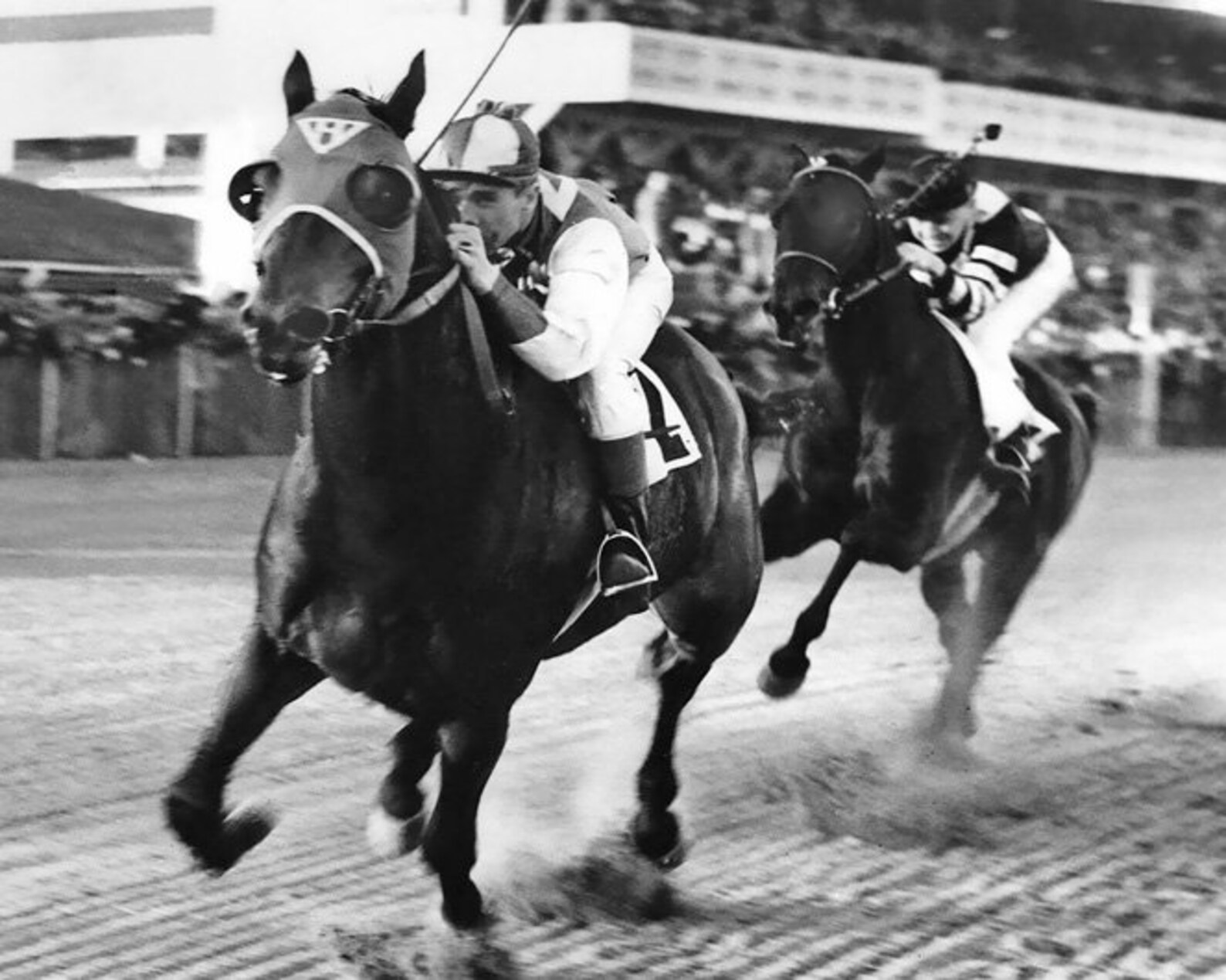
Ordinarily, I think I’m a pretty laid-back guy. When I’m not explosively angry, that is. But something happens to me when I write. Give me a word count and a deadline, and I’m like a lackadaisical Seabiscuit until he catches another horse coming up out of the corner of his eye. Word counts are shredded, the fabric of time is tested, and editors despair.
I just submitted 1600 words on Julian Grant’s new harpsichord concerto, “Vaudeville in Teal,” to be given its premiere by Mahan Esfahani and the Princeton Symphony Orchestra, March 7 & 8. On the same program with Stravinsky’s “Pulcinella?” You know I’ve got plenty to say.
The article is scheduled to appear in the community newspapers U.S. 1 and Princeton Echo next week. But it might just as easily be taking up all the memory in somebody’s inbox, crippling their account.
princetonsymphony.org -

From Out of the Wilderness to the Land of Plenty
Holy smokes! Now that the holiday “routine” is finally winding down (getting ahead on my radio shows, visiting and hosting family, and generally being festive to the point I have no idea what day of the week it is), I glance at the calendar and realize that I’ve totally, inadvertently crammed next weekend with concerts. And somehow two of those concerts feature the Barber Violin Concerto – on the same day!
How did it happen? I impulsively acquired a seat to Friday afternoon’s Philadelphia Orchestra concert as part of a package deal for deeply-discounted tickets. Of course, I leaped at those programs that really appealed to me, the ones I regarded as must-see (or hear), and then to fill the quota, I picked the Friday concert.
And what’s not to like? The program includes, beside the lovely and moving Barber concerto (with the excellent Augustin Hadelich as soloist), Mahler’s winning Symphony No. 4, and John Adams’ “Short Ride in a Fast Machine” (John Adams for people who think they don’t like John Adams). Furthermore, Dalia Stasevska will be conducting, and I confess I am a little bit in love with her. (The fact that she’s married to Sibelius’ great-grandson further endears her to me.)
What I had forgotten was that I was already holding a ticket to the New Jersey Symphony, which had also lured me at some point with a 50-percent off sale. So I’ll be hearing the Barber concerto again on Friday night in Princeton, this time with Randall Goosby as the soloist. It was an offer I couldn’t refuse, especially with a program that opens with Sibelius’ “Finlandia” and concludes with my personal favorite of the Tchaikovsky symphonies, the Symphony No. 2.
This Second Symphony, which assimilates Ukrainian folk themes, has always been subtitled, in English-speaking countries anyway, as the “Little Russian,” but world events have precipitated a shift toward identifying it as the “Ukrainian.” (I didn’t mention that Stasevska, who moved to Finland with her family at the age of 5, was born in Kyiv – yet another detail that binds the Friday concerts.) In this instance, the NJS’s music director, Xian Zhang, will conduct at Princeton University’s Richardson Auditorium.
Then on Saturday evening, I’ll be back at Richardson for a concert of the Princeton Symphony Orchestra. Yet another violinist, Bella Hristova, will be the soloist for Prokofiev’s Violin Concerto No. 1. On the second half will be the Symphony No. 1 of Dmitri Shostakovich.
The program will open with a recent work by Portuguese composer Andreia Pinto Carreia. “Ciprés” takes its inspiration from a poem by Federico Garcia Lorca. The structure of the piece is said to be influenced by the poem’s imagery of trees and water. I’ll be interested to see (and hear) what that’s all about. PSO music director Rossen Milanov will conduct.
I’ll give my ears a rest on Sunday. I’m certainly not complaining – it will be great to get back to attending concerts – but you’ll understand, I hope, that it is a bit like emerging from the desert and trying not to drink too fast!
——–
PHOTO: Dalia Stasevska in her Chuck Taylors. She’ll remain in Philadelphia to oversee John Williams’ Tuba Concerto, with the orchestra’s principal tubist Carol Jantsch, January 15-17. You know I’ll be there for that too!
Tag Cloud
Aaron Copland (92) Beethoven (94) Composer (114) Film Music (116) Film Score (143) Film Scores (255) Halloween (94) John Williams (185) KWAX (228) Leonard Bernstein (99) Marlboro Music Festival (125) Movie Music (131) Opera (197) Philadelphia Orchestra (86) Picture Perfect (174) Princeton Symphony Orchestra (106) Radio (86) Ralph Vaughan Williams (85) Ross Amico (244) Roy's Tie-Dye Sci-Fi Corner (290) The Classical Network (101) The Lost Chord (268) Vaughan Williams (99) WPRB (396) WWFM (881)