Tag: Pulitzer Prize for Music

  • Frankly Surprised:  An Actual, Straight-Down-the-Middle Composer Wins the Pulitzer

    Frankly Surprised: An Actual, Straight-Down-the-Middle Composer Wins the Pulitzer

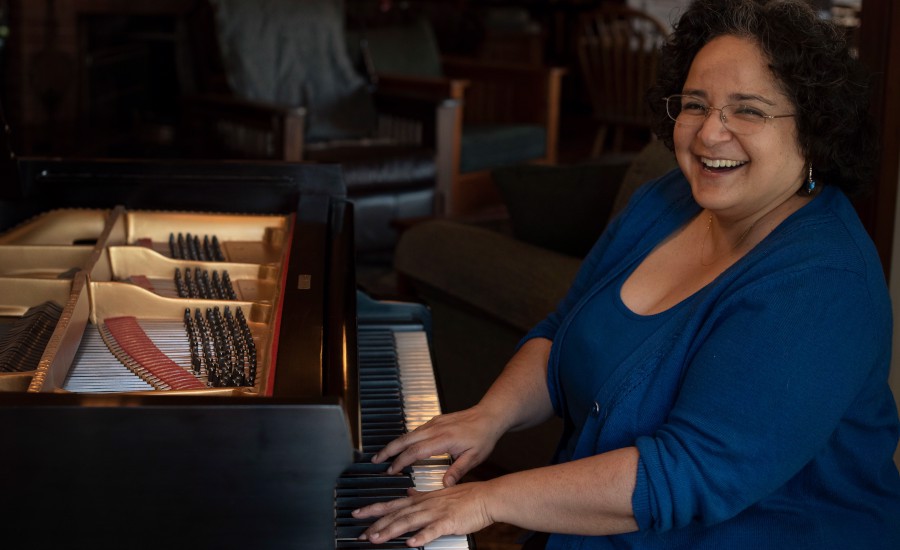
    Gabriela Lena Frank is the recipient of this year’s Pulitzer Prize for Music. The prize was announced yesterday, but certain slow-to-react social media outlets are still catching up with the news.

    Frank was recognized for “Picaflor: A Future Myth.” The work is tied to the composer’s personal experiences with the California wildfires and her knowledge Andean legend.

    The composition was introduced in Marian Anderson Hall at the Kimmel Center for the Performing Arts on March 13, 2025, by the Philadelphia Orchestra conducted by Marin Alsop. It was a co-commission of the orchestra, the Oregon Symphony, and Bravo! Vail Music Center.

    Cast in “ten powerful movements,” as characterized by the Pulitzer committee, “Picaflor” follows an original program, inspired by Andean-Peruvian mythology transplanted to a futuristic setting. “It draws upon the legends of a sky kingdom ruled by a sun god creator, a rebellious hummingbird… who tears through the sky, and the chaski – messengers of the Inca Empire. The piece is also immersed in the concept of pachacuti, the belief that era-worlds undergo cataclysmic transformations every few hundred years. These elements reflect the composer’s own climate activism in both art and life, and her pride as a generational daughter of Indigenous Perú.”

    The work is dedicated to the late Finnish composer Kaija Saariaho and is the culmination of a residency with the Philadelphia Orchestra.

    Frank, whose works have been frequently programmed, was born in Berkeley, CA, to a mother of mixed Peruvian/Chinese ancestry and a father of Lithuanian/Jewish descent. Following in the footsteps of musical heroes Béla Bartók and Alberto Ginastera, she serves as a kind of musical anthropologist. According to her bio, she’s “traveled extensively through South America, and her pieces often reflect and refract her studies of Latin American folklore, incorporating poetry, mythology, and native musical styles into a Western classical framework that is uniquely her own.”

    I haven’t heard this particular piece yet, but her music is colorful and full of incident.

    It’s nice to have a Pulitzer winner that can be performed by an actual symphony orchestra again.

    ———

    Frank previews “Picaflor” in 90 seconds:


    “Escaramuza” (2010)


    “Leyendas: An Andean Walkabout” (2001)


    “Elegía Andina” (2000)


    “Three Latin American Dances” (2004)


    Through a strange quirk of fate, because of my illness this weekend, I was unable to attend “Eugene Onegin” at the Met. So I traded my ticket for a seat at the Met debut of Frank’s recent opera, “El último sueño de Frida y Diego,” a magical-realist, upside-down Orpheus and Euridice story about painters Frida Kahlo and Diego Rivera.

    https://www.metopera.org/season/2025-26-season/el-ultimo-sueno-de-frida-y-diego

    There’s my Cinco de Mayo connection!

    You don’t have to go to New York to see it. It will be simulcast in select cinemas as part of the “Met Live in HD” series on May 30. Find a theater near you at the link (below the photo, there’s a red tab on the right).

    https://www.metopera.org/season/in-cinemas/2025-26-season/el-ultimo-sueno-de-frida-y-diego/

    A 16-second teaser


    Congratulations, Gabriela Lena Frank!

  • George Walker Pulitzer Winner and Pioneer

    George Walker Pulitzer Winner and Pioneer

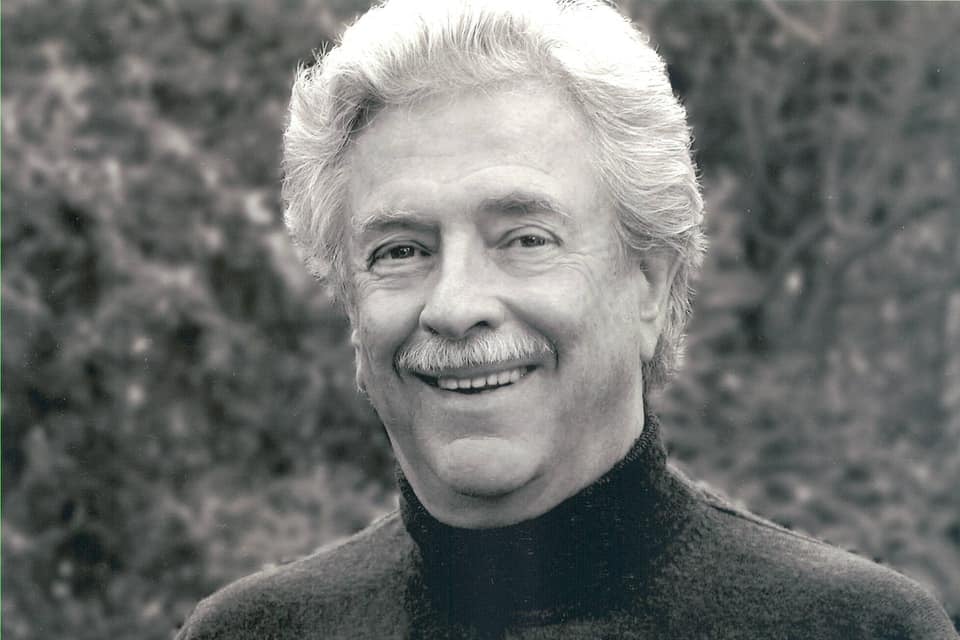
    It’s crazy that the first time an African-American composer would receive the Pulitzer Prize for Music was only in 1996. I remember when it happened. It was a pretty big deal. A special award had been made to Scott Joplin in 1976 – 59 years after Joplin’s death – and there have been some special citations and a number of Black honorees since. But it was George Walker who broke the glass ceiling.

    It was not the first time he was a “first.” Walker was the first Black pianist to present a solo recital at New York’s Town Hall (in 1945); he was the first Black performer to appear as soloist with the Philadelphia Orchestra (performing Rachmaninoff’s Piano Concerto No. 3); and he was the first Black musician to graduate from the Curtis Institute of Music (where he studied with Rudolf Serkin and Rosario Scalero).

    Walker was born in Washington, D.C., on this date in 1922. His father emigrated from Kingston, Jamaica, to study at Temple University School of Medicine. Walker’s mother supervised his first piano lessons. He was accepted into the Oberlin School of Music at the age of 14. He was then admitted to the Curtis Institute in Philadelphia. Later, he attended the Eastman School. For two years, in common with so many 20th century composer of merit, especially Americans, he studied in Paris with the famed pedagogue Nadia Boulanger.

    Walker’s own academic career included posts with Dillard University in New Orleans, the Dalcroze School of Music, the New School for Social Research, Smith College, the University of Colorado Boulder, Rutgers University (where he served as chairman of the music department), the Peabody Institute of John Hopkins University, and the University of Delaware.

    “Lilacs for Voice and Orchestra” was introduced by soprano Faye Robinson on February 1, 1996, with the Boston Symphony Orchestra conducted by Seiji Ozawa. The 15-minute work is a setting of texts from Walt Whitman’s 1865 Lincoln elegy “When Lilacs Last in the Dooryard Bloom’d.” “Lilacs” was described by the Pulitzer committee as a “passionate, and very American, musical composition with a beautiful and evocative lyrical quality.”

    “Lyric” is a descriptor that followed Walker his entire life, or at least since his music became more widely known. His most popular work is his “Lyric for Strings,” a touching piece for string orchestra. Like the ubiquitous “Adagio” by Samuel Barber (who also attended Curtis), “Lyric” was arranged from the slow movement of a string quartet, in Walker’s case written while he was still a student. Originally, he had titled the piece “Lament.” But comparisons with Barber’s “Adagio” end there. Walker’s work doesn’t strive for profundity or wrench the soul as Barber’s does. But it is moving, all the same, for being so evidently personal, confessional even.

    Walker wrote the piece in 1946, following the death of his grandmother. For anyone who learned about slavery in America from a history textbook, it’s sobering to discover that Melvina King actually lived it. Walker went on to a career studded with impeccably crafted works that brought him many honors and much critical praise. But “Lyric” has the distinction of going straight to the heart.

    A longtime resident of Montclair, NJ, George Walker died in 2018 at the age of 96. I often wonder if he ever got tired of hearing about his resume of firsts. In relation to his skin color, I mean. It was always the first thing you ever read or heard about him (and, alas, this post is no different).

    In an interview given in 2012, Walker commented, “I’ve always thought in universal terms, not just what is Black or what is American, but simply what has quality.”


    Hearing “Lyric for Strings” was once a rare treat. Now, in the past few years, everyone has taken it up. I have no doubt that the work will hold a lasting place in the standard repertoire.

    “Lilacs for Voice and Orchestra”

    Walker plays his Piano Sonata No. 1

    Brief 2012 documentary on Walker, in which he is interviewed, for the occasion of his 90th birthday:

    A fascinating interview conducted by Frank J. Oteri. Also includes some great photos!

    George Walker: Concise and Precise

  • Pulitzer Music Prize Enduring Classics & 2024

    Pulitzer Music Prize Enduring Classics & 2024

    On this date in 1945, Aaron Copland’s “Appalachian Spring” became the third recipient of the Pulitzer Prize for Music. The announcement came on V-E Day. Purely by chance, this American classic was honored as the Allies celebrated victory in Europe.

    Few Pulitzer Prize winners have endured as repertory pieces. Probably a handful at best. How many are actually known to the average concertgoer? Sure, the operas of Gian Carlo Menotti and Robert Ward get revived from time to time, and Jennifer Higdon has been exceptionally fortunate for a composer in her prime. But most Pulitzer winners tend to languish in relative obscurity.

    The 21st century has been a little kinder, with at least ten of the recipients garnering a respectable number of performances. But there have been some real eyebrow-raisers too.

    This year’s Prizes will be announced this afternoon at 3:00 EDT. You can catch the livestream at http://www.pulitzer.org.


    2022 Pulitzer winner, “Voiceless Mass” by Raven Chacon

    Aaron Copland conducts his 1945 winner, “Appalachian Spring,” at 80

    The complete list of past recipients, including additional citations

    https://en.wikipedia.org/wiki/Pulitzer_Prize_for_Music

  • Raven Chacon Wins Pulitzer for “Voiceless Mass”

    Raven Chacon Wins Pulitzer for “Voiceless Mass”

    I knew yesterday held some musical significance, but then, even after consulting all my usual sources, I just couldn’t figure out what it was. Wouldn’t you know it, yesterday was the announcement of this year’s Pulitzer Prizes, something I had made a mental note of weeks ago. But apparently my mental note pad isn’t what it used to be.

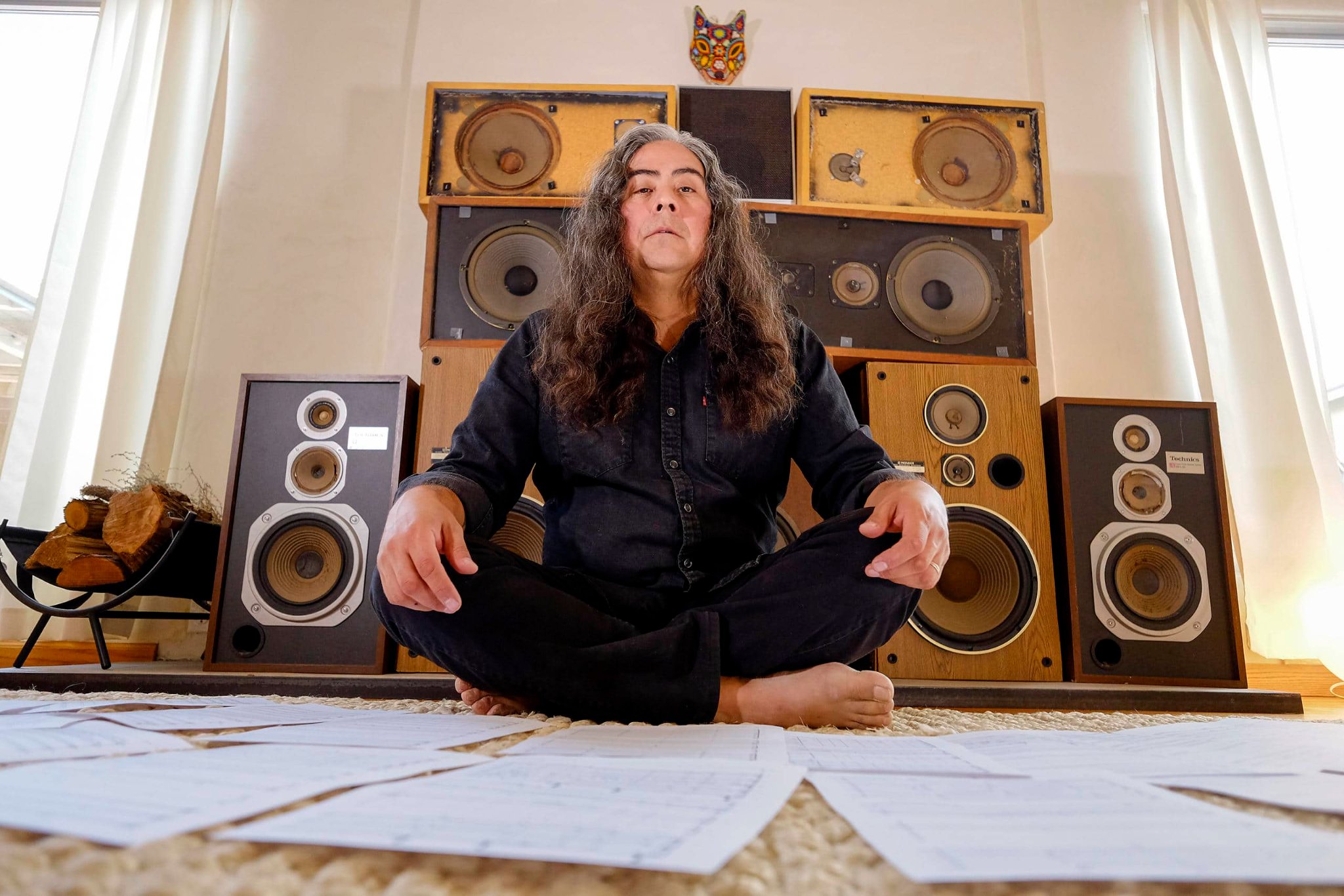
    This year’s Pulitzer Prize for Music was awarded to Raven Chacon for “Voiceless Mass.” As the title suggests, there are no voices in the work, which is scored organ and large ensemble (percussion, wind instruments, strings, and electronics). The work was given its premiere last November at Milwaukee’s Cathedral of St. John the Evangelist.

    “This was a response to buildings like the church (and other institutions like it), that suppresses voices,” Chacon said in an interview with the Albuquerque Journal.

    Chacon, 44, is a composer, performer, and installation artist from the Navajo Nation. He is the first Native American to be honored in the Pulitzer’s music category.

    https://www.pulitzer.org/winners/raven-chacon

    “Voiceless Mass” doesn’t appear to be posted anywhere on line, but here are some samples of Chacon’s other work.

    “American Ledger (No. 1)”

    “The Journey of the Horizontal People”

    A selection from “Tremble Staves” – though floating your cello in a canal is not recommended!

    More “Tremble Staves”

    The composer talks about his music, including a selection from “Report,” for firearms ensemble!

    https://www.youtube.com/watch?v=EJdaJuklZGA

    I can’t say that I’ll be whistling a lot of this, but there’s something to be said for ritual, spatial music, and installation art. Even so, I think I’m intrigued by “Tremble Staves” for all the wrong reasons. It puts me in mind of the Falcon and the Silver Surfer, from back in my Marvel Comics days.

    Congratulations, Raven Chacon!

  • Wayne Peterson Pulitzer Winner Dies

    Wayne Peterson Pulitzer Winner Dies

    On Friday, news began circulating that American composer Wayne Peterson died at the age of 93. He was a recipient of the Pulitzer Prize for Music, for his orchestral work “The Face of the Night, the Heart of the Dark,” in 1992.

    The award was not without controversy. Through no fault of Peterson’s own, the prize caused a bit of a scandal after the judges on the music committee went public with news that their own selection – Ralph Shapey’s “Concerto Fantastique” – had been vetoed by the Pulitzer board, and the award bestowed for Peterson’s piece instead.

    While the board’s intervention was not unprecedented (Edward Albee’s play “Who’s Afraid of Virginia Woof?” and Thomas Pynchon’s novel “Gravity’s Rainbow” were similarly dismissed), it was the first time it had imposed its will in the music category.

    What exactly spurred the action is anyone’s guess. Certainly Peterson’s work is no more commercially viable than Shapey’s. So it could not have been a sop to the public. Though the board justified its decision by stating the “Pulitzers are enhanced by having, in addition to the professional’s point of view, the layman’s or consumer’s point of view.”

    On the other hand, Shapey did have something of a reputation for being a prickly S.O.B., so maybe he just rubbed the wrong people the wrong way. Unquestionably, he had the respect of his peers. He had previously been a finalist for the Pulitzer in 1990.

    “I’ve been up for a Pulitzer year after year,” he remarked, “and I can’t get a Pulitzer.” Shapey was born in Philadelphia 100 years ago last month. He died in 2002.

    With few notable exceptions – among them Aaron Copland’s “Appalachian Spring” and Charles Ives’ Symphony No. 3, “The Camp Meeting” – Pulitzer Prize winners tend to fade from memory rather quickly.

    When Ives was awarded the Pulitzer in 1947, he muttered, “Prizes are for boys. I’m a grown-up.”

    Forever cranky, he characterized the very notion of prizes as “badges of mediocrity.”

    Peterson himself remarked, “Winning the Pulitzer has meant nothing for the piece that won. Back when Blomstedt was at the San Francisco Symphony, David Zinman conducted it and did a beautiful job. But they never did it again and nobody else has ever played it.”

    It did, however, generate new commissions and guaranteed publication of his music. In 2017, “The Face of the Night, the Heart of the Dark” was finally recorded, by Boston Modern Orchestra Project, or BMOP.

    This year’s Pulitzer Prize winners will be announced on June 11.

    Peterson’s obituary in yesterday’s WaPo. He died on April 7.

    https://www.washingtonpost.com/local/obituaries/wayne-peterson-dead/2021/04/18/752f23a8-9eea-11eb-9d05-ae06f4529ece_story.html

    Peterson’s “The Face of the Night, the Heart of the Dark,” in two movements (so just let it run):

    To my knowledge, Ralph Shapey’s “Concerto Fantastique” has yet to be recorded. Here’s “Ontogeny,” from 1958, a considerably earlier work, but I’m posting it here because, like the Pulitzer reject, it’s orchestral.

    Ives, Symphony No. 3, “The Camp Meeting”

    R.I.P. Wayne Peterson

Tag Cloud

Aaron Copland (92) Beethoven (95) Composer (114) Film Music (122) Film Score (143) Film Scores (255) Halloween (94) John Williams (187) KWAX (229) Leonard Bernstein (100) Marlboro Music Festival (125) Movie Music (137) Opera (199) Philadelphia Orchestra (89) Picture Perfect (174) Princeton Symphony Orchestra (106) Radio (87) Ralph Vaughan Williams (85) Ross Amico (244) Roy's Tie-Dye Sci-Fi Corner (290) The Classical Network (101) The Lost Chord (268) Vaughan Williams (103) WPRB (396) WWFM (881)

DON’T MISS A BEAT

Receive a weekly digest every Sunday at noon by signing up here


RECENT POSTS