Tag: Pulitzer Prize for Music

  • Charles Ives: An American Original

    Charles Ives: An American Original

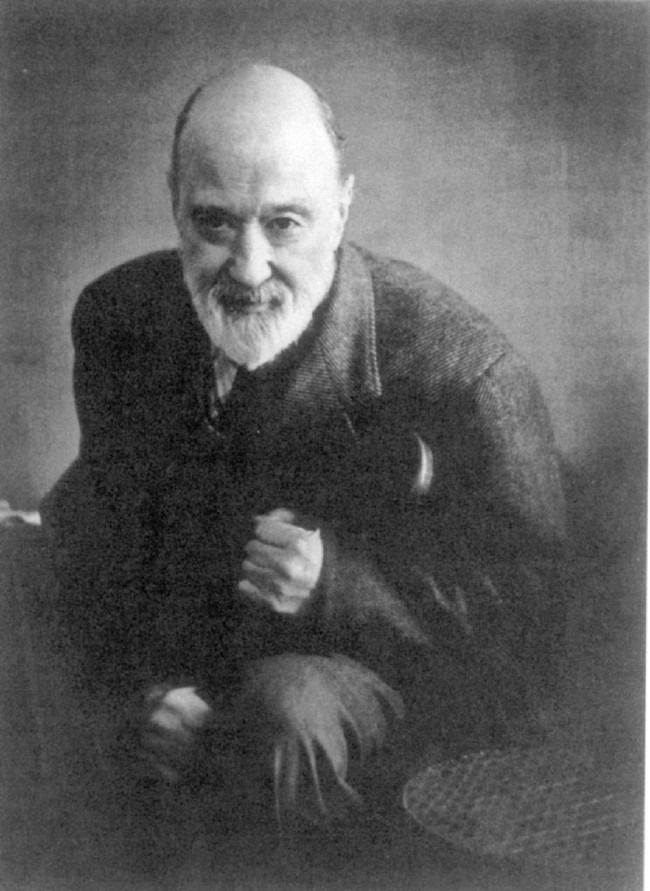
    “Are my ears on wrong?” once remarked Charles Ives, marveling at how out of step with musical convention his own compositions could be. Yet he soldiered on, writing works of all stripes, tonalities, and quasi-tonalities, even atonality, navigating with remarkable certainty for some 30 years, with very few performances to affirm his chosen course.

    I’m not saying anything new in stating that Ives was an American original. He wrote the kind of music he wanted to write, stitching together hymns and fiddle tunes of his youth into a brilliant crazy quilt of the American experience.

    His father had been something of an original himself, a bandmaster during the Civil War. He taught Ives to sing in one key while he played in another. This likely contributed to his son’s unique appreciation of a formative experience: while standing on a street corner during a parade, the boy Ives giddily perceived the natural dissonances and rhythmic complexities resulting from a clash of marching bands as they wrapped around the block.

    Thankfully, his quirky musical predilections were tempered by a practical streak. Ives pursued a career in the insurance business, and he became very successful at it. (His work in the field helped lay the groundwork for modern practices in estate planning.) While this would occupy much of his time, it also allowed him the financial security to follow his idiosyncratic muse. Ives composed in the evenings, on weekends, and during holidays. For a few years, in the 1890s, he was also organist and choirmaster at a couple of New York churches.

    Ives retired in 1930, which permitted him to devote himself wholeheartedly to music. Ironically, by then, he found he was no longer able to compose. His wife recalled a day in 1927 when he came downstairs with tears in his eyes and confessed that everything sounded wrong to him. After that, he labored mostly at revision and publication.

    By the time his works finally began to gain recognition, it had already been 20 years since he stopped writing. At the time of his death, in 1954, he was still widely misunderstood and much of his music remained unperformed. Nevertheless, he had some important champions. He was a recipient of the Pulitzer Prize for Music in 1947, for his Symphony No. 3, subtitled “The Camp Meeting,” a work he composed in 1904. The symphony was given its belated premiere, under Lou Harrison’s direction, in 1946.

    Arnold Schoenberg regarded Ives as a paragon of artistic integrity. After Schoenberg’s death, his widow found the following note, scrawled, among his papers: “There is a great Man living in this Country – a composer. He has solved the problem of how to preserve one’s self-esteem and to learn. He responds to negligence by contempt. He is not forced to accept praise or blame. His name is Ives.”

    Here is Ives, in all his patriotic, profane glory, singing “They Are There,” from 1943. Originally written in 1917, for the Great War, the song employs an updated text.

    Ives draws on his memory of the wrap-around marching bands of his youth, in Danbury, Connecticut, for “The Fourth of July.” Note the climactic rocket explosion, fading away into sparks!

    Finally, the work that won him the Pulitzer, the Symphony No. 3, “The Camp Meeting”:

    Ives’ characteristically gruff reaction: “Prizes are for boys. I’m grown up.” In private, though, he proudly hung the certificate on his wall.

    Happy birthday, Charles Ives!
  • Little Match Girl Passion Uplifts Suffering

    Little Match Girl Passion Uplifts Suffering

    At this most festive time of the year, it’s important to remember those who are less fortunate than ourselves.

    At the heart of today’s Noontime Concert on The Classical Network will be a contemporary meditation on Hans Christian Andersen’s keeping-it-real holiday parable, “The Little Match Girl.”

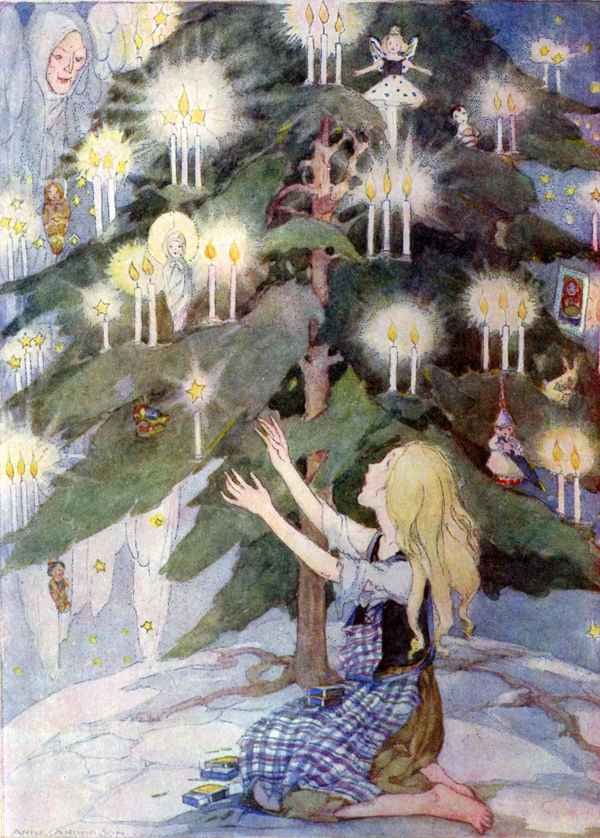
    You’ll recall that, in Andersen’s story, a little girl attempts to support her family and appease an abusive father by selling matches on the street. Failing to elicit any interest from the passersby, she warms herself by depleting her wares and finds delirious escape in comforting visions – a warm stove, a holiday feast, a happy family, and a Christmas tree. The matches run out, and she is found the next morning, frozen to death. It is revealed to the reader that she is happy at last with her grandmother in heaven.

    Composer David Lang – now artist-in-residence at Princeton’s Institute for Advanced Study – takes “The Little Match Girl” and reimagines it in the manner of a Bach Passion, drawing parallels between the Crucifixion and the death of a poor girl. The word “passion,” after all, is from the Latin, for “suffering.”

    “There is no Bach in my piece and there is no Jesus,” writes Lang, “rather the suffering of the little girl has been substituted for Jesus, (I hope) elevating her suffering to a higher plane.”

    “The Little Match Girl Passion” was awarded the Pulitzer Prize for Music in 2008.

    We’ll hear it performed this afternoon by The Thirteen, under the direction of Matthew Robertson. The balance of the program will be made up of carols and Christmas music from across the centuries.

    The Thirteen’s next concerts will take place this weekend in Alexandria, VA, Washington, DC, and Bethesda, MD. The program will include Philadelphia composer Kile Smith’s “The Consolation of Apollo,” which juxtaposes the words of Apollo 8 astronauts, spoken on Christmas Eve 1968, with the writings of Roman philosopher Boethius, for a fantastical take on the Christmas story. Find out more by visiting the choir’s website, thethirteenchoir.org.

    Following today’s Noontime Concert, stick around for further musical reflections on winter and the Christmas holiday. We’ll do our best to warm hands, heart and spirit, from 12 to 4 p.m. EST on WWFM – The Classical Network and wwfm.org.

  • Shulamit Ran 70th Birthday Celebration on WWFM

    Shulamit Ran 70th Birthday Celebration on WWFM

    The Israeli-born American composer Shulamit Ran turns 70 today. Ran was only the second female recipient of the Pulitzer Prize for Music, in 1990, for her Symphony. I didn’t get her a card, so I figured I’d play her “Voices” for flute and orchestra instead. Ran will also introduce the piece. Hear it this afternoon in the 4:00 hour.

    It’s also the anniversary today of the births of Sir Malcolm Arnold, Joseph Canteloube, Howard Ferguson, Alexander Schneider, Sir Georg Solti, Vladimir Ussachevsky and Egon Wellesz. Cake will follow Pin the Tail on the Donkey, this Monday from 4 and 7 p.m. EDT, on WWFM – The Classical Network and wwfm.org.

  • Caroline Shaw: Pulitzer Winner to Solo Violinist

    Caroline Shaw: Pulitzer Winner to Solo Violinist

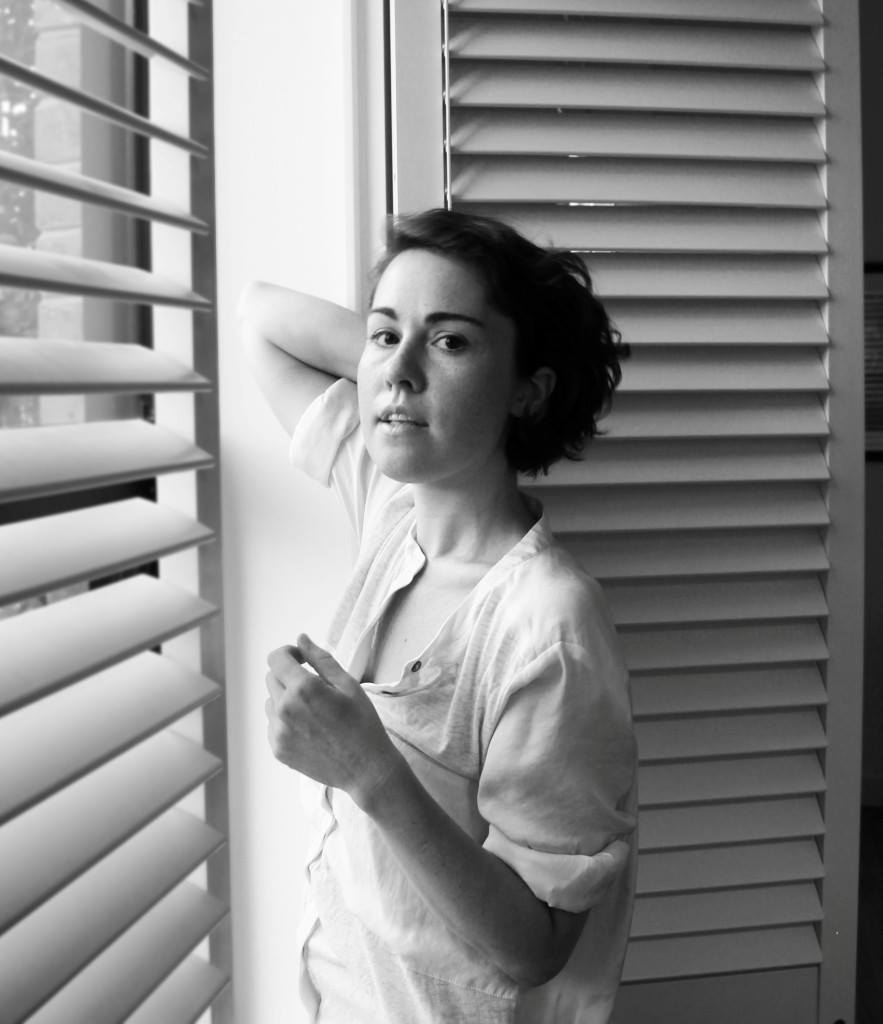
    Is there nothing Caroline Shaw can’t do? A founding member of the Grammy Award-winning vocal octet Roomful of Teeth, Shaw is enrolled in the PhD program in composition at Princeton University. In 2013, at the age of 30, she became the youngest recipient of the Pulitzer Prize for Music for her composition “Partita for 8 Voices,” which she also recorded.

    Now Shaw makes her debut as a solo violinist in her most recent work, which receives its first performances in a series of concerts, the next of which will take place at Princeton University’s Richardson Auditorium on Sunday at 4 p.m.

    “Lo,” for violin and orchestra, is a co-commission of the Princeton Symphony Orchestra and the North Carolina and Indianapolis Symphonies, in support of the Cincinnati Symphony Orchestra’s MusicNOW Festival.

    PSO Music Director Rossen Milanov will conduct the concert, which will also feature the tone poem “Pohjola’s Daughter,” by Jean Sibelius, and the Symphony No. 1, by Johannes Brahms. Shaw will join Milanov for the pre-concert talk at 3.

    On Saturday at 12 p.m., Shaw will also take part in a Pi Day celebration at Nassau Inn, 10 Palmer Square, where a pop-up masterclass will be held for violinists ages 3-6. At 4 p.m., she will discuss her creative process with Milanov, as part of a PSO “Behind the Music” event, at the Arts Council of Princeton’s Paul Robeson Center for the Arts, 102 Witherspoon St.

    Registration for the masterclass and tickets for “Behind the Music” – both free and open to the public – are available through the PSO website, princetonsymphony.org.

    Learn more about Caroline Shaw and the Princeton Symphony Orchestra in my article in today’s Trenton Times:

    http://www.nj.com/times-entertainment/index.ssf/2016/03/caroline_shaw_pso_performing_i.html

  • MLK Day Schwantner’s New Morning CD Still MIA?

    MLK Day Schwantner’s New Morning CD Still MIA?

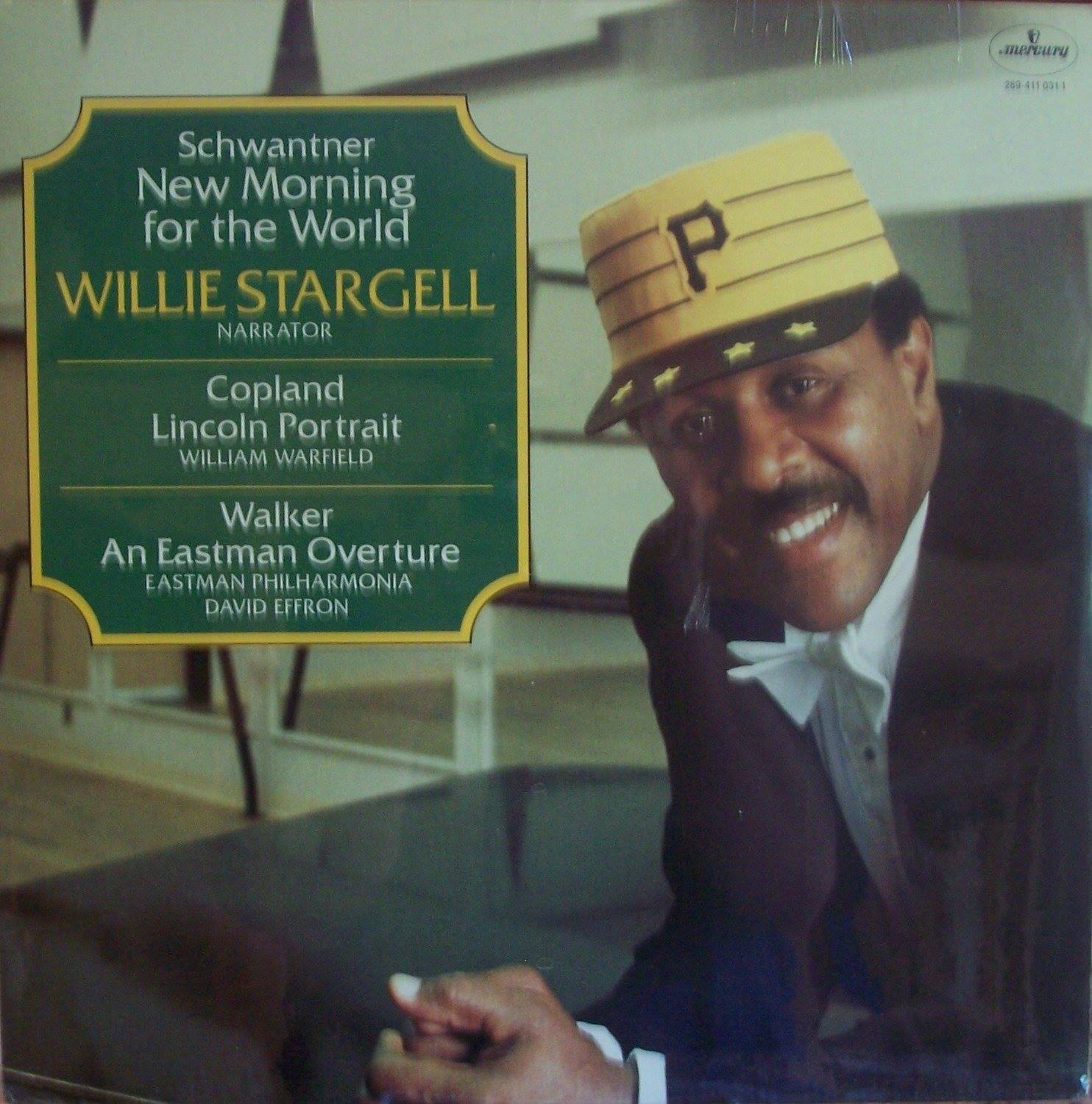
    Martin Luther King Day. Joseph Schwantner’s “New Morning for the World (Daybreak of Freedom),” on a text drawn from King’s speeches, still not available on CD? In this fine recording? Why?

    Schwantner was awarded the Pultizer Prize for Music, for his “Aftertones of Infinity,” in 1979. “New Morning for the World” dates from 1982. Here’s a review of a concert performance of the piece in the New York Times. Sorry they didn’t record the Piston symphony!

    http://www.nytimes.com/1983/01/18/arts/concert-willie-stargell-and-eastman-orchestra.html

    The work received its world premiere in 1983 at the Kennedy Center in Washington, D.C., on King’s birthday, January 15. This was followed by performances at Carnegie Hall, Philadelphia’s Academy of Music, Pittsburgh’s Heinz Hall, and Rochester’s Eastman Theater.

    The album also includes Aaron Copland’s “A Lincoln Portrait” and “An Eastman Overture” by George Walker. Copland and Walker too are Pulitzer Prize winners. Pittsburgh Pirate Willie Stargell hits it out of the park.

    There is a recording of “New Morning for the World” on compact disc (on Koch International Classic), but the narrator wouldn’t exactly earn a Stargell Star. The LP, with the Eastman Philharmonia, is still the one to beat.

Tag Cloud

Aaron Copland (92) Beethoven (95) Composer (114) Film Music (122) Film Score (143) Film Scores (255) Halloween (94) John Williams (187) KWAX (229) Leonard Bernstein (100) Marlboro Music Festival (125) Movie Music (137) Opera (199) Philadelphia Orchestra (89) Picture Perfect (174) Princeton Symphony Orchestra (106) Radio (87) Ralph Vaughan Williams (85) Ross Amico (244) Roy's Tie-Dye Sci-Fi Corner (290) The Classical Network (101) The Lost Chord (268) Vaughan Williams (103) WPRB (396) WWFM (881)

DON’T MISS A BEAT

Receive a weekly digest every Sunday at noon by signing up here


RECENT POSTS