Tag: Ray Harryhausen

  • Dino Movie Mayhem on Picture Perfect

    Dino Movie Mayhem on Picture Perfect

    I know, I know, strictly speaking, Godzilla is not a dinosaur. Don’t give me any guff. All I’m looking for is an hour’s worth of “fearfully great lizards” (from the Greek), and I don’t care how I get them.

    This week on “Picture Perfect,” the focus will be on four films that convey the disastrous results of bringing dinosaurs into the world of men.

    “One Million Years B.C.” (1966) features special effects by the legendary Ray Harryhausen and an equally legendary fur bikini, worn by Raquel Welch. Not to be confused with the more recent “10,000 B.C.,” this was actually a Hammer Studios remake of a 1940 Hollywood film, “One Million B.C.” – a fact as little known as the well-kept historical secret that man and dinosaurs did indeed co-exist. With its stop-motion dinosaurs, fur bikinis, and Peter Brady-style volcanoes, this cheese ball classic is a guilty pleasure indeed. The music was by Mario Nascimbene, who wrote one of my favorite scores for Kirk Douglas, “The Vikings.”

    Harryhausen also provided the special effects for “The Valley of Gwangi” (1969). Gwangi, a cross between an Allosaurus and a Tyrannosaurus rex, is discovered by cowboys in a lost valley in Mexico. Lending an air of realism, there is also a clan of Gypsies. Of course, the first thing you want to do when you discover a 14-foot predator is to monetize it by putting it on display for the public employing questionable safety standards. Obviously, none of these cowboys have seen “King Kong.” Gwangi is promptly conscripted into a wild west show, with predictable results.

    The music is by Jerome Moross, composer of one of the all-time classic western scores, that for “The Big Country,” and there are musical moments in this film that almost seem as if they’re left over from the earlier classic. Which is fine by me.

    Purists, no doubt, will object to my inclusion of Godzilla on a dinosaur program. Godzilla is not, strictly speaking, a dinosaur, but rather a monster unleashed by a nuclear blast. Still, according to the Smithsonian, he has the head and lower body of a Tyrannosaurus, a triple row of dorsal plates like those of a Stegosaurus, the neck and forearms of an Iguanodon, and the tail and skin texture of a crocodile.* No Ray Harryhausen stop-motion effects here. Just some guy in a suit. (Actor and stunt performer Haruo Nakajima played Godzilla 12 consecutive times, beginning with the original film.)

    We’ll hear the “Godzilla” theme (1954), composed by Akira Ifukube. And we’ll preface that with a little conversation between Godzilla and Orga, from the 23rd Godzilla movie, “Godzilla 2000: Millennium.”

    As he did with the Indiana Jones films, director Steven Spielberg turned to B-movie source material for his visual inspiration for “Jurassic Park” (1993), based on the novel by Michael Crichton. The herky-jerky dinosaur effects of yore are replaced by state-of-the-art computer-generated imagery, in the story of a safari park on a remote island gone wrong. Sure, we’ve come a long way from Raquel Welch getting carried off by a Pteranodon, but admit it, we all still want to see people fighting dinosaurs. Instead of fudging history, now we can feel superior by fudging science. “Jurassic Park” plays on the most recent scientific thinking, with DNA extracted from mosquitoes trapped in amber, cloning, and the theory that dinosaurs were not lizards, after all, but rather birds. (Yeah, and Pluto isn’t a planet!) The music is by long-time Spielberg-collaborator, John Williams.

    Dinosaurs walk the earth, on “Picture Perfect,” music for the movies, now in syndication on KWAX, the radio station of the University of Oregon!


    Remember, KWAX is on the West Coast, so there’s a three-hour difference for the Trenton-Princeton area. Here are the respective air-times of my recorded shows (with East Coast conversions in parentheses):

    PICTURE PERFECT, the movie music show – Friday on KWAX at 5:00 PACIFIC TIME (8:00 PM EDT)

    THE LOST CHORD, unusual and neglected rep – Saturday on KWAX at 4:00 PACIFIC TIME (7:00 PM EDT)

    Stream them here!

    https://kwax.uoregon.edu/


    *If we’re going to drag science into the thing, here’s an amusing article I discovered in Smithsonian Magazine, in which paleontologists speculate what dinosaurs may have been a part of Godzilla’s DNA. Before his radioactive mutation that is.


    https://www.smithsonianmag.com/science-nature/what-kind-of-dinosaur-is-godzilla-45639768/?no-ist&fbclid=IwAR24EdNM5di33tj86DHPbteSnliHqkkP8ZtEMfkIC-eowDPRNmtZnSw1ks8

  • One Million Years BC Raquel Welch & Dinosaurs

    One Million Years BC Raquel Welch & Dinosaurs

    Beach season may be over, but it’s never too late for Raquel Welch in a fur bikini. Roy and I will brave anything, even Ray Harryhausen-animated Pteranodons, to discuss “One Million Years B.C.” (1966) on the next Roy’s Tie-Dye Sci-Fi Corner.

    Prehistoric cave people face off against dinosaurs – and each other – in yet another wish-fulfillment fantasy from Hammer Studios. Thrill to erupting volcanoes, giant iguanas, and grunting hirsute men with spears. Also… Martine Beswick dances!

    Hammer! Harryhausen! Hairy beachwear!

    Count to one million in the comments section, as we test your patience with a conversation about “One Million Years B.C.” Not all the dinosaurs will be on screen, when we livestream on Facebook, YouTube, etc., this Friday evening at 7:00 EDT!

    https://www.facebook.com/roystiedyescificorner

  • Harryhausen on Herrmann Rózsa & Rejected Barry

    Harryhausen on Herrmann Rózsa & Rejected Barry

    This was shared yesterday on the Bernard Herrmann Society page. At the link, you’ll find a couple of letters written by special effects legend Ray Harryhausen, in which he comments on the various composers he had the privilege to work with. He has especially high praise for Herrmann and Miklós Rózsa.

    Ray Harryhausen On Miklos Rozsa … Bernard Herrmann … And Max Steiner

    Interestingly, on his last film, “Clash of the Titans,” Harryhausen apparently rejected a score-in-progress by Academy Award winning composer John Barry (composer of “Born Free,” “Out of Africa,” “Dances with Wolves,” and the James Bond franchise). In a later interview, Barry, who had been hired because Harryhausen was impressed by his score for “The Lion in Winter,” claimed not to remember much about the experience, beyond the fact that he had provided a few demos.

    Some of the music can actually be heard in this installment of the Ray Harryhausen Podcast.

    The composer’s fragmentary contributions begin at the following times:

    • 6:48, “Heroic 1”

    • 1:27:10, “Andromeda”

    • 1:28:43, “Persius Growing Up”

    • 1:30:49, “Scorpion”

    Barry was replaced by Laurence Rosenthal (composer of “A Raisin in the Sun,” “The Miracle Worker,” “Becket,” “The Return of a Man Called Horse,” “The Island of Dr. Moreau,” and “The Young Indiana Jones Chronicles”).

    But don’t shed any tears for Barry. He wound up doing just fine.

  • Clash of the Titans Harryhausen’s Swan Song

    Clash of the Titans Harryhausen’s Swan Song

    When “Clash of the Titans” opened on June 12, 1981, it was opposite “Raiders of the Lost Ark.” Needless to say, on Friday night I was riding with Indiana Jones; but on Saturday, you can bet I was cozying up with Medusa.

    This week on Roy’s Tie-Dye Sci-Fi Corner, we’ll dust off our Edith Hamilton to search vainly for Calibos and Bubo, on a quest to rescue Andromeda from… the Kraken?

    Okay, so maybe it’s not scrupulously faithful to the classical myths. Who cares? It’s Ray Harryhausen!

    “Clash of the Titans” would be the swan song of this special effects maestro. With classics like “Jason and the Argonauts,” “The Seventh Voyage of Sinbad,” and “Mighty Joe Young” adorning his buckler, Harryhausen had long since secured his place in the pantheon.

    But when “Titans” opened, critics were divided: Gene & Roger loved it, but many were shockingly condescending, dismissing the film – some of them even the effects – as turgid and old-fashioned. In the wake of “Star Wars,” the all-knowing arbiters were now too-cool-for-school.

    Nevermind the fact that George Lucas’ Industrial Light and Magic repeatedly tipped its hat to Harryhausen. Only the year before, in fact, in the “Star Wars” sequel “The Empire Strikes Back,” ILM served up a gloriously-retro Tauntaun and some hilariously-improbable Imperial Walkers. Where would Empire or Rebellion be without Harryhausen?

    Even so, it is hard to deny that Harryhausen’s Dynamation process did start to seem a tad quaint alongside ILM’s “go motion” effects, especially when, only two weeks later, on June 26, 1981, ILM would challenge Harryhausen on his own turf with the fire-breathing antagonist of “Dragonslayer.” The wondrous creation that was Vermithrax Pejorative looked forward to “Jurassic Park” in 1993. So realistic was he, it’s conceivable he would have made Harryhausen himself blanch.

    But realism was never the point of Harryhausen’s fantastic visions, and I feel sorry for anyone who can’t see what’s so special about his special effects. By what law should fantasy be photorealistic? Are not our dreams filled with the otherworldly and the uncanny? Must they conform to the logic of our waking hours?

    Whatever the case, evidently by 1981, the time for this sort of magical storytelling had passed. Harryhausen and his longtime producer Charles Schneer had been hoping to mount a “Titans” follow-up, to be titled “Force of the Trojans,” but they couldn’t secure the funding. So it was that one of special effects’ most imaginative masters was driven to retirement at the age of 61.

    That retirement would be a long one – Harryhausen died in 2013 at the age of 92 – but it was not inactive. He began his own foundation to promote stop motion animation, oversaw the restoration and completion of some of his earlier projects, and in general was lauded and paid tribute to by generations of younger filmmakers. He also turned up in a few cameos.

    With “Clash of the Titans,” nobody can say he didn’t swing for the fences. For one thing, the cast was the starriest of any movie of his career, with supporting roles played by stage and screen legends Laurence Olivier, Claire Bloom, Maggie Smith, Ursula Andress, Siân Phillips, Flora Robson, and Burgess Meredith. Harry Hamlin, soon to attain fame with the success of TV’s “L.A. Law,” played Perseus. Did Hamlin possess the dash of Kerwyn Matthews? Ask your local cyclops.

    More to the point, will Roy and I clash over “Clash of the Titans? Winged horses couldn’t keep us away! We’ll RELEASE THE KRAKEN in the comments section, when we livestream on Facebook, YouTube, etc., this Friday evening at 7:30 EDT!

    https://www.facebook.com/roystiedyescificorner

  • Myths & Movie Music Clash of the Titans

    Myths & Movie Music Clash of the Titans

    Release the Kraken!

    This week on “Picture Perfect,” it’s a mythological mash-up, with music from four films inspired by classical myths.

    “Helen of Troy” (1956) is based on events recounted in Homer’s “The Iliad.” Like the more recent film “Troy,” this version glosses over any participation by the gods. Could it be their wrath that caused this Robert Wise-directed spectacle to be plagued with difficulties?

    Reportedly three people were killed during the making of the film, extras were injured by a runaway chariot, and 80 percent of the two-acre recreation of Troy was burned to the ground by a cigarette. On the bright side, it was Bridgette Bardot’s first film made outside of France, and Rossana Podestà played Helen. A spectacle indeed! Max Steiner provided the lush, romantic score.

    “Clash of the Titans” (1981) is not to be confused with the 2010 CGI-fest. This is the real deal, with special effects by legendary stop-motion maestro Ray Harryhausen.

    Just as special is its luxury casting of supporting roles, including Sir Laurence Olivier as Zeus, and Claire Bloom, Maggie Smith, Sian Phillips, and Ursula Andress as fellow Olympians. Burgess Meredith is among the mortals, Flora Robson turns up in one scene as a witch, and Perseus is played by newcomer Harry Hamlin, soon to find fame on television’s “L.A. Law.”

    The composer, Laurence Rosenthal, studied at the Eastman School and in Paris with Nadia Boulanger. He also wrote the music for “Raisin in the Sun,” “The Miracle Worker,” “Becket,” and the 1977 version of “The Island of Dr. Moreau.”

    “Clash of the Titans” would be Harryhausen’s final film. Despite flashes of his inimitable brilliance, in sequences like the one involving Medusa, and the creation of something of a cultural icon in the Kraken, the effects came to seem a little too retro in the wake of “Star Wars” and “Superman.” Though a sequel, “Force of the Trojans,” was pitched to M-G-M, it was not to materialize. Harryhausen died in 2013, after a lengthy retirement, at the age of 92.

    It would be a crime against peplum to put together a program of this sort without at least a nod to Hercules. The peplum genre originated in Italy with Maciste, a supporting character in the 1914 classic “Cabiria.” So powerful did this strongman prove that he became an industry unto himself. The Maciste craze reached its muscular peak in the late ‘50s and early ‘60s. When the films arrived in the United States, in hilariously dubbed versions, the character was invariably renamed Hercules, Samson, Atlas, Goliath, or any other mythological, Biblical, or historical bodybuilder you can think of.

    A peplum revival sprang up around “Conan the Barbarian” in the early 1980s. We’ll hear a selection from “Hercules” (1983), starring Lou Ferrigno, television’s Incredible Hulk. The music is by Pino Donaggio.

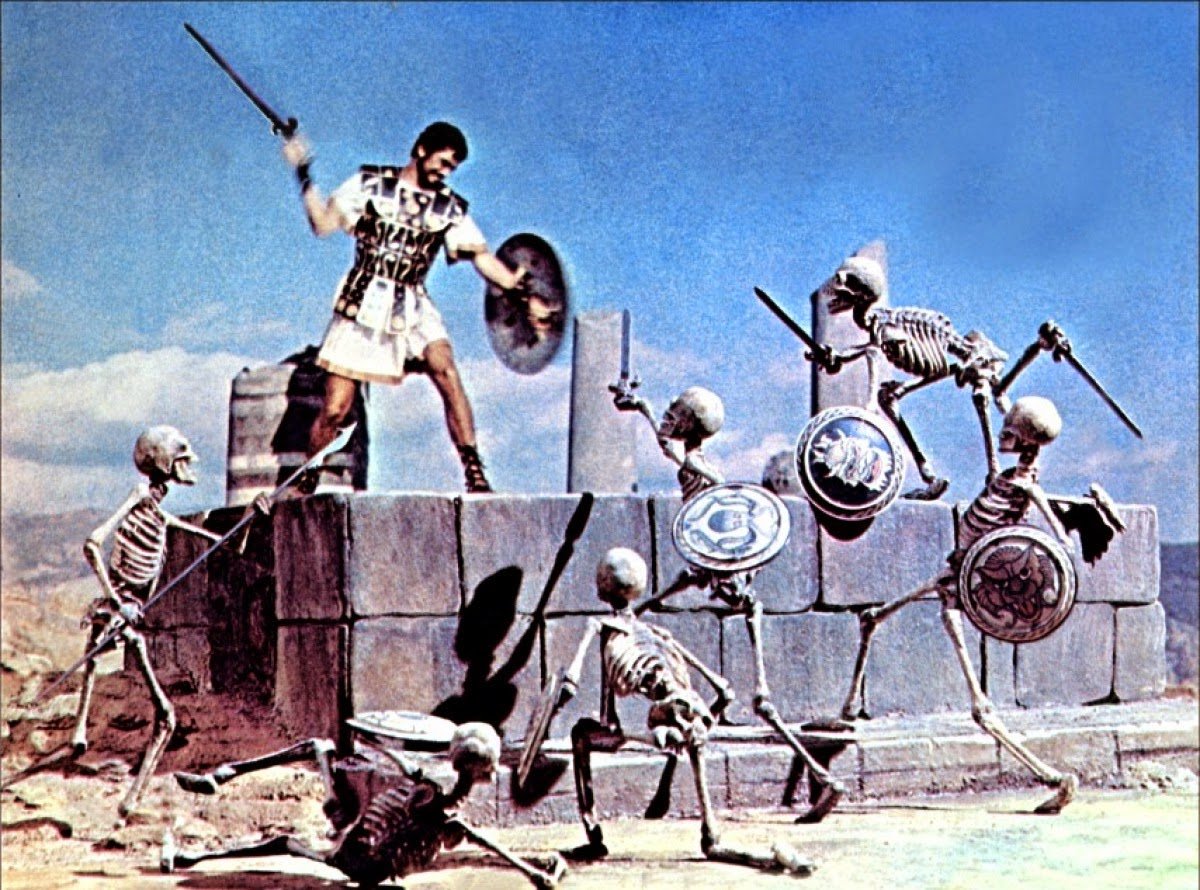
    Finally, we’ll make things right again with an extensive suite from the ultimate Ray Harryhausen mythological playground, “Jason and the Argonauts” (1963). This is the one that features the climactic battle with the skeleton army. The music, by Bernard Herrmann, brilliantly suits the visuals. We’ll hear a superb re-recording of the score on the Intrada label, with the Sinfonia of London conducted by Bruce Broughton.

    You won’t want to myth it, no bones about it! It’s a quest for classical mythology this week, on “Picture Perfect,” music for the movies, this Saturday evening at 6:00 EDT, on WWFM – The Classical Network and wwfm.org!

Tag Cloud

Aaron Copland (92) Beethoven (95) Composer (114) Film Music (120) Film Score (143) Film Scores (255) Halloween (94) John Williams (185) KWAX (229) Leonard Bernstein (100) Marlboro Music Festival (125) Movie Music (135) Opera (198) Philadelphia Orchestra (88) Picture Perfect (174) Princeton Symphony Orchestra (106) Radio (87) Ralph Vaughan Williams (85) Ross Amico (244) Roy's Tie-Dye Sci-Fi Corner (290) The Classical Network (101) The Lost Chord (268) Vaughan Williams (103) WPRB (396) WWFM (881)

DON’T MISS A BEAT

Receive a weekly digest every Sunday at noon by signing up here


RECENT POSTS