Tag: Ray Harryhausen

  • Mythological Movie Music Clash of the Titans & More

    Mythological Movie Music Clash of the Titans & More

    Release the Kraken!

    This week on “Picture Perfect,” it’s a mythological mash-up, with music from four films inspired by classical myths.

    “Helen of Troy” (1956) is based on events recounted in Homer’s “The Iliad.” Like the more recent film, “Troy,” this version glosses over any participation by the gods. Could it be their wrath that caused this Robert Wise-directed spectacle to be plagued with difficulties?

    Reportedly three people were killed during the making of the film, extras were injured by a runaway chariot, and 80 percent of the two-acre recreation of Troy was burned to the ground by a cigarette. On the bright side, it was Bridgette Bardot’s first film made outside of France, and Rossana Podestà played Helen. A spectacle indeed! Max Steiner provided the lush, romantic score.

    “Clash of the Titans” (1981) is not to be confused with the 2010 CGI-fest. This is the real deal, with special effects by legendary stop motion maestro Ray Harryhausen.

    Just as special is its luxury casting of supporting players, including Sir Laurence Olivier as Zeus, and Claire Bloom, Maggie Smith, Sian Phillips, and Ursula Andress as fellow Olympians. Burgess Meredith is among the mortals, Flora Robson turns up in one scene as a witch, and Perseus is played by newcomer Harry Hamlin, soon to find fame on television’s “L.A. Law.”

    The composer, Laurence Rosenthal, studied at the Eastman School and in Paris with Nadia Boulanger. He also wrote the music for “Raisin in the Sun,” “The Miracle Worker,” “Becket,” and the 1977 version of “The Island of Dr. Moreau.”

    “Clash of the Titans” would be Harryhausen’s final film. Despite flashes of his inimitable brilliance, in sequences like the one involving Medusa, and the creation of something of a cultural icon in the Kraken, the effects came to seem a little retro in the wake of “Star Wars” and “Superman.” Though a sequel, “Force of the Trojans,” was pitched to M-G-M, it was not to materialize. Harryhausen died in 2013, at the age of 92.

    It would be a crime against a peplum to put together a program of this sort without at least a nod to Hercules. The peplum genre originated in Italy with Maciste, a supporting character in the 1914 classic “Cabiria.” So powerful did this strongman prove that he became an industry unto himself. The Maciste craze reached its muscular peak in the late ‘50s and early ‘60s. When the films arrived in the United States, in hilariously dubbed versions, the character was invariably renamed Hercules, Samson, Atlas, Goliath, or any other mythological, Biblical, or historical bodybuilder you can think of.

    A peplum revival sprang up around “Conan the Barbarian” in the early 1980s. We’ll hear a selection from “Hercules” (1983), starring Lou Ferrigno, television’s Incredible Hulk. The music was by Pino Donaggio.

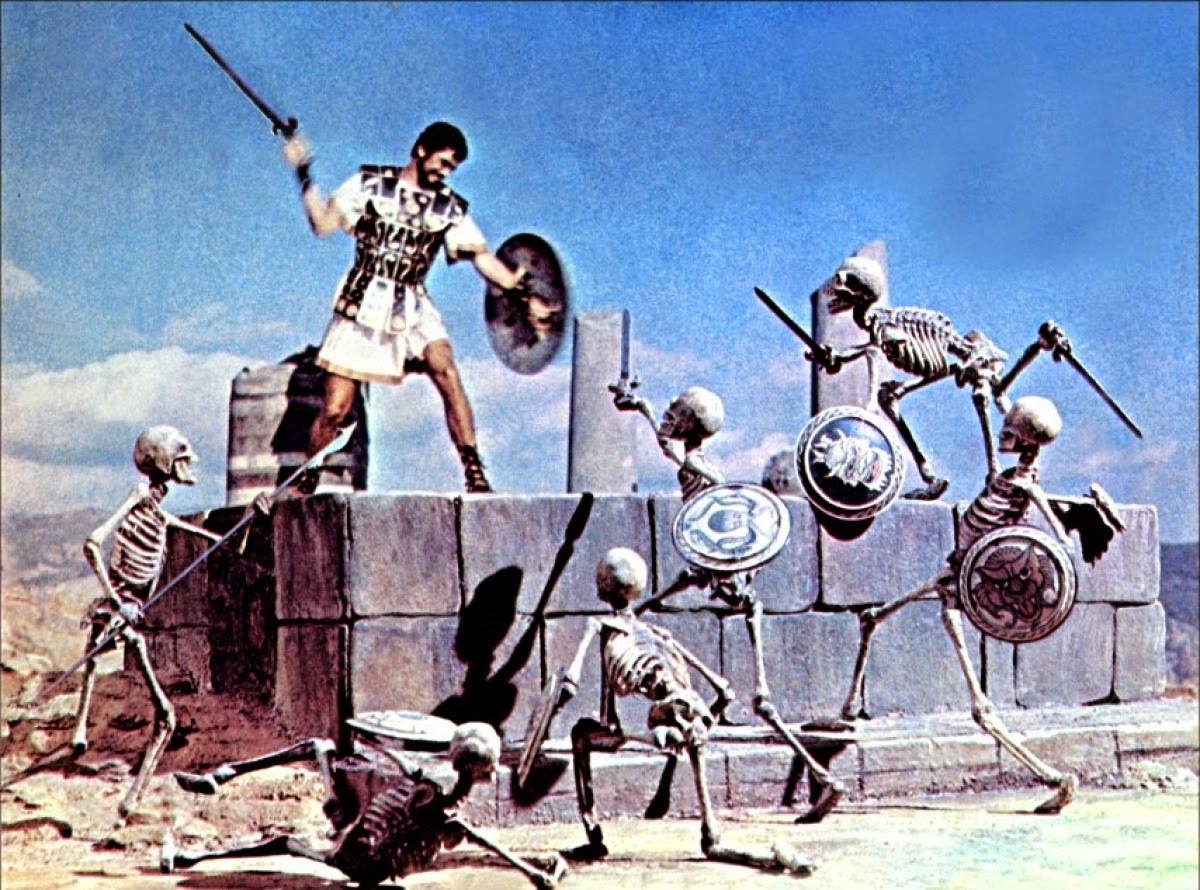
    Finally, we’ll make things right again with an extensive suite from the ultimate Ray Harryhausen mythological playground, “Jason and the Argonauts” (1963). This is the one that features the climactic battle with the skeleton army. The music, by Bernard Herrmann, brilliantly suits the visuals. We’ll hear a superb re-recording of the score, on the Intrada label, with the Sinfonia of London, conducted by Bruce Broughton.

    No bones about it, you won’t want to myth it! it’s music from movies (loosely) inspired by classical mythology this week, on “Picture Perfect,” this Friday evening at 6:00 EDT, on WWFM – The Classical Network and wwfm.org.
  • Arabian Nights Cinematic Delights

    Arabian Nights Cinematic Delights

    Open sesame! It’s an Aladdin’s Cave of cinematic delights.

    This week on “Picture Perfect,” the focus is on tales from “The Arabian Nights.”

    These traditional folk stories from the Orient have come down to us filtered through the sensibilities of Western translators. Further translation was required to get the stories from page to screen; so it’s hardly surprising to find Sinbad, for instance, fighting a giant walrus at the North Pole.

    The film versions are often showcases for the work of production designers and special effects artists, but composers have certainly gotten in on the act with appropriately imaginative scores.

    Bernard Herrmann lent plenty of color and wit to the skeleton duel in “The Seventh Voyage of Sinbad” (1958) by employing a battery of castanets, xylophone and brass. Stop motion artist Ray Harryhausen was responsible for the memorable effects. “Sinbad” proved to be a dry run for the climax of “Jason and the Argonauts,” in which Harryhausen outdid himself by animating not one, but seven skeletons, and again, Herrmann supplied the music.

    Harryhausen animated two further Sinbad adventures – “The Golden Voyage of Sinbad” (1974), and “Sinbad and the Eye of the Tiger” (1977). Over the course of the three “Sinbad” films, audiences were treated to fantastic encounters with, in addition to the skeleton, a Cyclops, a roc, a dragon, a statue of the goddess Kali, a centaur, a giant walrus, and a saber-tooth tiger, among others.

    “Sinbad and the Eye of the Tiger” was scored by Roy Budd. Budd’s reputation was largely that of a jazz musician and composer. He wrote scores for over 50 films, including “Get Carter” and “The Wild Geese,” before his early death of a brain hemorrhage at the age of 46, in 1993.

    Walt Disney created a modern classic in “Aladdin” (1992). The music was by Alan Menken, with lyrics by Howard Ashman and Tim Rice. “Aladdin” won Academy Awards for Best Original Score and Best Original Song (“A Whole New World”). Menken has a whole shelf full of Oscars for his work for Disney. Need I say, Robin Williams was the voice of the manic, freewheeling Genie?

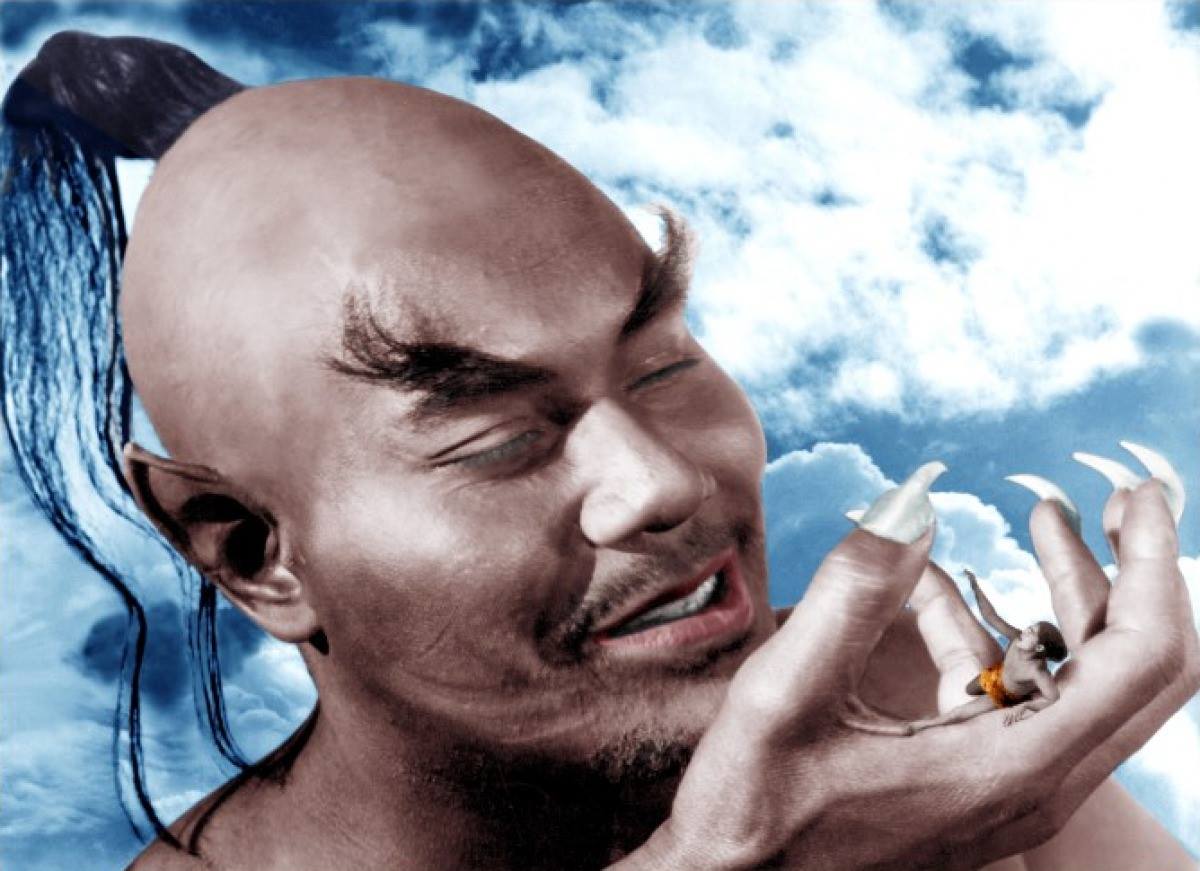
    Rex Ingram’s Genie steals the show in “The Thief of Bagdad” (1940). Ingram emerges from his magic lamp and looms over a cowering Sabu, whom he addresses as “Little Master of the Universe.” The beach resounds with his maniacal laughter. There had been an earlier, justly celebrated, silent version of “Thief,” with Douglas Fairbanks. The remake splits the thief and the prince into two separate characters. Sabu plays the incorrigible Abu (the thief), and Conrad Veidt is his nemesis, the treacherous vizier Jaffar.

    The score is by three-time Academy Award winner Miklós Rózsa. Rózsa was in London, in the employ of Alexander Korda, when the lavish Technicolor production was moved to Hollywood on account of the Blitz. Rózsa would go on to become one of Hollywood’s greatest composers. His music for “Ben-Hur” alone has earned him a place in the film music pantheon. He never wrote a more charming score, however, than he did for this.

    I hope you’ll join me for an hour of cinematic enchantments. It’s “A Thousand and One Nights at the Movies,” on “Picture Perfect,” this Friday evening at 6:00 EDT, on WWFM – The Classical Network and wwfm.org.

Tag Cloud

Aaron Copland (92) Beethoven (95) Composer (114) Film Music (120) Film Score (143) Film Scores (255) Halloween (94) John Williams (185) KWAX (229) Leonard Bernstein (100) Marlboro Music Festival (125) Movie Music (135) Opera (198) Philadelphia Orchestra (88) Picture Perfect (174) Princeton Symphony Orchestra (106) Radio (87) Ralph Vaughan Williams (85) Ross Amico (244) Roy's Tie-Dye Sci-Fi Corner (290) The Classical Network (101) The Lost Chord (268) Vaughan Williams (103) WPRB (396) WWFM (881)

DON’T MISS A BEAT

Receive a weekly digest every Sunday at noon by signing up here


RECENT POSTS