Tag: Rimsky-Korsakov

  • Rimsky-Korsakov’s Mlada A Hidden Opera Gem

    Rimsky-Korsakov’s Mlada A Hidden Opera Gem

    To say that I didn’t enjoy my undergraduate years at Temple University would be an understatement, but I do appreciate the fact that, at the much longed-for commencement ceremony, I got to march to Rimsky-Korsakov’s “Procession of the Nobles.” In fact, the only thing that would have made me happier is if the orchestra had launched into something from “The Sea Hawk.”

    “Procession of the Nobles” is all that most people know of Rimsky’s opera “Mlada,” an exploration of ancient Slavic paganism that somehow manages to assimilate Cleopatra. The work benefits from the composer’s visit to Paris, during the World Exhibition of 1889, and the eclectic musical influences he absorbed there. “Mlada” encompasses treachery, murder, a supernatural love triangle, a midsummer festival, a witches’ sabbath, Cleopatra, and, in the last act, revenge, widescale destruction, and an apotheosis in which bride and groom are reunited in the Great Beyond. The opera was not a success.

    Rimsky embarked on the work in 1889, after an earlier, collaborative effort, undertaken with his colleagues of the Mighty Handful in 1872, was not completed. Interestingly, Act III of this earlier project included one of several versions of Mussorgsky’s “A Night on Bald Mountain,” then titled “Glorification of Chernobog.” It was at this point that Mussorgsky added vocal soloists and chorus. It was later adapted again for use in his opera, “Sorochinsky Fair.”

    Be that as it may, Rimsky’s suite for his solo outing contains some characteristically transporting music.

    Rimsky also arranged Act III into a purely orchestral work, “Night on Mt. Triglav.” That’s the act with the witches’ sabbath and the vision of Cleopatra.

    In all, the composer wrote 15 operas. Performances in the West are rare, though I’ve managed to collect most of them on record.

    Temple University can go to the devil, as far as I’m concerned, but I will always consider myself lucky to have actually processed with the nobles.

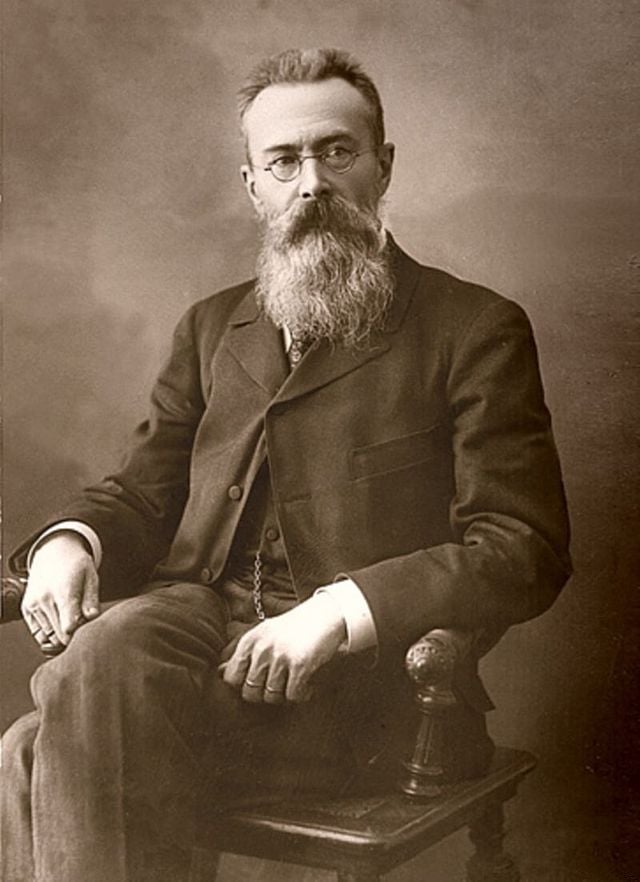
    Happy birthday, Nikolai Rimsky-Korsakov!
  • Rimsky-Korsakov’s Wild Ukrainian Christmas

    Rimsky-Korsakov’s Wild Ukrainian Christmas

    Definitely don’t go into it expecting Clement Moore’s jolly old elf!

    Nikolai Rimsky-Korsakov’s “Christmas Eve” was given its first performance at St. Petersburg’s Mariinsky Theater on this date in 1895.

    The opera is based on a story from Nikolai Gogol’s collection, “Evenings on a Farm Near Dikanka” (which I finally got around to reading this year). Part fairy tale and part farce, “Christmas Eve” is steeped in Ukrainian folk traditions.

    In Ukraine, Christmas Eve is a solemn occasion, marked by fasts and sacred services. Meatless dishes are served for Holy Night supper. But there are also carols. And the caroling is no simple singing of Christmas songs! Similar to the mumming traditions of the British Isles, there is also some play involved, with ritualistic dancing and even the participation of a live goat. As in the West, pre-Christian symbols and rituals are embraced in the celebration of Christmas, to lend cheer to the shortest days and hope for a fertile spring.

    With this in mind, is it any surprise that Gogol’s story features such incidentals as the theft of the moon by the Devil, amorous peasants secreting themselves in burlap sacks, and a ride through the air, on the Devil’s back, to collect the Tsarina’s slippers?

    “Christmas Eve” was adapted musically by both Rimsky-Korsakov and Tchaikovsky. The two composers shared a complicated relationship. In public, each was supportive of the other, but in private both were tormented by suspicion and envy. Tchaikovsky felt sufficiently threatened that he demanded secrecy of his publisher over his use of the then newly-minted celesta. This was to supply the fairy-dust magic for his Sugar Plum Fairy in “The Nutcracker,” and he was full of anxiety that Rimsky might learn of the instrument and steal his thunder.

    Equally wary of Tchaikovsky, Rimsky held off on adapting “Christmas Eve” until 1895. Tchaikovsky had set his own version of the story ten years before – a revision of an even earlier Tchaikovsky opera, “Vakula the Smith,” composed in 1871. By the time Rimsky’s version received its premiere, his rival had been safely in the grave for two years.

    Z Rizdvom Khrystovym! Good triumphs over evil, but the devil gets his due!


    Still my preferred recording of Rimsky-Korsakov’s “Christmas Eve,” from 1948, conducted by Nikolai Golovanov.

    An animated version of Gogol’s tale, incorporating some of Rimsky’s music:

    https://www.youtube.com/watch?v=TvtQQlb3-pw

    A fun live-action version from 1961:

    https://www.youtube.com/watch?v=q71uPvuQ2NA

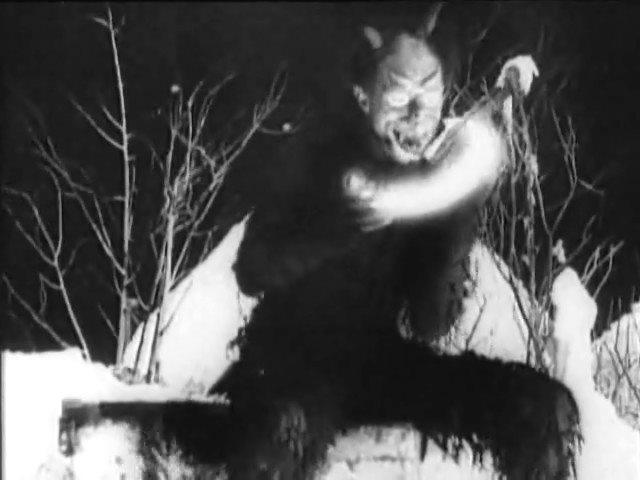
    A 1913 silent version (but you’ll have to provide your own soundtrack):

  • COVID Shift Rimsky to Mussorgsky

    COVID Shift Rimsky to Mussorgsky

    Six months into COVID: I was shooting for Rimsky-Korsakov, but wound up at Mussorgsky.

  • Celebrating Salieri: Beyond Mozart Rivalry

    Celebrating Salieri: Beyond Mozart Rivalry

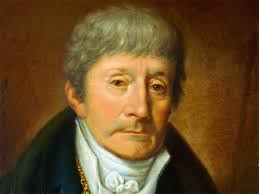
    Happy birthday, Antonio Salieri! I hope you’ll join me in celebrating 270 years of “mediocrity.”

    Salieri lives on in the popular imagination, of course, as the envious rival of Wolfgang Amadeus Mozart. But was he really?

    Rumors of Salieri’s involvement in Mozart’s death were seized upon by Alexander Pushkin as early as 1831, when he came to write the tragedy “Mozart and Salieri,” which appeared only few years after Salieri himself had passed. This was later set as an opera, in 1898, by Nikolai Rimsky-Korsakov.

    Of course, the slander has been kept alive and given even broader currency thanks to Peter Schaffer’s play, “Amadeus,” and the even more widely seen film, directed by Milos Forman. While I have no objection to dramatic license (Shakespeare would not be Shakespeare without it), it is too bad that such a generous figure – and a fine composer to boot – should live on, for the most part, in infamy.

    Salieri was a generous teacher, who fostered Beethoven, Schubert, Liszt, and even the son of the genius he was rumored to have poisoned. Franz Xaver Mozart was born four months after his father’s alleged murder.

    Salieri’s first act, when he was appointed Austrian Imperial Kapellmeister in 1788, was to revive Mozart’s “The Marriage of Figaro.” He was responsible for arranging first performances of his alleged nemesis’ Piano Concerto No. 22, the Clarinet Quintet, and the Symphony No. 40, and he had nothing but praise for “The Magic Flute.”

    Sadly, he found no one to return the favor. Already during his later years, his own enormous compositional output (37 operas, in addition to orchestral works, concertos, chamber music, and sacred pieces) gradually faded from public memory. Ironically, it is the scandalmongers who kept his name alive.

    But, as the saying goes, there is no such thing as bad publicity. In a way, “Amadeus” was the best thing to happen to Salieri in nearly 200 years. How many people remember Mozart’s string quartet partners (with Haydn), Carl Ditters von Dittersdorf and Jan Křtitel Vaňhal, both also talented and prolific composers? I’m sure they would agree – with apologies to Wilde – that the only thing worse than being talked about is not being talked about.

    Happy birthday, Patron Saint of Mediocrity!

    Russian film version of Rimsky’s “Mozart and Salieri” (without subtitles): https://www.youtube.com/watch?v=ilw7oIkrDj4

    In English, if a bit fuzzy:

    Salieri’s Concerto for Flute, Oboe and Orchestra:

    A Mozart and Salieri collaborative effort, the cantata “Per la ricuperata salute di Ofelia,” only recently rediscovered:

    “I absolve you.”

  • Rediscovering Glazunov’s Genius

    Rediscovering Glazunov’s Genius

    Okay, I admit it, I have a sweet tooth. And perhaps, at a time when I have no intention of getting a haircut, much less going to the dentist, that predilection could cost me. But damn it, here it is, dental health to the dogs: I do like the music of Alexander Glazunov!

    Glazunov is one of those composers I’ve always felt a little sheepish about liking. I remember sitting at a listening bar at a record shop in Philadelphia and asking to preview a recording of Glazunov ballet music. “I know I’m not supposed to like this stuff,” I offered, apologetically.

    Admittedly, at the time, other than the Violin Concerto, I didn’t really know a lot of great recordings of his music. I found the Marco Polo releases that I had heard, with the Hong Kong Philharmonic, to be underwhelming, and these prejudiced me against the composer for years. But Neeme Järvi’s performances on Chandos were revelatory. Then of course I eventually got my hands on the Melodiya issues with Gennady Rozhdestvensky and Evgeny Svetlanov. I know it’s going to make somebody cry to read this, but I currently have in my collection four complete cycles of Glazunov’s symphonies. Not even I know how that happened.

    Okay, so he isn’t Beethoven. Who is? But at his best, his music is well-crafted, attractive (to me, anyway), and marked by an abundance of memorable melodies that would make any honest composer jealous.

    As a person, he was not without his faults. He had a real problem with alcohol, which may have contributed to his disastrous performance as conductor at the premiere of Rachmaninoff’s First Symphony, a real train-wreck that elicited a savage review from Cesar Cui and plunged the younger composer into creative paralysis.

    But Glazunov was also generous, almost to a fault. As director of the Petrograd Conservatory, he was in a position to pull strings so that a young Dmitri Shostakovich didn’t have to deal with preparatory theory and instead could plunge right into the business of composition.

    Also, after the death of Alexander Borodin, Glazunov stepped up (with Rimsky-Korsakov) to help complete Borodin’s unfinished masterpiece, the opera “Prince Igor.” Legend has it that he wrote out the overture from memory, having heard Borodin play through it a couple of times on the piano.

    So maybe you don’t want this guy on the podium during a performance of your music, but put him on a piano bench with a bottle of vodka, and you’re in good hands.

    Glazunov’s own music can be full of serene lyricism, generously melodic, and, yes, often quite beautiful.

    Happy birthday, Alexander Glazunov! You won’t catch me going to a custard stand during COVID, but surely this is the next best thing.


    Symphony No. 4

    String Quintet in A major

    Violin Concerto

    The symphonic poem “Stenka Razin”

    “Raymonda” (selections)
    https://www.youtube.com/watch?v=nAs9mcGhtgg

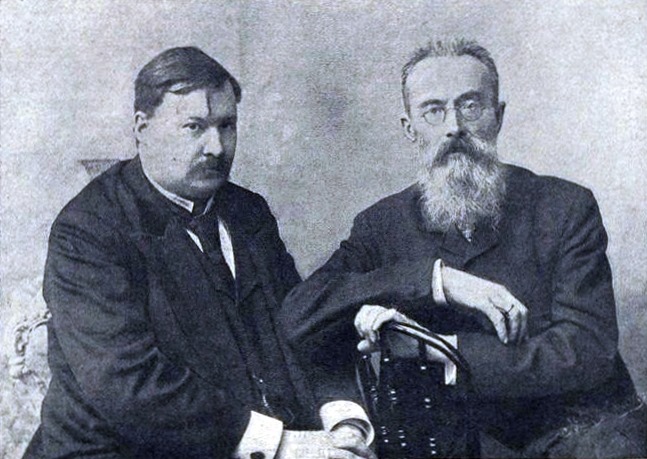
    PHOTO: Glazunov (left), hanging out with Rimsky-Korsakov

Tag Cloud

Aaron Copland (92) Beethoven (95) Composer (114) Film Music (120) Film Score (143) Film Scores (255) Halloween (94) John Williams (185) KWAX (229) Leonard Bernstein (100) Marlboro Music Festival (125) Movie Music (135) Opera (198) Philadelphia Orchestra (88) Picture Perfect (174) Princeton Symphony Orchestra (106) Radio (87) Ralph Vaughan Williams (85) Ross Amico (244) Roy's Tie-Dye Sci-Fi Corner (290) The Classical Network (101) The Lost Chord (268) Vaughan Williams (103) WPRB (396) WWFM (881)

DON’T MISS A BEAT

Receive a weekly digest every Sunday at noon by signing up here


RECENT POSTS