Tag: Rimsky-Korsakov

  • Classical Music Beach Vacation Getaway

    Classical Music Beach Vacation Getaway

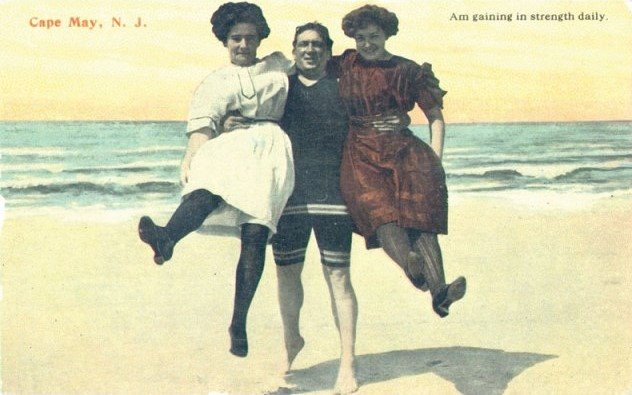
    With summer vacation winding down – and some even back to school already, poor dears – we’ll take one last trip to the beach. On today’s Noontime Concert on The Classical Network, it’s another program from the Cape May Music Festival.

    The New York Chamber Ensemble will present “Folk Dance in Chamber Music,” with repertoire including works by Béla Bartók, Luigi Boccherini, Astor Piazzolla, and Antonin Dvořák, alongside arrangements by Robert Beaser.

    Following the concert broadcast, stick around for Rick Sowash’s “Cape May Suite.” Sowash, who makes his home in Ohio, fondly recalls vacationing in South Jersey with his family.

    Then cast off with music by the Breton composer Jean Cras. Like Nikolai Rimsky-Korsakov and Albert Roussel, Cras was a navy man. Impressions of the sea saturate many of his works, a number of which were actually written in a ship’s cabin. We’ll hear his symphonic suite, “Journal de bord,” which, like Debussy’s “La mer,” attempts to convey the moods of the sea at different hours of the day.

    Rimsky-Korsakov had retired from active service by the time he came to write his Quintet for Piano and Winds. Even so, he had been appointed to the civilian post of Inspector of Naval Bands. We’ll hear a performance of Rimsky’s cheery quintet featuring members of the Munich Residenz Quintet and Wolfgang Sawallisch at the keyboard.

    I believe it was Igor Stravinsky who once said, “A good composer does not imitate; he steals.” No one is going to claim the Flemish composer Paul Gilson’s “De Zee” (“The Sea”) is one of the world’s great masterpieces, but clearly there is something to it for Debussy to have borrowed so shamelessly from it when he came to write “La mer.”

    Jacques Ibert served in the Navy during World War I. Before our time is out, we’ll travel to destinations around the Mediterranean – in Italy, North Africa, and Spain – with Ibert’s symphonic suite “Escales” (“Ports of Call”).

    You won’t have to join the Navy to see the world. We’ve got one in every port, this afternoon from 12 to 4 p.m. EDT, on WWFM – The Classical Network and wwfm.org.
  • Salieri: More Than Mozart’s Rival?

    Salieri: More Than Mozart’s Rival?

    He was a generous teacher, who fostered Beethoven, Schubert, Liszt, and even the son of the genius he was rumored to have poisoned.

    His first act, when he was appointed Austrian Imperial Kapellmeister in 1788, was to revive Mozart’s “The Marriage of Figaro.” He was responsible for arranging first performances of his alleged nemesis’ Piano Concerto No. 22, the Clarinet Quintet, and the Symphony No. 40, and he had nothing but praise for “The Magic Flute.” He even took it upon himself to educate Franz Xaver Mozart, the composer’s son, who was born four months after his father’s alleged murder.

    Already during the latter years of his life, Antonio Salieri’s enormous compositional output (37 operas, in addition to orchestral works, concertos, chamber music, and sacred pieces) gradually faded from public memory. Ironically, it is the scandalmongers who kept his name alive.

    Rumors of Salieri’s involvement in Mozart’s death were codified by Alexander Pushkin in 1831 in the tragedy “Mozart and Salieri,” which appeared a few years after Salieri himself had passed. This was later set as an opera in 1898 by Nikolai Rimsky-Korsakov.

    Was this any way to treat such a generous, hard-working composer? While he was certainly no Mozart – who was? – his music is finely crafted and often quite enjoyable, certainly no worse than that of a majority of his contemporaries.

    But, as the saying goes, there’s no such thing as bad publicity. In a way, Peter Schaffer’s “Amadeus” was the best thing to happen to Salieri in nearly 200 years. How many people remember Mozart’s quartet partners (with Haydn), Carl Ditters von Dittersdorf and Jan Křtitel Vaňhal, both also talented and prolific composers?

    By coincidence (?), Rimsky-Korsakov’s chamber opera is being performed today at Bard College, on the second half of a 1:30 p.m. program titled “Domestic Music Making in Russia,” as part of the 29th Annual Bard Music Festival: Rimsky-Korsakov and His World.

    In another context, it would be a peculiar way to mark a composer’s birthday – but as I’m sure Dittersdorf and Vaňhal would agree, the only thing worse than being talked about is not being talked about.

    Happy birthday, Antonio Salieri, Patron Saint of Mediocrity!


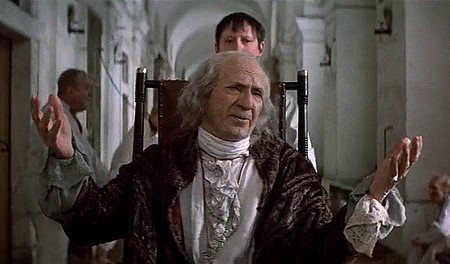
    Russian film version of Rimsky’s “Mozart and Salieri” (without subtitles): https://www.youtube.com/watch?v=ilw7oIkrDj4

    In English, if a bit fuzzy:

    Salieri’s Concerto for Flute, Oboe and Orchestra:

    “I absolve you.”

  • Bard’s Rimsky-Korsakov Festival Explored

    Bard’s Rimsky-Korsakov Festival Explored

    Fresh off the stalk of this year’s Bard Music Festival, it’s Nikolai Rimsky Korn-on-the-kob. Okay, it’s really Rimsky-Korsakov, but after a weekend in rural Upstate New York, how could I resist?

    “Rimsky-Korsakov and His World” is the focus of this year’s festival, Bard’s 29th. In classic Bard fashion, artistic co-directors Leon Botstein – president of Bard College, music director of the American Symphony Orchestra, and founder of The Orchestra Now – and musicologist Christopher H. Gibbs have assembled two weekends’ worth of stimulating programs, slanted toward lesser-known repertoire by its subject, his contemporaries, his influences, and those he influenced, with a few of his imperishable classics (“Scheherazade,” the “Russian Easter Festival Overture”) tossed into the mix. Highlights are too many to list, but the festival will conclude its second weekend on Sunday with a concert performance of “The Tsar’s Bride,” one of Rimsky’s 15 operas. How often do we get to hear it?

    Join me this afternoon, following today’s Noontime Concert, for some of the repertoire presented on this year’s 29th Annual Bard Music Festival: Rimsky-Korsakov and His World, including Rimsky’s Piano Concerto, Mikhail Glinka’s Sextet in E-flat major, Sergei Taneyev’s Symphony No. 4, and Modest Mussorgsky’s “Pictures at an Exhibition,” in its original version, which I’ll be featuring in a new recording with Clipper Erickson, piano.

    You’ll find more information about this one-of-a-kind festival, which skillfully walks the line between scholarship and entertainment, by visiting fishercenter.bard.edu/bmf/

    The music may not be in a hurry, but it’s definitely Russian, this afternoon between 1 and 4 p.m. EDT, on WWFM – The Classical Network and wwfm.org.
    Next summer’s focus: Erich Wolfgang KORNgold!

  • Stravinsky Genius or PR Machine?

    Stravinsky Genius or PR Machine?

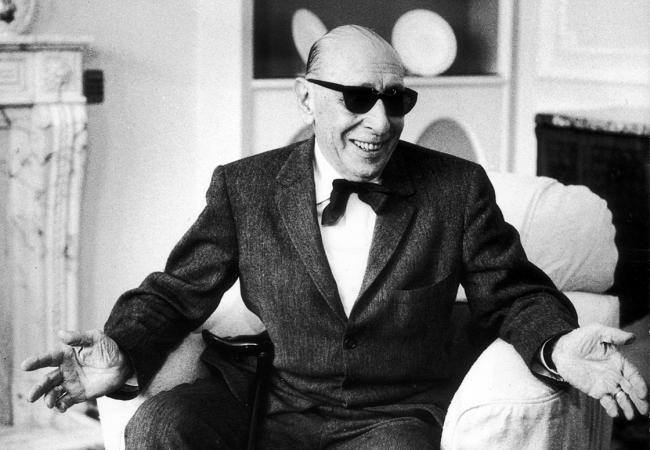
    Was Igor Stravinsky the greatest composer of the 20th century? Sure, he was in the right place(s) at the right time, but he wouldn’t have gotten very far without his own unique blend of talent, curiosity and drive. His was an incredible journey that spanned from the Russian nationalism of his teacher, Rimsky-Korsakov, to post-Schoenberg serial experimentation. Also, he had one hell of a PR machine. Happy birthday, Igor Stravinsky.

  • Classic Ross Amico Anniversary

    Classic Ross Amico Anniversary

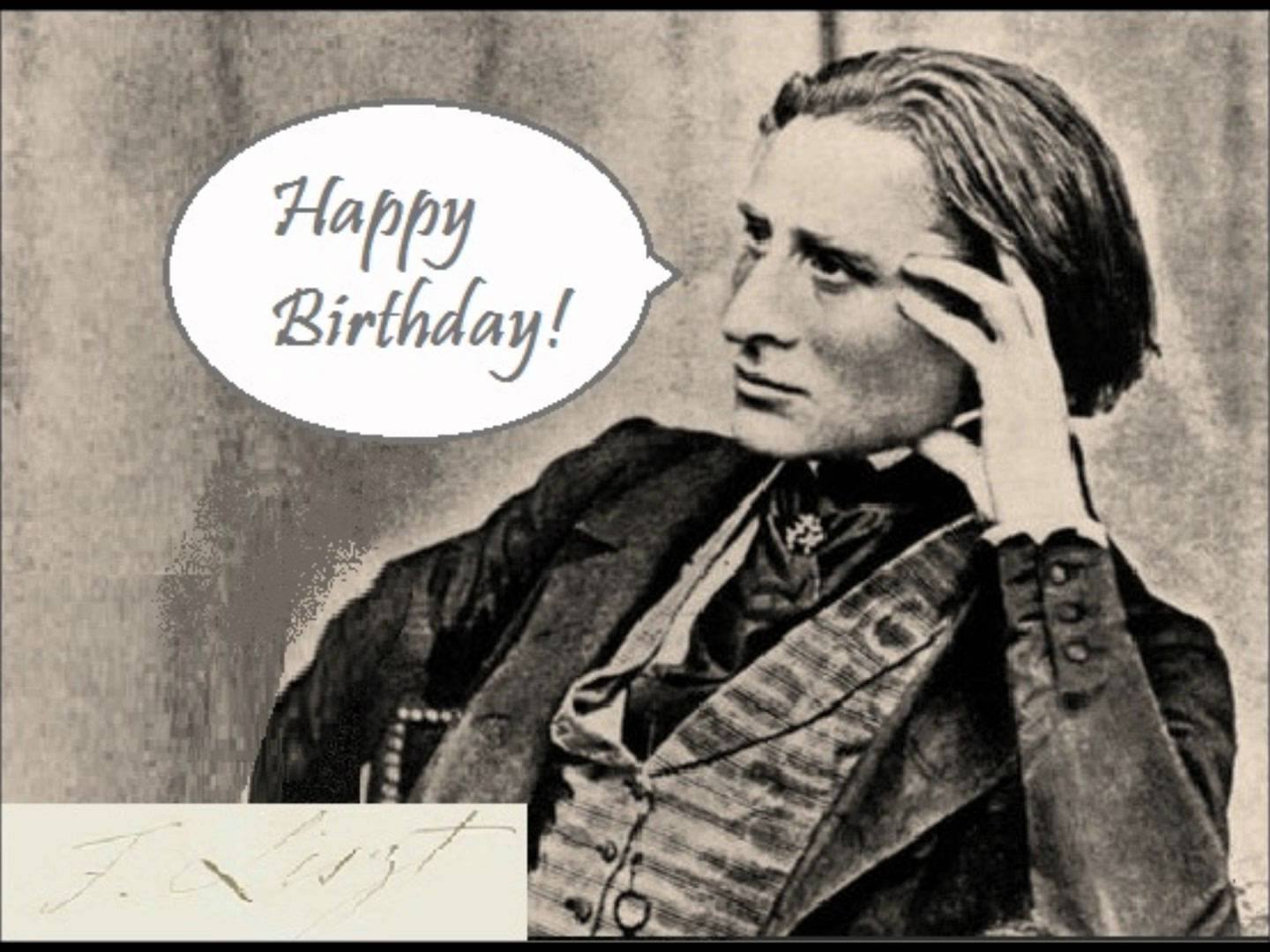
    By the beard of Rimsky-Korsakov! I just discovered, quite by accident, that today is the third anniversary of the creation of Classic Ross Amico. Thank you all for reading my page!


    PHOTO: So kind of you to remember, Liszt.

Tag Cloud

Aaron Copland (92) Beethoven (95) Composer (114) Film Music (120) Film Score (143) Film Scores (255) Halloween (94) John Williams (185) KWAX (229) Leonard Bernstein (100) Marlboro Music Festival (125) Movie Music (135) Opera (198) Philadelphia Orchestra (88) Picture Perfect (174) Princeton Symphony Orchestra (106) Radio (87) Ralph Vaughan Williams (85) Ross Amico (244) Roy's Tie-Dye Sci-Fi Corner (290) The Classical Network (101) The Lost Chord (268) Vaughan Williams (103) WPRB (396) WWFM (881)

DON’T MISS A BEAT

Receive a weekly digest every Sunday at noon by signing up here


RECENT POSTS