Tag: Rimsky-Korsakov

  • Stravinsky Birthday A Celebration in Spring

    Stravinsky Birthday A Celebration in Spring

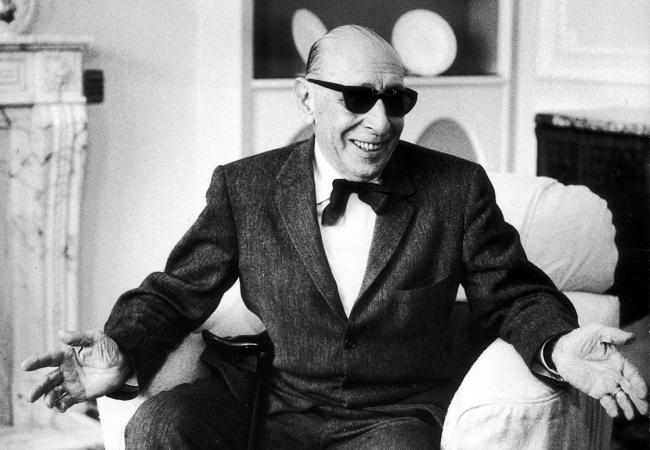
    “Igor Stravinsky was born in the spring and died in the spring. In a sense, he lived his whole life in a springtime of creativity. All his music is spring-like, newly budding, rooted in the familiar past, yet fresh and sharp, with that stinging, paradoxical combination of the inevitable and the unexpected.”

    On Stravinsky’s birthday, enjoy this brief appreciation, narrated by Leonard Bernstein, assembled not long after Stravinsky’s death:

    I especially got a kick out of the cowboy reception, around the 9-minute mark.

    Also on this date, in 1908, Stravinsky’s “Fireworks” was first performed, at the wedding of Rimsky-Korsakov’s daughter, Nadezhda, to Stravinsky’s professional rival, Maximillian Steinberg. The wedding took place a few days before Rimsky-Korsakov’s death. Stravinsky received the commission for his breakthrough ballet, “The Firebird,” in part because Serge Diaghilev heard the piece and was impressed with his orchestration.

    Stravinsky conducts “Fireworks,” from his Russian nationalist period, in Japan:

    Stravinsky, in his last public appearance, conducts his neoclassical masterpiece, “Pulcinella”:

    Stravinsky conducts one of my favorite works from his serial period, “Agon”:

    Stravinsky’s final masterpiece, “Requiem Canticles,” was first performed at Princeton’s McCarter Theatre in 1966. Against expectations, Stravinsky again conducted. The performance is led here by his assistant, Robert Craft:

    “Requiem Canticles” would be repeated at Stravinsky’s funeral five years later.

    As a bonus, here’s an article I wrote on Stravinsky in Princeton for the Trenton Times in 2016:

    https://www.nj.com/times-entertainment/2016/12/classical_music_puo_pugc_so_pe.html

    Happy birthday, Igor Stravinsky, and happy anniversary, Maximillian and Nadezhda Steinberg (née Rimskaya-Korsakova)!
  • Orthodox Easter Greetings & Music

    Orthodox Easter Greetings & Music

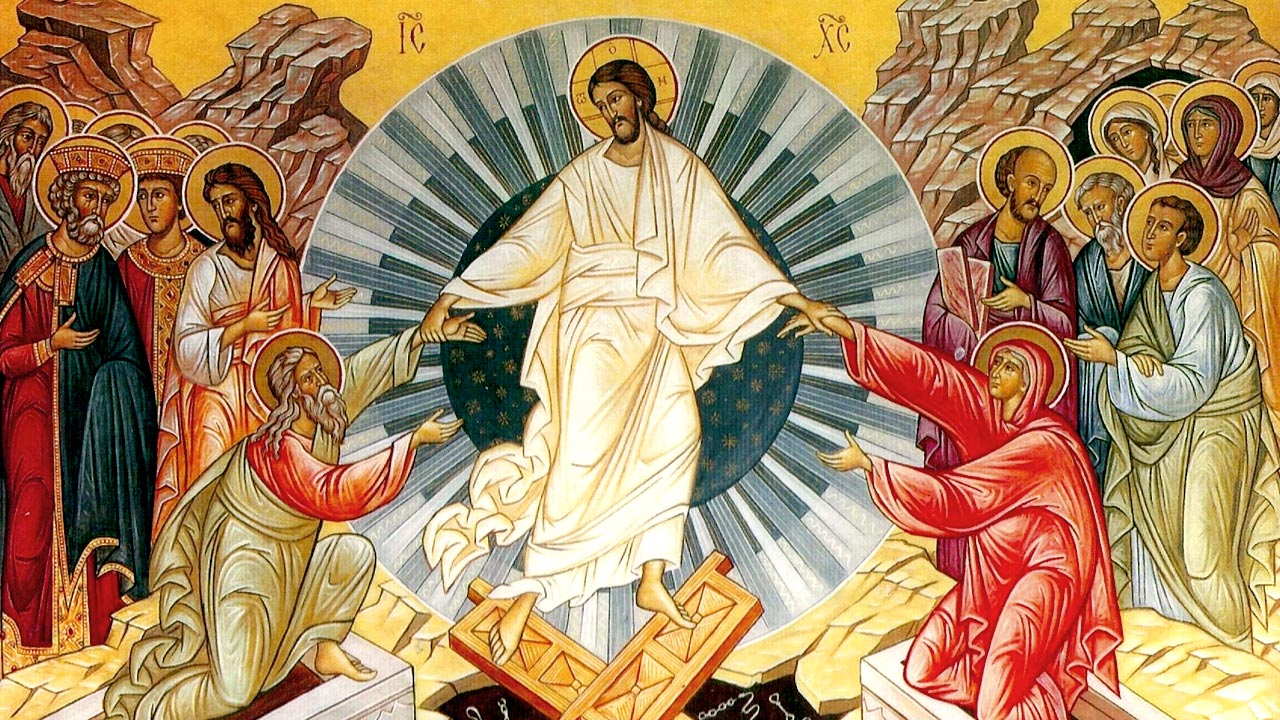
    My best wishes to all those who observe Orthodox Easter!

    Χριστος Aνεστη!

    Христос Воскресе!

    Christus resurrexit!

    From Rachmaninoff’s “Vespers”:

    Greek Byzantine chant:

    Paschal Canon:

    Russian Easter with the St. Petersburg Chamber Choir:

    Leopold Stokowski conducts Rimsky-Korsakov’s “Russian Easter Festival Overture.” This recording employs a bass-baritone in place of the trombone solo for maximum liturgical effect:

    Rachmaninoff: “Easter,” from the Suite No. 1 for Two Pianos:

  • Rimsky-Korsakov Birthday My Favorite Music

    Rimsky-Korsakov Birthday My Favorite Music

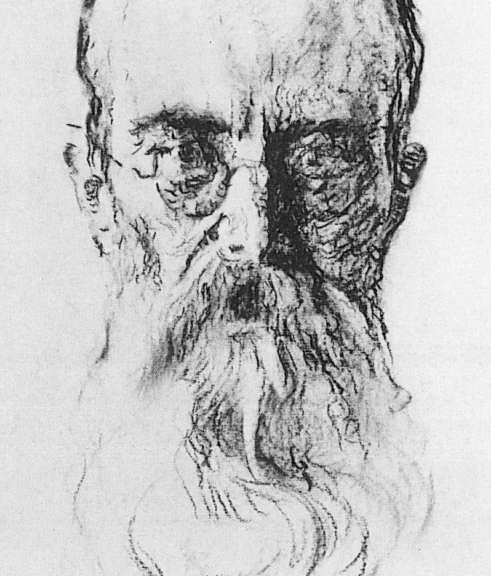
    Happy birthday, Nikolai Rimsky-Korsakov! I’ve always been a fan.


    Recommended Rimsky playlist:

    Ormandy and the “Procession of the Nobles” from “Mlada”

    Song of the Viking Guest from “Sadko,” with Mark Reizen

    Lots of intoxicating music in this staged performance of “Sadko” (complete, Gergiev conducting)

    Ernest Ansermet conducts the Symphony No. 2 “Antar,” a haunting work, full of beautiful melodies, that was once much better known

    Leopold Stokowski conducts the “Russian Easter Festival Overture,” employing a bass-baritone in place of a trombone solo, for maximum liturgical effect

    Evgeny Mravinsky conducts a suite from “The Invisible City of Kitezh”

    Mikhail Pletnev in Rimsky’s little-known gem, the Quintet for Piano and Winds

    Lily Pons sings the “Hymn to the Sun” from “Le coq d’or”

    Leif Segerstam conducts “Scheherazade,” with a highly unconventional, piratical conclusion

    “Flight of the Bumblebee” with real bees (!), courtesy of The Lost Fingers

  • Rimsky-Korsakov Birthday Workout & Bach!

    Rimsky-Korsakov Birthday Workout & Bach!

    I may very well be the only one at this point who hits the college gym wearing a Nikolai Rimsky-Korsakov t-shirt. Of course, I don’t hit the gym as much as I should, but when I do, it is Rimsky who shares my triumph. I bike, I lift, I do leg-presses, but what I really need to work on is my core. Rimsky-core-sakov?

    I can’t guarantee that I’ll go to the gym today, but I just might, since it happens to be the anniversary of Rimsky-Korsakov’s birth. Perhaps I’ll warble the “Russian Easter Festival Overture” as I pedal. Or I could just go to Carvel and see if they’ll make me a Rimsky-Korsakov ice cream cake.

    Join me today on The Classical Network as we revel in Rimsky’s music, as well as that of fellow birthday celebrants, Paul Le Flem and Gian Francesco Malipiero.

    Le Flem’s works are strongly influenced by his native Brittany. We’ll hear some orchestral selections from his opera, “The Magician of the Sea.” The opera is a variation on the same story as that told in Édouard Lalo’s “Le roi d’Ys” and suggested by Claude Debussy’s “La Cathédrale engloutie,” an ancient Breton legend about a submerged city.

    Malipiero was a member of the so-called “Generazione dell’ottanta” (Generation of ’80), a group of Italian composers all born around 1880, of which Ottorino Respighi is the most famous. We’ll hear Malipiero’s colorfully orchestrated “Tre commedie goldoniane,” as the title suggests, inspired by three comedies of the Venetian playwright Carlo Goldoni.

    Rimsky-Korsakov taught at the St. Petersburg Conservatory for nearly 40 years. Dmitri Shostakovich was only two at the time of Rimsky’s death, but he went on to study at the conservatory under one of Rimsky’s students (and his son-in-law), Maximilian Steinberg. As we draw ever closer to our celebration of Bach’s birthday, March 21, we’ll enjoy one of Shostakovich’s Bach-inspired 24 Preludes and Fugues.

    Have you contributed yet to our Bach 500 campaign? If we can get 500 listeners to step up and donate IN ANY AMOUNT before Thursday, we will celebrate Bach that day with a playlist made up exclusively of his music. If we can’t, well, then we’ll have to actively interrupt with breaks for fundraising. And nobody wants that.

    If you haven’t done so yet, please contribute now – again, YOU decide on the amount – at our website, wwfm.org (click on “Donate”), or call during business hours at 1-888-232-1212. The thermometer posted on the site will keep you apprised of where we currently stand. Make that mercury rise! And thank you for your support.

    Once you’ve made your donation, tune in for an example of the kind of programming you’ve made possible, from 4 to 7 p.m. EDT, on WWFM – The Classical Network and wwfm.org.

  • Orthodox Christmas Gogol Tchaikovsky Rimsky-Korsakov

    Orthodox Christmas Gogol Tchaikovsky Rimsky-Korsakov

    Here we go again! Just as we in the West conclude the Twelve Days of Christmas, adherents of the Eastern Orthodox Church today commence their celebrations of Orthodox Christmas. Chalk it up to the old Julian calendar.

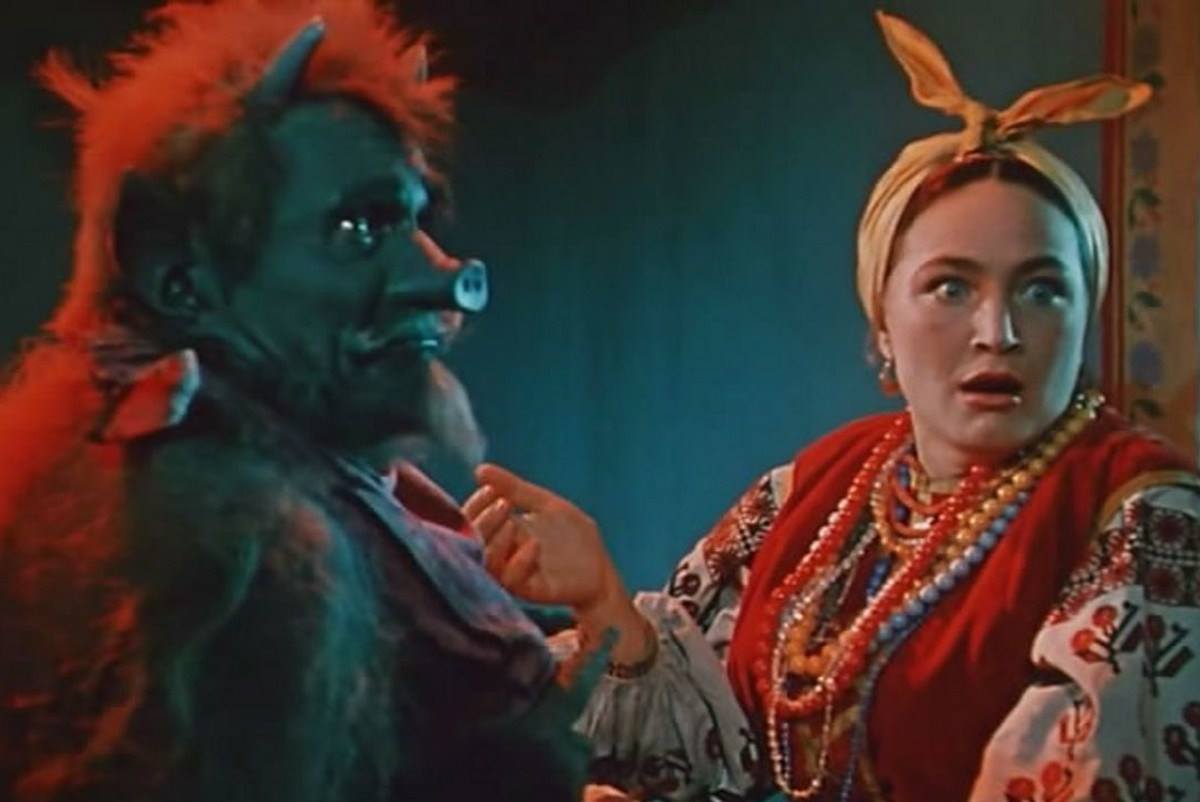
    Ukrainian Christmas Eve can be a solemn occasion, marked by fasts and sacred services. Meatless dishes are served for the Holy Night supper. But there are also carols. And the caroling is no simple singing of Christmas songs. Similar to mumming traditions of the British Isles, there is also a little play involved, with ritualistic dancing and the participation of a live goat. As in the West, pre-Christian symbols and rituals are embraced in the celebration of Christmas, to lend cheer to the shortest days and hope for a fertile spring.

    Nikolai Gogol’s “Christmas Eve,” from his collection of stories, “Evenings on a Farm Near Dikanka,” emerges from these folk traditions. Part fairy tale and part farce, Gogol’s story features such incidentals as the theft of the moon, amorous peasants secreting themselves in burlap sacks, and a ride through the air on the Devil’s back to collect the Tsarina’s slippers.

    “Christmas Eve” drew musical responses from both Peter Ilych Tchaikovsky and Nikolai Rimsky-Korsakov. The two composers shared a complicated rivalry. In public, each was supportive of the other, while in private they were nagged by suspicion and envy. Tchaikovsky felt sufficiently threatened to swear his publisher to secrecy about his use of the then newly-minted celesta in “The Nutcracker,” lest Rimsky steal his thunder. Equally intimidated by Tchaikovsky, Rimsky held off on adapting “Christmas Eve” until 1895. Tchaikovsky had set his version ten years before, a revision of an even earlier opera, “Vakula the Smith,” written in 1871. By the time Rimsky’s “Christmas Eve” received its premiere, Tchaikovsky had been safely in the grave for two years.

    We’ll hear selections from both composer’s operas today on The Classical Network, alongside observances of the birthdays of composers William Hurlstone, Ulysses Kay, and Francis Poulenc; conductors David Porcelijn and Gunter Wand; pianist Clara Haskil; violinist and conductor Iona Brown; and choral director Robert DeCormier.

    Z Rizdvom Khrystovym! Good triumphs over evil, but the devil gets his due, from 4 to 7 p.m. EST, on WWFM – The Classical Network and wwfm.org.


    An animated version of Gogol’s tale, incorporating some of Rimsky’s music:

    https://www.wilderutopia.com/performance/literary/nikolai-gogol-witches-and-devils-on-christmas-eve/

    A fun live-action version from 1961:

    https://www.youtube.com/watch?v=9MFoyMwfnlc

    A 1913 silent version (but you’ll have to provide your own soundtrack):

Tag Cloud

Aaron Copland (92) Beethoven (95) Composer (114) Film Music (120) Film Score (143) Film Scores (255) Halloween (94) John Williams (185) KWAX (229) Leonard Bernstein (100) Marlboro Music Festival (125) Movie Music (135) Opera (198) Philadelphia Orchestra (88) Picture Perfect (174) Princeton Symphony Orchestra (106) Radio (87) Ralph Vaughan Williams (85) Ross Amico (244) Roy's Tie-Dye Sci-Fi Corner (290) The Classical Network (101) The Lost Chord (268) Vaughan Williams (103) WPRB (396) WWFM (881)

DON’T MISS A BEAT

Receive a weekly digest every Sunday at noon by signing up here


RECENT POSTS