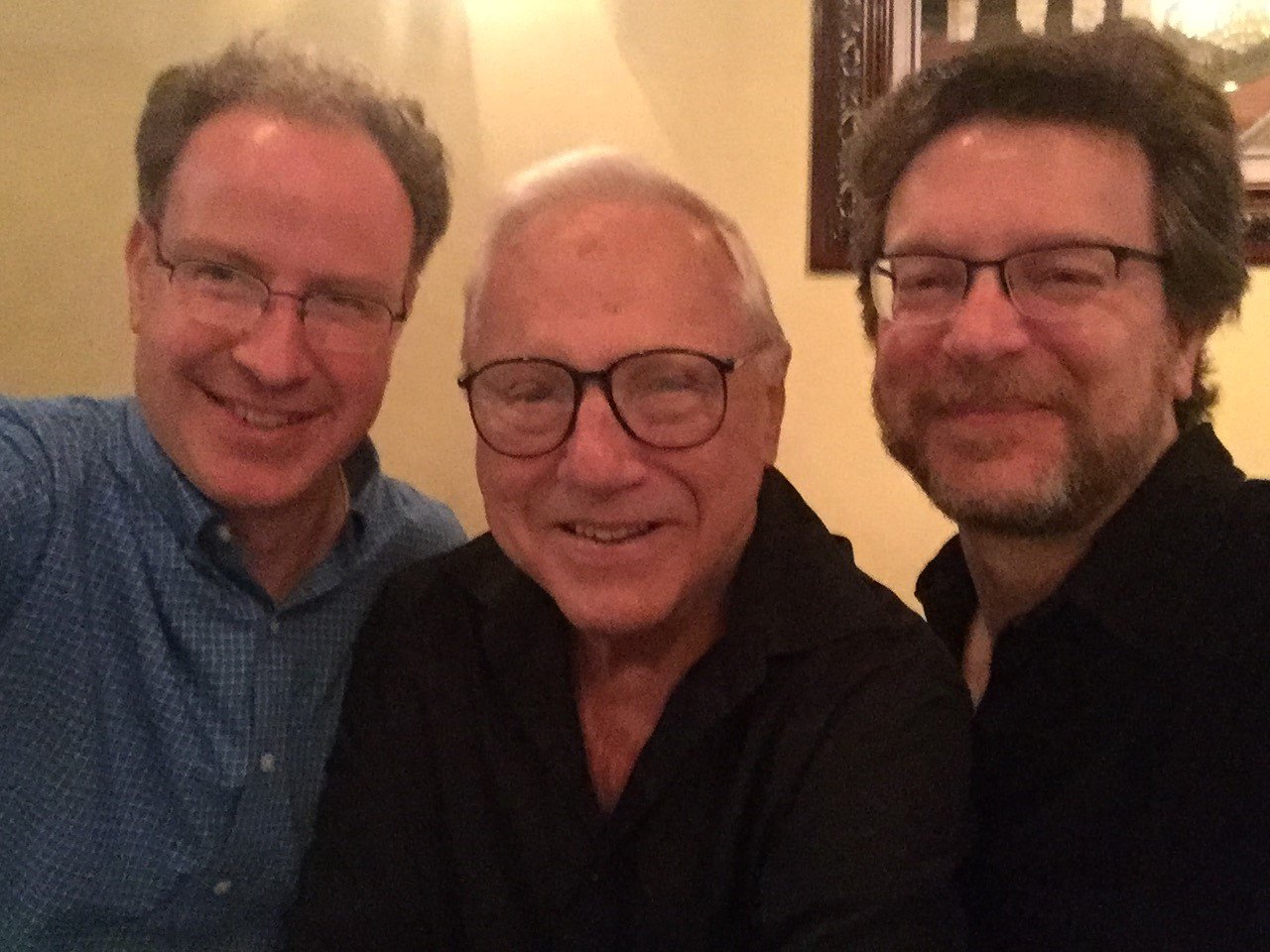
Restaurant lighting flatters no one, but here I am at the wrong end of a gin-fueled evening with two estimable Philadelphia composers, Robert Moran and Kile Smith. Only one broken glass, and we may have over-tipped, but I think I can say with confidence that a good time was had by all.
Tag: Robert Moran
-
Juniper Tree Opera Review Wolf Trap on YouTube
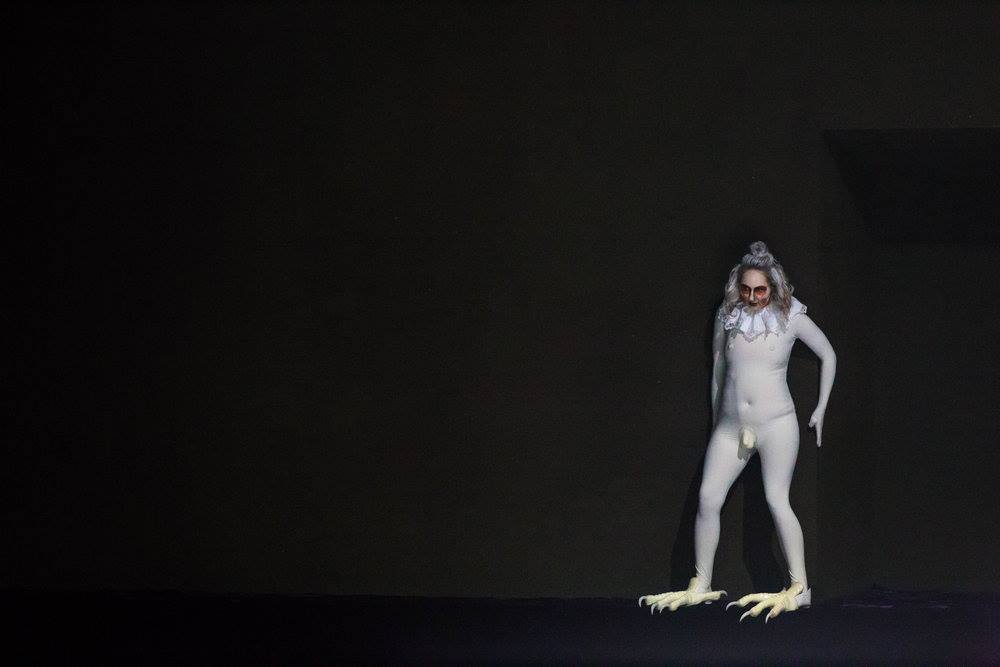
Last year’s Wolf Trap production of Philip Glass & Robert Moran’s collaborative opera, “The Juniper Tree,” hit YouTube this week. While I found most of the singing and most of the costumes effective (the velour birds aside), I felt the direction skimped too much on the inherent black humor. The emphasis in this Brothers Grimm tale was definitely on the grim. Also, some of the most important details, such as the out-of-nowhere decapitation and, later, the moment of justice-by-millstone, were obscured in favor of something(s) admittedly even more disturbing in their lack of specificity. Not nearly as disturbing, however, as the anatomically correct spirit of the dead son. Are spirits anatomically correct? I’m elated that they bothered to program the opera at all, and the production was indeed first rate – I just don’t think it really was the opera. See what you think.
Then check out this excerpt from a recording of the world premiere production, which definitely has more zing.
It’s available for purchase here:
-
Musical Wonder Cabinets on The Lost Chord
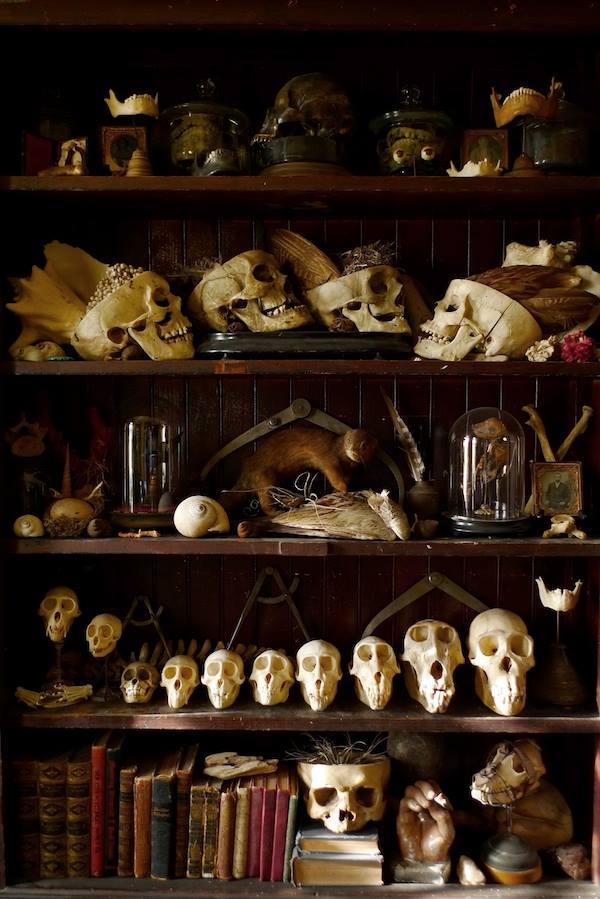
Cabinets of curiosities, also sometimes referred to as “wonder rooms,” were small collections of extraordinary objects, strange and often fanciful precursors of today’s museums, which attempted to categorize and explain oddities of the natural world. This Sunday night on “The Lost Chord,” we’ll have three examples of musical equivalents.
Princeton University professor Dmitri Tymoczko’s “Typecase Treasury” recalls a small table his parents acquired, made from a typecase subdivided into a hundred little compartments. “Each had been filled with a tiny mineralogical curiosity,” he writes, “a strange crystal, a piece of iron pyrite, a shark’s tooth, or a fossilized tribolyte.” He found it a useful metaphor for a multi-movement collection of short pieces, in which he attempts to produce “a sense of form through juxtaposition.”
Grammy Award-winner Michael Colina is perhaps best known for his jazz and Latin projects. However, Colina was classically trained, having studied at the North Carolina School of the Arts, and then abroad, at the Chigiana Academy, in Sienna, Italy. We’ll hear his Violin Concerto, subtitled “Three Cabinets of Wonder,” a work inspired by Fanny Mendelssohn, the Buddha, and an Amazonian nature spirit.
Finally, we’ll sample just a bit from “Cabinet of Curiosities” by Philadelphia-based composer Robert Moran, who’s something of a wonder himself. “The Hapsburg Kunstkammer” employs graphic notation and is scored for marimba, hairbrush, aluminum foil, bells played with fingers, finger cymbals, telephone bell, vibraphone, rubber ball, celesta and harpsichord.
I hope you’ll join me for “Curiouser and Curiouser,” a tour of musical wonder cabinets, this Sunday night at 10:00 EST, on WWFM – The Classical Network and wwfm.org.
More about cabinets of curiosities here:
-
Robert Moran on Composers Datebook
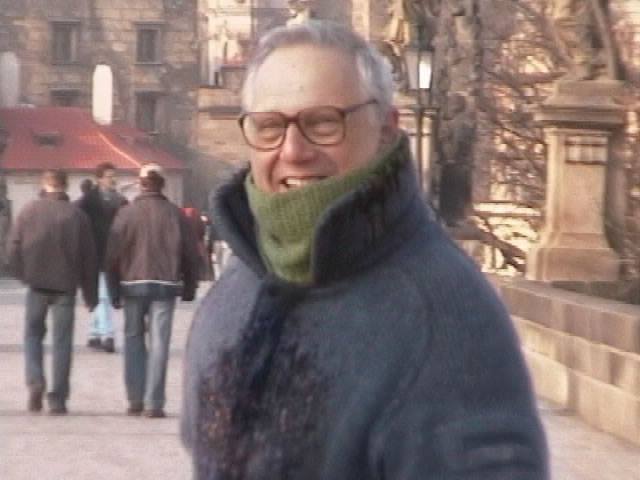
Lookee here! Robert Moran made today’s Composers Datebook:
https://www.yourclassical.org/programs/composers-datebook/episodes/2018/01/08
Enjoy Bob’s gorgeous and serene “Trinity Requiem,” composed for the tenth anniversary of 9/11, in the 6:00 hour this evening on WWFM – The Classical Network and wwfm.org.
-
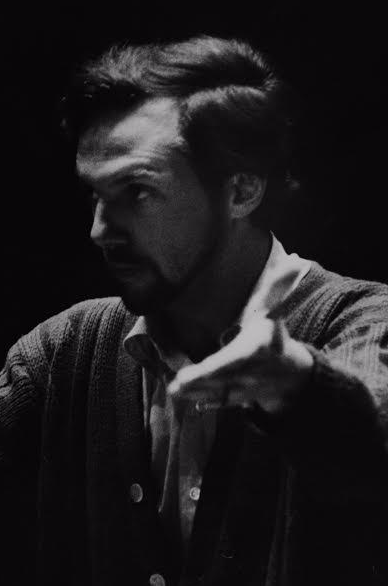
Robert Moran’s Unconventional Genius Celebrated Today
A work for amplified Volkswagen, played with flashlights. An opera for eleven dogs. A piano piece in which the performer crawls inside the lid and lets the piano play him.
Move over, Till Eulenspiegel. Today is the birthday of Robert Moran.
Moran, who’s made his home in Philadelphia for over 30 years, is contemporary music’s merry prankster.
Following studies in Vienna with Hans Erich Apostel, with whom he “learned to count to twelve” (as in twelve-tone music), Moran attended Mills College, where his teachers were Darius Milhaud and Luciano Berio. His classmates at Mills included Steve Reich, Phil Lesh, and Tom Constanten. Lesh and Constanten went on to play for The Grateful Dead. I wonder what ever happened to Reich?
While there, Moran became involved with the whole San Francisco scene. He gained notoriety in the late 1960s and early ‘70s through a series of performance pieces incorporating entire cities, including San Francisco, Bethlehem, PA, and Graz, Austria. These involved tens of thousands of performers.
His many stage works include “Desert of Roses” (after Beauty and the Beast), written for Houston Grand Opera, and “Alice” (after “Alice’s Adventures in Wonderland”), composed for the Scottish Ballet. Maurice Sendak introduced him to the Grimm fairy tale “The Juniper Tree,” which became an operatic collaboration with Philip Glass.
For the occasion of the tenth anniversary of the terrorist attacks on the World Trade Center, Moran was commissioned to write a work for the youth chorus of Trinity Wall Street, the so-called “Ground Zero” church in Lower Manhattan. “Trinity Requiem,” scored for children’s chorus, four cellos, harp and organ, offers a similar brand of solace to that conjured in the 19th century masterwork by Gabriel Fauré.
With Moran, you never know what you’re going to get. In his more puckish moments, he might write for harpsichord and electric frying pan. But then there are times when his natural gift for lyricism will melt your heart. Whether he’s writing for Houston Grand Opera, 39 autos, giant puppets, or electric popcorn popper, his music is always vital and worth getting to know.
Join me today, between 4 and 7 p.m. EST, for music by Robert Moran, among our birthday celebrants, on WWFM – The Classical Network and wwfm.org.
An aria from “Desert of Roses:”
Selections from “Trinity Requiem:”
“Obrigado” for Iowa Percussion:
Bob introducing his “Lunchbag Opera” for the BBC in 1971:
Tag Cloud
Aaron Copland (93) Beethoven (95) Composer (114) Film Music (144) Film Score (143) Film Scores (255) Halloween (94) John Williams (195) KWAX (229) Leonard Bernstein (104) Marlboro Music Festival (125) Movie Music (159) Mozart (90) Opera (212) Philadelphia Orchestra (89) Picture Perfect (174) Princeton Symphony Orchestra (109) Radio (88) Ross Amico (244) Roy's Tie-Dye Sci-Fi Corner (290) The Classical Network (101) The Lost Chord (269) Vaughan Williams (105) WPRB (397) WWFM (881)