Tag: Robert Moran

  • 9/11 Reflection Music and Remembrance

    9/11 Reflection Music and Remembrance

    9-11: A morning for reflection. It may have been 19 years ago today, but everything about it is still so vivid.

    When my telephone rang around 9:00 that morning, I was already at work, at home, on my computer, oblivious to the news. I picked up. A friend was on the line. She said a plane had crashed into the World Trade Center. I imagined the Empire State Building and the B-25 accident, back in the 1940s. I’m thinking maybe a piper. Terrible in itself, but accidents do happen. Then she said one of the towers “fell over.” That was what propelled me to the TV.

    Nothing could have prepared us for the spectacle and terror of that morning. Nothing would ever be the same.

    I was one of the lucky ones. My parents happened to be in the air at that time, on the way to China. They were traveling west across Pennsylvania. At 10:03, United States Airlines Flight 93 crashed near Shanksville, southeast of Pittsburgh. The phone lines were jammed. Nobody owned a cell phone. It was a long day until I learned that my parents’ flight had been grounded in Pittsburgh.

    My heart goes out to those who died senselessly, and for their survivors, for whom the day remains vivid and painful, I’m sure.

    Here’s a work of solace and consolation: Robert Moran’s “Trinity Requiem” (2011), named for Trinity Wall Street, the so-called “Ground Zero church” in Lower Manhattan, composed to mark the attacks’ tenth anniversary:

    The horror and surreality of the day are perfectly reflected in Gloria Coates’ String Quartet No. 8 (2001-02), with its eerie approximations not only of plane engines but also a kind of emotional instability. I know it gives me a sinking feeling, and that’s pretty much how it was to experience 9/11. If you’re looking for solace, do not go here:

    Kevin Puts processes expectancy, uncertainty, and hope in his Symphony No. 2 (2002):

    Dona nobis pacem.
  • Musical Wonder Cabinets: A Curious Collection

    Musical Wonder Cabinets: A Curious Collection

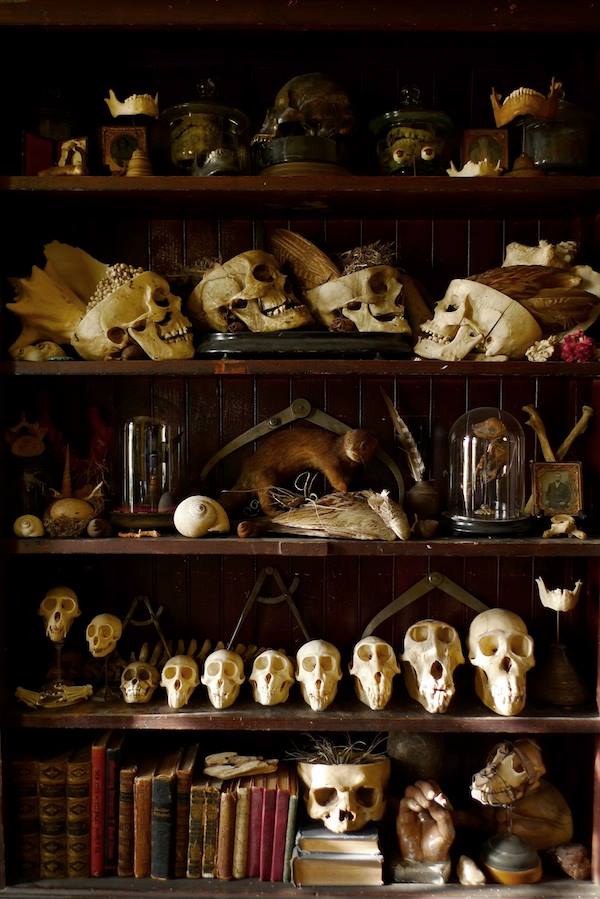
    Cabinets of curiosities, also sometimes referred to as “wonder rooms,” were small collections of extraordinary objects, strange and often fanciful precursors of today’s museums, which attempted to categorize and explain oddities of the natural world. This Sunday night on “The Lost Chord,” we’ll have three examples of musical equivalents.

    Princeton University professor Dmitri Tymoczko’s “Typecase Treasury” recalls a small table his parents acquired, made from a typecase subdivided into a hundred little compartments. “Each had been filled with a tiny mineralogical curiosity,” he writes, “a strange crystal, a piece of iron pyrite, a shark’s tooth, or a fossilized tribolyte.” He found it a useful metaphor for a multi-movement collection of short pieces, in which he attempts to produce “a sense of form through juxtaposition.”

    Grammy Award-winner Michael Colina is perhaps best known for his jazz and Latin projects. However, Colina was classically trained, having studied at the North Carolina School of the Arts, and then abroad, at the Chigiana Academy, in Sienna, Italy. We’ll hear his Violin Concerto, subtitled “Three Cabinets of Wonder,” a work inspired by Fanny Mendelssohn, the Buddha, and an Amazonian nature spirit.

    Finally, we’ll sample just a bit from “Cabinet of Curiosities” by Philadelphia-based composer Robert Moran, who’s something of a wonder himself. “The Hapsburg Kunstkammer” employs graphic notation and is scored for marimba, hairbrush, aluminum foil, bells played with fingers, finger cymbals, telephone bell, vibraphone, rubber ball, celesta and harpsichord.

    I hope you’ll join me for “Curiouser and Curiouser,” a tour of musical wonder cabinets, this Sunday night at 10:00 EST, on WWFM – The Classical Network and wwfm.org.

    More about cabinets of curiosities here:

    https://en.wikipedia.org/wiki/Cabinet_of_curiosities

  • Robert Moran Banned From Facebook Again

    Robert Moran Banned From Facebook Again

    Be it known that on this day, the fifteenth of April in the year of our Lord 2020, Robert Moran has once again been banned from Facebook. Mister Moran’s name has been inscribed on a brass plaque in the Facebook penalty box.

  • Robert Moran Featured Composer Datebook

    Robert Moran Featured Composer Datebook

    Robert Moran is featured on today’s “Composers Datebook.”

    https://www.yourclassical.org/programs/composers-datebook/episodes/2020/02/13

    Moran happened to be in Buffalo one summer when he sat down at the piano and in about 20 minutes came up with a waltz he thought sounded an awful lot like Maurice Ravel. This prompted him to call his friend, Robert Helps. He told Helps he had just written this piece of music and asked, rhetorically, “Does anyone write waltzes anymore?” Helps was astonished, as, he confessed, he had just completed a waltz himself.

    This was the start of “The Waltz Project,” for which Moran approached a number of his composer-colleagues to contribute. Some didn’t have the time, others had exclusive contracts that barred their participation. Those who could – including such unlikely bedfellows as Philip Glass, Milton Babbitt, Lou Harrison, Roger Sessions, Joan Tower, John Cage, and Virgil Thomson – had their contributions recorded by Nonesuch Records. These were released on an LP that is still much sought-after by collectors.

    Robert Moran’s “Waltz. In Memoriam Maurice Ravel”

    His orchestration of Philip Glass’ “Modern Love Waltz”

    The original Nonesuch LP and its 17 composers:
    https://www.discogs.com/Various-The-Waltz-Project-17-Contemporary-Waltzes-For-Piano/release/1223767

    This must be a sign from the cosmos, as Bob and I are supposed to have lunch today!

  • Robert Moran’s Music Legacy at University of Delaware

    Robert Moran’s Music Legacy at University of Delaware

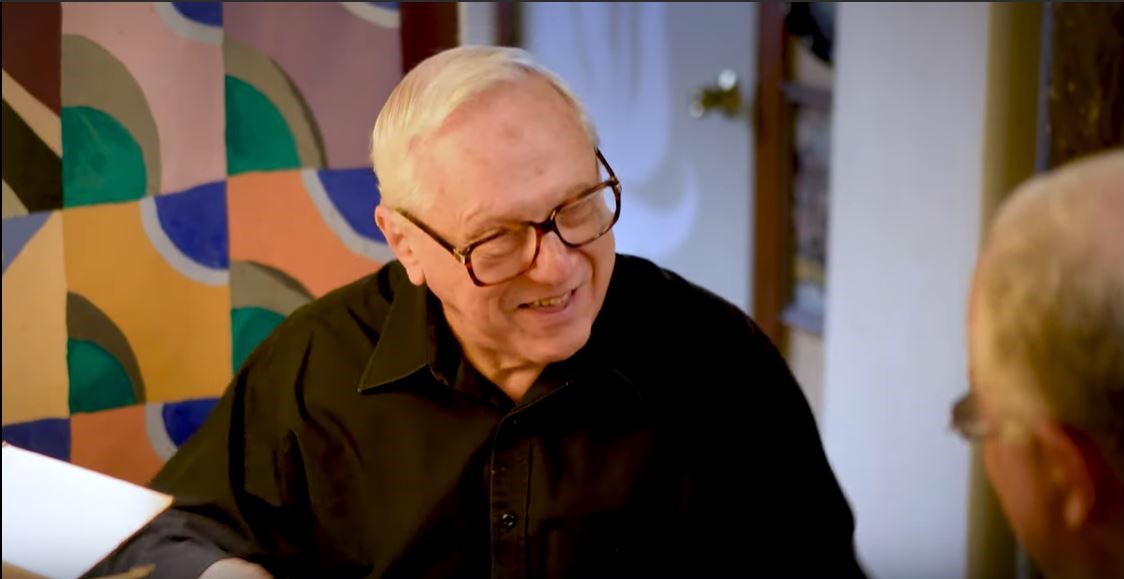
    The University of Delaware is setting up an archive of Robert Moran’s manuscripts. Bob sent out this video of the process, apparently the first of three. Evidently it transpired at his house, prior to a break for dinner and against the looming menace of a Philadelphia parking meter.

    The interviewer is James Allen Anderson, Delaware’s director of orchestral activities, who, as music director of the university’s symphony orchestra, has conducted a lot of Bob’s music, including the collaborative opera (with Philip Glass) “The Juniper Tree.”

    Even though I’d heard a number of these anecdotes before, there’s still plenty that was new to me. Of course, I loved the little asides that reveal the composer’s feelings about some of his colleagues, or how certain well-known musicians related to one other. Had I known Bob was going to be so enthusiastic about it, I would have suggested he donate his manuscripts a long time ago!

    Incidentally, he’s not parting with everything. That box is by no means all-inclusive. I’m told there are at least two more to go. Bob wrote some full-length operas (other than “The Juniper Tree”) and an evening-length ballet on the subject of Alice in Wonderland. Also, he’s planning to hang on to some of the more popular rentals.

    The first 55 minutes or so are mostly autobiographical, providing a brisk overview of the composer’s life and all the fascinating people he worked with and encountered. It is not by any measure comprehensive. We don’t really hear any details about his insane performance pieces of the late ‘60s and early ‘70s that involved entire cities – including San Francisco, Bethlehem, PA, and Graz, Austria – or his work for Houston Grand Opera. For those, I hope we won’t have to wait for the definitive biography.

    The last 45 minutes consist of random thoughts and anecdotes triggered by going through the manuscripts. There’s even a shout-out to Classic Ross Amico at the 1:31:00 minute mark!

    Be forewarned, even though Bob is on his best behavior, there are a few brief interludes that slip into PG-13 territory. Still, for Bob, this is pretty family-friendly.

    Also, while you’re at it, do yourself a favor and check out some of his music. It’s not ALL tied up in being a merry prankster.


    From the opera “Desert of Roses” (after Beauty and the Beast):

    Trinity Requiem (for the tenth anniversary of 9/11):

    “Ten Miles High Over Albania” (for eight harps):

    “Alice” at the Scottish Ballet:

    “Obrigado” (for percussion ensemble):

    “Game of the Antichrist” (with giant puppets):

Tag Cloud

Aaron Copland (93) Beethoven (95) Composer (114) Film Music (144) Film Score (143) Film Scores (255) Halloween (94) John Williams (195) KWAX (229) Leonard Bernstein (104) Marlboro Music Festival (125) Movie Music (159) Mozart (90) Opera (212) Philadelphia Orchestra (89) Picture Perfect (174) Princeton Symphony Orchestra (109) Radio (88) Ross Amico (244) Roy's Tie-Dye Sci-Fi Corner (290) The Classical Network (101) The Lost Chord (269) Vaughan Williams (105) WPRB (397) WWFM (881)

DON’T MISS A BEAT

Receive a weekly digest every Sunday at noon by signing up here


RECENT POSTS