Tag: Robert Moran

  • 9/11 Trinity Requiem Moran’s Consoling Masterpiece

    9/11 Trinity Requiem Moran’s Consoling Masterpiece

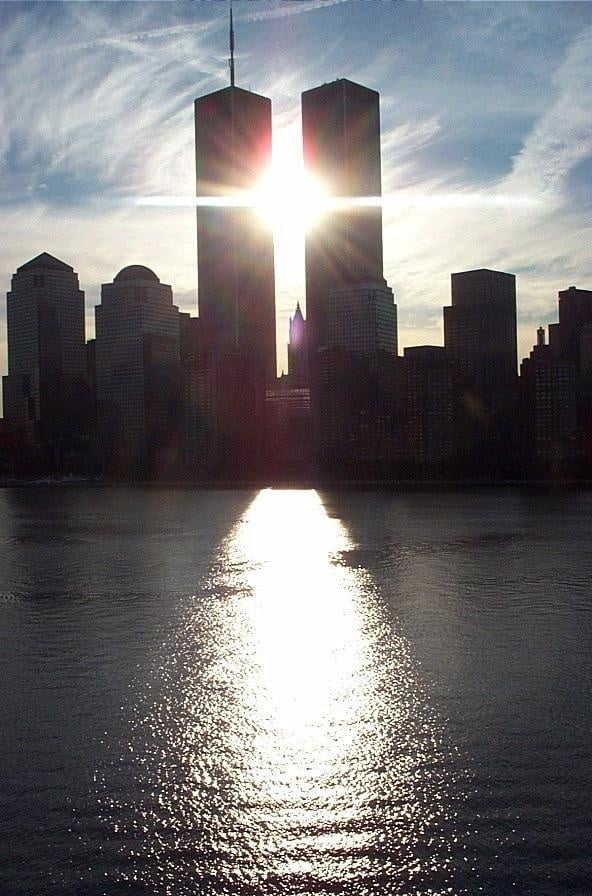
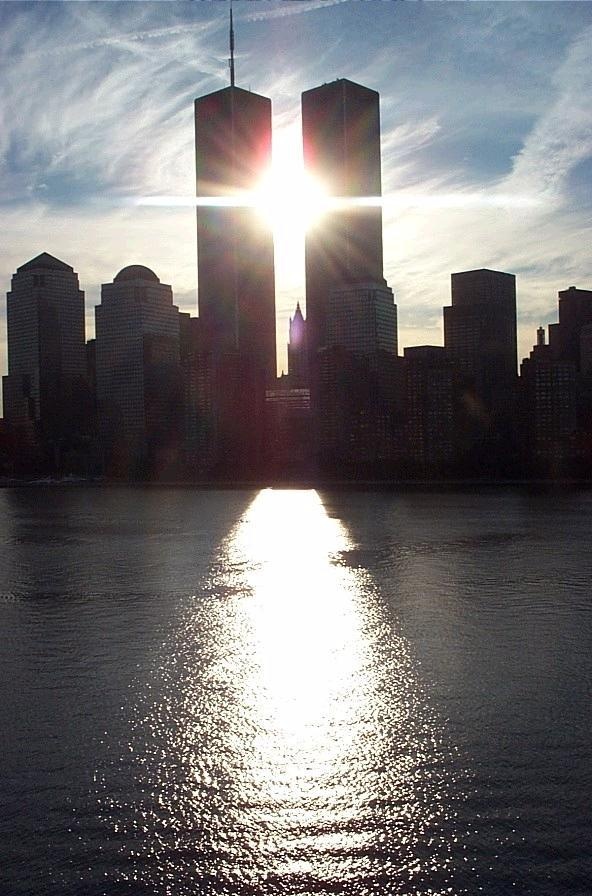
    For the tenth anniversary of the surreal, unforgettable events of September 11, 2001, Philadelphia composer Robert Moran wrote his “Trinity Requiem” for the youth chorus of Trinity Wall Street, the so-called “Ground Zero church” in Lower Manhattan. This Sunday night on “The Lost Chord,” we’ll revisit this beautiful, consoling work and reflect on that September morning of twenty years ago – a morning that still feels like yesterday.

    Moran may not be the first artist that would spring to mind for anyone seeking musical solace. The merry prankster ethos runs deep in this pupil of Hans Erich Apostel, Darius Milhaud, and Luciano Berio. Moran gained early notoriety for his compositions on a grand scale, incorporating entire cities (including San Francisco, Graz, Austria, and Bethlehem, Pennsylvania), their automobiles, airplanes, skyscrapers, radio and television stations, marching bands, dancers, theatrical groups, and tens of thousands of performers.

    He’s written works for harpsichord and electric frying pan, and any number of performance art pieces, including one, archived on YouTube, that involves musicians walking around a financial district with slide whistles inside giant paper bags.

    Flirting with respectability, he collaborated on an opera, “The Juniper Tree,” perhaps the grimmest of Grimm fairy tales, with Philip Glass, and he has composed a number of other works for the stage, including “Desert of Roses” (after Beauty and the Beast), for Houston Grand Opera, and “Alice” (after Lewis Carroll), for the Scottish Ballet. He’s currently at work on a monodrama about God.

    Given Moran’s freewheeling reputation, I thought it only appropriate to title this week’s show after one of Salvador Dali’s most famous paintings, “The Persistence of Memory” – both for its surreal associations (a dreamscape of melting watches) and for the deep psychological scars left by the deadliest attacks ever perpetrated on American civilians.

    Moran rises to the occasion to provide an ethereal masterpiece, a 30-minute journey to Paradisum, worthy to stand alongside the transcendent Requiem of Gabriel Fauré.

    “Trinity Requiem” received its first performance at Trinity Wall Street on September 7, 2011. The second performance took place in St. Paul, Minnesota, on the actual anniversary of the attacks. Locally, it was performed by Mendelssohn Club, at the Basilica of Saints Peter and Paul, on Logan Square in Philadelphia, in 2012.

    A compact disc was released on the innova Recordings label, with the Trinity Youth Chorus and members of the Trinity Choir, Trinity Wall Street, under the direction of Robert Ridgell.

    Among the handful of miracles that occurred on a day of unthinkable tragedy, a hundred-year-old sycamore tree preserved the church’s St. Paul Chapel, constructed in 1766, from destruction by debris from the World Trade Center, including what would have been a direct hit from a falling I-beam.

    On tonight’s broadcast, “Trinity Requiem” will be prefaced by a conversation with the composer. In the time remaining we’ll also hear Moran’s dreamlike “Notturno in Weiss” (“Nocturne in White”), on an aphoristic text by Christian Morgenstern.

    Find solace in the purity of music, as we continue to grapple with the legacy of 9/11, this Sunday night at 10:00 EDT, on WWFM – The Classical Network and wwfm.org.

  • Unexpectedly Beastly Radio WWFM

    Unexpectedly Beastly Radio WWFM

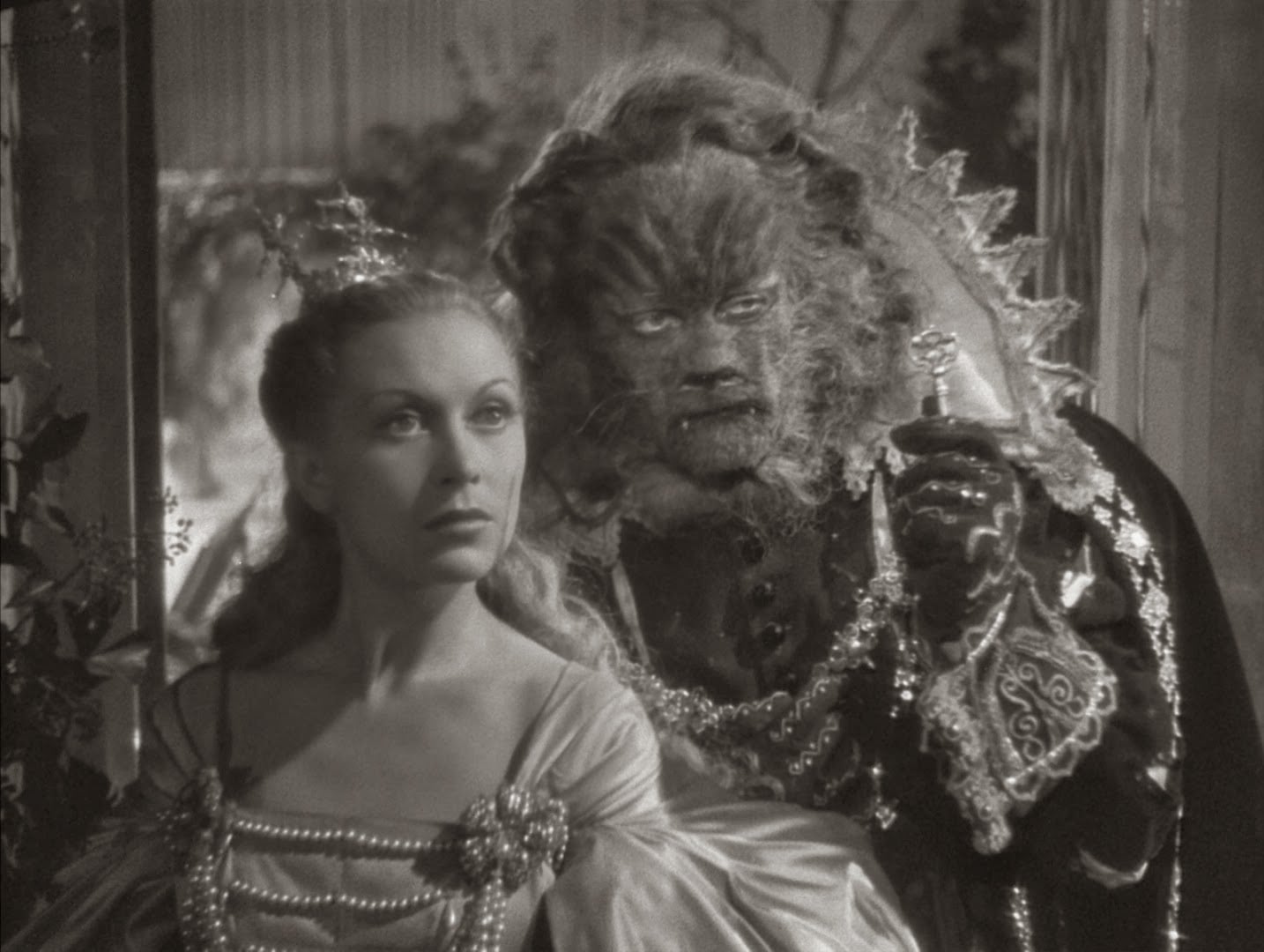
    If you tuned in to “The Lost Chord” tonight expecting the Bulgarian program, unfortunately there’s been a mix-up, so instead we’re hearing “A Feast of Beast,” a fairy tale program I had earmarked for Mother’s Day. Enjoy selections from Georges Auric’s film score for Jean Cocteau’s “La Belle et la Bête” and a suite from Robert Moran’s opera “Desert of Roses,” airing now, from 10 to 11 pm EDT on WWFM – The Classical Network and wwfm.org.

  • Robert Moran’s Music Returns!

    Robert Moran’s Music Returns!

    Robert Moran has made “Composers Datebook”… again! The program is being aired today, on classical music stations all across the country (including WWFM – The Classical Network and wwfm.org, at 5:01 p.m. EST). If you can’t find it, or you just can’t wait, it’s also been posted here:

    https://www.yourclassical.org/programs/composers-datebook/episodes/2021/01/08

    While you’re at it, be sure to follow the link to Moran’s “Lunchbag Opera.”

    This seems like a good time to mention that Bob has not one, but TWO new albums out on Neuma Records.

    “Points of Departure” (1993), the title track of the first, may just be the composer’s most frequently performed orchestral work. With its origins in the dance, the piece grooves to a post-minimalist pulse. I would think it would be a welcome addition to any afternoon drive-time playlist. It’s been recorded before, most notably by the Baltimore Symphony Orchestra conducted by David Zinman.

    The program also includes two works that are new to me. “Angels of Silence” (1973) stands apart from the composer’s freewheeling “city pieces” of the same era by conjuring a more interior world of spare melodies, long-held lines, and static chords. At 22 minutes in this performance, with viola soloist Maria Rusu, it is the polar opposite of drive-time. Put it on when you’re in a meditative mood. “Star Charts and Travel Plans I” (2016-17) is also dreamy and beautiful, with evocative colors, and at 4 minutes in length, it leaves you wanting more.

    But my personal favorites are the works with voice, which are also the most ardent. “Frammenti di un’opera barocca perduta” (2017) – “Fragments of a Lost Baroque Opera” – is marked by the kind of tender luminosity that first attracted me to Bob’s music, close to 25 years ago, when I encountered the suite from his opera “Desert of Roses.” Yet at its center is an aria that kicks even higher than “Points of Departure.” Daniel Bubeck is the versatile countertenor. The inclusion of a harpsichord is a nice touch. Even so, in spite of its title and its texts – three meditations on love, previously employed by various Baroque masters – this is no mere pastiche.

    Finally, “Yahrzeit” (2002/2018), formerly for chorus and piano, is heard in a new arrangement. This moving memorial to Michael Neal Sitzner, on a text by James Skofield, his partner, benefits from its orchestration – the added warmth deepening the emotion of an already poignant work – and the contribution of bass-baritone Zachary James.

    In all selections, the University of Delaware Symphony Orchestra is conducted by devoted Moran champion James Allen Anderson.

    The second album offers something completely different. “Buddha Goes to Bayreuth” (2011-14) is an ambitious canvas spanning some 66 minutes. Scored for two choirs and two string ensembles, the work takes its inspiration from the fact that Wagner once toyed with the idea of composing a music drama on the life of Buddha. Moran lifts his chords from “Parsifal,” then filters them through the chance-operations of the “I Ching.” Add in the reverberant acoustic of Salzburg Cathedral (in its definitive, two-movement form, the work was given its premiere at the Salzburg Festival in 2014), and the result is haunting, contemplative, at times even ecstatic. The texts, though indecipherable, are fragments of ancient Tibetan mantras. Countertenor Stefan Görgner joins the KammerChor KlangsCala Salzburg and Stuttgarter Kammerorchester, conducted by Rupert Huber, for this antiphonal, transcendent wallow.

    Thanks, Bob, for the embarrassment of riches. Happy birthday!


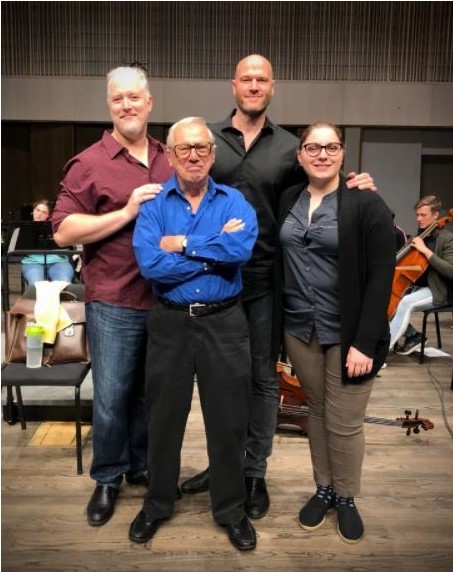
    PHOTO: A blue-shirted Moran, flanked by (clockwise from left) James Allen Anderson, Daniel Bubeck, and Maria Rusu

  • 9/11 Reflection Music and Remembrance

    9/11 Reflection Music and Remembrance

    9-11: A morning for reflection. It may have been 19 years ago today, but everything about it is still so vivid.

    When my telephone rang around 9:00 that morning, I was already at work, at home, on my computer, oblivious to the news. I picked up. A friend was on the line. She said a plane had crashed into the World Trade Center. I imagined the Empire State Building and the B-25 accident, back in the 1940s. I’m thinking maybe a piper. Terrible in itself, but accidents do happen. Then she said one of the towers “fell over.” That was what propelled me to the TV.

    Nothing could have prepared us for the spectacle and terror of that morning. Nothing would ever be the same.

    I was one of the lucky ones. My parents happened to be in the air at that time, on the way to China. They were traveling west across Pennsylvania. At 10:03, United States Airlines Flight 93 crashed near Shanksville, southeast of Pittsburgh. The phone lines were jammed. Nobody owned a cell phone. It was a long day until I learned that my parents’ flight had been grounded in Pittsburgh.

    My heart goes out to those who died senselessly, and for their survivors, for whom the day remains vivid and painful, I’m sure.

    Here’s a work of solace and consolation: Robert Moran’s “Trinity Requiem” (2011), named for Trinity Wall Street, the so-called “Ground Zero church” in Lower Manhattan, composed to mark the attacks’ tenth anniversary:

    The horror and surreality of the day are perfectly reflected in Gloria Coates’ String Quartet No. 8 (2001-02), with its eerie approximations not only of plane engines but also a kind of emotional instability. I know it gives me a sinking feeling, and that’s pretty much how it was to experience 9/11. If you’re looking for solace, do not go here:

    Kevin Puts processes expectancy, uncertainty, and hope in his Symphony No. 2 (2002):

    Dona nobis pacem.

  • Musical Wonder Cabinets: A Curious Collection

    Musical Wonder Cabinets: A Curious Collection

    Cabinets of curiosities, also sometimes referred to as “wonder rooms,” were small collections of extraordinary objects, strange and often fanciful precursors of today’s museums, which attempted to categorize and explain oddities of the natural world. This Sunday night on “The Lost Chord,” we’ll have three examples of musical equivalents.

    Princeton University professor Dmitri Tymoczko’s “Typecase Treasury” recalls a small table his parents acquired, made from a typecase subdivided into a hundred little compartments. “Each had been filled with a tiny mineralogical curiosity,” he writes, “a strange crystal, a piece of iron pyrite, a shark’s tooth, or a fossilized tribolyte.” He found it a useful metaphor for a multi-movement collection of short pieces, in which he attempts to produce “a sense of form through juxtaposition.”

    Grammy Award-winner Michael Colina is perhaps best known for his jazz and Latin projects. However, Colina was classically trained, having studied at the North Carolina School of the Arts, and then abroad, at the Chigiana Academy, in Sienna, Italy. We’ll hear his Violin Concerto, subtitled “Three Cabinets of Wonder,” a work inspired by Fanny Mendelssohn, the Buddha, and an Amazonian nature spirit.

    Finally, we’ll sample just a bit from “Cabinet of Curiosities” by Philadelphia-based composer Robert Moran, who’s something of a wonder himself. “The Hapsburg Kunstkammer” employs graphic notation and is scored for marimba, hairbrush, aluminum foil, bells played with fingers, finger cymbals, telephone bell, vibraphone, rubber ball, celesta and harpsichord.

    I hope you’ll join me for “Curiouser and Curiouser,” a tour of musical wonder cabinets, this Sunday night at 10:00 EST, on WWFM – The Classical Network and wwfm.org.

    More about cabinets of curiosities here:

    https://en.wikipedia.org/wiki/Cabinet_of_curiosities

Tag Cloud

Aaron Copland (92) Beethoven (95) Composer (114) Film Music (120) Film Score (143) Film Scores (255) Halloween (94) John Williams (185) KWAX (229) Leonard Bernstein (100) Marlboro Music Festival (125) Movie Music (135) Opera (198) Philadelphia Orchestra (88) Picture Perfect (174) Princeton Symphony Orchestra (106) Radio (87) Ralph Vaughan Williams (85) Ross Amico (244) Roy's Tie-Dye Sci-Fi Corner (290) The Classical Network (101) The Lost Chord (268) Vaughan Williams (103) WPRB (396) WWFM (881)

DON’T MISS A BEAT

Receive a weekly digest every Sunday at noon by signing up here


RECENT POSTS