Tag: Robert Schumann

  • Beecham’s Byron A Romantic Lost Chord

    Beecham’s Byron A Romantic Lost Chord

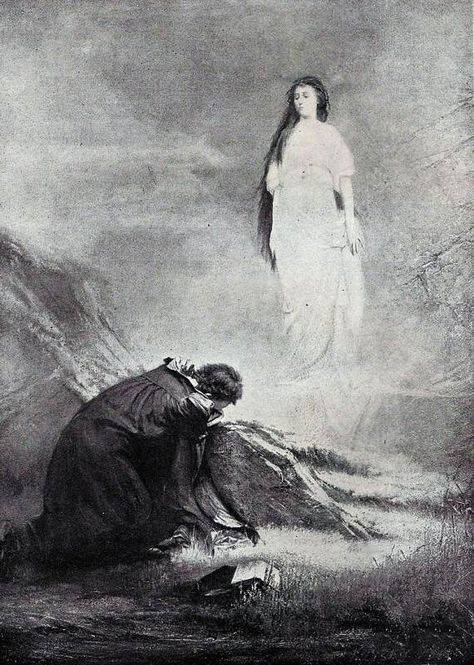
    “Oh God! If it be thus, and thou art not a madness and a mockery, I yet might be most happy…” So laments Lord Byron’s Manfred when confronted by the specter of Astarte.

    Manfred is the quintessential Byronic hero, a romantic superman who endures unimaginable sufferings and mysterious guilt in connection with the death of his beloved. He wanders the Alps, longing for extinction, and meets his fate defiantly, rejecting all authority, corporeal and supernatural.

    Robert Schumann was intoxicated by Byron’s dramatic poem from the time he first encountered it at the age of 19 in 1829. In 1848, he began to compose music for it, concurrently with that for his “Scenes from Goethe’s ‘Faust.’” Wrote Schumann, “I have never before devoted myself to a composition with such love and such exertion of my powers as to ‘Manfred.’” The piece was given its first performance in Weimar in 1852, with Franz Liszt conducting.

    This Sunday night on “The Lost Chord,” we’ll hear highlights from a recording made 102 years later by Sir Thomas Beecham.

    When Beecham came to record Schumann’s incidental music in 1954, it was an act of total reimagination. Unquestionably the work, as written, contains much attractive music. However, if we’re to be completely frank, it can be a bit dramatically static at those times when the music falls silent in deference to florid monologue. Beecham recognized this and enlisted the help of Eugene Goossens and Julius Harrison to assist him in orchestrating a number of Schumann’s piano pieces to be used as underscore for some of the spoken dialogue. He also incorporated a couple of part-songs and even invented a ballet. Fear not! Beecham’s license is nowhere in the same league as that he would later take with Handel’s “Messiah.”

    Beecham’s Byronic credentials are unimpeachable. Byron was among his favorite poets. Of course, he also happened to conduct one of the great recordings of “Harold in Italy” (after “Childe Harold’s Pilgrimage”), with the violist William Primrose. Furthermore, Beecham had been familiar with Schumann’s “Manfred” since at least 1918, when he led two performances of the complete incidental music at the age of 39. Some 36 years later, he decided to resurrect the work via a broadcast performance and then as a program at Royal Festival Hall.

    I first encountered this remarkable recording in the 1980s, in the middle of the night, when it was broadcast over the now-extinct WFLN, for 48 years Philadelphia’s classical music station. Henry Varlack used to play it from time to time on his program, “Sleepers Awake.” Finally, having not heard it for a while, I called in to his Friday night/Saturday morning request show, and he told me with regret that the record had become so worn that it was no longer suitable for airplay.

    Imagine my excitement, then, when I learned in the mid-‘90s that it was being reissued on CD. I promptly special-ordered it from England, and it couldn’t get here fast enough. That was on the Beecham Collection label – alas now long out of print. It has since appeared and disappeared (like Astarte?) on Sony.

    The recording featuring actors, chorus, and orchestra. Laidman Browne may be a bit long-in-the tooth for Byron’s anti-hero, but no one elongates “eeeeeeeeviiiiiiiiiiiiiiiiiiiiiiiiiilllllllll” quite like him.

    I hope you’ll join me for “Byronic Beecham,” this Sunday night at 10:00 EST, on WWFM – The Classical Network and wwfm.org.

  • First Piano Quintet Schumann or Before?

    First Piano Quintet Schumann or Before?

    Quick! Who wrote the first piano quintet?

    The combo of keyboard and four string instruments began to exert its pull on composers as far back as the 18th century, with artists like Luigi Boccherini experimenting with works for piano and string quartet. More commonly, the piano was joined by violin, viola, cello, and double bass. Think Schubert’s “Trout” Quintet. Mozart and Beethoven both wrote quintets for piano and winds (oboe, clarinet, horn, and bassoon).

    But it wasn’t until 1842 that the genre firmly took root with Robert Schumann’s chamber music masterpiece, the Piano Quintet in E-flat major, Op. 44. It was Schumann who brought together the modern piano, with its increased power and dynamic range, with the established string quartet (two violins, viola, and cello) that had become the most common and confessional of chamber music combinations. The result allowed for the unprecedented exploration of a much broadened musical vocabulary that spanned confessional intimacy and public declaration. The innovation was immediately recognized and embraced as the quintessential Romantic chamber music form.

    Hear Schumann’s pioneering Piano Quintet on today’s Noontime Concert on The Classical Network, as we present a performance by the Manhattan Chamber Players. The program, titled “Breaking New Ground,” will also include Mozart’s String Quintet in C major, K. 515, from 1787. Again, Boccherini wrote a lot of string quintets, but his preference had been to augment the classical quartet through the addition of a second cello. It was Mozart who established the more common practice of doubling the violas. K. 515 became the inspiration for one of Schubert’s greatest works, the String Quintet in C major of 1828. This concert took place at Manhattan’s Baruch Performing Arts Center on April 26, 2017.

    Then stick around – at 2:00, we’ll hear a complete performance of Bedřich Smetana’s sprawling collection of nationalistic tableaux, “Má Vlast” (“My Country”). There’s more to this cycle of six symphonic poems than the well-worn “Vltava” (a.k.a. “The Moldau”). Each movement evokes some aspect of Czech history, legend, and countryside.

    I hope you’ll join me for Mozart, Schumann, Smetana, and more, this Tuesday from 12 to 4 p.m. EST, on WWFM – The Classical Network and wwfm.org.

  • Christopher Houlihan Organ Recital Millburn NJ

    Christopher Houlihan Organ Recital Millburn NJ

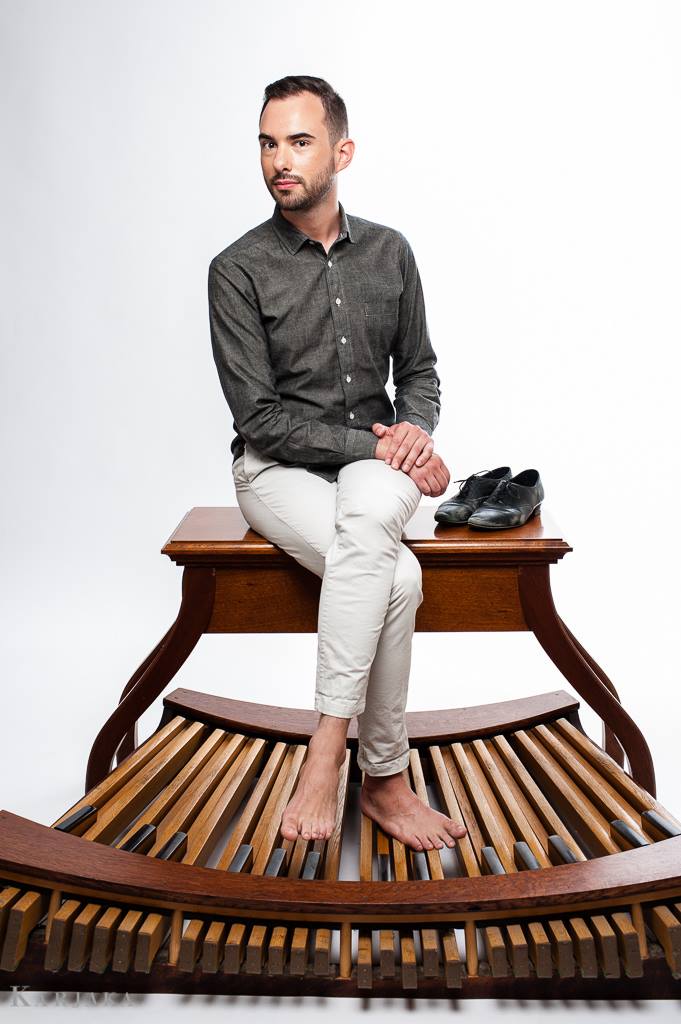
    In case you missed it, my Monday interview with Christopher Houlihan, organist, has been posted to the Classical Music Communications website. Houlihan will present a recital on Sunday at 4 p.m. at St. Stephen’s Church in Millburn, NJ. On the program will be works by Robert Schumann, Louis Vierne, Leo Sowerby, and Johann Sebastian Bach. With playing described by the Los Angeles Times as “dazzling” and “seductive,” Houlihan had been lauded for his “marvelous ear” and “world class chops.” Listen to our conversation here, then check out the video clip of Houlihan performing Vierne at the bottom of the page.

    http://www.classicalmusiccommunications.com/artist.php?id=houlihan&aview=media

  • Albert Dietrich & Friends Birthday Broadcast

    Albert Dietrich & Friends Birthday Broadcast

    Albert Dietrich (1829-1908) was a pupil of Robert Schumann, who was also a good friend of Johannes Brahms. In fact, the three artists sat down to compose a collaborative sonata, known as the “FAE” (“frei aber einsam,” “free but lonely”) for their mutual friend, the violinist Joseph Joachim. A virtually forgotten figure, Dietrich was born on this date.

    Join me this afternoon to enjoy some of his worthwhile music, alongside contributions of Karl Böhm, Ivor Gurney, Istvan Kertesz, John Shirley-Quirk, and Richard Tucker, whose birthday anniversaries we’ll also celebrate, between 4 and 7 p.m. EDT, on WWFM – The Classical Network and wwfm.org.


    PHOTOS (clockwise from left): Albert Dietrich, Johannes Brahms, Robert Schumann and Joseph Joachim

  • Schumann’s Birthday Romantic Piano Concertos on WPRB

    Schumann’s Birthday Romantic Piano Concertos on WPRB

    There will be a battery of Romantic piano concertos this morning on WPRB, as you can probably imagine, as we celebrate the birthday today of Robert Schumann. We’ll be enjoying some of Schumann’s own music, of course, but also representative works by figures he admired and promoted, some of whom numbered among the finest pianists of the day.

    At 9:00, we’ll joined by Steven LaCosse, who will be stage directing Beethoven’s only opera, “Fidelio, ” for The Princeton Festival. He’ll tell us a little bit about the production, which will be presented at McCarter Theatre Center on June 18 & 25.

    The highlight of the morning may very well be a rarely heard recording from 1954 of Schumann’s “Manfred,” after the dramatic poem of Lord Byron. The overture is rather well known, but Sir Thomas Beecham recorded the entire thing, with narrator, lending his characteristic Beecham touch not only to the performance, but in his editorial decisions, “livening it up,” as it were, with a part-song or two and adding a ballet.

    Get ready for a five hour Romantic interlude, this Thursday morning from 6 to 11 EDT, on WPRB 103.3 FM and wprb.com. We’re ready to tickle some ivories, on Classic Ross Amico.


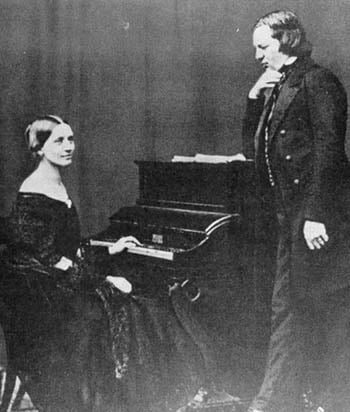
    PHOTO: Robert and Clara Schumann get Romantic

Tag Cloud

Aaron Copland (92) Beethoven (95) Composer (114) Film Music (120) Film Score (143) Film Scores (255) Halloween (94) John Williams (185) KWAX (229) Leonard Bernstein (100) Marlboro Music Festival (125) Movie Music (135) Opera (198) Philadelphia Orchestra (88) Picture Perfect (174) Princeton Symphony Orchestra (106) Radio (87) Ralph Vaughan Williams (85) Ross Amico (244) Roy's Tie-Dye Sci-Fi Corner (290) The Classical Network (101) The Lost Chord (268) Vaughan Williams (103) WPRB (396) WWFM (881)

DON’T MISS A BEAT

Receive a weekly digest every Sunday at noon by signing up here


RECENT POSTS