Tag: Romeo Cascarino

  • William Penn Opera on WPRB Sunday

    William Penn Opera on WPRB Sunday

    William Penn envisioned Philadelphia, the city he established in 1682, as a “greene Country Towne” along the Delaware River. Equally verdant was composer Romeo Cascarino’s vision of “William Penn,” the opera, which he crafted over a quarter century, from 1950 to 1975. The completed work was first heard at Philadelphia’s Academy of Music in 1982, to coincide with the 300th anniversary of the city’s founding.

    I’ll be presenting Cascarino’s magnum opus tomorrow morning on WPRB, as I sit in for Sandy Steiglitz on “Sunday Morning Opera.” Metropolitan Opera singer bass-baritone John Cheek will sing the title role, and Christopher Macatsoris will conduct the Philadelphia Singers and the Chamber Orchestra of Philadelphia.

    I will be joined in the studio by a very special guest: Dolores Cascarino, the composer’s widow, who created the role of Gulielma (as Dolores Ferraro), Penn’s first wife. She will offer insights into the opera and its creator, and share her memories of that premiere run of performances. The program will also include private recordings of some of the composer’s other works, with a special focus on his writing for voice.

    I hope you’ll join me for this one-of-a-kind broadcast of a first-rate, virtually unknown American opera, in a recording which is not commercially available, with valuable insights from the composer’s closest confidante, who sang in the work’s first performance.

    It all comes your way tomorrow, on “Sunday Morning Opera,” from 7 to 10 a.m. EST, on WPRB 103.3 FM and at wprb.com.


    Tune in early to enjoy a pre-show treat, the world premiere broadcast of collaborations with pianist Richard Rome, a producer in the field of commercial music, in arrangements made by Cascarino, who will conduct the orchestra in a program of works on celestial themes. The album, recorded at Cinecittà studios, outside Rome, was never released. Musicians for the sessions were assembled from performers who were heard on the soundtracks of Italian films of the era, who recorded for RCA Italia, and who played at La Scala Milan. The airing of this music, great background for your morning coffee, will begin around 6:30 a.m.


    PHOTO: John Cheek as William Penn, with my guest, soprano Dolores Cascarino (née Ferraro), as Gulielma


  • William Penn Opera Rare Broadcast

    William Penn Opera Rare Broadcast

    Trust me. If you are interested in American opera or local history, you won’t want to miss this one.

    Just in time for Thanksgiving, I’ll be sitting in for Sandy Steiglitz on WPRB’s Sunday Morning Opera with Sandy to host a rare broadcast of Romeo Cascarino’s “William Penn.”

    Cascarino, born in South Philadelphia in 1922, labored at this, his magnum opus, for 25 years, from 1950 to 1975. It was given its premiere at the Academy of Music in Philadelphia in 1982, to mark the 300th anniversary of the founding of the city. Metropolitan Opera singer bass-baritone John Cheek assumed the title role, and Christopher Macatsoris conducted the Philadelphia Singers and the Chamber Orchestra of Philadelphia.

    I will be joined in the studio by a very special guest: Dolores Cascarino, the composer’s widow, who created the role of Gulielma (as Dolores Ferraro), Penn’s wife. She will offer anecdotes about – and insights into – this beautiful and haunting opera.

    I’ve said it before, and I’ll say it again: if Cascarino had completed “William Penn” within a few years of starting it, in the 1950s, the opera would now be mentioned in the same breath as Carlisle Floyd’s “Susannah” and Robert Ward’s “The Crucible.” It’s that good.

    Join me for this one-of-a-kind broadcast of a first-rate, virtually unknown American opera, in a recording which is not commercially available, with valuable insights from the composer’s closest confidante, who sang in the work’s first performance.

    It all comes your way on this week’s “Sunday Morning Opera,” which will be heard from 7 to 10 a.m. EST, on WPRB 103.3 FM and at wprb.com.

  • WWFM Classical Music for Dreary Days

    WWFM Classical Music for Dreary Days

    Dreary days make for great listening.

    There will be Irish music to start this afternoon, hopefully some Florent Schmitt later on, and a nod to Philadelphia composer Romeo Cascarino on his birthday.

    Pour yourself a cup of something nice, and then join me for these and more, between 4 and 7:00 EDT, on WWFM – The Classical Network, and at wwfm.org.

  • Sandburg’s America Music and Memorial Day

    Sandburg’s America Music and Memorial Day

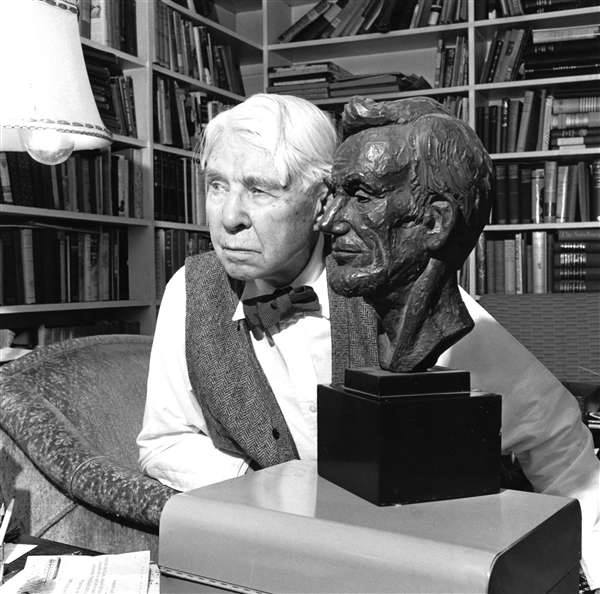
    Carl Sandburg was the recipient of three Pulitzer Prizes: two for his poetry, and a third for his biography of Abraham Lincoln. He was also known for his 1927 anthology “The American Songbag,” espousing our native folk song and anticipating the folksong revivals the 1940s and the 1960s. On top of everything else, he was awarded a Grammy for his recording of Aaron Copland’s “Lincoln Portrait.” When Sandburg died in 1967, at the age of 89, Lyndon Johnson observed that “Carl Sandburg was more than the voice of America, more than the poet of its strength and genius. He WAS America.”

    This Sunday night on “The Lost Chord,” we’ll hear music inspired by this popular – and populist – figure, with two works especially appropriate for Memorial Day and, in between, a piece after a poem evocative of the American heartland.

    Philadelphia composer Romeo Cascarino (1922-2002), who had served in the U.S. Army, composed a plaintive elegy, “Blades of Grass,” in 1945, just after World War II. He expressed a preference on several occasions that Sandburg’s poem “Grass” be read before performances. You’re probably familiar with it:

    Pile the bodies high at Austerlitz and Waterloo.
    Shovel them under and let me work—
    I am the grass; I cover all.

    And pile them high at Gettysburg
    And pile them high at Ypres and Verdun.
    Shovel them under and let me work.
    Two years, ten years, and passengers ask the conductor:
    What place is this?
    Where are we now?

                                          I am the grass. 
                                          Let me work.
    

    Leo Sowerby (1895-1968) was born in Grand Rapids, MI, and spent much of his career in the Midwest. Sometimes referred to as the “Dean of American church music,” he was the recipient of the Pulitzer Prize for Music in 1946 for his cantata, “The Canticle of the Sun.”

    The published score of his symphonic poem after Sandburg, titled “Prairie,” from 1929, bears the following lines:

    “Have you seen a red sunset drip over one of my cornfields, the shore of night stars, the wave lines of dawn up a wheat valley?

    “Have you heard my threshing crews yelling in the chaff of a strawpile and the running wheat of the wagonboards, my cornhuskers, my harvest hands hauling crops, singing dreams of women, worlds, horizons?”

    Last but certainly not least, Roy Harris, who shared Lincoln’s birthday (though born 89 years later), was born in a log cabin in Lincoln County, OK, only adding to his sense of destiny. Indeed he went on to become one of America’s greatest composers.

    Harris’ Symphony No. 6 is subtitled “Gettysburg.” It’s one of a number of works the composer wrote with a “Lincoln” connection. Each movement of the symphony bears a superscription taken from the Gettysburg Address: the first, “Awakening (‘Fourscore and seven years ago…’);” the second, “Conflict (‘Now we are engaged in a great civil war…’);” the third, “Dedication (“We are met on a great battlefield of that war…’);” and the fourth and final movement, “Affirmation (‘…that we here highly resolve that these dead shall not have died in vain…’).”

    Prior to composing the work, Harris read – you guessed it – Sandburg’s biography of Lincoln.

    I hope you’ll join me for “Lincoln Logger,” an hour of music inspired by Carl Sandburg, this Sunday night at 10 EDT, with a repeat Wednesday evening at 6; or that you’ll listen to it later as a webcast at wwfm.org.


    Although not on tonight’s show, here, as an added bonus, is Sandburg narrating Aaron Copland’s “Lincoln Portrait”:

  • Poetry Inspires Music on WPRB

    Poetry Inspires Music on WPRB

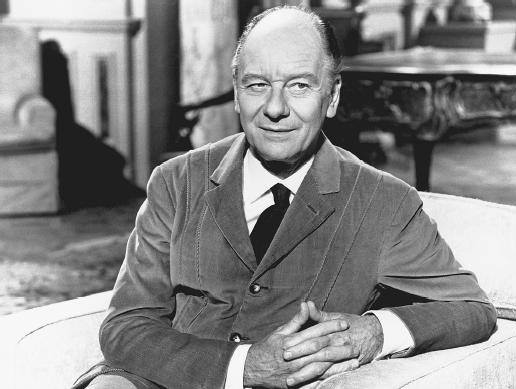
    Coming up later in this hour: Sir John Gielgud reads the eerie texts by Aloysius Bertrand that inspired Maurice Ravel’s “Gaspard de la Nuit” (“Gaspard of the Night”). Gina Bachauer will be the pianist in this classic recording.

    We’ll also hear a gorgeous work after Edgar Allan Poe’s “Annabel Lee” by Philadelphia composer Romeo Cascarino and Irving Fine’s settings for a cappella chamber choir of poetry of Ben Jonson, “The Hour-Glass.”

    It’s all poetry and music until 11 ET, on WPRB 103.3 FM, or online at wprb.com.

Tag Cloud

Aaron Copland (93) Beethoven (95) Composer (114) Film Music (144) Film Score (143) Film Scores (255) Halloween (94) John Williams (195) KWAX (229) Leonard Bernstein (104) Marlboro Music Festival (125) Movie Music (159) Mozart (90) Opera (212) Philadelphia Orchestra (89) Picture Perfect (174) Princeton Symphony Orchestra (109) Radio (88) Ross Amico (244) Roy's Tie-Dye Sci-Fi Corner (290) The Classical Network (101) The Lost Chord (269) Vaughan Williams (105) WPRB (397) WWFM (881)

DON’T MISS A BEAT

Receive a weekly digest every Sunday at noon by signing up here


RECENT POSTS