Tag: Science Fiction

  • Flash Gordon Movie Mania A Colorful Celebration

    Flash Gordon Movie Mania A Colorful Celebration

    Pathetic Earthlings… who can save you now?

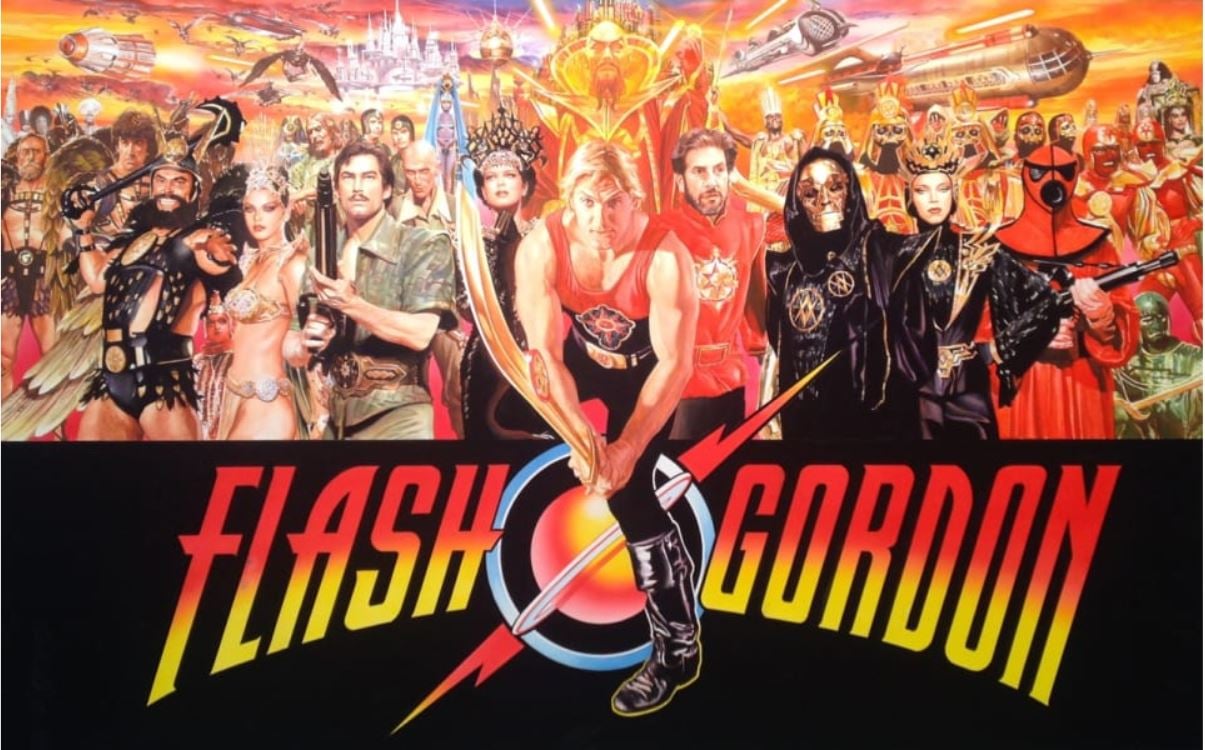
    Cue the Queen soundtrack (on vinyl, of course) and join us as we discuss the Dino De Laurentiis cult classic “Flash Gordon” (1980).

    We’ll talk about Flash’s colorful history, from Alex Raymond’s hit comic strip, to the fondly-remembered Buster Crabbe serials, to an unsuccessful early attempt by George Lucas to obtain the rights, so that he could direct a feature film. (Poor George had to create “Star Wars” instead.)

    And of course, we’ll extensively fetishize the movie itself, which at times plays like “The Wizard of Oz” on mushrooms. With a campy script by Lorenzo Semple Jr., an unlikely director (Mike Hodges of “Get Carter”), and lurid set and costume design by Fellini favorite Danilo Donati, “Flash” is the film “Barbarella” only wishes it could be.

    Max von Sydow, Brian Blessed, Timothy Dalton, Topol, Ornella Muti, Mariangela Melato, Peter Wyngarde, and any number of familiar faces from sci-fi and fantasy films of the ‘70s and ‘80s join a buff, gee-whiz Sam J. Jones as Flash – now a quarterback for the New York Jets (because a Yale-educated polo-player is just too effete?) – and Melody Anderson as Dale Arden.

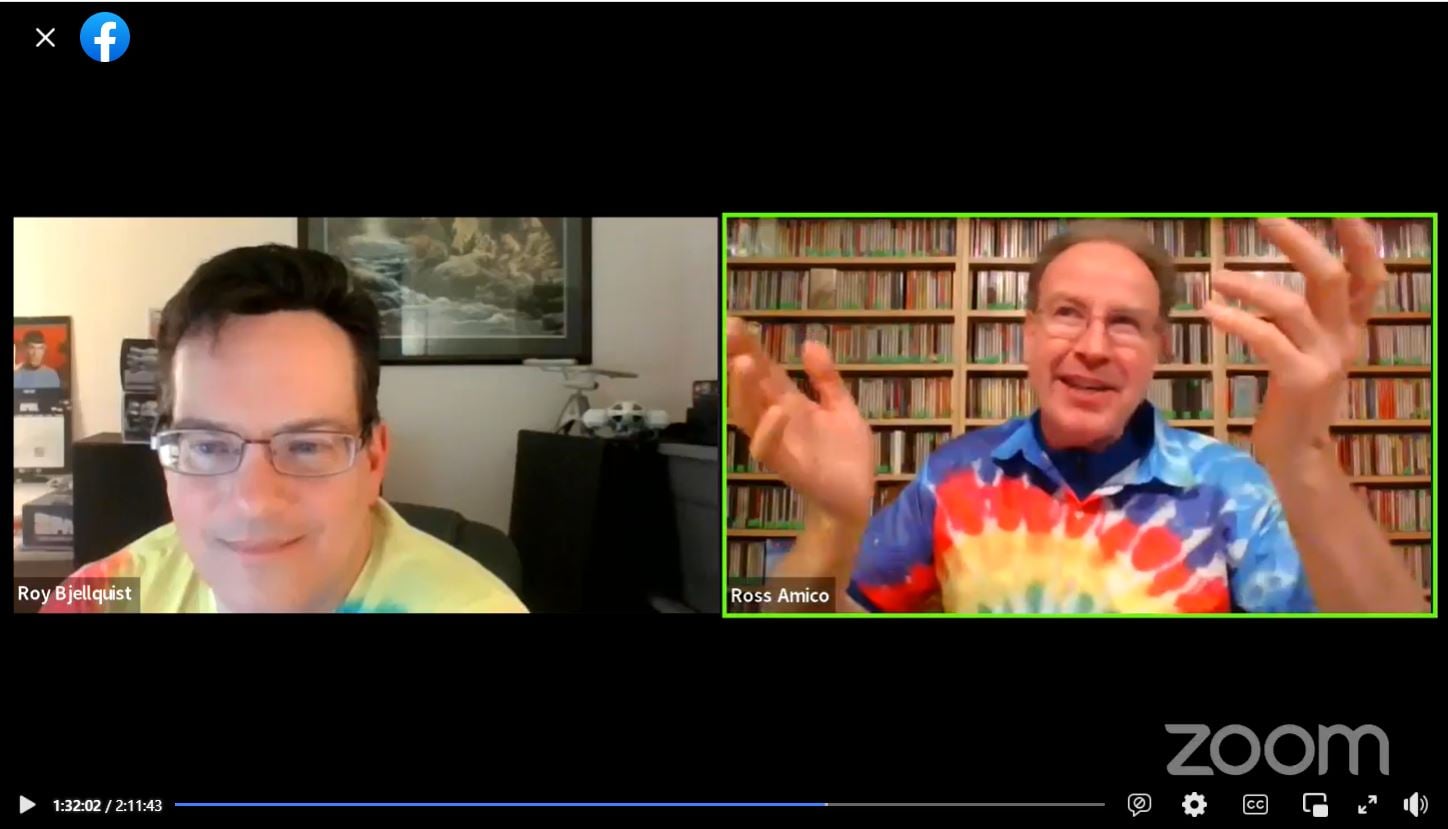
    Jon Haag will be our guest on the next Roy’s Tie-Dye Sci-Fi Corner for a colorful celebration of this gaudy, fleet-footed mash-up of art deco and pop art. Go, Flash, go! Lashes and bore worms will be dispensed in the comments section, when we livestream on Facebook, this Friday evening at 7:00 EST!

    https://www.facebook.com/roystiedyescificorner

  • Star Trek’s Epic Music Galaxy

    Star Trek’s Epic Music Galaxy

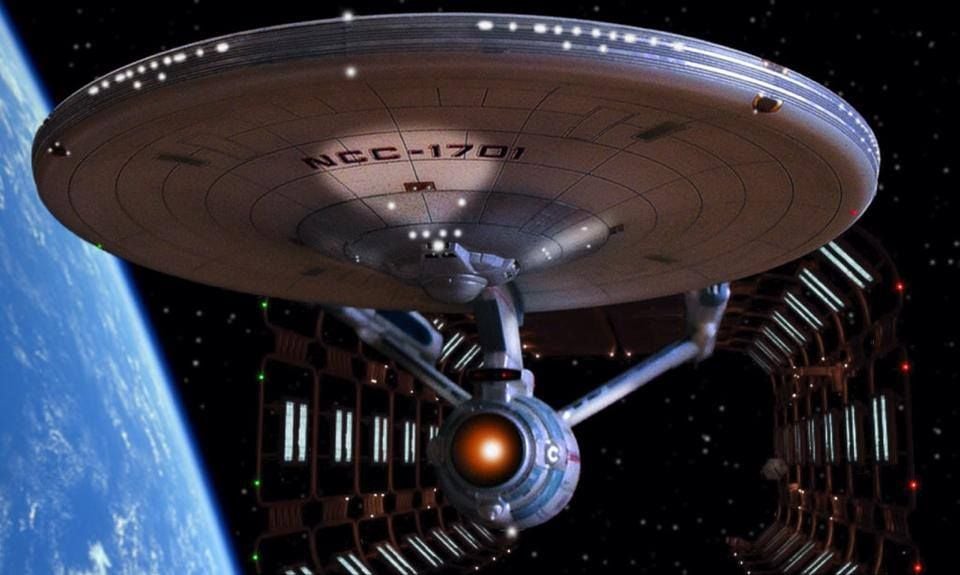
    Space… the final frontier. This week, on “Picture Perfect,” beam aboard for some of the best “Star Trek” music in the galaxy. We’ll hear enterprising selections from the beloved media franchise.

    In retrospect, it’s hard to conceive of “Star Trek,” the original series (1966-69), staggering toward cancellation after a mere three seasons on NBC, so much a part our shared cultural consciousness it has become. The show’s popularity expanded through syndication. Still, prior to the blockbuster success of “Star Wars,” the only other “Trek” would be an animated series that aired on Saturday morning television from 1973 to 1974 (to be discussed tomorrow evening on Roy’s Tie-Dye Sci-Fi Corner).

    In 1977, the one-two box office punch of “Star Wars” and “Close Encounters of the Third Kind” revealed a latent hunger for science fiction that gave “Star Trek” the final boost it needed to reach the silver screen.

    “Star Trek: The Motion Picture” (1979), long-awaited, was ambitious to a fault. Its approach seemed especially ponderous next to the souped-up dog fights of a galaxy far, far away. However, there was undeniably a nostalgic satisfaction in seeing the original crew reassembled on the deck of a refurbished Enterprise, and the production values were nothing less than first-rate.

    Robert Wise directed. Wise was involved in the production of any number of classic films, dating back to the 1930s, including “The Day the Earth Stood Still,” “West Side Story,” “The Haunting,” and “The Sound of Music.” He also edited “Citizen Kane.”

    “Star Trek: The Motion Picture” sported state-of-the-art special effects (by Douglas Trumbull no less), and a knock-out music score by Jerry Goldsmith. I remember leaving the theater on the film’s opening night and remarking that the movie was all right, but the music was fantastic.

    There’s a six-minute, music-and-special effects showpiece of a shuttle flying around the drydocked Enterprise that’s a perfect marriage of music and film. It’s like nothing you’re ever likely to encounter in movies today – and more’s the pity.

    The “ST: TMP” theme has always been a fan favorite, but its resurrection, beginning with the launch of the television series “Star Trek: The Next Generation,” cemented its broader familiarity.

    “Star Trek” had always positioned itself as thoughtful science fiction, and in the case of the first film perhaps it tried a mite too hard. “ST: TMP” strove for stately, but what it wound up achieving was stasis. Although a box office success, the film received mixed reviews and performed below industry expectations. However, it still made enough money to justify a sequel.

    “Star Trek II: The Wrath of Khan” (1982) was a belated continuation of an episode from the original series, “Space Seed,” in which a genetically engineered superman is revived from suspended animation and attempts to take over the Enterprise. Khan, of course, was played by Ricardo Montalban, now with gleaming chest and silver mullet – worlds away from his contemporaneous characterization as Mr. Roarke on TV’s “Fantasy Island.”

    The tone of the film proved a refreshing change of pace, playing up the character relationships that made the original series so enjoyable and providing enough action to satisfy audiences attuned to post-“Star Wars” spectacle. Moreover, it cleverly draws on nautical iconography – while “Star Wars” had its dogfights, “Wrath of Khan” deals more in broadsides – and that nautical flavor extends to the film’s brilliant score, by James Horner. The project proved an important stepping stone to Horner’s acceptance as an A-list composer.

    Another memorable episode of the original series dealt with the usually unflappable Spock losing his cool, as he teeters into pon farr, a period of madness that strikes every seven years during which a Vulcan must mate or die.

    “Amok Time” (1967) opened the show’s second season. It featured alien-world papier-mâché boulders, oversized Q-tip like weapons, and what is now widely recognized as the “Star Trek fight music.” This music was reused in several subsequent episodes and has since been widely parodied.

    The composer was Gerald Fried, who wrote the music for Stanley Kubrick’s first four films. He also provided most of the score for the landmark television mini-series “Roots.”

    Following the disappointing box office of “Star Trek: Nemesis” in 2002, the film franchise was put on hiatus for the next six-and-a-half years, possibly the result of “Star Trek” fatigue – too many movies and too many television series.

    J.J. Abrams was hired in the hopes of revitalizing “Trek” with a fresh makeover. Abrams’ approach might best be summed up as “Damn the social issues! Damn the philosophical underpinnings! Damn the continuity! Full speed ahead!” The result is undoubtedly entertaining, though very much of our time, with a lot of action at the expense of the ideas and humanity that made earlier incarnations more resonant.

    The “reboot” scored a hit with critics and general audiences, though it remains controversial with fans of the original series. Even the title suggests a new beginning, as the film was titled, simply, “Star Trek” (2009). The story employs an alternative timeline, so that the filmmakers are no longer beholden to more than 40 years’ worth of accrued “Star Trek” lore. It’s the kind of thing that is done all the time in comic books. Whether or not the result is for the best, I leave to you.

    Neither is the music quite as rich as that for some of the earlier installments, though it does generate a fair amount of excitement within the context of the film. The composer is Michael Giacchino.

    I hope you’ll join me for these selections from “Star Trek,” on “Picture Perfect,” music for the movies. The music won’t be the only thing that’s transporting. Set phasers for “fun,” this Saturday evening at 6:00 EST, on WWFM – The Classical Network and wwfm.org.

  • Edgar Rice Burroughs Still Thrills

    Edgar Rice Burroughs Still Thrills

    It’s probably true that everything I liked as a kid, I still like now.

    I was already in my teens by the time I discovered Edgar Rice Burroughs. My family was about to move into a new house, and I was supposed to be painting the interiors. Instead, I spent huge swaths of the day reading about John Carter of Mars (or Barsoom, as it’s called by the natives). Eventually I finished the job, but it did not escape my mother’s notice that it took an awfully long time.

    Years later, as I was just getting sucked into the internet, I belonged to an online book chat, and one of the topics we discussed was what we enjoyed reading as we were growing up. I mentioned Burroughs, which spurred one of the other contributors to remark, “Some things are probably better left to memory.”

    Fast forward another decade. I was sifting through a box of my old paperbacks, when my eyes settled on Michael Whelan’s vibrant cover art, with its six-limbed Green Martians, scantily clad princesses, mad scientists, and swords everywhere. Why would I not want to re-explore?

    And you know what? The stories were still terrific.

    Scott Tracy Griffin will be our guest on an upcoming episode of “Roy’s Tie-Dye Sci-Fi Corner.” Griffin is a world authority on Burroughs. In particular, he has written extensively on the author’s most famous creation, Tarzan of the Apes. Needless to say, I am taking my preparation entirely too seriously – if having this much fun can be considered serious. I have read literally thousands of pages of Burroughs in preparation for the interview.

    Is Burroughs a great writer? From a literary standpoint, probably not. Even his plots can seem a little slapdash, written as they were for the pulps. But he is unquestionably a master entertainer. There is a raw power to his stories and a flamboyant passion underlying his descriptions that defy criticism. It’s easy to understand why he had such a lasting impact on figures ranging from Ray Bradbury to George Lucas to Carl Sagan.

    And it’s not like he doesn’t have anything to say. The stories are full of interesting, amusing, and occasionally horrifying observations about social constructs (practical and peculiar), race relations, overweening science, religious fanaticism, ivory tower intellectualism, autocratic rule, greed, lust, love, honor, sacrifice, environmental peril, the beauty of nature, and the mysteries of existence. Furthermore, since his characters and settings extend over multiple narratives, he is able to fully develop these magical, transporting worlds.

    Maybe Africa and Mars are not as strange and distant as they once seemed in the nineteen-tens (the era that produced Tarzan and John Carter). But Burroughs’ imagination is evergreen in its inspiration and fascination.

    Also, I love his crazy science! It’s not enough for Burroughs to build these insane worlds; he actually attempts at many points to explain how everything works. That his speculative flights are rooted in the science and technology of his own time makes them all the more fascinating. I love that people on Mars travel in aerial warships powered by propeller, and that no one seems to have developed methods of long-distance communication.

    Furthermore, despite the existence of rifles and sidearms, swords are still the preferred method of defense. Castles and walled cities are common. So as much as Burroughs looks forward, he also looks back.

    Sure, a broken clock is right twice a day, but give Burroughs some credit. He may lack the respectability of Jules Verne and H.G. Wells, but he did anticipate wireless technology, the teletype, radar, sonar, the radio compass, autopilot, television, cloning, organ transplants, and the use of radiation in warfare.

    Now that “Tarzan of the Apes,” The Return of Tarzan,” and “A Princess of Mars” have all been picked up by Penguin Classics, it’s high time to give Burroughs his due. Tarzan has been as enduringly popular as Sherlock Holmes and more insinuatingly primal than Conan Doyle’s other hero, Professor Challenger. And if you only know Tarzan from the movies, you don’t know Tarzan! These are simple adventure tales, to be sure, but they are also thought-provoking reflections of the era in which they were written that still have the power to enthrall today. Who knew? They are classics, after all.

    It’s the summer of Edgar Rice Burroughs! Join us as we chat about these topics and more with author Scott Tracy Griffin, on Roy’s Tie-Dye Sci-Fi Corner, when we livestream on Facebook, Sunday, August 8, at 7 PM EDT.

    https://www.facebook.com/roystiedyescificorner

    PLEASE NOTE: There will be no show this weekend, but Roy and I will be back on Friday, August 6, to discuss the 1961 Irwin Allen film, “Voyage to the Bottom of the Sea.”


    PHOTOS (counterclockwise from top): Burroughs authority Scott Tracy Griffin, his book “Tarzan: The Centennial Celebration,” the last of the John Carter collections, and the master himself
  • Rollerball 1975 Review Roy’s Tie-Dye Sci-Fi Corner

    Rollerball 1975 Review Roy’s Tie-Dye Sci-Fi Corner

    In the not-so-distant future (?) – 2018, to be exact – corporations rule world. They see to it that all mankind’s needs are met. There is no crime, there is no war, there is no disease, there is no famine. For the populace, the ultimate distraction is Rollerball, a brutal contact sport engineered to remind everyone that no individual is greater than the system. Champion Jonathan E. thinks otherwise.

    Norman Jewison’s bread-and-circus parable has all the subtlety of a studded glove in the face, and James Caan proves that Sonny can hold a job after all, if only he can make it through the next toll booth.

    A special shout-out to André Previn for his music supervision. Previn conducts the London Symphony Orchestra in selections by Tchaikovsky, Albinoni, and Shostakovich. But it’s Simon Preston who makes the most lasting impression with Bach’s “Toccata and Fugue in D minor.”

    The Super Bowl holds no fear, as Roy and I take on the Man, with “Rollerball” (1975), on the next Roy’s Tie-Dye Sci-Fi Corner. We’ll be looking for your chants of “Jonathan” in the comments section, as we live-stream on Facebook, this Sunday evening at 7:00 EST.

    https://www.facebook.com/roystiedyescificorner

    “GAME??? THIS WASN’T MEANT TO BE A GAME!!!”


    The trailer:

    To get you in the mood – the Puppy Bowl:

    https://www.discovery.com/shows/puppy-bowl/puppy-bowl-xvii#:~:text=PUPPY%20BOWL%20airs%20on%20discovery%2B,February%207%20at%202p%20ET.

  • Robot History in Sci-Fi Movies and TV

    Here’s our whirlwind, slapdash history of the robot in science fiction movies and television, spurred by the 100th anniversary of the first use of the word “robot” in Karel Čapek’s “R.U.R.” Čapek’s play was first performed on January 25, 1921.

    Even at an indulgent two hours and seven minutes, there really wasn’t much time to explore many literary antecedents. In any case, that’s not really what the show’s all about. With 600+ viewer comments, clearly there was a spirited, parallel discussion about robots! Again, it was impossible to include everything, but we were able to give some real love to Maschinenmensch, Gort, Robby, and Artoo and Threepio, among others.

    Also, around the midway point, we visited with Lew Place, who shared his very cool, life-size, totally homemade reproductions of Robby and B-9 from “Lost in Space.” If you still can’t get enough Robot, definitely check out Lew’s website at lisrobot.com. Domo arigato, Mr. Roboto!

    Roy’s special guest tomorrow night will be actor David Frankham, who will discuss his career and contributions to the golden age of science fiction television, including his appearances on “The Outer Limits” and “Star Trek.”

    The next Facebook livestream of Roy’s Tie-Dye Sci-Fi Corner will take place this Sunday night at 7:00 EST!

    https://www.facebook.com/roystiedyescificorner/

Tag Cloud

Aaron Copland (93) Beethoven (95) Composer (114) Film Music (126) Film Score (143) Film Scores (255) Halloween (94) John Williams (189) KWAX (229) Leonard Bernstein (101) Marlboro Music Festival (125) Movie Music (141) Mozart (87) Opera (203) Philadelphia Orchestra (89) Picture Perfect (174) Princeton Symphony Orchestra (107) Radio (87) Ross Amico (244) Roy's Tie-Dye Sci-Fi Corner (290) The Classical Network (101) The Lost Chord (268) Vaughan Williams (103) WPRB (396) WWFM (881)

DON’T MISS A BEAT

Receive a weekly digest every Sunday at noon by signing up here


RECENT POSTS