Tag: Shostakovich

  • Soviet Composers Under Stalin’s Shadow

    Soviet Composers Under Stalin’s Shadow

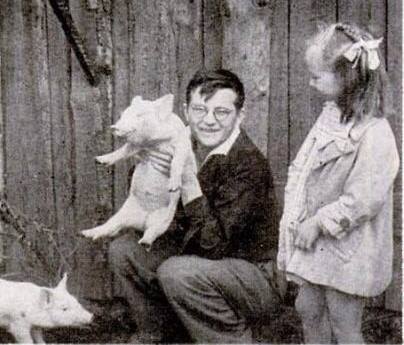
    Not even Shostakovich’s fondness for pigs prepared him for Joseph Stalin.

    This Thursday morning on WPRB, we’ll mark the centenary of the Russian Revolution, with music by composers who attempted to navigate an impossibly perilous course during the Soviet era.

    We’ll hear Reinhold Gliere’s slightly embarrassing propagandistic runaway hit, “The Red Poppy,” in which enlightened Soviet sailors share their revolutionary spirit with oppressed coolies on the docks of Kuomingtang. We’ll also have a symphony by Tikhon Krennikov, who, in his role as Secretary of the Union of Soviet Composers, made life miserable for many of his more talented colleagues, especially Shostakovich, Prokofiev, and Mieczyslaw Weinberg.

    There was scarcely anyone who was left untouched by the culture of fear. Even five-time Stalin Prize winner Nikolai Myaskovsky was condemned by the authorities for writing music of an anti-Soviet, anti-proletarian, and formalist bent. Gavriil Popov was attacked for his forward-looking Symphony No. 1. The experience drove him to alcoholism and relegated his considerable talent to Socialist Realist tub-thumpers.

    Terrified, Prokofiev wrote his cantata “Hail to Stalin,” even as his wife was sent to the Gulag. He would never see her again. Alexander Mosolov, too, spent years in the Gulag, despite his earlier celebrity as one the new regime’s star futurists. Weinberg, a “rootless cosmopolitan” (Soviet speak for Jew), nearly lost his life. He was saved only by Stalin’s fortuitously timed death.

    Among the true curiosities of the morning will be an historic performance of Tchaikovsky’s “1812 Overture,” in which the melody “God Save the Tsar” has been excised and replaced by a politically sanctioned snippet from Glinka’s opera, “Ivan Susanin” (ironically, once known as “A Life for the Tsar”). The performance will be led by the mercurial and magnetic Nikolai Golovanov. Golovanov, one of the most exciting conductors of the 20th century, showed up at the Bolshoi one day to be told he no longer had a job.

    Hey, nobody said the New World Order was going to be easy. We’ll take a look at the public and private lives of the heroes, villains and victims of Soviet music, this Thursday morning from 6 to 11 EST, on WPRB 103.3 FM and wprb.com. It won’t be just the workers who are revolting, on Classic Ross Amico.
  • Classical Music Birthday Bash on WWFM

    Classical Music Birthday Bash on WWFM

    It is quite the day for birthdays! Jean-Philippe Rameau. Dmitri Shostakovich. Glenn Gould. Sir Colin Davis. And those are just the top of the pile. I’ve been wrapping gifts all day. Drop by for some ice cream and cake, metaphorically speaking, from 4 to 7 p.m. EDT, on WWFM – The Classical Network and wwfm.org.


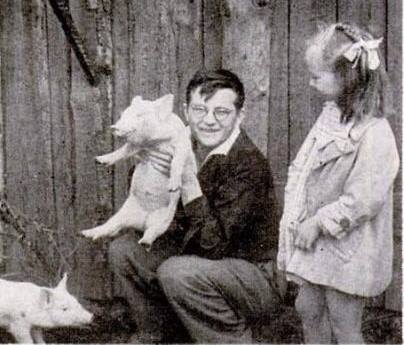
    PHOTO: Shostakovich pigs out on his birthday

  • Shostakovich & Jewish Folk Music

    Shostakovich & Jewish Folk Music

    Wrote Dmitri Shostakovich, “Jewish folk music has made a most powerful impression on me. I never tire of delighting in it; it is multifaceted – it can appear to be happy while it is tragic. It’s almost always laughter through tears…. This quality of Jewish folk music is close to my ideas of what music should be….”

    Keeping that in mind, this week on “Music from Marlboro,” we’ll hear Shostakovich’s song cycle “From Jewish Folk Poetry.” The work was conceived in 1948 at great personal risk to the composer (who, by the way, was not Jewish). Under the Zhdanov decree, Shostakovich had already been denounced for the second time with charges of “formalism” for his alleged embrace of decadent Western tendencies in his music. Furthermore, it was a time of heightened anti-Semitism in the Soviet Union, as Stalin targeted Jewish intellectuals and artists. For these reasons, Shostakovich’s songs were not given their first public performance until 1955, two years after Stalin’s death. The first eight of them were performed at a private birthday celebration at the composer’s home in September of 1948. Shostakovich would incorporate Jewish music, whether as an act of solidarity or a gesture of subversion, in many of his major works.

    “From Jewish Folk Poetry” was toured around the United States by Marlboro musicians in 1968. We’ll hear a 1967 performance from the Marlboro Music Festival, featuring soprano Benita Valente, mezzo-soprano Glenda Maurice, and tenor John Humphrey, with Luis Batlle at the keyboard.

    Then we’ll turn to a String Quintet in A major, by a composer Shostakovich knew very well, Alexander Glazunov. Glazunov, who was director of the Petrograd Conservatory, saw to it that the talented young Shostakovich be allowed to bypass preparatory theoretical courses and enter directly into the conservatory’s composition program. In general, Shostakovich was lukewarm on his mentor’s music, but he had very kind words for the man and expressed admiration for his scherzos.

    The String Quintet is full of serene lyricism, generously melodic and beautiful. We’ll hear it performed at Marlboro in 1982, with Sylvie Gazeu and Ernestine Schor, violins; Toby Hoffman, viola; and Peter Wiley and David Soyer, cellos.

    That’s an hour of music from Russia, with love, on the next “Music from Marlboro,” this Wednesday evening at 6 EDT, on WWFM – The Classical Network and wwfm.org.

    Marlboro School of Music and Festival: Official Page


    PHOTO: Once and future cellists of the Guarneri Quartet (David Soyer passing the bow to former student Peter Wiley in 2001) will be heard in music by Alexander Glazunov on this week’s “Music from Marlboro”

  • PSO Concert Explores Heritage and Identity

    PSO Concert Explores Heritage and Identity

    Four composers featured on the next concert of the Princeton Symphony Orchestra have traveled far, both geographically and genealogically, yet all manage to retain a strong sense of heritage at their core.

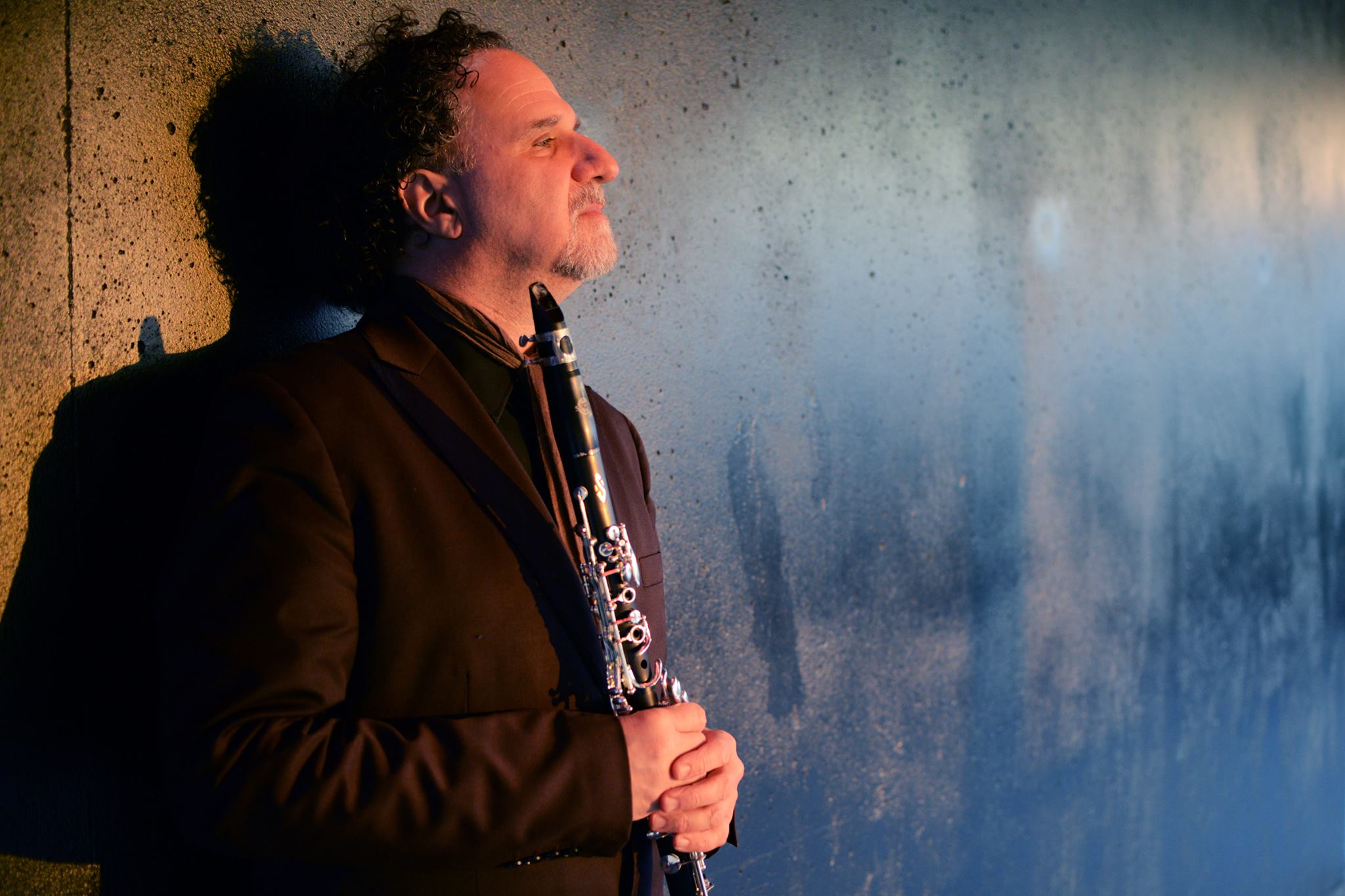
    Celebrated clarinetist David Krakauer will join the PSO and its music director, Rossen Milanov, for a program of music rooted in explorations of personal and cultural identity. The program, “Un/Restrained,” will take place at Princeton University’s Richardson Auditorium this Sunday afternoon at 4:00.

    On the concert will be klezmer-infused works by Krakauer, Osvaldo Golijov and Wlad Marhulets – composer. Saad Haddad, Composer will use live processing of acoustic instruments to suggest the microtonal music of his Arabic past.

    Rounding off the afternoon will be Rudolf Barshai’s arrangement of Dmitri Shostakovich’s String Quartet No. 8 into a Chamber Symphony. Shostakovich’s quartet is deeply personal – intense, harried, neurotic, enigmatic, visceral, and unforgettable. It’s also full of veiled self-references, including allusions to his other works, among them a piano trio that quotes a Jewish folk song.

    Read more about this fascinating program in my article in today’s Trenton Times.

    http://www.nj.com/times-entertainment/index.ssf/2017/01/classical_music_david_krakauer.html

  • Brazilian Music & Shostakovich Leningrad Symphony

    Brazilian Music & Shostakovich Leningrad Symphony

    Boa tarde!

    As we have for the past several weekdays, we’ll be interspersing into our playlist a few works by Brazilian composers and on Brazilian themes, the better to satisfy your musical curiosity, since television coverage of the Olympic Games in Rio cleaves pretty closely to the arenas.

    We’ll also observe the birthday anniversary of Reynaldo Hahn, a figure whose origins were in Venezuela, though he spent much of his creative life in Paris, where he became an exquisite composer of art songs (and the longtime companion of Marcel Proust). Sure, his songs turn up in recitals from time to time, and once in a while you’ll hear his delightful work for winds, harp and piano, “The Ball of Beatrice d’Este,” but we’ll actually get to enjoy his Piano Concerto.

    It’s also the anniversary of the first performance in Leningrad, in 1942, of Shostakovich’s Symphony No. 7, the so-called “Leningrad Symphony,” a work that so embodied the plight of a city under foreign siege that its citizens were both moved to tears and inspired to battle on. The Soviets blared the performance over loud speakers pointed away from the city and toward the German lines, knocking out the Nazi artillery beforehand to ensure the enemy could absorb the defiant work in all its bombastic glory.

    I hope you’ll join me this afternoon on WWFM – The Classical Network and at wwfm.org. I’ll be here in all my bombastic glory until 4:00 EDT.

Tag Cloud

Aaron Copland (92) Beethoven (95) Composer (114) Film Music (120) Film Score (143) Film Scores (255) Halloween (94) John Williams (185) KWAX (229) Leonard Bernstein (100) Marlboro Music Festival (125) Movie Music (135) Opera (198) Philadelphia Orchestra (88) Picture Perfect (174) Princeton Symphony Orchestra (106) Radio (87) Ralph Vaughan Williams (85) Ross Amico (244) Roy's Tie-Dye Sci-Fi Corner (290) The Classical Network (101) The Lost Chord (268) Vaughan Williams (103) WPRB (396) WWFM (881)

DON’T MISS A BEAT

Receive a weekly digest every Sunday at noon by signing up here


RECENT POSTS