Tag: Shostakovich

  • Shostakovich & Jewish Folk Song at Marlboro

    Shostakovich & Jewish Folk Song at Marlboro

    Wrote Dmitri Shostakovich, “Jewish folk music has made a most powerful impression on me. I never tire of delighting in it; it is multifaceted – it can appear to be happy while it is tragic. It’s almost always laughter through tears…. This quality of Jewish folk music is close to my ideas of what music should be….”

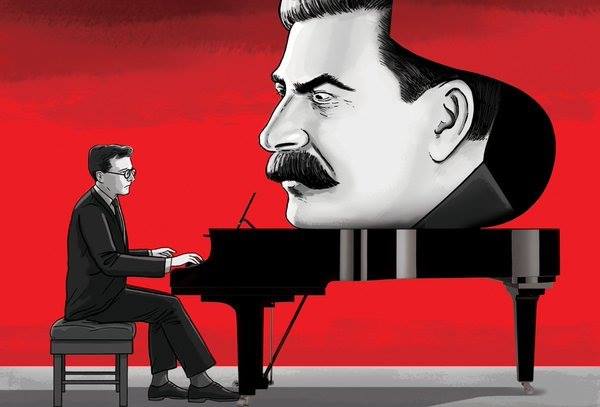
    Keeping that in mind, this week on “Music from Marlboro,” we’ll hear Shostakovich’s song cycle “From Jewish Folk Poetry.” The work was conceived in 1948 at great personal risk to the composer (who, by the way, was not Jewish). Under the Zhdanov decree, Shostakovich had already been denounced for the second time with charges of “formalism” for his alleged embrace of decadent Western tendencies in his music. Furthermore, it was a time of heightened anti-Semitism in the Soviet Union, as Stalin targeted Jewish intellectuals and artists.

    For these reasons, Shostakovich’s songs were not given their first public performance until 1955, two years after Stalin’s death. The first eight of them were performed at a private birthday celebration at the composer’s home in September of 1948. Shostakovich would incorporate Jewish music, whether as an act of solidarity or a gesture of subversion, in many of his major works.

    “From Jewish Folk Poetry” was toured around the United States by Marlboro musicians in 1968. We’ll hear a 1967 performance from the Marlboro Music Festival, featuring soprano Benita Valente, mezzo-soprano Glenda Maurice, and tenor John Humphrey, with Luis Batlle at the keyboard.

    Then we’ll turn to a String Quintet in A major, by a composer Shostakovich knew very well, Alexander Glazunov. Glazunov, who was director of the Petrograd Conservatory, saw to it that the talented young Shostakovich be allowed to bypass preparatory theoretical courses and enter directly into the conservatory’s composition program. In general, Shostakovich was lukewarm on his mentor’s music, but he had very kind words for the man and expressed admiration for his scherzos.

    The String Quintet is full of serene lyricism, generously melodic and beautiful. We’ll hear it performed at Marlboro in 1982, by violinists Sylvie Gazeu and Ernestine Schor, violist Toby Hoffman, and once-and-future cellists of the Guarneri Quartet, David Soyer and Peter Wiley.

    That’s an hour of music from Russia, with love, on the next “Music from Marlboro,” this Wednesday evening at 6:00 EDT, on WWFM – The Classical Network and wwfm.org.

    Marlboro School of Music and Festival: Official Page
  • Shostakovich’s Lost Impromptu Rediscovered

    Shostakovich’s Lost Impromptu Rediscovered

    A lost impromptu by Dmitri Shostakovich was recently rediscovered in Moscow’s Central State Archive, among the papers of Vadim Borisovsky.

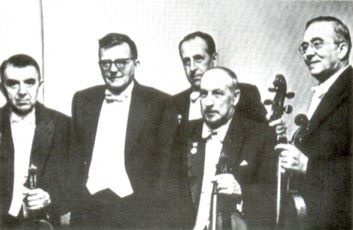
    Borisovsky was violist in the Beethoven Quartet. The quartet, made up of graduates of the Moscow Conservatory, was founded in the mid-‘20s and played together for half a century. The ensemble gave first performances of thirteen of Shostakovich’s fifteen string quartets (Nos. 2 through 14). The third and fifth quartets were dedicated to the group, and Nos.11 through 14 to its individual members (No. 13 to Borisovsky himself). Shostakovich joined the quartet, at the keyboard, for the first performance of his Piano Quintet. He also played with quartet members at the premiere of his Piano Trio No. 2. Borisovsky died in 1972. He taught at the conservatory since the 1920s.

    The impromptu – formally titled Impromptu, op. 33 – is a beautiful little piece. It is believed to have been written in one sitting in 1931. It is only the second known work written by Shostakovich to highlight the viola. The other is the Viola Sonata, Op. 147, of 1975, which has become a viola standard.

    The discovery was announced on September 25, the composer’s birthday, but to my knowledge this is the first time a performance has been posted online. Listen to the “new” impromptu here, played by Paul Neubauer and Wu Han:

    https://www.thestrad.com/artists/newly-discovered-viola-impromptu-by-shostakovich-performed-by-paul-neubauer/8038.article


    PHOTO: Shostakovich (second from left) with the Beethoven Quartet. Borisovsky is on the far right.

  • Rediscovering Glazunov: From Sheepishness to Serenity

    Rediscovering Glazunov: From Sheepishness to Serenity

    Alexander Glazunov was always one of those composers I felt kind of sheepish about liking. I remember sitting at a listening bar at a used record shop in Philadelphia and asking to preview a recording of Glazunov’s ballet music. “I know I’m not supposed to like this stuff,” I commented, almost apologetically.

    Admittedly, at the time, other than the Violin Concerto, I didn’t really know a lot of great recordings of his music. I found the Marco Polo releases I had heard, with the Hong Kong Philharmonic, to be underwhelming, and these prejudiced me against the composer for years. But Neeme Järvi’s performances on Chandos were a revelation. Then of course I eventually got my hands on the Melodiya issues with Gennadi Rozhdestvensky and Evgeny Svetlanov.

    Okay, so Glazunov isn’t Beethoven. Who is? But at his best, his music is well-crafted, attractive (to me, anyway), and marked by an abundance of memorable melodies that would make any honest composer jealous.

    Join me on this week’s “Music from Marlboro” in enjoying Glazunov’s String Quintet in A major (1891). The work is full of serene lyricism, generously melodic and beautiful. We’ll hear it performed at the Marlboro Music Festival in 1982 by violinists Sylvie Gazeau and Ernestine Schor, violist Toby Hoffman, and once-and-future cellists of the Guarneri Quartet, David Soyer and Peter Wiley.

    Above and beyond his own merits as a composer, Glazunov had an eye for developing young talent. In the capacity of director of the Petrograd Conservatory, Glazunov saw to it that a young Dmitri Shostakovich be allowed to bypass preparatory theoretical courses and enter directly into the conservatory’s composition program. In general, Shostakovich was lukewarm on his mentor’s music, but he had very kind words for the man and expressed admiration for his scherzos.

    We’ll preface Glazunov’s Quintet with Shostakovich’s String Quartet No. 4 in D major (1949). Shostakovich’s quartet grew out of a newfound confidence on the part of the composer as a result of Stalin personally selecting him as a cultural ambassador to the West. Shostakovich persuaded Stalin that if that were going to be the case, then perhaps it would be a good idea to lift the ban on Soviet performances of his music. Otherwise, it might look a little peculiar to outsiders.

    Papa Joe agreed, and Shostakovich promptly embarked on his new quartet, which he loaded up with Jewish folk songs and all sorts of things that had a history of angering the “wise leader and teacher.” Fortunately for Shostakovich, who had walked a very precarious line with the authorities, his friends persuaded him not to allow the work to be performed publicly, and the composer put it in a drawer for another day.

    That other day is now, and we’ll hear it played by violinists Sylvie Gazeau and Yuzuko Horigome, violist Philipp Naegele, and cellist Robie Brown Dan, at Marlboro in 1983.

    Sylvie Gazeau does double duty in music by Shostakovich and Glazunov, on this week’s “Music from Marlboro,” Wednesday evening at 6:00 EDT, on WWFM – The Classical Network and wwfm.org.

    Marlboro School of Music and Festival: Official Page
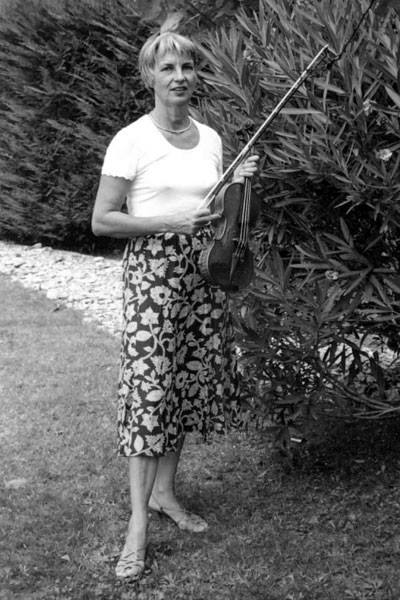

    PHOTOS (Clockwise from left): Gazeau, Glazunov, and Shostakovich

  • Russian Revolution Music on WPRB

    Russian Revolution Music on WPRB

    Attention, comrades!

    This Thursday morning on WPRB, we mark the centenary of the Russian Revolution with music by heroes, villains and victims of the mercurial Soviet system.

    Dmitri Shostakovich, Sergei Prokofiev, Aram Khachaturian, Nikolai Myaskovsky, Vissarion Shebalin, Gavriil Popov, Alexander Mosolov, Mieczyslaw Weinberg, and Alfred Schnittke – none of them escaped censure, even as they were held up to the West as superior artists. We’ll hear a mix of their music, along with that of one of their primary antagonists, Tikhon Krennikov, who, in his role as Secretary of the Union of Soviet Composers, was responsible for much suffering.

    The threat of imprisonment or even death hung over many of them, as they struggled to create great art in an environment of confusion and fear.

    What a revolting development! We remember the Russian Revolution this Thursday morning from 6 to 11 EST, on WPRB 103.3 FM and wprb.com. Wakers of the world unite, on Classic Ross Amico!

  • Soviet Composers Under Stalin’s Shadow

    Soviet Composers Under Stalin’s Shadow

    Not even Shostakovich’s fondness for pigs prepared him for Joseph Stalin.

    This Thursday morning on WPRB, we’ll mark the centenary of the Russian Revolution, with music by composers who attempted to navigate an impossibly perilous course during the Soviet era.

    We’ll hear Reinhold Gliere’s slightly embarrassing propagandistic runaway hit, “The Red Poppy,” in which enlightened Soviet sailors share their revolutionary spirit with oppressed coolies on the docks of Kuomingtang. We’ll also have a symphony by Tikhon Krennikov, who, in his role as Secretary of the Union of Soviet Composers, made life miserable for many of his more talented colleagues, especially Shostakovich, Prokofiev, and Mieczyslaw Weinberg.

    There was scarcely anyone who was left untouched by the culture of fear. Even five-time Stalin Prize winner Nikolai Myaskovsky was condemned by the authorities for writing music of an anti-Soviet, anti-proletarian, and formalist bent. Gavriil Popov was attacked for his forward-looking Symphony No. 1. The experience drove him to alcoholism and relegated his considerable talent to Socialist Realist tub-thumpers.

    Terrified, Prokofiev wrote his cantata “Hail to Stalin,” even as his wife was sent to the Gulag. He would never see her again. Alexander Mosolov, too, spent years in the Gulag, despite his earlier celebrity as one the new regime’s star futurists. Weinberg, a “rootless cosmopolitan” (Soviet speak for Jew), nearly lost his life. He was saved only by Stalin’s fortuitously timed death.

    Among the true curiosities of the morning will be an historic performance of Tchaikovsky’s “1812 Overture,” in which the melody “God Save the Tsar” has been excised and replaced by a politically sanctioned snippet from Glinka’s opera, “Ivan Susanin” (ironically, once known as “A Life for the Tsar”). The performance will be led by the mercurial and magnetic Nikolai Golovanov. Golovanov, one of the most exciting conductors of the 20th century, showed up at the Bolshoi one day to be told he no longer had a job.

    Hey, nobody said the New World Order was going to be easy. We’ll take a look at the public and private lives of the heroes, villains and victims of Soviet music, this Thursday morning from 6 to 11 EST, on WPRB 103.3 FM and wprb.com. It won’t be just the workers who are revolting, on Classic Ross Amico.

Tag Cloud

Aaron Copland (92) Beethoven (95) Composer (114) Film Music (120) Film Score (143) Film Scores (255) Halloween (94) John Williams (185) KWAX (229) Leonard Bernstein (100) Marlboro Music Festival (125) Movie Music (135) Opera (198) Philadelphia Orchestra (88) Picture Perfect (174) Princeton Symphony Orchestra (106) Radio (87) Ralph Vaughan Williams (85) Ross Amico (244) Roy's Tie-Dye Sci-Fi Corner (290) The Classical Network (101) The Lost Chord (268) Vaughan Williams (103) WPRB (396) WWFM (881)

DON’T MISS A BEAT

Receive a weekly digest every Sunday at noon by signing up here


RECENT POSTS