Tag: Shostakovich

  • Shostakovich Parties Webcast and Oscar Fun

    Shostakovich Parties Webcast and Oscar Fun

    The second volume of my Shostakovich plays Shostakovich series, “Black and White and Red Redux,” is now posted as a webcast.

    https://www.wwfm.org/post/lost-chord-february-9-black-and-white-and-red-redux

    And of the course, the three-hour “Picture Perfect” Oscar Party has been up since Friday.

    https://www.wwfm.org/post/picture-perfect-february-7-oscar-party-2020#stream/0

    Nobody loves a party like Shostakovich.


    In America, you go to party… In Soviet Russia, party comes to you!

  • Shostakovich Plays Shostakovich

    Shostakovich Plays Shostakovich

    Last week, in promoting “The Lost Chord,” I wound up executing a shameless bait-and-switch, tying Shostakovich to the Super Bowl by emphasizing his rabid enthusiasm for football (albeit of the international variety).

    This week, I contemplate a sequel. To coincide with the Academy Awards, I could just as easily spin the composer’s ties to the cinema, first as a house pianist who eked out a living with his improvisations, then later as a composer of over two dozen original film scores.

    Admittedly, both of these angles, football and the movies, would make for interesting shows in themselves. Unfortunately, neither topic has anything to do with tonight’s program.

    Rather the focus, once again, will be on a 5-CD boxed set, “Shostakovich Plays Shostakovich,” issued on the Melodiya label, made up of Russian state recordings set down largely between 1946 and 1958, with the composer at the keyboard.

    As I mentioned the last time, Shostakovich was a fabulous pianist, who began serious studies at the age of 9. He continued, formally, at the Petrograd Conservatory, upon his acceptance there, at the age of 13. Once he began to receive international attention for his original compositions, for works such as his Symphony No. 1, written when he was only 19, his principal focus began to shift. He did, however, continue to perform and record his own music.

    The documents in this box are riveting, not only for the musicianship they enshrine, but also because of their biographical fascination and their sense of history.

    By way of example, we’ll hear a harrowing account of the Piano Trio No. 2 in E minor. Given its premiere only months after the liberation of Leningrad, the trio predates Shostakovich’s String Quartet No. 8. Both share in common a kind of inexorable, klezmer-inflected danse macabre.

    Shostakovich always felt a special kinship with the Jewish people. Furthermore, the trio is dedicated to his friend, Ivan Sollertinsky, artistic director of the Leningrad Philharmonic, who was an enthusiast of the music of Gustav Mahler. Sollertinsky died of a heart attack in Siberia, following his evacuation during the Siege of Leningrad.

    In 1947, Shostakovich sat down in front of the microphones to record the work, with violinist David Oistrakh and cellist Miloš Sádlo.

    On a lighter note, “Children’s Notebook” is a collection of trifles (March, Waltz, Sad Tale, Merry Tale, The Bear, The Clockwork Doll, and Birthday). However, they certainly take on added interest when introduced by the composer, as they will be tonight.

    The hour will open with the Concertino for Two Pianos – performed by Shostakovich and his son, Maxim – and conclude with the Piano Concerto No. 2, written for Maxim’s 19th birthday. Maxim introduced the concerto at his graduation from the Moscow Conservatory. Here, Shostakovich himself performs at the conservatory’s Grand Hall, at fever pitch, with the Moscow Radio Symphony conducted by Alexander Gauk.

    In America, artists play with authority. In Soviet Russia, authorities play with you! Shostakovich gets all keyed up, on “Black and White and Red Redux,” this Sunday night at 10:00 EST, on WWFM – The Classical Network and wwfm.org.
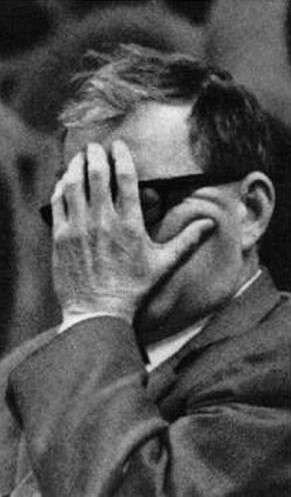
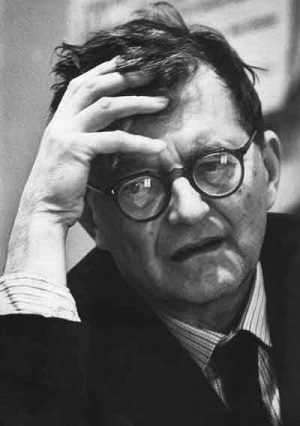
  • Shostakovich McQueen Webcasts Are Here

    Shostakovich McQueen Webcasts Are Here

    My weekend shows, “Bustin’ Out of the Joint” (on “Picture Perfect”) and “Black and White and Red All Over” (on “The Lost Chord”), are now posted as webcasts. Not bad! Only four hours late this time.

    At any rate, if you missed the Shostakovich show because of the Super Bowl, or can’t get enough of Steve McQueen jumping over barbed wire on a motorcycle, you’ve just been handed a gift. Or a file baked in a cake. Select the show you want, and click on the “Listen” button.

    Picture Perfect:

    https://www.wwfm.org/programs/picture-perfect-ross-amico

    The Lost Chord:

    https://www.wwfm.org/programs/lost-chord-ross-amico

  • Shostakovich: Football, Stalin & Piano

    Shostakovich: Football, Stalin & Piano

    Of the great composers, none enjoyed football more than Dmitri Shostakovich. Russian football, that is. On one occasion he even invited the entire Leningrad Dynamo over to his apartment for dinner.

    This Sunday night on “The Lost Chord,” following the Super Bowl, tune in for selections from a 5-CD boxed set, on the Melodiya label, of Russian state recordings of Shostakovich performing his own music.

    Admittedly, emphasizing Shostakovich’s rabid enthusiasm for football is something of a bait-and-switch. The show just happens to air on Super Sunday and has nothing at all to do with the sport. However, Shostakovich really did love football (i.e. soccer) and all kinds of sports and games of chance. You can read more about it by following this link.

    https://www.themoscowtimes.com/2019/08/18/dmitri-shostakovich-football-fanatic-a66908

    Concerning the show itself, Shostakovich was a fabulous pianist, who, early on, eked out a living with his improvisations at a local cinema. He began serious studies at the age of 9, and continued, formally, at the Petrograd Conservatory, upon his acceptance there, at the age of 13. Once he began to receive international attention for his original compositions, for works such as his Symphony No. 1, written when he was only 19, his principal focus began to shift. He did, however, continue to perform and record his own music.

    The documents in this Melodiya set, “Shostakovich Plays Shostakovich,” are riveting, not only for the musicianship they enshrine, but also on account of their biographical fascination and their sense of history.

    Perhaps no Shostakovich recording is imbued with a greater sense of time and place than a 1954 performance of his Symphony No. 10. An arrangement, for piano four-hands, was played by the composer at his apartment with his close friend and neighbor Mieczyslaw Weinberg.

    Weinberg found himself in a very precarious situation only the year before. He was arrested on a charge of “Jewish bourgeois nationalism,” in connection with the so-called Doctor’s Plot, at the command of Stalin himself, on the pretense that Jewish doctors were planning to assassinate Soviet officials. Weinberg’s father-in-law had been implicated, and killed. Shostakovich attempted to intercede on his friend’s behalf, but it was only with the sudden and fortuitous death of Stalin in 1953 that Weinberg was officially rehabilitated, and released.

    In a piece of living history, these two artists sit down to perform on Shostakovich’s home piano. This is music that was claimed, in Solomon Volkov’s “Testimony,” Shostakovich’s alleged memoir, to be about Stalin and the Stalin years.

    The pianos used in some of these recordings may be a little rough around the edges, but they only lend to the neurotic intensity of the music-making. It’s also a kind of window into what it must have been like to have been a musician in Soviet Russia, between 1946 and 1958, commandeering whatever means of expression you could lay your hands on.

    I hope you’ll join me for “Black and White and Red All Over.” Shostakovich tickles the keys, this Sunday night at 10:00 EST, on WWFM – The Classical Network and wwfm.org.
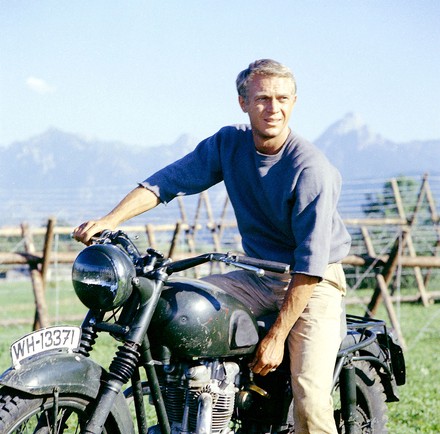

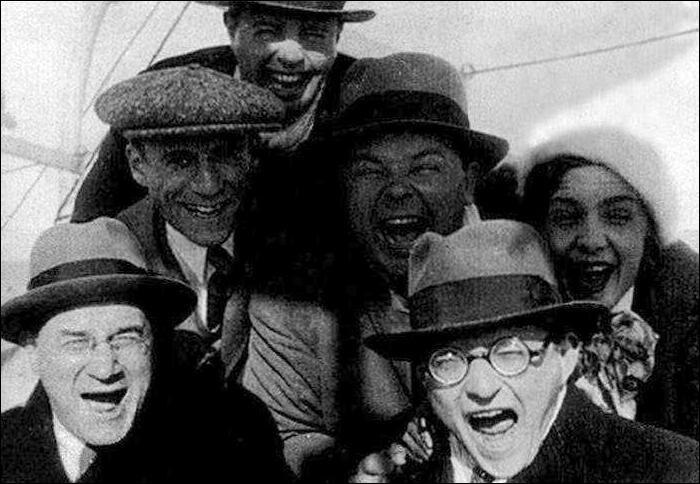
    PHOTO: Shostakovich (lower right), with fellow Soviet football fans

  • Classical Birthdays & Women Composers

    Classical Birthdays & Women Composers

    The birthdays are thick on the ground today, like so many autumn leaves.

    I hope you’ll join me as I celebrate the artistry of composers Jean-Philippe Rameau, Dmitri Shostakovich, and Eugen Suchon, pianist Glenn Gould, conductor Sir Colin Davis, and flutist Eugenia Zukerman, among others.

    I’ll also highlight a few more works by women composers in this month in which we observe the Clara Schumann bicentennial. Tune in today to hear music by Amy Beach, Vítězslava Kaprálová, and Lera Auerbach.

    Then it’s more Shostakovich on “Music from Marlboro.” We’ll take in one of his string quartets, alongside a piano trio by Anton Arensky, at 6 p.m.

    Grab a rake and let’s get busy. I’ll be dispensing the hard cider from 4 to 7 p.m. EDT, on WWFM – The Classical Network and wwfm.org.
Tag Cloud

Aaron Copland (92) Beethoven (95) Composer (114) Film Music (120) Film Score (143) Film Scores (255) Halloween (94) John Williams (185) KWAX (229) Leonard Bernstein (100) Marlboro Music Festival (125) Movie Music (135) Opera (198) Philadelphia Orchestra (88) Picture Perfect (174) Princeton Symphony Orchestra (106) Radio (87) Ralph Vaughan Williams (85) Ross Amico (244) Roy's Tie-Dye Sci-Fi Corner (290) The Classical Network (101) The Lost Chord (268) Vaughan Williams (103) WPRB (396) WWFM (881)

DON’T MISS A BEAT

Receive a weekly digest every Sunday at noon by signing up here


RECENT POSTS