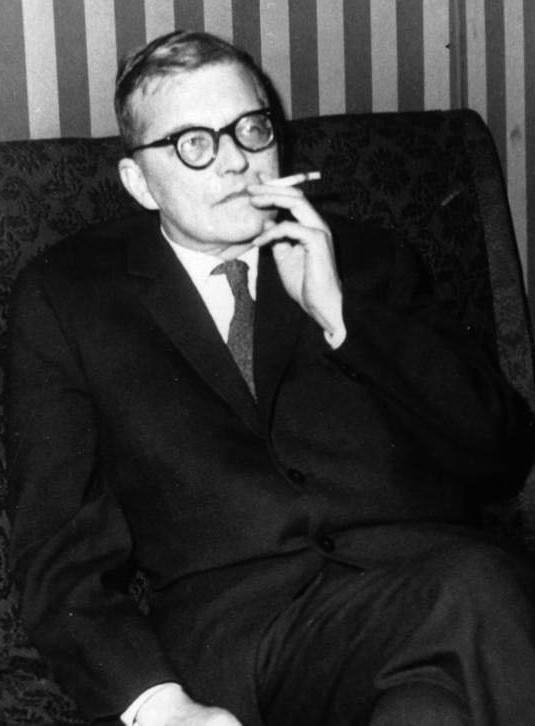
Tag: Shostakovich

  • Shostakovich’s Birthday Marlboro Music

    Shostakovich’s Birthday Marlboro Music

    Hey, Dmitri! Happy birthday!

    Oh, okay. Act like you don’t know me then. I understand. In Stalinest Russia, one can never be too careful.

    We’ll divine what we can from your String Quartet No. 4 on this week’s “Music from Marlboro.”

    While Shostakovich had an on-again, off-again history with the Soviet authorities that made him justifiably cautious, his fourth quartet grew out of a newfound confidence, the result of Stalin having personally selected him as a cultural ambassador to the West.

    But these things had to be navigated very carefully. A sign of favoritism from Papa Joe often had the effect of setting a recipient up for a very big fall.

    Still, Shostakovich was determined to leverage his new-found currency. He took the opportunity to persuade Stalin that if he were going to be sent out into the decadent West, then perhaps it would be a good idea to lift the ban on performances of his music at home. Otherwise, the situation might appear a little peculiar to outsiders. Stalin recognized the logic in this, and Shostakovich was rehabilitated.

    He was not by any measure a stupid man. Yet the artistic impulse was not to be denied. Shostakovich wasted no time in embarking on a new string quartet, which he loaded up with inscrutable subtexts, Jewish folk songs, and all sorts of things that had a history of angering the “wise leader and teacher.” Fortunately for the composer, his friends convinced him not to allow the work to be performed publicly, and he put it in a drawer for another day.

    That other day is now. We’ll hear it played at the 1983 Marlboro Music Festival by violinists Sylvie Gazeau and Yuzuko Horigome, violist Philipp Naegele, and cellist Robie Brown Dan.

    Anton Arensky was a pupil of that icon of Russian nationalism, Nikolai Rimsky-Korsakov. However, in his music, he tended to gravitate more toward the cosmopolitan approach of Rimsky’s rival, Peter Ilych Tchaikovsky. Arensky’s Piano Trio in D minor is full of good tunes, by turns melancholy, turbulent, reflective, and good humored, but unfailingly charming. It’s the kind of piece that will have you humming for the rest of the day.

    We’ll hear it performed by pianist Frederick Moyer, violinist Isodore Cohen, and cellist John Sharp, at Marlboro in 1982.

    It’s a cryptic birthday cake for Shostakovich, with a strong cup of open-hearted Arensky. The composer is gifted in more ways than one, on the next “Music from Marlboro,” this Wednesday evening at 6:00 EDT, on WWFM – The Classical Network and wwfm.org.


    Marlboro School of Music and Festival: Official Page
  • Khrennikov Shostakovich and Soviet Power

    Khrennikov Shostakovich and Soviet Power

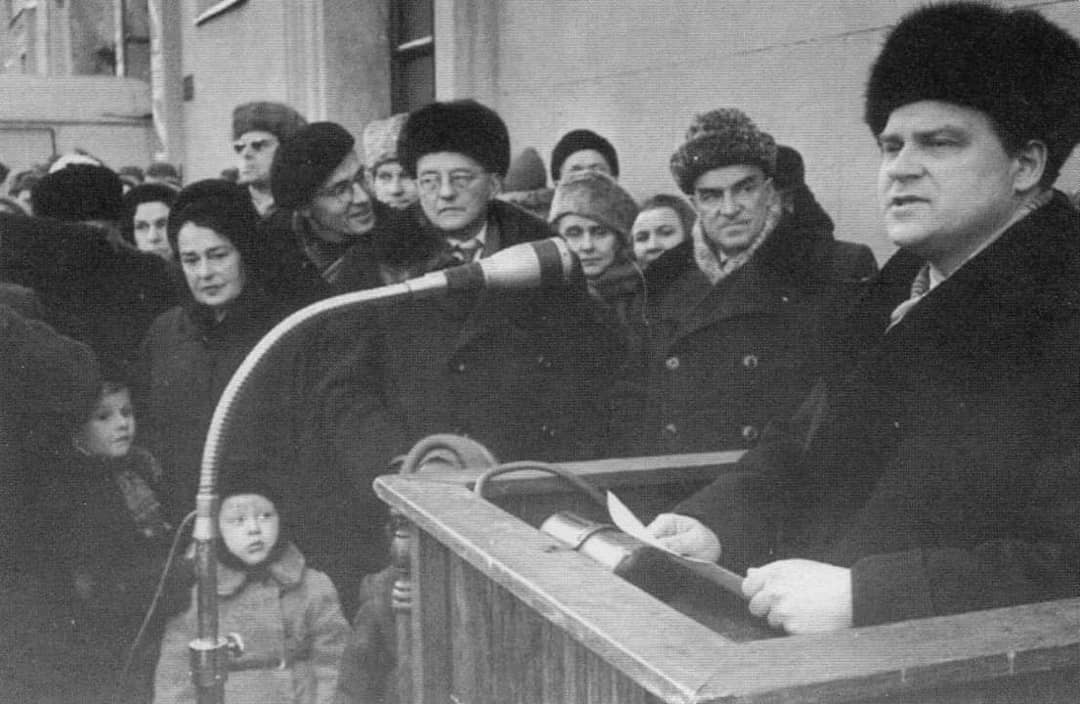
    Tikhon Khrennikov, in his role as Secretary of the Union of Soviet Composers, made life miserable for many of his more talented colleagues, especially Dmitri Shostakovich, Sergei Prokofiev, and Mieczyslaw Weinberg. In fact, cellist Mstislav Rostropovich, who was a big man, once stormed into Khrennikov’s office and gave him a good shaking by his lapels for being such an A-one a-hole.

    But Khrennikov was also one of the great survivors. Following the death of Stalin in 1953, he managed to ride out each successive regime for four more decades, holding on to his influential post until the collapse of the Soviet Union.

    There were some who claimed that Khrennikov was actually quite the sensitive fellow, who used his influence to quietly protect some of his more vulnerable colleagues. Whether or not that is true, I cannot say. He was a controversial figure, no doubt.

    Just because Khrennikov was an artist doesn’t mean he was a nice person. All the same, I hope you’ll join me as I sample some of his music this afternoon, alongside that of his fellow birthday celebrants Heinrich von Herzogenberg and Frederick Loewe.

    We’ll be seeing Red, between 4 and 7 p.m. EDT, on WWFM – The Classical Network and wwfm.org.


    PHOTO: Khrennikov talks; Shostakovich listens

  • Shostakovich’s Misery Marlboro’s Joy

    Shostakovich’s Misery Marlboro’s Joy

    Dmitri? DMITRI! Pull yourself together. Don’t look so miserable.

    This week on “Music from Marlboro,” we’ll be featuring your Piano Trio No. 2 in E minor. Sure, it’s dedicated to Ivan Sollertinsky, a close friend of yours who died an untimely death, and it was given its premiere in Leningrad in 1944, not the cheeriest place in the months following a years-long siege that killed probably a million and a half people, maybe two, created subhuman conditions, and instilled unfathomable desperation in the populace.

    This is the piece that lent your String Quartet No. 8 its inexorable, klezmer-influenced “danse macabre.” After all, among Sollertinsky’s many other talents and enthusiasms – as a musicologist, a critic, a linguist, a professor, and the artistic director of the Leningrad Philharmonic – he was an ardent enthusiast of the music of Gustav Mahler. Sollertinsky had been evacuated during the siege. Unfortunately, he died suddenly of a heart attack in Siberia at the age of 41.

    With Sollertinsky’s death, the barricades of misery were shattered, and you mourned as only you could. It’s not exactly uplifting music, but boy does it make an impression.

    We’ll hear it performed at the 2011 Marlboro Music Festival by pianist Bruno Canino, violinist Ying Fu, and cellist Matthew Zalkind.

    Then Alexander Glazunov – representative of an earlier generation, oblivious, and perhaps not entirely sober – will clear the air with his String Quintet in A major. Glazunov knew you well, did he not? As director of the Petrograd Conservatory, he saw to it that you were allowed to bypass preparatory theoretical courses and enter directly into the conservatory’s composition program.

    What a nice guy! Too bad you were lukewarm on his music. But you did have kind things to say about the man, and even opined that his scherzos weren’t too bad.

    Glazunov’s quintet is full of serene lyricism, generously melodic and quite beautiful. Then again, Glazunov never had to worry about Nazis and probably never had to eat anyone to survive. We’ll hear it performed at Marlboro in 1982, with violinists Sylvie Gazeau and Ernestine Schor, violist Toby Hoffman, and one-and-future cellists of the Guarneri Quartet, David Soyer and Peter Wiley.

    That’s a dazed piano trio, with a glaze of Glazunov, on the next “Music from Marlboro,” this Wednesday evening at 6:00 EDT, on WWFM – The Classical Network and wwfm.org.

    RAINY DAY ACTIVITY: Post your most miserable photo of Shostakovich in the comments section below.

    Marlboro School of Music and Festival: Official Page
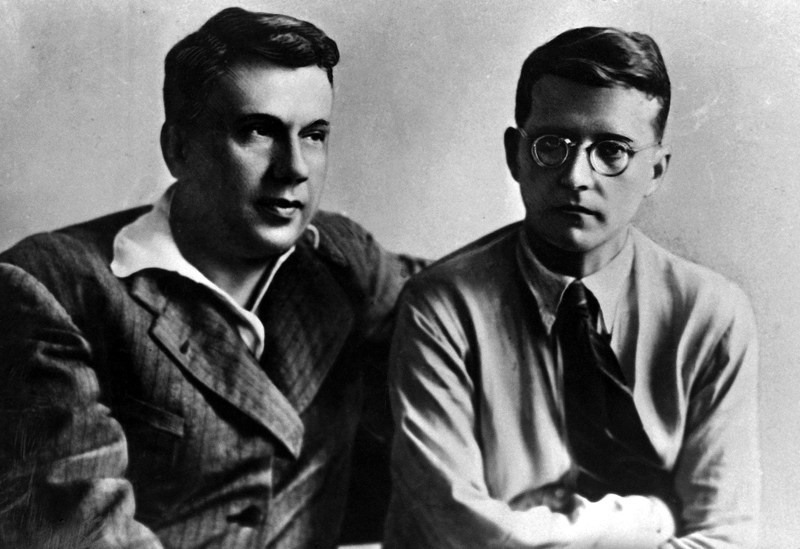

    PHOTOS: Sollertinsky (upper left) and the many moods of Shostakovich

  • Shostakovich Birthday Broadcast on WWFM

    Shostakovich Birthday Broadcast on WWFM

    At last! The day is upon us!

    We’ll light 112 candles for Dmitri Shostakovich for his birthday. I thought I’d announce the plan right up front, since, understandably, Shostakovich didn’t care much for surprises.

    We’ll hear the Symphony No. 10 in one of the most acclaimed Shostakovich recordings of recent years, with the Boston Symphony Orchestra conducted by Andris Nelsons. That’s the one with the harrowing Stalin scherzo. Shostakovich is said to have written the symphony following the wise leader and teacher’s death. It was Shostakovich’s first symphony to be composed since his second denunciation in 1948. He had been accused, alongside Prokofiev and Khachaturian, under the Zhdanov decree of promoting “formalism” – decadent Western tendencies – in his music, a serious business. People had disappeared for less.

    According to the book “Testimony,” alleged to have been taken down from Shostakovich’s own observations by the musicologist Solomon Volkov, the Symphony No. 10 is “about Stalin and the Stalin years. The second part, the scherzo, is a musical portrait of Stalin, roughly speaking. Of course, there are other things in it, but that’s the basis.”

    Also encoded, in the symphony’s third movement, is the composer’s famous signature, DSCH, which appears alongside one meant to suggest his student, Elmira Nazirova (E La Mi Re A), with whom Shostakovich was in love. The themes alternate and draw gradually closer.

    The authenticity of “Testimony” as an official memoir has been much disputed. Though some of the details may have been fabricated, it does seem to add up to a larger truth. We’ll hear Shostakovich’s symphony at 2:00.

    First, it’s another Noontime Concert from Gotham Early Music Scene, or GEMS, and it’s an unusual one. Douglas Lundeen, principal horn of the Princeton Symphony Orchestra and an associate professor at Rutgers University, will push the outer limits of GEMS’ traditional area of focus (i.e. Early Music) to present works from the 19th and 20th centuries performed on a French piston horn. Composers will include Robert Planel, Henri Tomasi, Eugene Bozza, Charles Gounod, and Paul Dukas. The concert took place at St. Bartholomew’s Church, 50th Street and Park Avenue, in New York City. GEMS’ free lunchtime concerts series is offered on Thursdays at 1:15 p.m. To learn more, visit gemsny.org.

    Lundeen’s program reflects that of his new release, “Le cor francais authentique (The Truly French Horn),” issued on the Affetto Records label. Affetto is the Princeton-based company founded by engineer John C. Baker. Baker handles the audio for many of the broadcast concerts heard on WWFM. Lundeen’s album was recorded at All Saints’ Church, Princeton.

    The 1:00 hour will be devoted to further releases on Affetto. We’ll decompress from the intensity of the Shostakovich at 3:00 with ballet music by a composer who helped him greatly, Alexander Glazunov.

    Happy birthday, Shostakovich! We’ll help ourselves to a stimulating variety of great music, from 12 to 4 p.m. EDT, on WWFM – The Classical Network and wwfm.org.


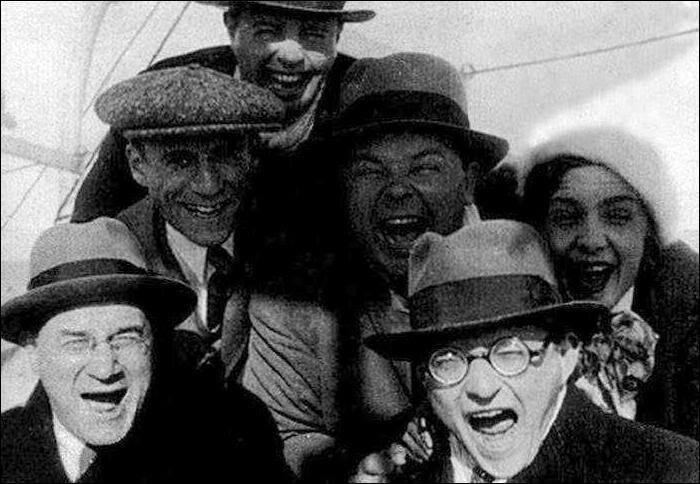
    The many moods of Shostakovich

  • Shostakovich Rocks! Young Musicians Reimagine Classics

    Shostakovich Rocks! Young Musicians Reimagine Classics

    The next time you despair of young people losing touch with classical music, please consider the following. Three days in advance of Dmitri Shostakovich’s birthday (on September 25), here are a few links to some incredible videos, which apparently have been in circulation, but I only just came across them the other day.

    Connor Gallagher is a composer, conductor, and arranger with lots of genre-hopping experience between the worlds of classical, jazz, and heavy metal. Here is his virtuosic take on the second movement from Shostakovich’s Symphony No. 10.

    And the second movement of the String Quartet No. 8.

    Similarly, Joe Parrish, of the progressive rock band Oraton, devotes an awful lot of time to electric guitar overdubs of classical masterworks. His rendition of the first movement from Shostakovich’s Piano Concerto No. 2 is a knockout.

    Apparently the guitarists are hitting their marks, with enthusiastic feedback from young metal heads side by side with that of seasoned classical collectors in their 70s. Search for these guys on YouTube and prepare to be awed.


    A delighted Shostakovich rocks out (bottom right)

Tag Cloud

Aaron Copland (92) Beethoven (95) Composer (114) Film Music (120) Film Score (143) Film Scores (255) Halloween (94) John Williams (185) KWAX (229) Leonard Bernstein (100) Marlboro Music Festival (125) Movie Music (135) Opera (198) Philadelphia Orchestra (88) Picture Perfect (174) Princeton Symphony Orchestra (106) Radio (87) Ralph Vaughan Williams (85) Ross Amico (244) Roy's Tie-Dye Sci-Fi Corner (290) The Classical Network (101) The Lost Chord (268) Vaughan Williams (103) WPRB (396) WWFM (881)

DON’T MISS A BEAT

Receive a weekly digest every Sunday at noon by signing up here


RECENT POSTS