Tag: St John’s Eve

  • Disney’s “Fantasia” Wrong About Walpurgis Night

    Disney’s “Fantasia” Wrong About Walpurgis Night

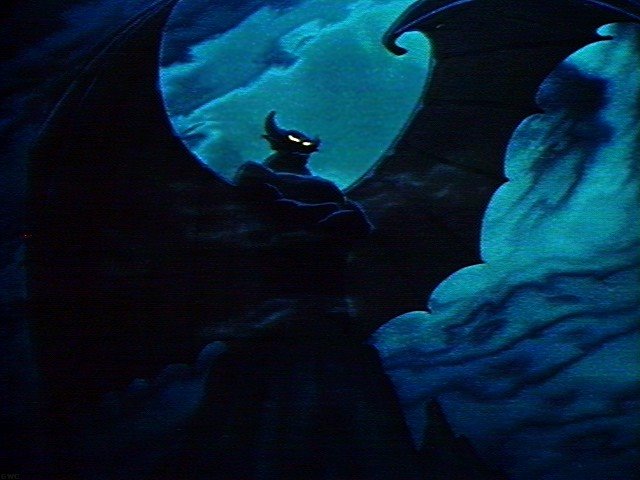
    In Walt Disney’s “Fantasia,” the narrator, Deems Taylor, sets the film’s childhood-scarring climax on Walpurgis Night. Deems Taylor was wrong!

    It’s actually tonight, St. John’s Eve, that the Slavic demon Chernobog emerges from the “Bare Mountain” (the translation preferred by Leopold Stokowski). For sure, there should be plenty of nudity on a good old-fashioned St. John’s Eve. And Disney obliges with bare-breasted harpies!

    St. John’s Day holds a place on the Christian calendar akin to that of Christmas, in that it coincides, roughly (thanks to miscalculation by the Romans), with solstice time. For the pagan North, summer began on May Day. Midsummer was originally a pagan festival, which was co-opted by the Church into the observance of the birth of John the Baptist, which St. Luke implies took place six months before that of Jesus.

    So while the actual summer solstice might occur anytime between June 20 and June 22, depending on the year, June 24 was designated the Feast Day of St. John.

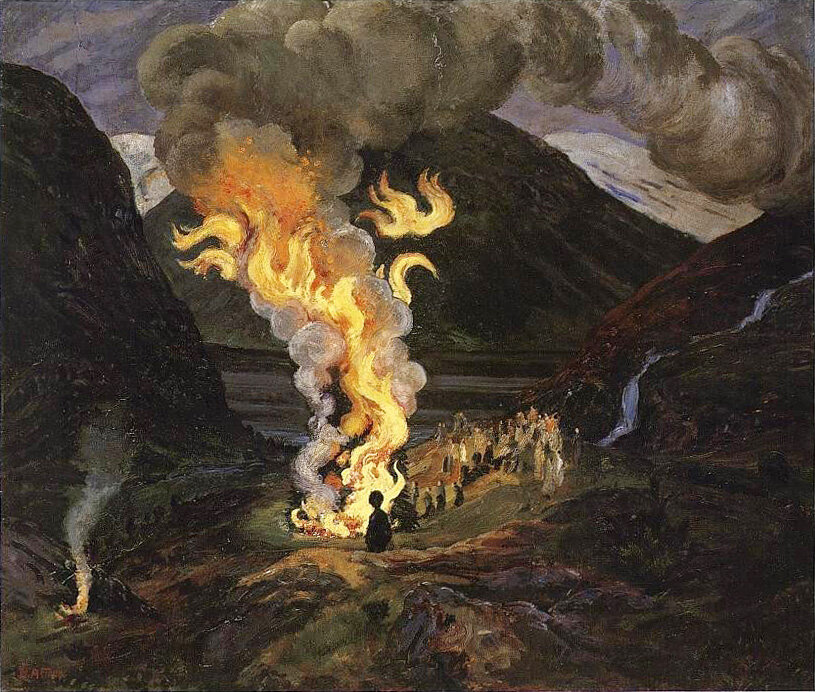
    St. John’s Eve is a time for leaping over bonfires. Doing so was believed to ensure prosperity and good luck. The bigger the fire, the further at bay were kept evil spirits. The further the evil spirits, the better the guarantee of a good harvest. If you didn’t light a bonfire… well, it was as good as tempting fate to burn your house down. It’s a time when dragons roam the earth, as the sun again pursues a southerly course. And it’s a time when witches are believed to rendezvous with powerful forces, such as Chernobog.

    The idea for Modest Mussorgsky’s famous musical picture “A Night on Bald Mountain” haunted him for his entire creative life. In 1858, while still in his teens, he planned to write an opera on the subject of Nikolai Gogol’s short story, “St. John’s Eve.” A couple of years later, in 1860, he toyed with another projected opera called “The Witch.” Not long after, according to Nikolai Rimsky-Korsakov, he wrote a diabolical piece for piano and orchestra under the influence of Franz Liszt’s “Totentanz.” If it was so, it has not survived.

    It wasn’t until 1867 that Mussorgsky reconfigured the idea as an orchestral piece, “St. John’s Eve on Bald Mountain.” He began to compose it on June 12. He finished it on June 23 – ACTUALLY ON ST. JOHN’S EVE. Mussorgsky was ecstatic finally to have completed it. Then he showed it to his mentor, Mily Balakirev, who savaged it. The composer, no doubt ashamed, put it aside. This version of “A Night on Bald Mountain” would not be published until 1968.

    Mussorgsky may have been cowed by Balakirev, but he was not done with his dream of a witches’ sabbath. In 1872, he revised and recast the material for vocal soloists, chorus, and orchestra, as part of Act III of the opera-ballet “Mlada,” a collaborative effort undertaken with his “Mighty Handful” fellows, Rimsky-Korsakov, Alexander Borodin, and César Cui. In this new version the music was to form the basis of the “Night on Mount Triglav” scene. Mussorgsky now referred to the piece as “Glorification of Chernobog.”

    Unfortunately, the “Mlada” project foundered, and again “Bald Mountain” sank into oblivion. “Glorification of Chernobog” was never published or performed and this version is now lost.

    Mussorgsky took one more crack at it, as “Dream Vision of the Peasant Lad,” designed to serve as an intermezzo in his opera “Sorochyntsi Fair,” begun in 1874. He went back to the short story “St. John’s Eve,” from Gogol’s book “Evenings on a Farm Near Dikanka.” The collection, steeped in Ukrainian lore, also proved to be a fount of inspiration for Tchaikovsky, Rimsky-Korsakov, and others. If you can find an edition coupled with Gogol’s “Mirgorod” (which includes “Taras Bulba” and “Vij”), all the better.

    Alas, the opera was left incomplete when Mussorgsky drank himself to death in 1881. There are at least five performing editions of the work, completed by other hands. Sadly, Mussorgsky NEVER HEARD “A Night on Bald Mountain,” in any of its versions, in his lifetime. How’s that for a sucker punch?

    I’ve got the Sorochyntsi incarnation all cued up to the relevant passage at the link. If you’re interested in hearing the rest of the opera, you can drag the audio bar back to the beginning with your cursor.

    For many years, this was the standard version, edited and orchestrated by Rimsky-Korsakov.

    Disney is notoriously vigilant about guarding its content, but you can view the “Fantasia” segment here, the video posted for educational purposes. In the film, Mussorgsky’s music is heard in Stokowski’s orchestration.

    https://www.cornel1801.com/disney/Fantasia-1940/film8.html?fbclid=IwY2xjawLGnrtleHRuA2FlbQIxMABicmlkETFyZUhBelZRbVlEb2xwakp6AR6RyrHTzwvPj_8ByfsR_SY_Oml0TI5XF29OYqaXYSWYtvvOwIpKqVs2sau8HQ_aem_XkVs1_XeDcNgZzNshtoE5g

    With heat index values around here projected to push 110 through Wednesday, the idea of dancing around a bonfire is not exactly at the top of my list. On the other hand, at least I wouldn’t have to worry about catching a chill on the Bare Mountain.
  • Midsummer Music for St John’s Eve Festival

    Midsummer Music for St John’s Eve Festival

    Celebrate Midsummer with music for St. John’s Eve.

    The Feast Day of St. John the Baptist (June 24) is like Christmas, in that it coincides with solstice time. But St. John’s Eve is more like Halloween. It’s a time for the lighting of bonfires against evil spirits – when witches are believed to rendezvous with powerful forces, such as the demon Chernobog, who emerges from the Bald Mountain – as the sun again pursues a southerly course.

    This week on “The Lost Chord,” we’ll surrender to Midsummer madness, with Modest Mussorgsky’s “St. John’s Night” from his opera “Sorochinsky Fair,” Alfred Schnittke’s puckish “(K)ein Sommernachtsdraum” (“NOT a Midsummer Night’s Dream”), and selections from Gunnar de Frumerie’s ballet “St. John’s Eve.”

    Leaping over a bonfire at this time is seen as a surety of prosperity and good luck. Tuning in to “The Lost Chord” doubly so. Keep an ear out for “Midsummer Night’s Fiends,” now in syndication on KWAX, the radio station of the University of Oregon!


    Clip and save the start times for all three of my recorded shows:

    PICTURE PERFECT, the movie music show – Friday at 8:00 PM EDT/5:00 PM PDT

    SWEETNESS AND LIGHT, the light music program – Saturday at 11:00 AM EDT/8:00 AM PDT

    THE LOST CHORD, unusual and neglected rep – Saturday at 7:00 PM EDT/4:00 PM PDT

    Stream them, wherever you are, at the link!

    https://kwax.uoregon.edu/


    PAINTING: “Midsummer Night” (1926), by Nikolai Astrup

  • Medieval Dance Mania The Fatal Outbreak

    Medieval Dance Mania The Fatal Outbreak

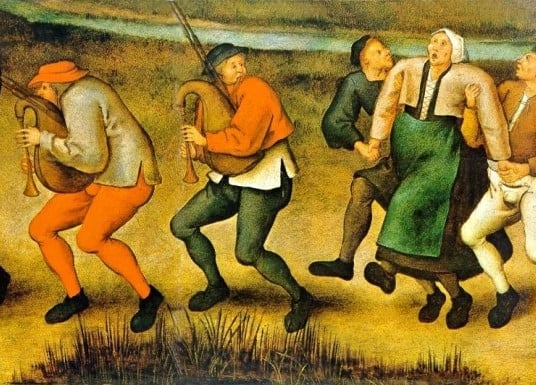
    Probably the last thing anyone wants to do after a long night of leaping over bonfires on St. John’s Eve is cut a rug – but 650 years ago today, that’s precisely what happened. On June 24, 1374, against their collective will, hundreds found themselves swept up in an involuntary dance mania.

    It was not for the first time, nor would it be the last, but it was one of the largest and most noteworthy outbreaks of terpsichorean madness, a malady that seems largely to have been a phenomenon of the Middle Ages. Participants danced until they collapsed from exhaustion. Some dropped down dead.

    The cause of the frenzy has never been adequately explained.

    Read more about St. John’s Dance (often attributed to St. Vitus) here:

    https://www.onthisday.com/articles/the-fatal-dance-manias-of-medieval-europe?fbclid=IwZXh0bgNhZW0CMTAAAR2-Yyg1Gyc-DqbJ0MeIhKIpk2H7TzQu-sfrVH9-9TFGs6w82LDW-ADlzoM_aem_Jt6r7qd7ALVA-g_kgq8gZQ

    And here:

    https://en.wikipedia.org/wiki/Dancing_mania…

    Gotta dance!

  • Chernobog St Johns Eve and Disney’s Fantasia

    Chernobog St Johns Eve and Disney’s Fantasia

    When the sun sets this evening, June 23, you had better be prepared to deal with Chernobog! That’s right, it’s St. John’s Eve – the eve of the Feast Day of St. John the Baptist.

    On the eve of St. John’s nativity (observed), St. John’s wort, prized for its miraculous healing powers, is sought, as is the fern flower, believed by some to bring good fortune, wealth, and the ability to understand animal speech.

    It’s a time for the lighting of bonfires against evil spirits, and even dragons, which roam the earth as the sun again pursues a southerly course. And it’s a time when witches are believed to rendezvous with powerful forces, such as the Slavic demon that emerges from the Bald Mountain at the climax of Disney’s “Fantasia.”

    “Dracula” fans might be interested to know that none other than Bela Lugosi struck demonic poses for Disney animators for several days as a model for the film’s climactic sequence. Ultimately, he would be replaced by Wilfred Jackson. Still, how cool is that?

    Leopold Stokowski conducts the Philadelphia Orchestra in his own arrangement of Modest Mussorgsky’s music on the soundtrack. Also, I would be remiss if I didn’t mention that that’s Princeton’s Westminster Choir, as “A Night on Bald Mountain” segues into Schubert’s “Ave Maria.”

    The master of ceremonies, Deems Taylor, states that the setting is Walpurgis Night (April 30). Deems Taylor is wrong! I’m not afraid to say so, since I’ve pretty much given up on ever receiving a Deems Taylor-Virgil Thomson Award for Radio Broadcast at this point, for as richly deserved as it might be.

    Chernobog could care less about Walpurgis Night. He’s kickin’ it up for St. John!

    Relive your childhood anxiety here. Click on “watch video clip” at the link.

    http://www.cornel1801.com/disney/Fantasia-1940/film8.html

  • Medieval Dance Mania The Dancing Plague

    Medieval Dance Mania The Dancing Plague

    Probably the last thing anyone wants to do after a long night of leaping over bonfires on St. John’s Eve is to cut a rug – but on this date in 1374, that’s precisely what happened. Against their collective will, hundreds found themselves swept up in an involuntary dance mania.

    It was not the first time, nor would it be the last, but it was one of the largest and most noteworthy outbreaks of terpsichorean madness, a malady that seems largely to have been a phenomenon of the Middle Ages. Participants danced until they collapsed from exhaustion. Some dropped down dead.

    The cause of the frenzy has never been adequately explained.

    Read more about St. John’s Dance (often attributed to St. Vitus) here:

    https://www.onthisday.com/articles/the-fatal-dance-manias-of-medieval-europe

    And here:

    https://en.wikipedia.org/wiki/Dancing_mania?fbclid=IwAR0rpc5K6wIEUrTmSfNGHhLRRvzCJUBY1IJgMLMpG1NQMV05Vigml3c-Zkw

    Gotta dance!

Tag Cloud

Aaron Copland (92) Beethoven (95) Composer (114) Film Music (119) Film Score (143) Film Scores (255) Halloween (94) John Williams (185) KWAX (229) Leonard Bernstein (99) Marlboro Music Festival (125) Movie Music (134) Opera (198) Philadelphia Orchestra (86) Picture Perfect (174) Princeton Symphony Orchestra (106) Radio (87) Ralph Vaughan Williams (85) Ross Amico (244) Roy's Tie-Dye Sci-Fi Corner (290) The Classical Network (101) The Lost Chord (268) Vaughan Williams (102) WPRB (396) WWFM (881)

DON’T MISS A BEAT

Receive a weekly digest every Sunday at noon by signing up here


RECENT POSTS