
Don’t let the happy faces fool you. Roy and I return tonight to celebrate three years of Roy’s Tie-Dye Sci-Fi Corner, with a discussion of “Spock’s Brain.” One the looniest episodes of the original “Star Trek” television series, once seen it’s not easily forgotten. The Laurel and Hardy of sci-fi reunite for another gold-plated bull session. Make the trek to the comments section, when we livestream on Facebook, YouTube, etc., at a special day and time, this Thursday evening at 7:00 EDT!
Tag: Star Trek
-

Roy’s Sci-Fi Corner Postponed Rescheduled!
I am very sorry to report that tonight’s scheduled anniversary celebration of Roy’s Tie-Dye Sci-Fi Corner – which today marks three years of perfecting the balance between nostalgia and banter in relation to science fiction and fantasy in classic television and film – has had to be postponed, as Roy is under the weather.
However, we’re optimistic that he’ll have talked Dr. McCoy through the process of surgically reconnecting his cerebrum before the Easter weekend. We hope you’ll be able to join us for our discussion of the “Star Trek” original series episode “Spock’s Brain,” to be livestreamed on Facebook, YouTube, etc., THIS THURSDAY EVENING AT 7:00 EDT.
In the meantime, we apologize for the inconvenience. You can console yourself by ordering an official t-shirt at the “Roy’s Tie-Dye Sci-Fi Corner” Facebook page, several of which are modeled here by Roy’s cat, the always slinky and stylish Squeaker.
-

Spock’s Brain Roy’s Tie-Dye Sci-Fi Corner Anniversary
How to celebrate three years of Roy’s Tie-Dye Sci-Fi Corner? It’s a no-brainer.
We’ll discuss the third season opener of “Star Trek,” the original series: Captain Kirk and crew scramble to recover their unflappable first officer’s noodle in “Spock’s Brain” (1968).
Widely reviled as one of the worst “Star Trek” episodes ever made, the subject is guaranteed to spark a lively conversation, with plenty of digressions and not a few laughs.
Get ready for another year of mindless chatter, as Roy and I put our heads together for “Spock’s Brain.” Your gray matter is required in the comments section, when we livestream on Facebook, YouTube, etc., at a special time, THIS MONDAY EVENING AT 7:00 EDT!
-
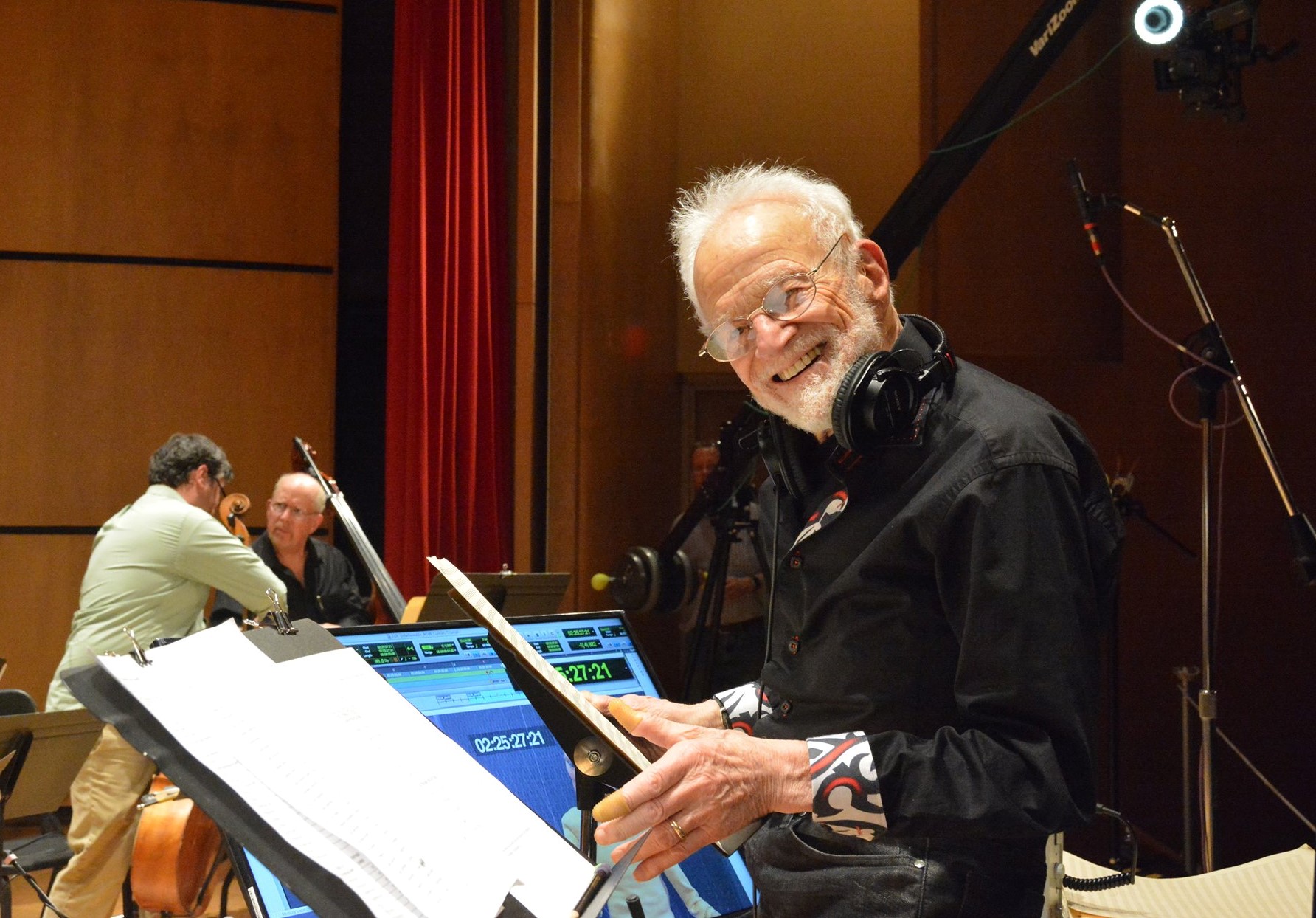
Remembering Gerald Fried Star Trek Composer
I am very sorry to learn that Gerald Fried has died.
Fried was the composer of nearly 300 film and television scores.
A schoolmate of Stanley Kubrick, he provided the music for the director’s earliest projects (up until “Spartacus”). The best known of these are “The Killing,” with Sterling Hayden, and “Paths of Glory,” with Kirk Douglas.
His fruitful collaborations with producer David L. Wolper yielded “Birds Do It, Bees Do It,” which earned Fried an Academy Award nomination, and the landmark miniseries “Roots,” which won him an Emmy.
He composed original music for five episodes of “Star Trek, in its original series incarnation, including those for fan favorites “Shore Leave” and “Amok Time” (source of the much-parodied “Star Trek fight music”). Selections from these scores were recycled in subsequent installments of the series.
He also contributed to “Riverboat,” “Shotgun Slade,” “Gilligan’s Island,” “The Man from U.N.C.L.E.,” “Mission: Impossible,” and many others.
Between 1948 to 1956, Fried was principal oboist of the Dallas Symphony Orchestra and the New York Little Orchestra.
His final film project was the science fiction parody “Unbelievable!!!!” in 2020. In his later years, he also wrote screenplays.
In 2021, we were very lucky to have him as a guest on Roy’s Tie-Dye Sci-Fi Corner. Roy characterizes his appearance as a very special interview. I concur. He impressed me as a kind and generous man.
At the time of his death, Fried was 95-years-old. R.I.P.
Fried performs music from three of his classic “Star Trek” scores – including the iconic fight music from “Amok Time”:
Finnegan
Ruth
Spock vs. Kirk
“Paths of Glory”
“Birds Do It, Bees Do It”
Fried and family perform music from “Roots”
Gerald Fried conversing with us on “Roy’s Tie-Dye Sci-Fi Corner”
-
Star Trek Opera Mozart’s Abduction
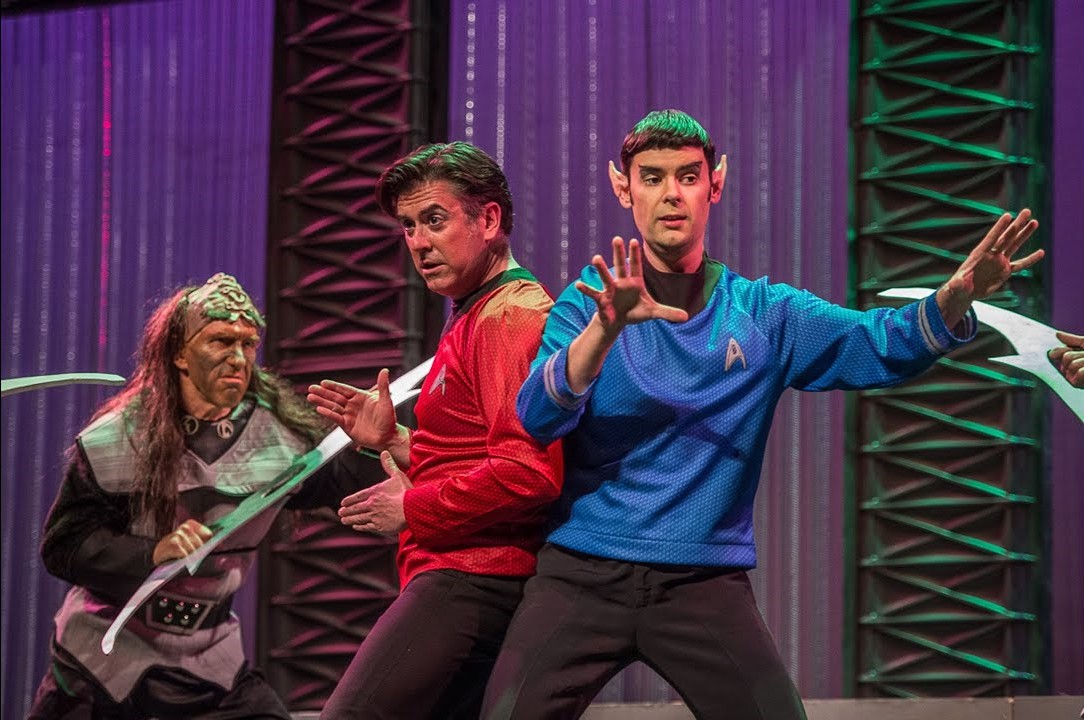
In 2016, Pacific Opera Project boldly went where no opera company went before. But since I’ve been caught in a wormhole, I guess, I am only just now catching up with POP’s bridge-rocking spin on Mozart’s comic singspiel “The Abduction from the Seraglio,” presented “Star Trek” style.
In Mozart’s original, Belmonte, a Spanish nobleman, attempts to rescue his beloved from the seraglio of Pasha Selim, a scenario that would have capitalized on the 18th century European fascination with orientalism, with the added savor of salaciousness in setting the piece in a harem.
Now, Belmonte is reimagined as Captain Kirk (replete with Shatnerisms), his servant Pedrillo is Mr. Spock, Constanze is Lt. Uhura, and Blonde is the iconic Star Trek “green girl.” The Ottomans? They’re all Klingons. There’s even an appearance by the Gorn!
Mozart is given an assist on a couple of occasions by Alexander Courage, whose music was featured prominently in the original television series (along with that of Fred Steiner, Gerald Fried, and George Duning, among others).
Unusually for opera, the singers are all miked, but I assume it’s more for documentary purposes than for amplification, since there’s another performance posted on YouTube with the same cast without the mikes, and it’s very difficult to make out the dialogue.
I imagine this would have been a gas to see live. On video, you have to make the extra leap of imagining yourself in the house.
Mozart and “Star Trek?” Salieri would have been so envious.
Tag Cloud
Aaron Copland (93) Beethoven (95) Composer (114) Film Music (144) Film Score (143) Film Scores (255) Halloween (94) John Williams (195) KWAX (229) Leonard Bernstein (104) Marlboro Music Festival (125) Movie Music (159) Mozart (90) Opera (212) Philadelphia Orchestra (89) Picture Perfect (174) Princeton Symphony Orchestra (109) Radio (88) Ross Amico (244) Roy's Tie-Dye Sci-Fi Corner (290) The Classical Network (101) The Lost Chord (269) Vaughan Williams (105) WPRB (397) WWFM (881)