Space… the final frontier. This week, on “Picture Perfect,” beam aboard for some of the best “Star Trek” music in the galaxy. We’ll hear enterprising selections from the beloved media franchise.
In retrospect, it’s hard to conceive of “Star Trek,” the original series (1966-69), staggering toward cancellation after a mere three seasons on NBC, so much a part our shared cultural consciousness it has become. The show’s popularity expanded through syndication. Still, prior to the blockbuster success of “Star Wars,” the only other “Trek” would be an animated series that aired on Saturday morning television from 1973 to 1974 (to be discussed tomorrow evening on Roy’s Tie-Dye Sci-Fi Corner).
In 1977, the one-two box office punch of “Star Wars” and “Close Encounters of the Third Kind” revealed a latent hunger for science fiction that gave “Star Trek” the final boost it needed to reach the silver screen.
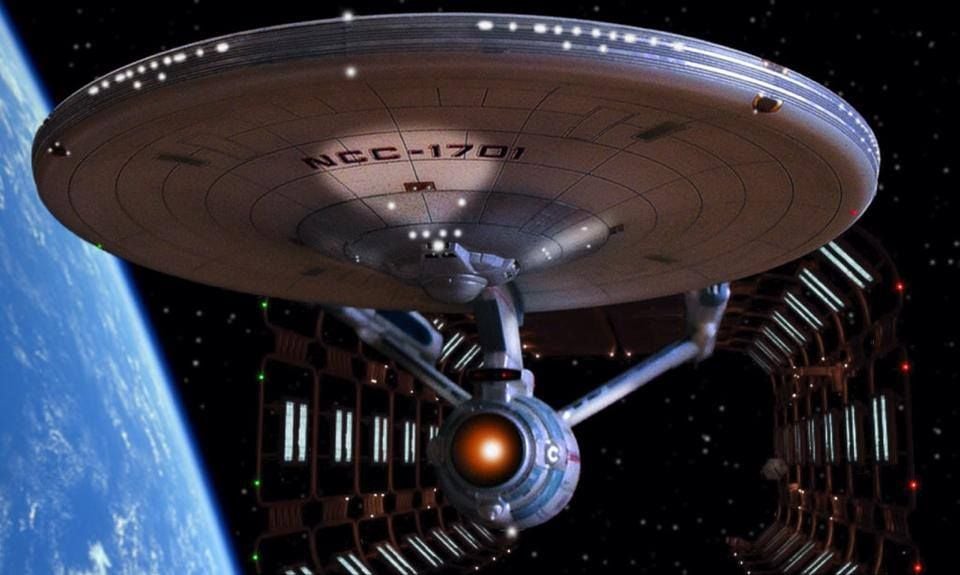
“Star Trek: The Motion Picture” (1979), long-awaited, was ambitious to a fault. Its approach seemed especially ponderous next to the souped-up dog fights of a galaxy far, far away. However, there was undeniably a nostalgic satisfaction in seeing the original crew reassembled on the deck of a refurbished Enterprise, and the production values were nothing less than first-rate.
Robert Wise directed. Wise was involved in the production of any number of classic films, dating back to the 1930s, including “The Day the Earth Stood Still,” “West Side Story,” “The Haunting,” and “The Sound of Music.” He also edited “Citizen Kane.”
“Star Trek: The Motion Picture” sported state-of-the-art special effects (by Douglas Trumbull no less), and a knock-out music score by Jerry Goldsmith. I remember leaving the theater on the film’s opening night and remarking that the movie was all right, but the music was fantastic.
There’s a six-minute, music-and-special effects showpiece of a shuttle flying around the drydocked Enterprise that’s a perfect marriage of music and film. It’s like nothing you’re ever likely to encounter in movies today – and more’s the pity.
The “ST: TMP” theme has always been a fan favorite, but its resurrection, beginning with the launch of the television series “Star Trek: The Next Generation,” cemented its broader familiarity.
“Star Trek” had always positioned itself as thoughtful science fiction, and in the case of the first film perhaps it tried a mite too hard. “ST: TMP” strove for stately, but what it wound up achieving was stasis. Although a box office success, the film received mixed reviews and performed below industry expectations. However, it still made enough money to justify a sequel.
“Star Trek II: The Wrath of Khan” (1982) was a belated continuation of an episode from the original series, “Space Seed,” in which a genetically engineered superman is revived from suspended animation and attempts to take over the Enterprise. Khan, of course, was played by Ricardo Montalban, now with gleaming chest and silver mullet – worlds away from his contemporaneous characterization as Mr. Roarke on TV’s “Fantasy Island.”
The tone of the film proved a refreshing change of pace, playing up the character relationships that made the original series so enjoyable and providing enough action to satisfy audiences attuned to post-“Star Wars” spectacle. Moreover, it cleverly draws on nautical iconography – while “Star Wars” had its dogfights, “Wrath of Khan” deals more in broadsides – and that nautical flavor extends to the film’s brilliant score, by James Horner. The project proved an important stepping stone to Horner’s acceptance as an A-list composer.
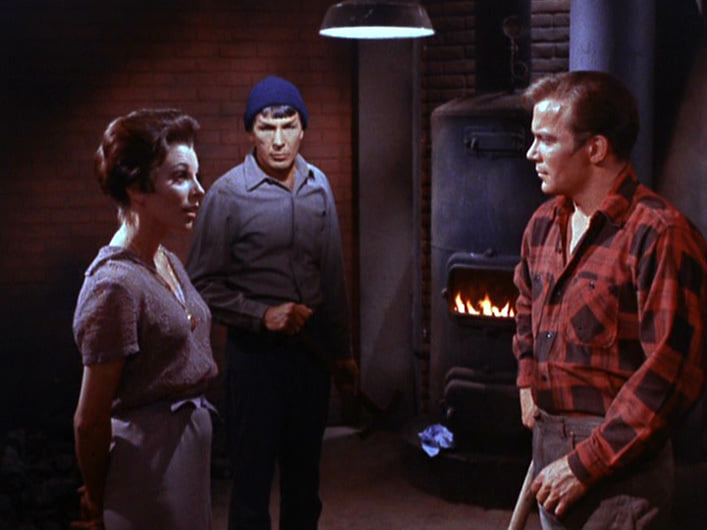
Another memorable episode of the original series dealt with the usually unflappable Spock losing his cool, as he teeters into pon farr, a period of madness that strikes every seven years during which a Vulcan must mate or die.
“Amok Time” (1967) opened the show’s second season. It featured alien-world papier-mâché boulders, oversized Q-tip like weapons, and what is now widely recognized as the “Star Trek fight music.” This music was reused in several subsequent episodes and has since been widely parodied.
The composer was Gerald Fried, who wrote the music for Stanley Kubrick’s first four films. He also provided most of the score for the landmark television mini-series “Roots.”
Following the disappointing box office of “Star Trek: Nemesis” in 2002, the film franchise was put on hiatus for the next six-and-a-half years, possibly the result of “Star Trek” fatigue – too many movies and too many television series.
J.J. Abrams was hired in the hopes of revitalizing “Trek” with a fresh makeover. Abrams’ approach might best be summed up as “Damn the social issues! Damn the philosophical underpinnings! Damn the continuity! Full speed ahead!” The result is undoubtedly entertaining, though very much of our time, with a lot of action at the expense of the ideas and humanity that made earlier incarnations more resonant.
The “reboot” scored a hit with critics and general audiences, though it remains controversial with fans of the original series. Even the title suggests a new beginning, as the film was titled, simply, “Star Trek” (2009). The story employs an alternative timeline, so that the filmmakers are no longer beholden to more than 40 years’ worth of accrued “Star Trek” lore. It’s the kind of thing that is done all the time in comic books. Whether or not the result is for the best, I leave to you.
Neither is the music quite as rich as that for some of the earlier installments, though it does generate a fair amount of excitement within the context of the film. The composer is Michael Giacchino.
I hope you’ll join me for these selections from “Star Trek,” on “Picture Perfect,” music for the movies. The music won’t be the only thing that’s transporting. Set phasers for “fun,” this Saturday evening at 6:00 EST, on WWFM – The Classical Network and wwfm.org.