Tag: Strauss

  • Wagner Strauss Fleming Weekend

    Wagner Strauss Fleming Weekend

    This weekend I’ll be gazing into the abyss, even as I’m lifted to Parnassus!

    It’s not like I planned it this way. Sometimes things just turn out like that.

    A couple of months ago, I reserved a seat for Wagner’s “Tristan und Isolde” with The Philadelphia Orchestra on Sunday afternoon. The opera is being performed complete in a concert setting – 4 and ½ to 5 hours, with two intermissions – with Nina Stemme, one of the world’s foremost Isoldes, still reportedly in fantastic voice, bidding farewell to the role, and heldentenor Stuart Skelton as Tristan. This is the first time the work is being presented complete in Philadelphia since the orchestra gave it its U.S. debut in 1934. An event, for sure, and scheduled for only two performances. Reviews for last Sunday’s concert have been ecstatic, with a critic in The Washington Post calling it “one of the greatest things I have ever heard.” It’s a 2 p.m. curtain, and I’ll likely have lunch plans beforehand, which means I’ll have to be ready to go and out the door on Sunday morning. On its own, certainly doable…

    However, I have also been offered a ticket to hear a concert performance of Richard Strauss’ “Guntram” – also reportedly Wagnerian, in language if not length – at Carnegie Hall on Friday night. The work, Strauss’ first opera, seldom done, is quoted in the composer’s “Ein Heldenleben,” but beyond that, I have never heard it. So of course I’m in! Angela Meade will sing Freihild and Leon Botstein will conduct the American Symphony Orchestra. It’s an 8:00 curtain, which means by the time it lets out and I catch the train, it will be well after midnight by the time I get home. Then I’ll be wound up from the trip, so I’m not anticipating turning out the bedside lamp much before 2:00. For ordinary human beings, this might not pose a problem, since the next day is Saturday, but perhaps attributable to the early radio schedule I kept for a couple of decades, I have been conditioned to being a morning person. And I mean it. If I drank a bottle of scotch, my eyes would still shoot open with the first rays of the sun. So I’m anticipating not getting very much shut-eye after the Carnegie concert.

    In the meantime, I’ve had a seat reserved to hear Renée Fleming at The Princeton Festival on Saturday evening. So while Saturday will undoubtedly be a day of bountiful coffee, so that I can be alert for the performance (which is at least close to home, thankfully), I will have to be mindful of the timing of my caffeine intake as I mustn’t overshoot the mark and destroy my chance at getting a full night’s sleep before “Tristan.” There will be wags among you, I’m sure, who will observe that I can just catch up on my sleep during the opera!

    Fleming’s program will be a light one, accompanied by Rossen Milanov and the Princeton Symphony Orchestra, with arias, art songs, and musical theater selections punctuated by applause, so no danger of nodding for that. But droop during “Tristan,” and I’ll be swallowed beneath the brine of the Irish Sea.

    If I do stay awake, and alert, may my ears remain supple!


    “Coffee…” (“The Death of Tristan” by Harry Robert Mileham, 1902)

  • Fritz Reiner: Genius and Grinch

    Fritz Reiner: Genius and Grinch

    You’re a mean one, Mr. Reiner.

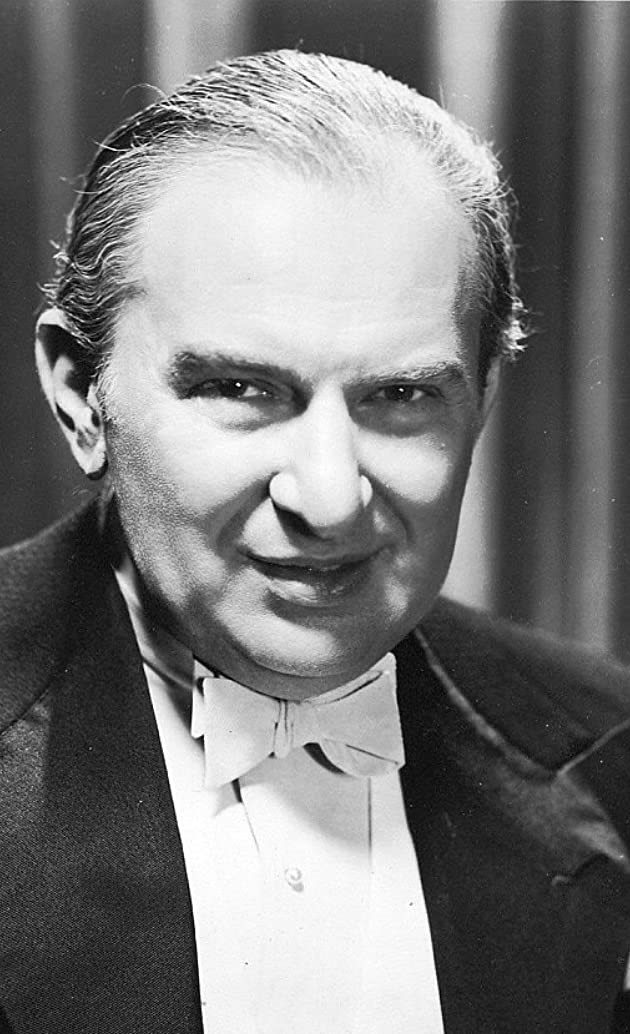
    Classical music has had its share of Grinches, but few were as cactus-cuddly as Fritz Reiner. From a musician’s standpoint, Reiner was one of the most dreaded conductors, in an era when tyrants of the podium still very much roamed the earth. With a glower that could make Karloff quake (though he resembled more Bela Lugosi), Reiner was forged in Hungary at the twilight of the Austro-Hungarian Empire. Hungary at the time had quite the reputation for churning out great conductors. George Szell, Eugene Ormandy, Antal Doráti, Ferenc Fricsay, Sir Georg Solti, and István Kertész all achieved considerable international success.

    Among Reiner’s own teachers was Béla Bartók, with whom he studied piano. Reiner would later repay the favor with what many consider to be the benchmark recording of Bartók’s “Concerto for Orchestra.” He also worked closely with Richard Strauss in Dresden, and his recordings of Strauss’ works are equally revered. All in all, the Chicago Symphony under Fritz Reiner was a surefire choice to give the ol’ hi-fi a good workout in the early days of stereo.

    In 1928, Reiner became a naturalized American citizen. He began to teach conducting at the Curtis Institute of Music in Philadelphia, where among his pupils was Leonard Bernstein. His first American post was as principal conductor of the Cincinnati Symphony. He took over the Pittsburgh Symphony for a decade, beginning in 1938. Then he spent several years at the Met. But it was as music director of the Chicago Symphony that he attained legendary status.

    For a master interpreter of some of the largest and most challenging works in the repertoire, his baton technique was notable for its precision and economy. Much of what he achieved, unfortunately, was through the brutality he exuded in rehearsals. Reiner emerged from an Old World steeped in aristocratic privilege. At the top of their profession, conductors then were regarded as gods-on-earth. When drive and ego were bolstered by absolute power, working conditions could become downright perilous. Before strong musicians’ unions, conductors exercised the authority to fire anyone on a whim. So when musicians played for Reiner, they played as if their lives depended on it – or at the very least their livelihoods.

    Did it make for better musicmaking? You can’t argue with the excellence of Reiner’s Chicago Symphony.

    Fritz Reiner: A Marriage of Talent and Terror

    https://drgeraldstein.wordpress.com/2013/10/12/fritz-reiner-a-marriage-of-talent-and-terror/?fbclid=IwAR1ylzD3gidbYGdYCgeUq7WF57_O1tzX1JqV6Nc0JNezy3DWwkc6R_bRob4

    His heart grew three times that day: Fritz Reiner’s perfect concert

    125 Moments: 101 Fritz Reiner’s “Perfect Concert”

    He found the strength of ten Reiners, plus two. I guess even autocrats have their cuddly moments. Happy birthday, Fritz Reiner.


    Reiner conducts Beethoven

    Big band Bach

    Benchmark Bartók

    Strauss’ “Salome”

    And, to keep it seasonal, “Waltz of the Flowers” from “The Nutcracker”

    https://www.youtube.com/watch?v=mgaS9CZ7KsQ

  • Vienna Philharmonic New Year’s Concert 2022

    Vienna Philharmonic New Year’s Concert 2022

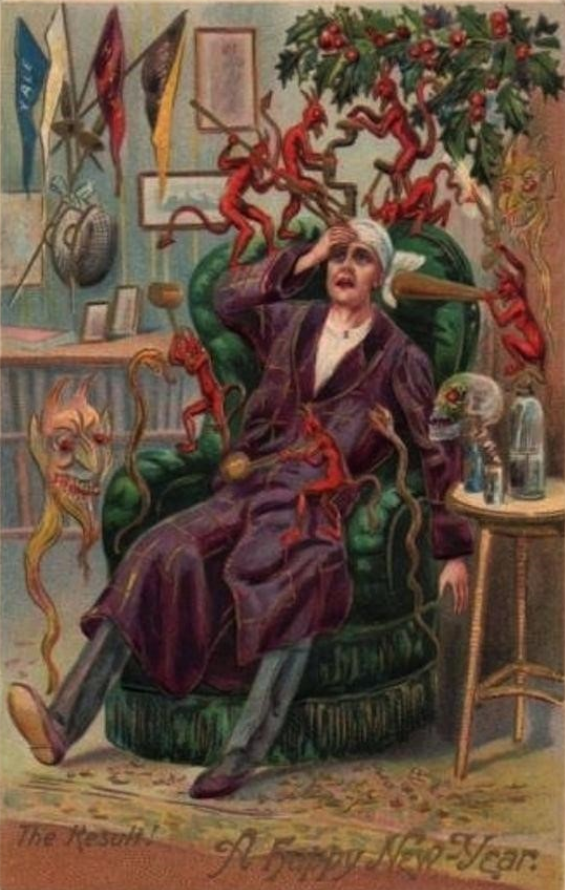
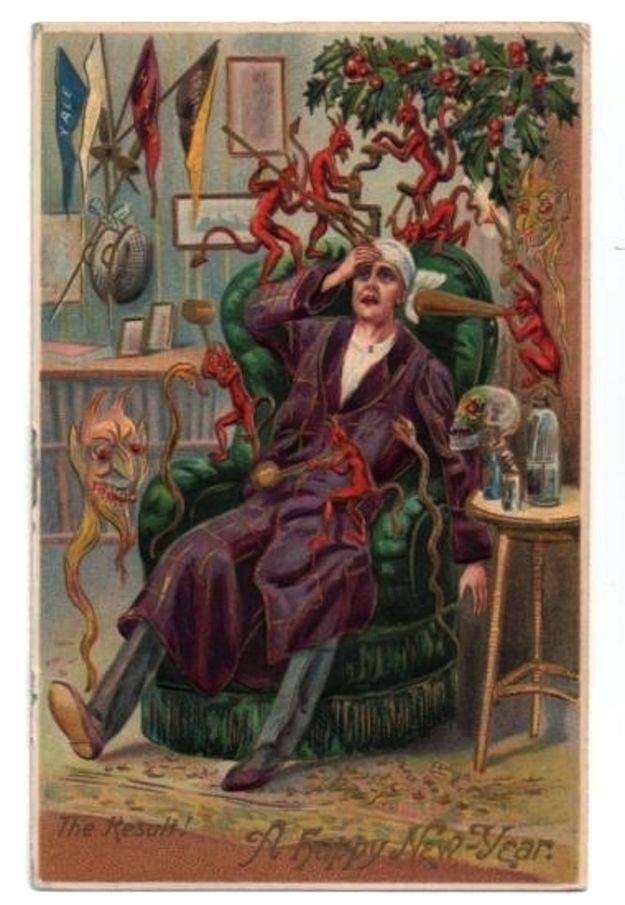
    What better way to treat your New Year’s Day hangover than with a celebratory concert of bright Strauss waltzes and raucous galops?

    The Classical Network presents its annual live broadcast of the New Year’s Day Concert from Vienna. This year, the Vienna Philharmonic is conducted by Daniel Barenboim.

    Load up your ice pack, pour yourself a hair of the dog, and tune in for this New Year’s tradition, this morning at 11:00 EST. 2022 gets off to a fizzy start on WWFM – The Classical Network and wwfm.org.

  • Fritz Reiner Tyrant Genius of the CSO

    Fritz Reiner Tyrant Genius of the CSO

    At a time when tyrant conductors still very much roamed the earth, Fritz Reiner was one of the most feared. With a glower that would make Bela Lugosi quake – and sporting quite the similar hairline – Reiner was forged in Hungary at the twilight of the Austro-Hungarian Empire. Hungary at the time had quite the reputation for churning out great conductors. Among those to achieve considerable international success were George Szell, Eugene Ormandy, Antal Doráti, Ferenc Fricsay, Sir Georg Solti, and István Kertész.

    Among Reiner’s own teachers was Béla Bartók, with whom he studied piano. Reiner would later repay the favor with what many consider to be the benchmark recording of Bartók’s “Concerto for Orchestra.” He also worked closely with Richard Strauss in Dresden, and his recordings of Strauss’ works are equally revered. All in all, the Chicago Symphony under Fritz Reiner was a surefire choice to give the ol’ hi-fi a good workout in the early days of stereo.

    Reiner became a naturalized American citizen in 1928, and began to teach conducting at the Curtis Institute of Music in Philadelphia. Among his pupils was Leonard Bernstein. His first American post was as principal conductor of the Cincinnati Symphony. He led the Pittsburgh Symphony for ten years, from 1938 to 1948, then spent several years at the Met. But it was as music director of the Chicago Symphony that he attained legendary status.

    For a master interpreter of some of the largest and most challenging works in the repertoire, his baton technique was notable for its precision and economy. Much of what he achieved, unfortunately, was through the brutality he exerted in rehearsals. Reiner emerged from an Old World steeped in aristocratic methods. At the top of their profession, conductors then were regarded as gods-on-earth. When drive and ego were bolstered by absolute power, working conditions became downright perilous. Before strong musicians’ unions, conductors exercised the authority to fire anyone on the spot. So when musicians played for Reiner, they played as if there lives depended on it – or at the very least their livelihoods.

    Did it make for better musicmaking? You can’t argue with the excellence of Reiner’s Chicago Symphony.

    Read this account of the day Reiner finally gave his “perfect concert.”

    https://csosoundsandstories.org/125-moments-101-fritz-reiners-perfect-concert/#:~:text=In%20October%201958%2C%20Fritz%20Reiner,New%20Brunswick%2C%20and%20Washington%2C%20D.C.

    Even autocrats have birthdays. Happy birthday, Fritz Reiner.


    Reiner conducts Beethoven

    Reiner conducts Kodály and Bartók, with Rudolf Serkin at the piano
    https://www.youtube.com/watch?v=TOE83a1FrwA

    Reiner conducts Strauss’ “Salome”

  • Vienna Philharmonic New Year 2019

    Vienna Philharmonic New Year 2019

    2019 can’t be any worse, can it? CAN IT??? Happy New Year.

    If you’re experiencing a Strauss deficiency, “New Year’s Day from Vienna 2019,” with Christian Thielemann leading the Vienna Philharmonic, will commence at 11 a.m. EST, on WWFM – The Classical Network and wwfm.org.

Tag Cloud

Aaron Copland (92) Beethoven (95) Composer (114) Film Music (119) Film Score (143) Film Scores (255) Halloween (94) John Williams (185) KWAX (229) Leonard Bernstein (99) Marlboro Music Festival (125) Movie Music (134) Opera (198) Philadelphia Orchestra (86) Picture Perfect (174) Princeton Symphony Orchestra (106) Radio (87) Ralph Vaughan Williams (85) Ross Amico (244) Roy's Tie-Dye Sci-Fi Corner (290) The Classical Network (101) The Lost Chord (268) Vaughan Williams (102) WPRB (396) WWFM (881)

DON’T MISS A BEAT

Receive a weekly digest every Sunday at noon by signing up here


RECENT POSTS