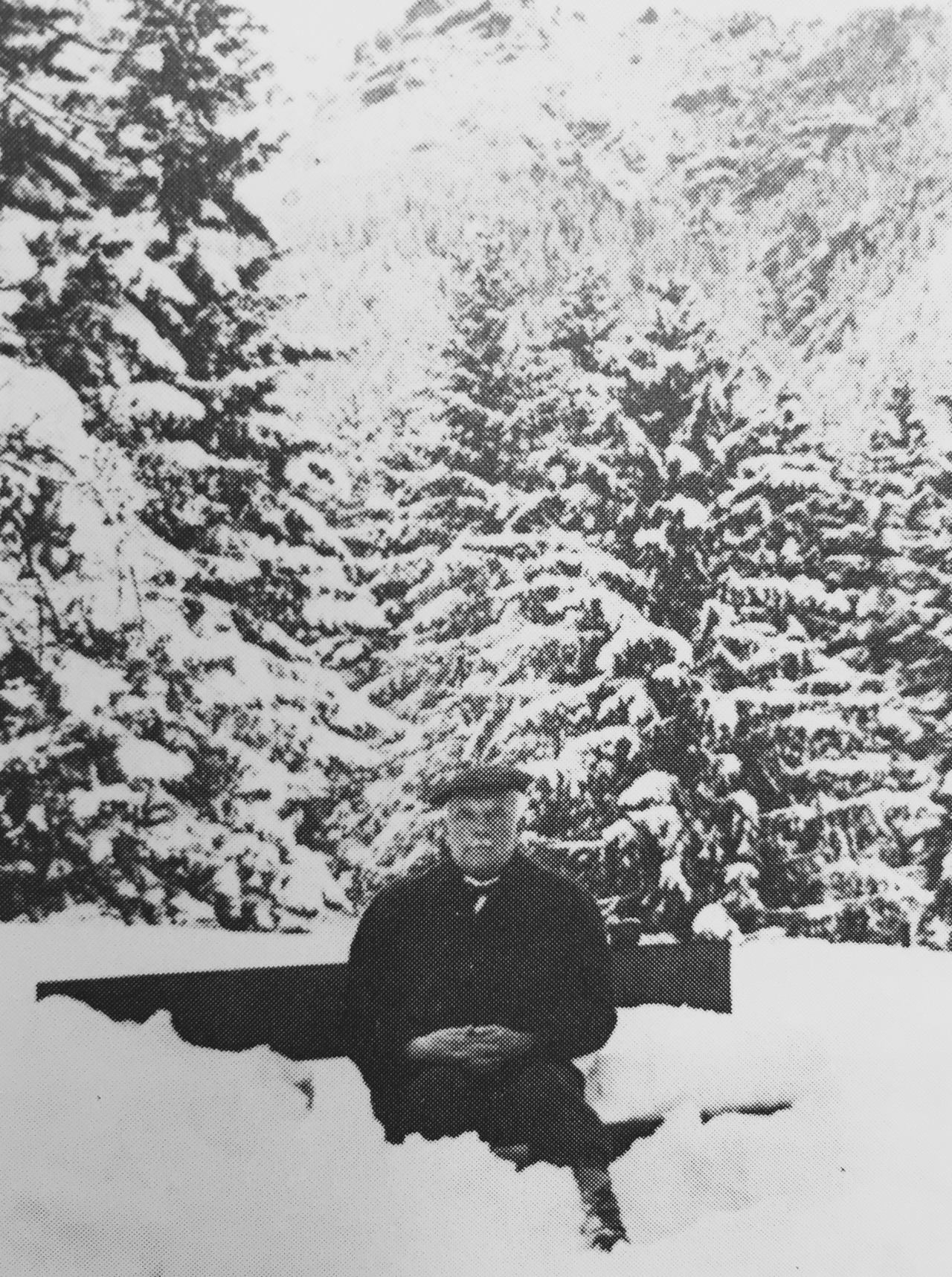
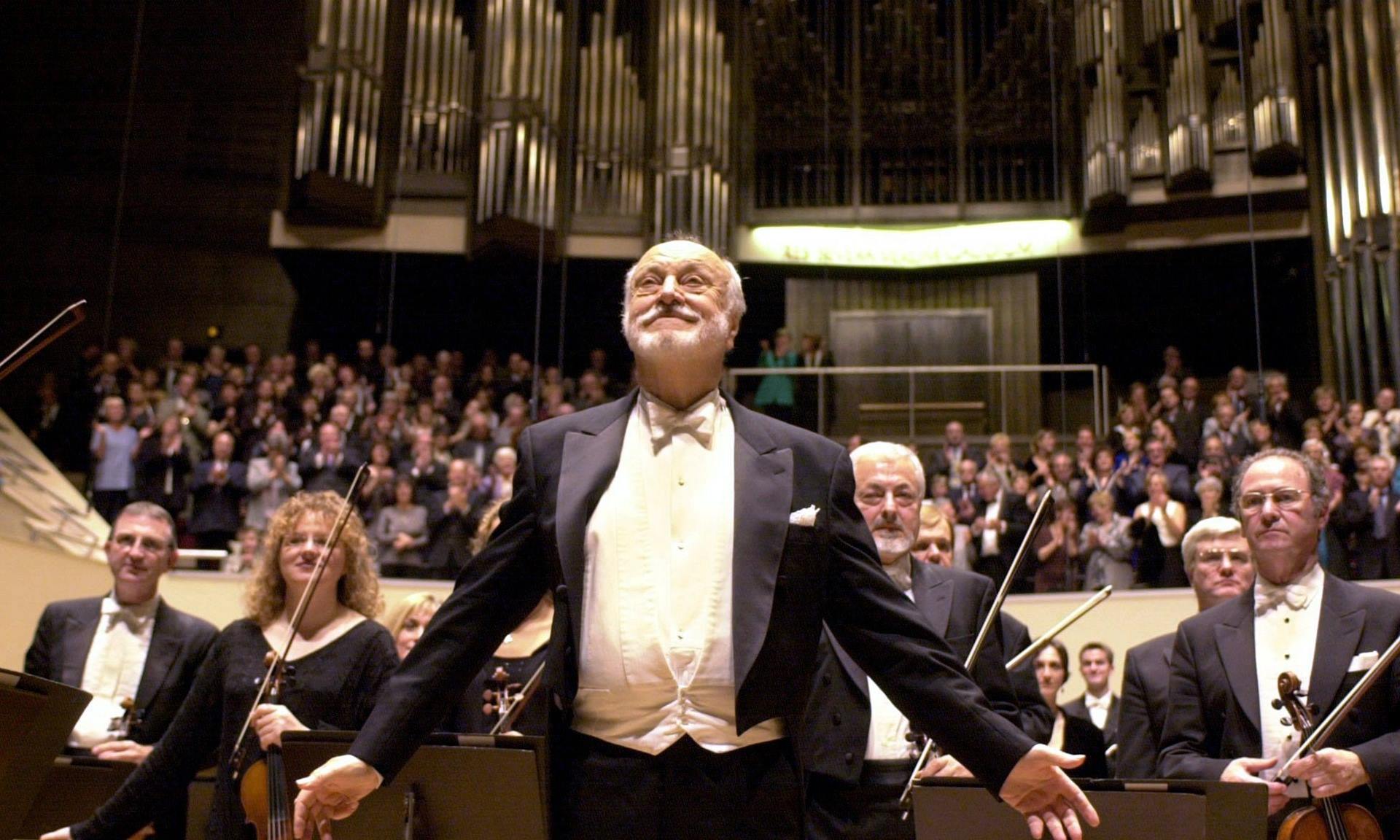
He shook hands with Mickey Mouse, married Gloria Vanderbilt, and signed a ten-year recording contract at the age of 90. Why, it’s LEOPOLD! Join me this afternoon at 4:00 on The Classical Network as we dip a toe into the recorded legacy of Leopold Stokowski, on his birthday.
It’s also the anniversary of the birth of famed film composer Miklós Rózsa. Rózsa titled his autobiography “A Double Life.” Following his lead, we’ll hear examples of both his film and concert music. And I suppose – Franz von Suppé also having been born on this date – we’ll toss in one of Suppé’s frothy overtures, as well. Like Stokowski, Suppé got a fair amount of mileage out of being parodied in cartoons, so we should all be thankful for the movies, for having granted wide exposure to all three of today’s birthday celebrants.
At 6:00, it’s another “Music from Marlboro.” This week, we’ll hear works by two composers of German origin, who travelled very different routes, Richard Strauss (1864-1949) and Paul Hindemith (1895-1963).
Both men found much notoriety as nerve-shattering iconoclasts – Strauss with his operas “Salome” and “Elektra” and Hindemith with his raucous works of the 1920s. Then they settled into respectability, Strauss ageing into the elder statesman of Romantic opulence, and Hindemith becoming an influential teacher at Yale. The two men chose different paths during the Nazi Regime. Hindemith, denounced as an “atonal noisemaker” by Goebels, left for America, by way of Switzerland and Turkey, while Strauss, in his 70s with the outbreak of war, remained at home, hoping to preserve and promote German music and to protect his Jewish daughter-in-law and grandchildren. While understanding Strauss’ importance as a propaganda tool, Goebels wasn’t too fond of his music, either, referring to him privately as a “decadent neurotic.”
But we’ll avoid all that, and instead listen to Strauss at the very beginning of his career, in 1883-84, and a Piano Quartet in C minor completed at the age of 20. Interestingly for this composer who became celebrated for the apotheosis of the lavish tone poem, Strauss here channels his admiration for Johannes Brahms, and in a genre not generally associated with a follower of the post-Wagnerian “New Music School.” Brahms was at the height of his fame while the young Strauss was living in Berlin. In fact, Strauss attended the premiere of Brahms’ Fourth Symphony. This performance of the Piano Quartet promises to be a very special one, with Walter Klien at the keyboard, heard at the 1972 Marlboro Music Festival, in his early 40s and at the peak of his powers.
Hindemith was evidently feeling his oats when he launched into his series of Kammermusiken, 20th century analogues to the Bach Brandenburg Concertos, but with a little bit of an ironic edge. Hindemith was about 26 when he wrote his exuberant Kammermusik No. 1, in 1922, the piece sounding like a post-modern mash-up of “Petrushka,” the Rondo-Burleske from Mahler’s Ninth Symphony, and hot jazz. Watch out for that siren! The performance, from 2016, will feature an ensemble of 12 Marlboro musicians under the direction of another great pianist, Leon Fleisher.
Two young composers show what they can do, one in reverence and the other evidently not, on “Music from Marlboro,” this Wednesday evening at 6:00 EDT, on WWFM – The Classical Network and wwfm.org.
Marlboro School of Music and Festival: Official Page