
Tag: String Quartet

  • Berg, Mozart & Marlboro Zigzags on WWFM

    Berg, Mozart & Marlboro Zigzags on WWFM

    There are times when I suspect Alban Berg felt he zigged when he should have zagged.

    Berg, a pupil of Arnold Schoenberg, was always the Romantic among serialists – one critic described him as “the Puccini of twelve-tone music” – so it’s not difficult to divine a shimmering, unresolved longing common to the works of his Viennese contemporaries.

    On this week’s “Music from Marlboro,” we’ll hear Berg’s two-movement String Quartet of 1910. Like much of Berg’s music, the quartet is not really a strict adherent to any system. The music wafts spectrally, sharing tonal and atonal characteristics, a kind of fever dream of uncertainty.

    There will be no lack of commitment in the performance, which dates from 1984. We’ll experience Marlboro excellence in the form of Ida Levin and Felix Galimir, violins; Benjamin Simon, viola; and Sara Sant’Ambrogio, cello.

    Then we’ll emerge from the fin de siècle fog to find enlightenment with Wolfgang Amadeus Mozart. Mozart’s String Quintet No. 5 in D Major, K. 593, composed in 1790, adds a second viola to the mix. The work was recollected by the composer’s widow, Constanze, to have been written for a musical amateur, often speculated to be Johann Trost. Trost must have been quite the gifted dilettante. He also knew Haydn from Esterhaza, and Haydn dedicated some of his quartets to him.

    When Haydn and Mozart played through the D Major Quintet together before Haydn’s first visit to London, the two men took turns indulging in the first viola part. The work was known for centuries as the “Zigzag” because of an alteration to the original manuscript that modified what had been a descending chromatic figure in the final movement into something decidedly more humorous.

    We’ll hear a Marlboro performance from 2005, with Sarah Kapustin and Diana Cohen, violins; Mark Holloway and Sebastian Krunnies, violas; and David Soyer, cello.

    The music may be jagged, but the path to enjoyment is always straight. It’s another hour of superb chamber music making from the legendary Marlboro Music Festival, this Wednesday evening at 6:00 EDT, on WWFM – The Classical Network and wwfm.org.

    Marlboro School of Music and Festival: Official Page
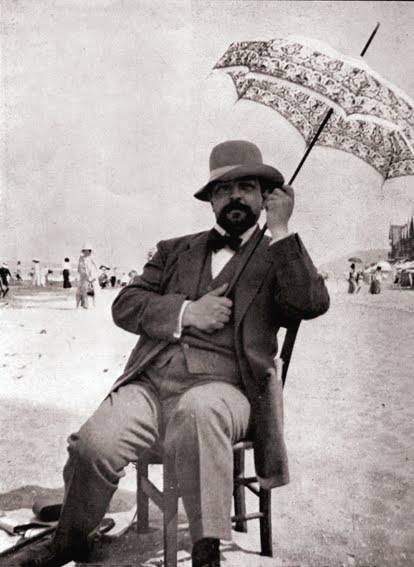
  • Debussy’s Enduring Quartet Music from Marlboro

    Debussy’s Enduring Quartet Music from Marlboro

    Claude Debussy may have died 100 years ago (March 28, 1918), but his music hasn’t aged a bit. On this week’s “Music from Marlboro,” we celebrate Debussy’s birthday (August 22, 1862) – a more festive occasion, I think – with a performance of his String Quartet in G minor.

    Debussy’s quartet, composed in 1893, was very much of its time, but also ahead of its time. Its flights of fancy and free association mirror currents in contemporaneous French painting and poetry; but when it comes to change, music often has a tendency to be “la plus que lente.”

    Debussy’s bold rejection of German academicism likely caused more than a few whiskers to bristle. Ernest Chausson, its dedicatee, had personal reservations about the piece, and the premiere, given by the Ysaÿe Quartet, received mixed reviews. Poetry and sensuality dominate, with a kind of cyclic structure, reliant on a recurring motto, declared at the very outset, standing in for the rules of classical harmony. Wrote the composer, “Any sounds, in any combination, and in any succession, are henceforth free to be used in a musical continuity.”

    Debussy disliked the term “Impressionism,” by the way. Quel dommage!

    We’ll hear Debussy’s one-and-only quartet, performed by Marlboro musicians – violinists Joseph Lin and Judy Kang, violist Richard O’Neill, and cellist David Soyer – on tour at the Isabella Stewart Gardner Museum in Boston in 2002. For a complete schedule of this year’s tours, including stops in New York and Philadelphia, look online at marlboromusic.org.

    Maurice Ravel’s Piano Trio will be included on a Marlboro tour in March, alongside music by Haydn and Kodály. That’s a long time to wait, n’est-ce pas, so let’s give it a listen this evening, shall we?

    Ravel, who also composed a single string quartet, very much under the influence of Debussy, finally sat down to write his Piano Trio over the summer of 1914. By that point, it had already been gestating for at least six years. Progress was slow, but when war was declared in August, Ravel put on a burst of speed so that he could do his patriotic duty and enlist in the French army. He was rejected from the infantry and the air force on account of his diminutive size and precarious health, but he learned to drive a truck and cared for the wounded at Verdun and the Western Front.

    From 2016 Marlboro Music Festival, we’ll hear a performance with pianist Bruno Canino, violinist Robyn Bollinger, and cellist Jonah Ellsworth.

    I’m hoping to leave some good Impressions, on the next “Music from Marlboro,” this Wednesday evening at 6:00 EDT.

    Tune in a little early, beginning at 4 p.m., to enjoy more Debussy – alongside representative selections by fellow birthday celebrants Pierre Danican Philidor, Sir Alexander Mackenzie, and Karlheinz Stockhausen (gussied up somewhat by Pulitzer Prize winner Caroline Shaw) – on WWFM – The Classical Network and wwfm.org.

    Marlboro School of Music and Festival: Official Page


    PHOTO: Debussy at “La mer”

  • Verdi, Rossini, and Mignone at Marlboro Music

    Verdi, Rossini, and Mignone at Marlboro Music

    Viva Verdi!

    When we think of “Aida,” perhaps what springs immediately to mind is a stage full of elephants, but when a Naples performance of Verdi’s grandest grand opera was delayed, the composer found diversion on a much smaller scale. Verdi tossed off his first piece of chamber music at the age of 60. The String Quartet in E minor was given an informal performance at the Hotel delle Crocelle on April 1, 1873. Said Verdi of his latest creation, “I don’t know whether the Quartet is beautiful or ugly, but I do know that it’s a Quartet!” We’ll get to hear it on this week’s “Music from Marlboro,” in a 1969 performance featuring violinists Pina Carmirelli and Endre Granat, violist Martha Strongin Katz, and cellist Ronald Leonard.

    The hour will open with another quartet by a figure who would go on to become one of the most productive of opera composers, Gioachino Rossini. Even as a boy, there was evidence of his remarkable fecundity. He wrote his six string sonatas, scored for two violins, cello, and double bass in 1804, over a period of three days. Rossini was twelve years-old. The sonatas are rhythmically vital and full of the kinds of melodies that would soon endear him to audiences the world over. We’ll hear the third of these, the String Sonata in C major, in a 1989 performance, with violinists Lara St. John and Ivan Chan, cellist Paul Tortelier, and double bassist Timothy Cobb.

    In between, we’ll find further enjoyment in the music of Brazilian composer Franciso Mignone. Born in São Paolo to an Italian immigrant flutist, Mignone studied at the Milan Conservatory before returning to accept a teaching position in Rio de Janeiro. Over the course of his career, he accumulated a diverse output written across many styles, from native “choros” to highly-schooled serialism. He is best known for his music composed in a folk-inflected, nationalistic idiom. Brazilian influences color many of his works, including his “Five Songs for Voice and Bassoon,” written around 1931 and revised in 1976. We’ll hear it performed at the 2016 Marlboro Music Festival by soprano Lucy Fitz Gibbon and bassoonist Catherine Chen.

    I hope you’ll join me for music by two Italian masters and one of Italian descent, on “Music from Marlboro,” this Wednesday evening at 6:00 EST, on WWFM – The Classical Network and wwfm.org.

    Marlboro School of Music and Festival: Official Page
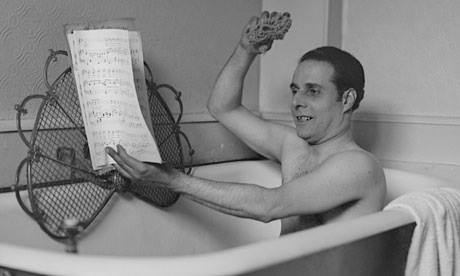
  • Alban Berg: Romantic Serialist

    Alban Berg: Romantic Serialist

    Alban Berg! Dead ahead!

    On this week’s “Music from Marlboro,” we’ll hear Berg’s two-movement String Quartet of 1910. Berg, a pupil of Arnold Schoenberg (whose birthday it is today) was always the Romantic among serialists – one critic described him as “the Puccini of twelve-tone music” – so it’s not difficult to divine a shimmering, unresolved longing common to the works of his more traditionally-minded Viennese contemporaries. Like much of Berg’s music, the quartet is not really a strict adherent to any system. The music wafts spectrally, sharing tonal and atonal characteristics, a kind of fever dream of uncertainty.

    There will be no lack of commitment in the performance, which dates from 1984. We’ll experience Marlboro excellence in the form of Ida Levin and Felix Galimir, violins; Benjamin Simon, viola; and Sara Sant’Ambrogio, cello.

    Then we’ll emerge from the fin de siècle hothouse to unwind in the late summer radiance of Mozart’s Clarinet Quintet in A major. It will be performed, from 1968, by chamber music luminaries Harold Wright, clarinet; Alexander Schneider and Isadore Cohen, violins; Samuel Rhodes, viola; and Leslie Parnas, cello.

    I hope you’ll join me for another “Music from Marlboro,” this Wednesday evening at 6, on WWFM – The Classical Network and wwfm.org.

    Marlboro School of Music and Festival: Official Page
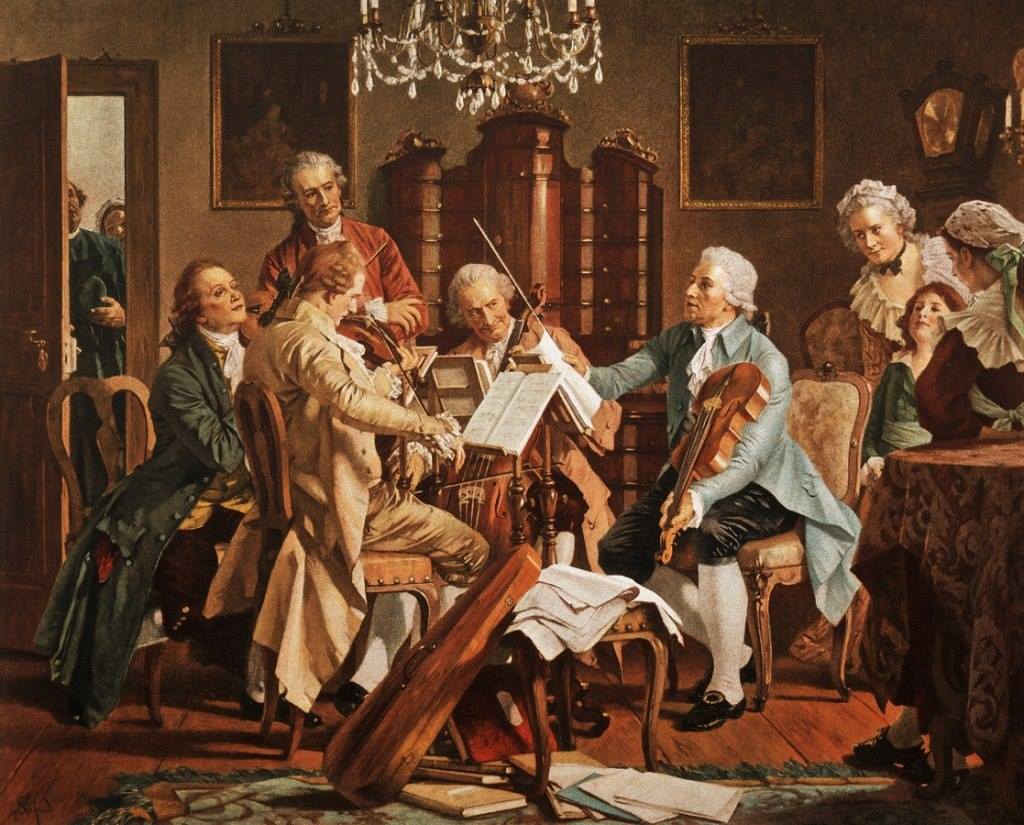

    PHOTO: Alban Berg cools down

  • Papa Haydn: Beyond the Familiar Composer

    Papa Haydn: Beyond the Familiar Composer

    Come to Papa – Papa Haydn, that is.

    Franz Joseph Haydn, affectionately known as “Papa,” was the father of the modern symphony and the modern string quartet, but how much do we really know about the master? As is the case with so many composers, we tend to hear the same pieces over and over again.

    Today, on the eve of Haydn’s 285th birthday, we look past the ordinary to get a peripheral view of Papa, with music inspired by Haydn, music by Haydn’s colleagues, and rarely-heard works by Haydn himself.

    Other composers we may encounter along the way will include Johannes Brahms, Norman Dello Joio, Marcel Grandjany, Johann Michael Haydn (the composer’s brother), Roman Hoffstetter, Anton Kraft, Andre Previn, Maurice Ravel, Johann Peter Salomon, Alfred Schnittke, Ananda Sukarlan, and Joseph Weigl (Haydn’s godson). We’ll even have a piano concerto by Haydn Wood, who was named for Haydn by his music-mad parents, though they pronounced it “Hayden.”

    At 10:00, I’ll be joined by representatives of Boheme Opera NJ, who will talk a little bit about the company’s upcoming production of “Lucia di Lammermoor,” which will be performed at The College of New Jersey’s TCNJ-Kendall Hall on April 7 at 8 p.m. and April 9 at 3 p.m., so we might just hear a selection or two by Donizetti, as well.

    It’s a little early for Father’s Day, this morning from 6 to 11 EDT, on WPRB 103.3 FM and wprb.com. All the same, we celebrate Papa Haydn, on Classic Ross Amico.


    IMAGE: Franz Joseph Haydn demonstrates that Papa knows best

Tag Cloud

Aaron Copland (92) Beethoven (95) Composer (114) Film Music (120) Film Score (143) Film Scores (255) Halloween (94) John Williams (185) KWAX (229) Leonard Bernstein (100) Marlboro Music Festival (125) Movie Music (135) Opera (198) Philadelphia Orchestra (88) Picture Perfect (174) Princeton Symphony Orchestra (106) Radio (87) Ralph Vaughan Williams (85) Ross Amico (244) Roy's Tie-Dye Sci-Fi Corner (290) The Classical Network (101) The Lost Chord (268) Vaughan Williams (103) WPRB (396) WWFM (881)

DON’T MISS A BEAT

Receive a weekly digest every Sunday at noon by signing up here


RECENT POSTS