Tag: String Quartet

  • Ives Halloween Music Under 4 Minutes

    Ives Halloween Music Under 4 Minutes

    For Charles Ives’ birthday, here are two Halloween-specific pieces. You can listen to them both in just over three minutes.

    First, my favorite recording of “Hallowe’en” (1907), in its original version for string quartet and piano, since it actually includes the bass drum. Ives later orchestrated the work, but it just ain’t the same. The composer wrote, “It’s a take-off of a Halloween party and bonfire – the elfishness of the little boys throwing wood on the fire, etc., etc… it is a joke even Herbert Hoover could get.”

    And then this wisp of a song, “Slugging a Vampire” (1902). Like somebody slipped acid in your Smartees.

    Happy Halloween, from Charles Ives!

  • Nielsen & Sibelius at Marlboro School of Music and Festival

    Nielsen & Sibelius at Marlboro School of Music and Festival

    We head north on this week’s “Music from Marlboro” for selections by the most famous composers from Denmark and Finland, respectively.

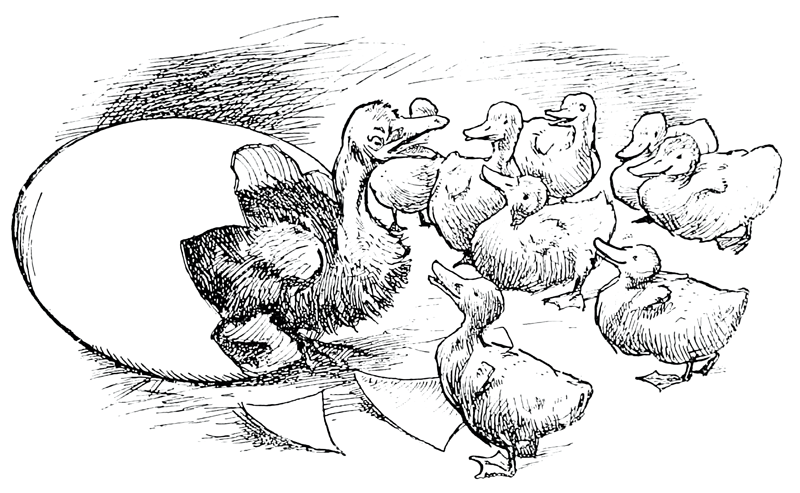
    Like “The Ugly Duckling” of his compatriot, Hans Christian Andersen, Carl Nielsen emerged from humble beginnings to blossom into Denmark’s national composer. Internationally, Nielsen has flitted in and out of the seemingly inescapable shadow of Finnish master Jean Sibelius. Both men were born in 1865. In fact, Nielsen was six months older. But it is an unfair comparison, not so much apples and oranges; more like kipper and pickled herring.

    The very fact that Nielsen is not referred to reductively as “The Sibelius of Denmark” is attributable to an unusually strong individual voice. His music is modern, yet traditional; Scandinavian, yet Germanic. Most important, it is full of personality, freshness and vitality.

    Nielsen’s Wind Quintet of 1922 reflects the composer’s optimism and good humor. These he retained despite great personal, professional, and global turmoil. Each part of the quintet was tailored to the personality of the individual performer for which it was written (all members of the Copenhagen Wind Quintet). There is also something of the outdoors about the piece. Nielsen was always fascinated by nature, and there are ample suggestions of bird song woven into the texture of the work’s pastoral neoclassicism.

    We’ll enjoy a recording made at Marlboro in 1971, with Paula Robison, flute; Joseph Turner, oboe; Larry Combs, clarinet; William Winstead, bassoon; and Robin Graham, horn.

    Sibelius too was influenced by nature. However, the very subtitle of his String Quartet in D minor, “Voces Intimae,” suggests a looking inward. The piece was composed in 1909, between the Third and Fourth Symphonies. It is the only chamber work of Sibelius’ maturity. The composer wrote to his wife, “It turned out as something wonderful. The kind of thing that brings a smile to your lips at the hour of death. I will say no more.”

    If Nielsen suggests the Ugly Duckling, Sibelius is more like the Swan of Tuonela.

    We’ll hear his quartet performed at the 2005 Marlboro Music Festival, by Dan Zhu and Sarah Kapustin, violins; Samuel Rhodes, viola; and Amir Eldan, cello.

    The prevailing winds will be from the north (strings, too, for that matter), on the next “Music from Marlboro,” this Wednesday evening at 6:00 EST, on WWFM – The Classical Network and wwfm.org.

    Marlboro School of Music and Festival: Official Page

  • Haydn, Rochberg & Marlboro’s Musical Rebellion

    Haydn, Rochberg & Marlboro’s Musical Rebellion

    On this week’s “Music from Marlboro,” you may be good at Haydn, but there’s no escaping the Roch. And I don’t mean Alcatraz.

    George Rochberg’s big claim to fame – or, in some circles, notoriety – is that he was one of the first composers to emerge from the predominant serialism of the 1960s to embrace a new tonality, a shift brought on, it is said, by the untimely death of his son.

    Rochberg found the brand of expressionism he had been exploring at mid-career inadequate to convey the strong emotional upheaval he felt. The reintroduction of tonal passages into his works acted as a kind of balm, even as it lit a slow fuse that would blow wide open the future for up-and-coming composers. At the time, this would have been viewed by some as a criminal offense.

    Rochberg is often credited with having ushered in the Age of Pluralism. Now a composer can write any way he or she wants and still be taken seriously. It’s easy to forget that that was not always the case.

    Rochberg’s desire to communicate must have been a latent one, since his Trio for Clarinet, Horn, and Piano, from 1947 (predating his “twelve tone” period), is direct and, in its second movement adagio, introspective and full of feeling. We’ll hear it performed at the 2007 Marlboro Music Festival by clarinetist Charles Neidich, hornist José Vicente Castelló, and pianist Igor Levit.

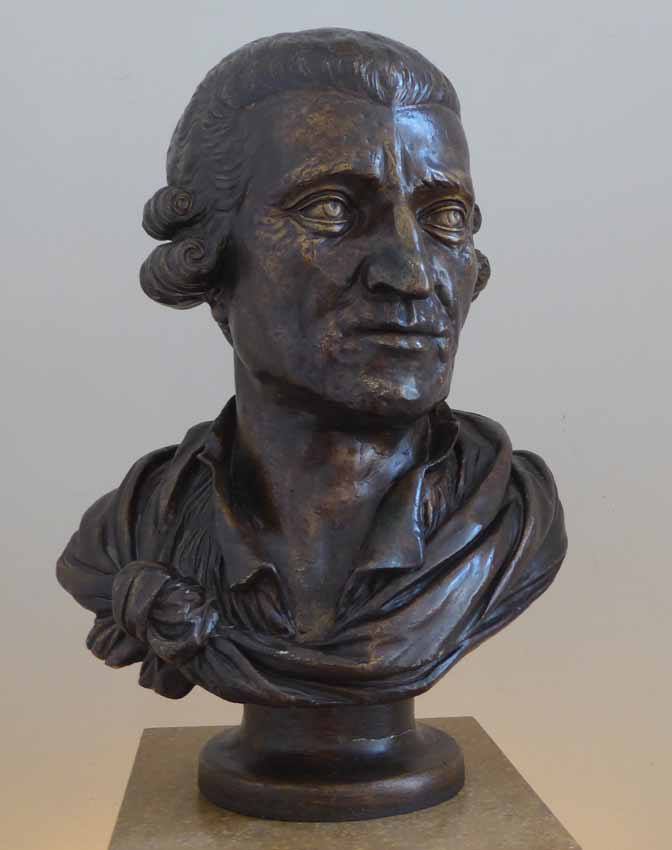
    The trio will be bookended by two works associated with Franz Joseph Haydn – the String Quartet in B flat major, Op. 33, No. 4, by turns puckish and transporting, and Johannes Brahms’ “Variations on a Theme of Haydn.”

    Who cares that the theme that inspired Brahms to write his variations isn’t by Haydn at all? The “Saint Anthony Chorale” that forms the basis of the slow movement of Haydn’s Divertimento No. 1 in B flat major, Hob. II: 46, is a preexisting melody. In fact, the composer of the divertimento itself has been disputed. A clear case of forgery?

    A lenient judge would understand that none of that really matters in music this well-crafted, especially when performed at the 1976 Marlboro Music Festival by pianists Stephanie Brown and Cynthia Raim.

    Haydn’s Op. 33, No. 4, will open the hour. We’ll hear it played by a band on the run, from 1990, made up of violinists Chee-Yun Kim and Felix Galimir, violist Caroline Levine, and cellist Jean-Guihen Queyras.

    Haydn and Rochberg get busted on this week’s “Music from Marlboro,” Wednesday evening at 6:00 EDT, on WWFM – The Classical Network and wwfm.org.

    Marlboro School of Music and Festival: Official Page
  • Ben Johnston Microtonal Pioneer Dies at 93

    Ben Johnston Microtonal Pioneer Dies at 93

    The pioneering microtonalist Ben Johnston has died at the venerable age of 93. Johnston, born in Macon, GA, in 1926, apprenticed with Harry Partch, whom he assisted in the construction and tuning of one-of-a-kind instruments fashioned from scrap. He then studied at Mills College with Darius Milhaud and, later in New York City, with John Cage. Cage encouraged Johnston to drop the idea of writing for newly created instruments and instead to focus on expanding the potentials and perceptions of more traditional sources.

    Johnston exceeded even Partch in his experiments with “just intonation,” a method of tuning based on the intervals of the harmonic series. For hundreds of years, equal temperament, in which the intervals of the chromatic scale are distorted to create major and minor scales, with the ability to modulate from key to key, has been the standard in Western music.

    However, to get something, you often have to give something up. The compromise of equal temperament is a finite system. Johnston (and Schoenberg before him) realized that by the 20th century the musical resources available through an adherence to equal temperament were on the verge of exhaustion. The exploration of microtones opened up new horizons by allowing for an expandable scale of more than forty divisions to an octave.

    Johnston’s great achievement was to take a radical concept and render it in such a way as to make it comparatively accessible to untutored listeners. The pay-off of his String Quartet No. 10 is the realization that (spoiler alert) the entire thing is constructed on the traditional melody “Danny Boy.” His String Quartet No. 4 is based on “Amazing Grace.”

    I’ll remember Johnston today, among my featured composers, during my afternoon air shift. We’ll also sample from a new release on Bridge Records, Inc., “Sonata Dementia,” consisting of works by Johnston’s mentor, Harry Partch. Satisfy your thirst for unusual music, between 4 and 7 p.m. EDT, on WWFM – The Classical Network and wwfm.org.


    The ensemble Partch performs “Sonata Dementia:”

    Those are some impressive mallets!

  • Stravinsky Grieg Boulez Marlboro Music

    Stravinsky Grieg Boulez Marlboro Music

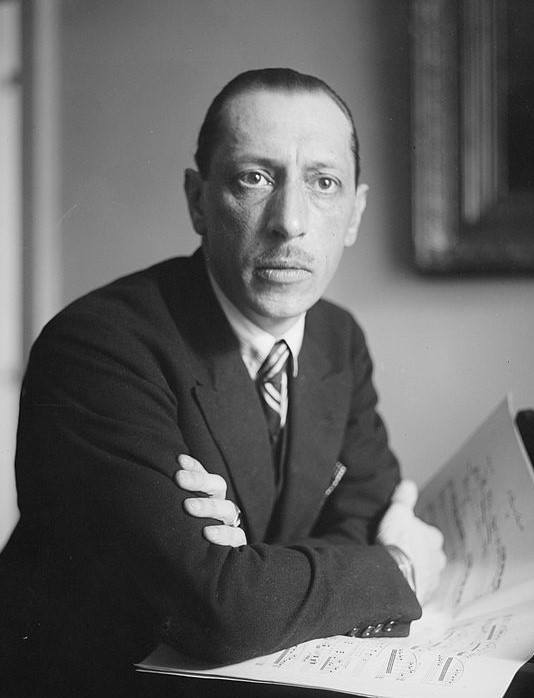
    When Igor Stravinsky unveiled his “Four Norwegian Moods” in 1945, Pierre Boulez was appalled. Stravinsky had been a kind of god to him. The young man had been dissecting the score to “The Rite of Spring” under Olivier Messiaen at the Paris Conservatory. That the Master who had revealed to the world the unvarnished brutality of “The Rite” had retreated to a pastiche of Edvard Grieg, of all people – it was unforgivable. Boulez and his classmates booed vigorously.

    Boulez must be spinning in his grave right now, as Stravinsky and Grieg will reunite for this week’s “Music from Marlboro.”

    With a wintry mix in the forecast, our featured work for the hour will be Grieg’s String Quartet in G minor. Grieg wrote his quartet in 1877-78 while living on a farm in Hardanger. It’s a rare long-form piece from a composer generally typecast as a miniaturist.

    From his letters, we know that Grieg was frustrated by his propensity for shorter works. “Nothing that I do satisfies me,” he wrote, “and though it seems to me that I have ideas, they neither soar nor take form when I proceed to the working out of something big.”

    In addition to giving Grieg the opportunity to flex his creative muscle, the quartet may also reveal something of autobiographical significance. The work opens with a motto lifted from one of Grieg’s songs, “The Minstrel,” on a text by Henrik Ibsen. The poem tells of Hulder, a spirit from Norse mythology, who dwells in waterfalls and lures aspiring musicians with the promise to reveal art in music. However, in return for this invaluable gift, Hulder robs its recipient of both happiness and peace of mind.

    Claude Debussy was also dismissive of Grieg’s music, which he famously derided as “pink bonbons filled with snow.” (What is it about the Norwegian’s music that could have so galled the Gauls?) That said, it has been convincingly demonstrated that Debussy owed more than a little to Grieg in the writing of his own String Quartet in G minor and in some of his piano miniatures.

    We’ll hear a performance of the Grieg quartet from the 2002 Marlboro Music Festival, featuring violinists Ayano Ninomiya and Sharon Roffman, violist Teng Li, and cellist David Soyer.

    Beyond its overt Norwegianisms, what really put Boulez over the edge about the “Four Norwegian Moods” was Stravinsky’s embrace of neoclassicism. Boulez, an austere disciple of the serialist techniques advocated by Arnold Schoenberg and his circle, would later conduct and record Stravinsky’s very neoclassical “Pulcinella.” Perhaps he softened his stance somewhat in light of Stravinsky’s late conversion to the serial cause.

    In any case, one wonders what Boulez would have made of the “Octet for Wind Instruments.” Composed in 1922, this is the work with which Stravinsky really threw down the gauntlet as neoclassicism’s foremost champion.

    We’ll hear it performed at Marlboro in 1968 by flutist Paula Robison, clarinetist Larry Combs, bassoonists Sol Schoenbach and Thomas Woodhams, trumpeters Henry Nowak and Ronald Anderson, and trombonists John Swallow and Richard Rodda, all directed by Leon Kirchner.

    The weather outside is frightful. Cozy in with an abominable bouillabaisse for Boulez, on the next “Music from Marlboro,” this Wednesday evening at 6:00 EST, on WWFM – The Classical Network and wwfm.org.

    Marlboro School of Music and Festival: Official Page
Tag Cloud

Aaron Copland (92) Beethoven (95) Composer (114) Film Music (120) Film Score (143) Film Scores (255) Halloween (94) John Williams (185) KWAX (229) Leonard Bernstein (100) Marlboro Music Festival (125) Movie Music (135) Opera (198) Philadelphia Orchestra (88) Picture Perfect (174) Princeton Symphony Orchestra (106) Radio (87) Ralph Vaughan Williams (85) Ross Amico (244) Roy's Tie-Dye Sci-Fi Corner (290) The Classical Network (101) The Lost Chord (268) Vaughan Williams (103) WPRB (396) WWFM (881)

DON’T MISS A BEAT

Receive a weekly digest every Sunday at noon by signing up here


RECENT POSTS